
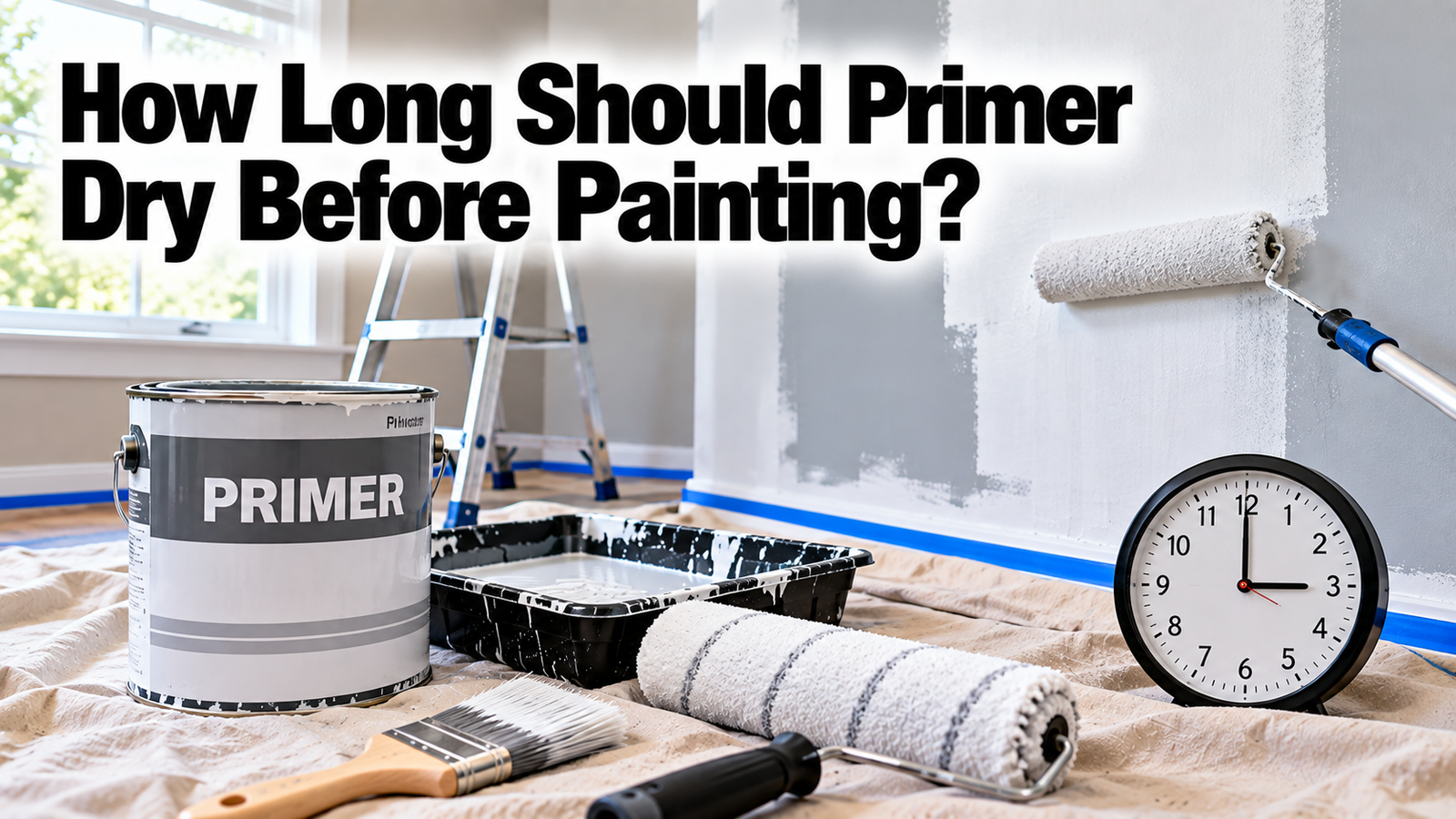

Most water-based (latex) primers are ready to paint over in about 1 to 3 hours, and often feel dry to the touch within 30 to 60 minutes. Oil-based primers take longer, usually 1 to 3 hours to dry to the touch and, for a full cure, up to around 24 hours, though many are paintable within a few hours. The single most reliable number, though, is the recoat time printed on your primer’s label, because that’s the gap the manufacturer has tested for proper adhesion.
Waiting the right amount of time matters more than people think. Paint too soon and the topcoat can peel, bubble, or pull the primer off the wall; wait far too long with certain primers and you may need to sand or re-prime. Here’s how long to wait, what changes it, and how to know when your primer is genuinely ready for paint.
Dry to the touch vs ready to paint
The key thing to understand, and the reason a single number can mislead you, is that “dry to the touch” and “ready to paint” are two different stages. Getting them confused is what causes most primer-related paint failures.
Dry to the touch means the surface feels dry when you brush a finger across it, which for many water-based primers happens in as little as 30 minutes. But the film underneath may still be forming its bond and off-gassing. Ready to paint, the recoat time, is the longer wait until the primer has set enough to accept a topcoat without problems. That’s why a primer can feel perfectly dry at 30 minutes yet still need an hour or more before you paint. Always go by the recoat time, not the touch test alone.
The reason for the gap comes down to how primer forms its film. As it dries, the surface skins over first while the layers underneath are still releasing solvent or moisture and knitting together into a solid, bonded coating. Paint over it while that’s still happening and you effectively seal the wet layer in, which is what leads to peeling and blistering down the line. The recoat time is the manufacturer’s tested estimate of when that whole film, not just the skin on top, is ready to take another coat. Treating the touch test as a green light is the single most common way people get this wrong.
The distinction that saves paint jobs: dry to the touch is not the same as ready to paint. Follow the label’s recoat time, which is always the longer of the two.
Primer dry times by type
Different primers dry on very different schedules. Here are the typical ranges, but treat them as guidance and always check your specific product’s label, since formulas vary.
| Primer type | Dry to touch | Ready to paint | Full cure |
| Water-based / latex | 30 to 60 min | About 1 to 3 hrs | Days |
| Oil-based | 1 to 3 hrs | Few hrs to 24 hrs | Up to a week |
| Shellac-based | As little as 15 min | About 45 min to 1 hr | Fast |
As concrete examples, a common water-based primer like KILZ 2 All-Purpose lists drying to the touch in about 30 minutes and recoating in 1 hour, while a popular oil-based primer is touch-dry in roughly an hour but wants about 2 hours before recoating. Shellac primers are the speed champions, often ready in under an hour, which is why they’re favored for quick stain-blocking jobs.
It’s worth knowing why the type you choose changes the wait, because it helps you plan. Water-based primers dry mainly by water evaporating out of the film, which happens quickly, so they’re the fast, low-odor, easy-cleanup choice for most drywall and general interior work.
Oil-based primers cure through a slower chemical process as they react with air, which is why they take longer but grip glossy or stained surfaces so well. Shellac primers use alcohol that flashes off almost immediately, giving the fastest dry and the strongest stain and odor sealing. Picking the primer that fits your surface, rather than grabbing whatever is on hand, often decides both how well the job holds and how long you’ll be waiting between coats.
What affects how long primer takes to dry
Those label times assume ideal conditions, usually around 70°F and 50% humidity. Change the environment and the timeline shifts, sometimes a lot. A few factors do most of the work.
- Humidity. The biggest variable. Damp air slows drying dramatically and can leave water-based primer tacky well past its stated time. Aim for humidity below about 85%.
- Temperature. Warmth speeds drying; cold slows it. Try to work above about 50°F, since cool rooms can double the wait.
- Ventilation and airflow. Moving air carries away evaporating solvent and moisture, so a fan or an open window helps primer dry faster and more evenly.
- Surface and porosity. Bare wood soaks up primer and can need extra time to fully settle, while sealed or glossy surfaces behave differently. Porous drywall usually dries quickly.
- Coat thickness. A thick, heavy coat traps solvent underneath and stays wet longer. Thin, even coats dry faster and bond better.
How to tell primer is ready to paint
Beyond the clock, you can confirm the primer is ready with a couple of quick checks. Timing plus a test is more reliable than either alone.
First, look and touch: the primer should look uniformly matte and dry, with no shiny wet patches, and feel dry and not tacky when you press a fingertip in an inconspicuous spot. If your finger sticks or leaves a mark, it needs more time.
Second, respect the label’s recoat window even if it feels dry early, especially in humid or cool conditions where the surface can feel dry before the film has properly set. When in doubt, give it a little longer; a short extra wait is cheap insurance against a peeling topcoat.
Quick test: the primer should look evenly matte with no wet sheen and feel dry, not tacky, to a fingertip. Tacky means wait longer, whatever the clock says.
Can you wait too long to paint over primer?
This is the flip side that many guides skip, and it matters. With some primers, you actually can wait too long before applying your topcoat.
Certain primers have a recoat window, a span within which the paint bonds best. Many latex primers are forgiving and can sit for a good while, but some primers, especially certain oil-based and specialty products, are best painted within a day or a few days.
Leave them exposed too long and the surface can collect dust, lose a little of its bonding ability, or begin to break down, meaning you may need to scuff-sand or re-prime before painting. It’s also just practical: a bare primed surface isn’t protected and attracts dust and marks. The safe habit is to check the label for any maximum recoat time and plan to paint within it, ideally within a day or two of priming, rather than leaving primed surfaces sitting for weeks.
What happens if you paint over primer too soon
Rushing the wait is the more common mistake, and it undoes the whole point of priming. When you topcoat before the primer is ready, a few things can go wrong.
The most common problem is poor adhesion: the paint can’t grip a primer that’s still forming its film, so it peels, flakes, or bubbles later. You may also see the topcoat drag or lift the wet primer as you roll, leaving streaks and uneven coverage, and trapped solvent or moisture under the paint can cause blistering or a finish that never fully hardens.
In stain-blocking situations, painting too soon can even let stains bleed through because the primer hasn’t sealed. All of this defeats the purpose of priming, which is to create a sound, well-bonded base. The fix is simple and free: wait the recoat time. Patience here is what turns primer into the durable foundation it’s meant to be.
If you’ve already painted too soon and see trouble, the repair depends on how bad it is. Minor tackiness or slow drying often just needs time and airflow, so give the surface warmth and a fan and let it fully cure before judging it.
But if the paint is peeling, blistering, or the stains have bled through, there’s no shortcut: you’ll need to scrape or sand back the failed area to a sound surface, re-prime, wait the proper recoat time this round, and repaint. That extra work is exactly what waiting the recoat time in the first place is meant to spare you, which is why the small upfront patience almost always pays for itself.
Conclusion
So how long should primer dry before painting? Plan on roughly 1 to 3 hours for most water-based primers and up to around 24 hours for oil-based, but let the recoat time on the label be your real guide, since that’s the tested window for a solid bond.
Remember that dry to the touch isn’t the same as ready to paint, adjust for humidity, temperature, and airflow, and confirm with a quick touch test. Don’t rush the topcoat, but don’t leave primer bare for weeks either. Give primer the right wait and it rewards you with a smooth, long-lasting finish.
Frequently asked questions
How long should primer dry before painting? Usually 1 to 3 hours for water-based primer and up to about 24 hours for oil-based, though many are paintable sooner. Always follow the recoat time on the label, which is the tested wait for good adhesion.
Can I paint 30 minutes after priming? Usually not. Primer may feel dry to the touch in 30 minutes, but most need at least 1 to 2 hours before a topcoat. Painting that early risks peeling and poor adhesion. Check the label’s recoat time.
How do I know if primer is dry enough to paint? It should look uniformly matte with no wet sheen and feel dry, not tacky, to a fingertip in a hidden spot. If it’s tacky or your finger marks it, wait longer, especially in humid or cool conditions.
Does primer need to dry longer in humidity? Yes. High humidity significantly slows primer drying and can leave water-based primer tacky past its usual time. Warm the room, improve airflow with a fan, and extend the wait when it’s damp.
Can you leave primer unpainted too long? With some primers, yes. Certain oil-based and specialty primers have a recoat window and can lose bonding ability or collect dust if left bare too long. Aim to topcoat within a day or two, and check the label.
Related Articles
How to Get Paint Off Tires Without Damaging the Rubber?
How to Make Stencils for Spray Paint (Step by Step)
How to Paint Shutters: Step-by-Step Guide