
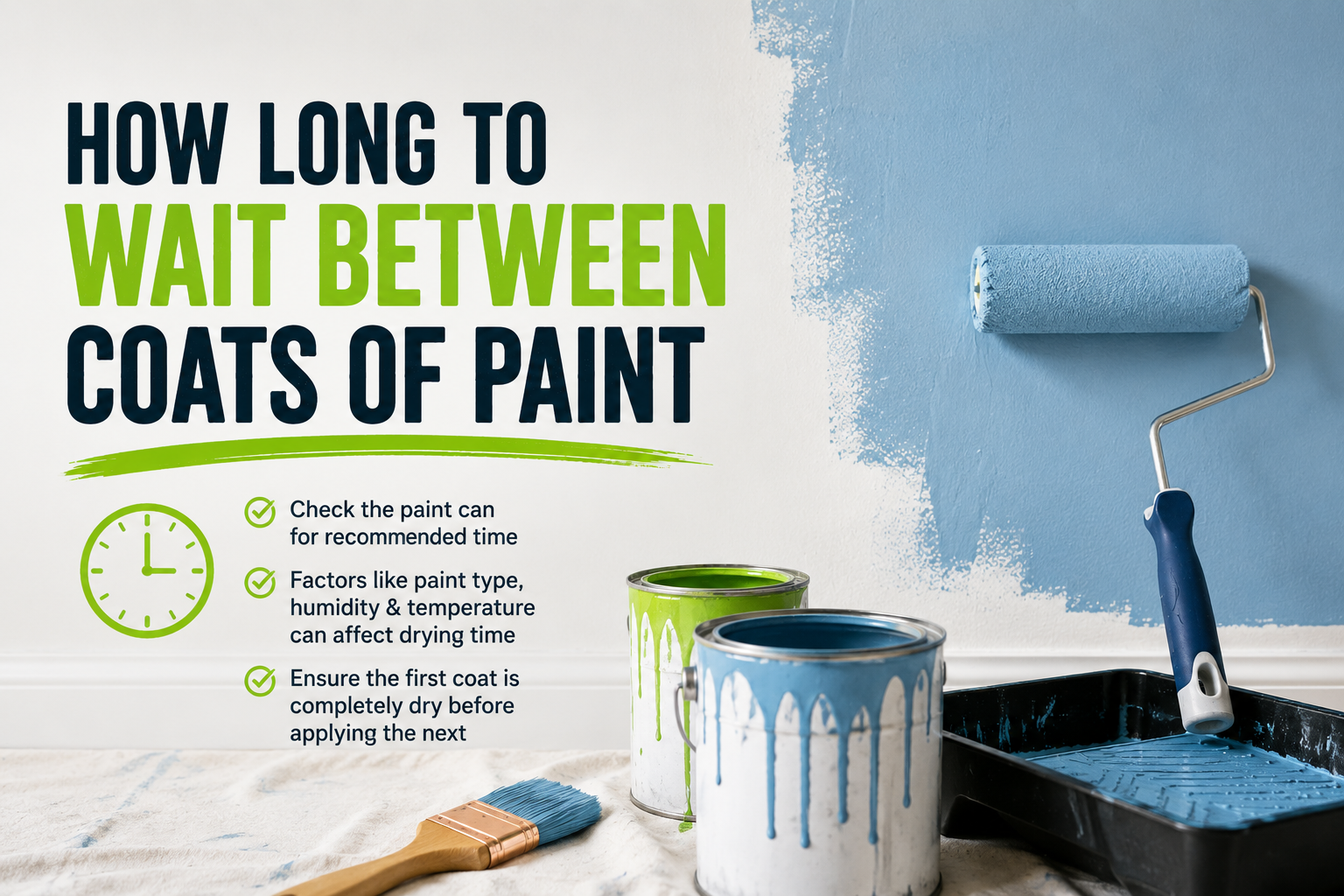

If you’ve ever stood in front of a freshly painted wall wondering whether it’s ready for a second coat, you’re not alone. One of the most common questions people ask before starting a painting project is how long to wait between coats of paint. Rushing this step is one of the easiest ways to ruin an otherwise perfect paint job, while waiting too long can create its own set of problems.
- Understanding Drying vs. Curing
- Recoat Times by Paint Type
- Latex/Acrylic (Water-Based) Paint
- Oil-Based (Alkyd) Paint
- Primer (Latex vs. Oil-Based)
- Chalk Paint
- Spray Paint
- Enamel Paint
- Milk Paint
- Factors That Affect Drying Time
- Recoat Times by Surface
- How to Tell If Paint Is Ready for a Second Coat
- What Happens If You Recoat Too Soon?
- What Happens If You Wait Too Long Between Coats?
- Tips for Speeding Up Dry Time Safely
- Manufacturer Guidelines: Why Reading the Label Matters
- Frequently Asked Questions
- Quick Reference Chart
- Conclusion
- Related Articles
The truth is, there’s no single answer that works for every situation. The right waiting time depends on the type of paint you’re using, the surface you’re painting, the weather conditions in your space, and even how thick you applied the first coat. This guide breaks down everything you need to know so you can get a smooth, professional-looking finish every time.
For those who just want a quick answer, here’s a snapshot:
| Paint Type | Touch Dry | Safe to Recoat | Fully Cured |
|---|---|---|---|
| Latex/Acrylic | 30–60 minutes | 2–4 hours | 2–4 weeks |
| Oil-Based | 6–8 hours | 24 hours | 5–7 days |
| Primer | 30 minutes–1 hour | 1–3 hours | Varies |
| Chalk Paint | 30 minutes | 1 hour | 3–4 weeks |
| Spray Paint | 10–20 minutes | 30 minutes–1 hour | 24–72 hours |
| Enamel Paint | 8 hours | 24 hours | 7 days |
Now let’s dive into the details behind each of these numbers.
Understanding Drying vs. Curing
Before jumping into specific timeframes, it helps to understand two terms that often get confused: drying and curing. These sound similar, but they describe very different stages in a paint’s life.
Drying refers to the surface-level process where solvents or water evaporate from the paint, leaving it dry to the touch. This usually happens within a few hours. Curing, on the other hand, is a much slower chemical process where the paint fully hardens and bonds to the surface underneath. Curing can take anywhere from several days to a full month, depending on the paint type.
This distinction matters because when people ask how long to wait between coats of paint, they typically only need to wait until the paint is dry enough to accept another layer, not fully cured. However, if you’re planning to wash the wall, hang furniture against it, or apply heavy use to a painted surface like a floor or cabinet, you’ll want to wait for full curing instead.
Recoat Times by Paint Type
Different paint formulas dry and cure at different speeds because of their chemical makeup. Here’s a closer look at the most common types.
Latex/Acrylic (Water-Based) Paint
Latex and acrylic paints are the most popular choice for interior walls because they dry quickly and clean up easily with water. In most cases, these paints feel dry to the touch within 30 to 60 minutes. However, it’s best practice to wait about 2 to 4 hours before applying a second coat, giving the layer underneath enough time to properly set. In humid conditions, extending this to 4 to 6 hours is a safer bet.
Oil-Based (Alkyd) Paint
Oil-based paints take considerably longer to dry because they rely on evaporation of solvents rather than water. These paints typically need 24 hours between coats. Attempting to recoat sooner often results in a tacky, uneven surface that can trap the first layer underneath, leading to long-term adhesion issues.
Primer (Latex vs. Oil-Based)
Primer timing depends on its base. Latex primers usually dry enough for a topcoat within 1 to 3 hours, while oil-based primers may need up to 24 hours. Always check the product label, since some fast-drying primers are formulated to be painted over in as little as 30 minutes.
Chalk Paint
Chalk paint is popular for furniture makeovers because of its fast drying time and matte finish. Most chalk paints are dry to the touch within 30 minutes, and a second coat can usually be applied after about an hour. Full curing, though, can take three to four weeks, so it’s wise to avoid heavy use of chalk-painted furniture during that window.
Spray Paint
Spray paint dries quickly due to its thin application and fast-evaporating propellants. Light coats are often dry within 10 to 20 minutes, and a second coat can typically go on within 30 minutes to an hour. Waiting too long between spray paint coats, however, can cause adhesion problems, so it’s best to follow the recoat window closely.
Enamel Paint
Enamel paints, often used on trim, doors, and metal surfaces, are known for their durability but slower drying time. These generally require about 8 hours before they’re dry to the touch and a full 24 hours before recoating.
Milk Paint
Milk paint, a natural and eco-friendly option, dries fast, similar to chalk paint. It’s usually ready for a second coat within an hour, although mixing consistency and temperature can shift this slightly.
Factors That Affect Drying Time
Even within the same paint type, drying times can vary quite a bit depending on environmental and application factors. Understanding these variables helps you judge how long to wait between coats of paint more accurately for your specific project.
Humidity plays a major role in how quickly paint dries. High moisture in the air slows evaporation, meaning paint applied on a muggy day may need significantly more time between coats than paint applied in a dry climate. Temperature works similarly. Most paints are formulated to dry best between 50°F and 85°F (10°C to 29°C). Painting in colder conditions can dramatically slow the process, while painting in extreme heat can cause the paint to dry too quickly on the surface while remaining wet underneath.
Ventilation and airflow also matter. A well-ventilated room with a gentle breeze or fan circulating air will help paint dry faster and more evenly than a stuffy, closed-off space. The thickness of your application is another key factor. Thicker coats naturally take longer to dry than thin, even layers, and applying paint too heavily is one of the most common reasons for extended dry times and uneven finishes.
The surface you’re painting affects absorption rates as well. Porous surfaces like raw wood or drywall may absorb paint differently than a previously painted or sealed surface, which changes how long it needs to sit before recoating. Finally, if you’re applying a third or fourth coat, drying times can sometimes shift slightly since each additional layer sits on top of an increasingly built-up surface.
Recoat Times by Surface
Beyond paint type, the surface itself influences timing.
Interior walls using latex paint generally follow the standard 2 to 4 hour window, especially in rooms with decent airflow. Exterior walls and siding need more caution since outdoor humidity, direct sunlight, and temperature swings can all affect drying. It’s often recommended to wait at least 4 hours, and ideally check weather forecasts to avoid rain interfering with a fresh coat.
Wood trim and furniture dry differently depending on whether you’re using latex, oil-based, or specialty paint like chalk paint. Wood also tends to absorb more paint than drywall, sometimes requiring a slightly longer wait to avoid a blotchy finish. Metal surfaces typically pair with oil-based or enamel paints, meaning a full 24-hour wait between coats is standard to prevent bubbling.
Cabinets and doors are high-touch areas, so many painters recommend waiting the full recommended time between coats and allowing extra curing time before regular use, since these surfaces face daily wear.
How to Tell If Paint Is Ready for a Second Coat
While following general guidelines is helpful, doing a quick physical check before recoating can save you from costly mistakes. The simplest method is the touch test: lightly press a clean, dry finger against an inconspicuous area of the painted surface. If it feels tacky, sticky, or leaves a mark, it’s not ready yet.
Visually, dried paint should have an even sheen across the surface with no wet-looking patches or color variation. Uneven glossiness often signals that some areas are drier than others, which usually happens when the first coat was applied unevenly.
A common mistake many people make is judging dryness purely based on time rather than actually checking the surface. Environmental conditions can shift dry times by hours, so relying solely on a clock without testing can lead to premature recoating.
What Happens If You Recoat Too Soon?
Applying a second coat before the first has properly dried can cause a range of frustrating issues. Peeling and bubbling are among the most common problems, as trapped moisture underneath the new layer tries to escape, lifting the paint film in the process. Lap marks, those visible streaky lines where wet paint overlaps dry paint, are also more likely to appear if you’re working too quickly.
Trapped moisture is particularly problematic because it can lead to long-term adhesion failure, meaning the paint may crack or peel weeks or months later, even if it looked fine immediately after application. Color unevenness is another issue, since wet paint mixing with a still-drying base coat can create blotchy, inconsistent shading once everything fully dries.
What Happens If You Wait Too Long Between Coats?
While rushing is the more common mistake, waiting too long can also cause problems, particularly with certain paint formulas. Some paints, especially those with a glossy or semi-gloss finish, can cure to the point where a new coat has trouble bonding properly. This can lead to adhesion issues where the top coat doesn’t grip the surface as well as it should.
In these cases, especially if more than a few days have passed, lightly sanding the surface before applying the next coat can help create the texture needed for proper adhesion. This is more of a concern with oil-based and enamel paints than with latex, since latex paints tend to be more forgiving even after longer gaps.
Tips for Speeding Up Dry Time Safely
If you’re working on a timeline and want to speed things along without compromising quality, there are a few safe strategies. Using fans to improve air circulation can meaningfully cut down drying time, especially in enclosed rooms. A dehumidifier can also help in particularly humid climates by pulling excess moisture from the air.
Applying thin, even coats rather than one thick layer is one of the most effective ways to reduce drying time overall, since thinner layers naturally dry faster. Choosing to paint during ideal weather conditions, when possible, moderate temperatures with low humidity, also makes a noticeable difference. Avoid painting on rainy or extremely humid days if you have flexibility in your schedule.
Manufacturer Guidelines: Why Reading the Label Matters
While general guidelines are useful, paint formulas vary between brands, and manufacturers often test their specific products to provide the most accurate recoat windows. Big-name brands may recommend slightly different times based on their unique additives and drying agents.
Because of this, the paint can label should always be your final reference point. It typically includes both a recoat time and a full cure time, along with any special notes about temperature or humidity thresholds. When in doubt, following the manufacturer’s specific instructions will always give you the best results.
Frequently Asked Questions
Can I apply a second coat after 1 hour? For most latex paints, waiting only one hour is on the early side. While the surface may feel dry, it’s generally safer to wait at least 2 hours to ensure the layer underneath has properly set.
Do I need to sand between coats? In most cases, sanding isn’t necessary between coats of the same paint on a properly prepped surface. However, if you’re recoating after several days or dealing with a glossy finish, a light sanding can help improve adhesion.
How long before I can touch or lean on painted furniture? While furniture may feel dry within a few hours, it’s best to avoid heavy use for at least 24 to 72 hours, and ideally wait the full cure time of several weeks before subjecting it to daily wear.
How soon can I apply polyurethane over paint? Most experts recommend waiting at least 24 hours after your final coat of paint before applying polyurethane, though checking your specific paint’s cure guidelines is always a good idea.
Quick Reference Chart
| Paint Type | Touch Dry | Recoat Time | Full Cure |
|---|---|---|---|
| Latex/Acrylic | 30–60 min | 2–4 hours | 2–4 weeks |
| Oil-Based | 6–8 hours | 24 hours | 5–7 days |
| Primer (Latex) | 30 min–1 hr | 1–3 hours | Varies |
| Primer (Oil) | 6–8 hours | Up to 24 hours | Varies |
| Chalk Paint | 30 minutes | 1 hour | 3–4 weeks |
| Spray Paint | 10–20 min | 30 min–1 hr | 24–72 hours |
| Enamel Paint | 8 hours | 24 hours | 7 days |
| Milk Paint | 30–45 min | ~1 hour | 2–3 weeks |
Conclusion
Understanding how long to wait between coats of paint comes down to knowing your paint type, paying attention to environmental conditions, and doing a simple touch test before moving forward. Latex paints are generally the most forgiving and fastest to recoat, while oil-based and enamel paints require more patience. Regardless of what you’re working with, taking the extra time to let each coat properly set will always pay off with a smoother, longer-lasting finish.
When in doubt, the paint can label is your best friend, since it reflects testing specific to that exact formula. A little patience between coats goes a long way toward achieving a professional result you’ll be happy with for years to come.
Related Articles
Can You Paint Bathtub Tile? Complete Step-by-Step Guide
How to Make Skin Color With Paint (Easy Mixing Guide)
How to Remove Chalk Paint: 5 Easy Methods That Actually Work
How to Get Dried Paint Off Brushes and Save Them?