

If you’ve ever picked up a paintbrush for a craft project, a school assignment, or a weekend DIY makeover, chances are you’ve reached for acrylic paint. It’s colorful, easy to use, and dries quickly — but that quick-drying quality raises an important question for parents, hobbyists, and anyone working with fabric or furniture: is acrylic paint washable?
- Understanding Acrylic Paint Basics
- Is Acrylic Paint Washable When Wet?
- Is Acrylic Paint Washable When Dry?
- Removing Acrylic Paint From Different Surfaces
- From Skin
- From Clothing/Fabric
- From Hands and Nails
- From Hair
- From Carpet
- From Wood
- From Plastic
- From Glass
- From Walls
- Step-by-Step Removal Methods
- Acrylic Paint vs. Other Paint Types
- Is Acrylic Paint Safe/Washable for Kids?
- Tips to Prevent Acrylic Paint Stains
- Frequently Asked Questions (FAQs)
- Conclusion
- Related Articles
The short answer is that acrylic paint behaves in two very different ways depending on whether it’s wet or dry. While it’s still wet, it can usually be wiped or washed away with soap and water. Once it dries, however, it forms a flexible plastic-like film that clings to surfaces and resists water almost entirely.
This distinction matters a lot in real life. A toddler who gets acrylic paint on their school uniform, a hobbyist who spills a drop on the carpet, or a DIY enthusiast painting a wall who accidentally splashes their sleeve — all of them need to know how much time they have before the paint becomes permanent. This guide walks through everything: how acrylic paint works, whether it’s washable at each stage, and exactly how to remove it from different surfaces.
Understanding Acrylic Paint Basics
Acrylic paint is a water-based paint made from pigment particles suspended in an acrylic polymer emulsion. In plain language, that means tiny colored particles are mixed into a liquid plastic solution that is thinned with water. This is why acrylic paint pours and blends like a water-based paint at first.
The magic — and the challenge — happens during drying. As the water in the paint evaporates, the acrylic polymer particles move closer together and fuse into a continuous, slightly stretchy plastic film. This process is called coalescence. Once that film forms, it no longer dissolves in water the way it did when wet, because it has physically transformed from a liquid suspension into a solid plastic layer.
So, when people ask, “is acrylic paint washable,” the honest answer depends entirely on timing:
- Wet acrylic paint = washable with water and mild soap
- Dry acrylic paint = essentially waterproof and needs stronger removal methods
Understanding this wet-versus-dry behavior is the foundation for everything else in this guide.
Is Acrylic Paint Washable When Wet?
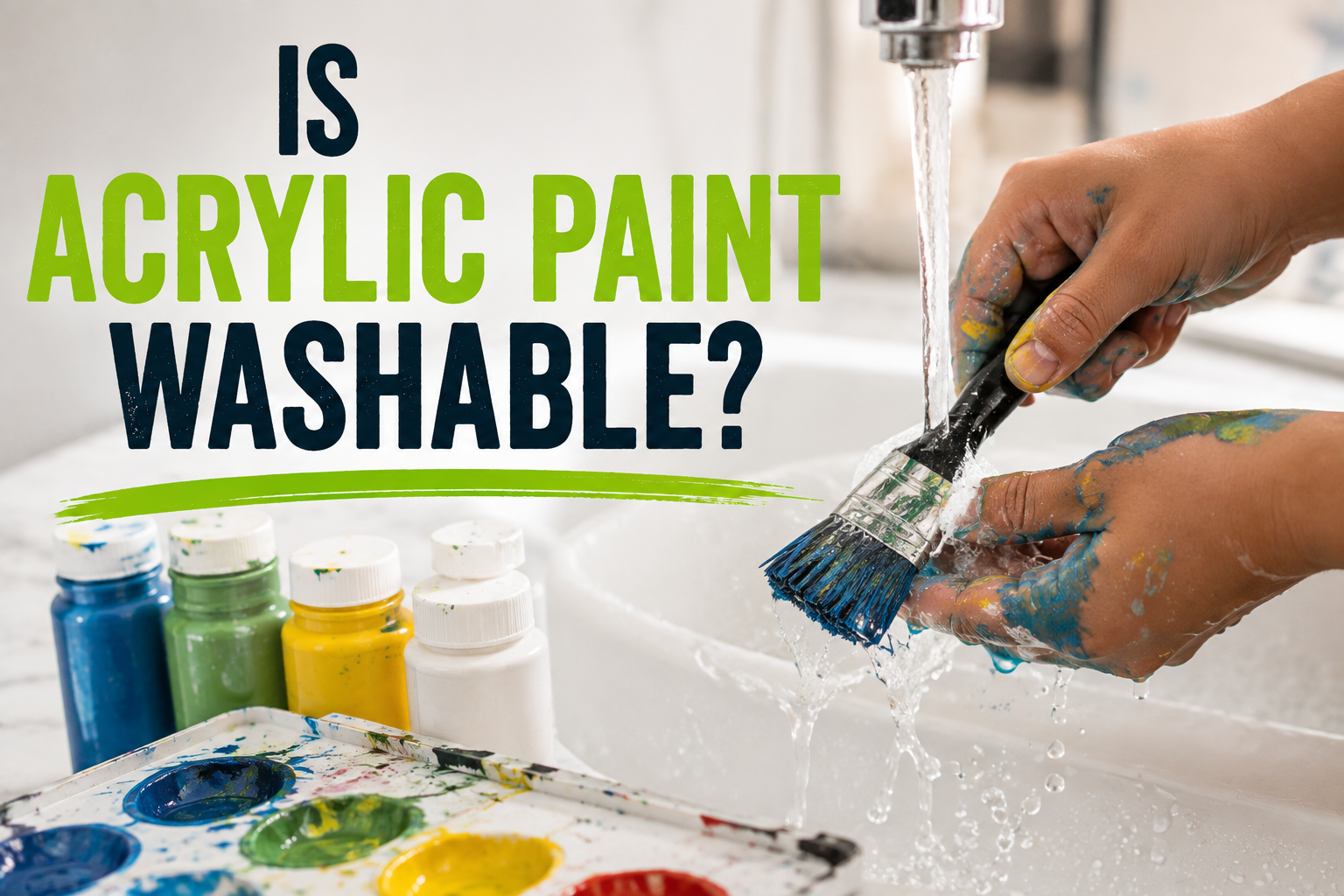
Yes — while acrylic paint is still wet, it is genuinely washable. Because the polymer particles haven’t fused together yet, plain water can break up the paint and lift it from most surfaces, including skin, fabric, and brushes.
However, there’s a catch: acrylic paint dries faster than many other paint types, often within 10 to 30 minutes depending on humidity, paint thickness, and surface material. On a hot or dry day, some acrylic paints can start setting in as little as 5 minutes. This means the “washable window” is short, and quick action makes all the difference.
Best practices for cleaning wet acrylic paint:
- Act immediately — don’t let it sit or air-dry.
- Rinse the area under lukewarm running water.
- Use a mild soap or dish detergent to break down the paint further.
- Gently rub or dab (avoid harsh scrubbing on fabric, which can push paint deeper into fibers).
- Rinse thoroughly and repeat if any color residue remains.
If you catch the paint within this wet stage, you’ll rarely need anything beyond soap and water.
Is Acrylic Paint Washable When Dry?
Once acrylic paint dries, the answer to “is acrylic paint washable” shifts dramatically — it becomes largely water-resistant and, on porous surfaces like fabric, close to permanent.
Here’s the science in simple terms: the acrylic polymer molecules cross-link and bond tightly as they cure, forming a durable, flexible plastic coating. This is actually the same property that makes acrylic paint popular for outdoor murals, canvas art, and furniture — it’s meant to resist weather, water, and general wear once fully cured. That durability is a benefit for artists but a headache for anyone trying to remove a stain.
Plain water will no longer dissolve dried acrylic paint. Instead, removal requires either:
- Softening agents like rubbing alcohol or specialized solvents that can break the polymer bond
- Mechanical removal like scraping, peeling, or gentle abrasion
- A combination of both, depending on the surface
It’s worth noting that dried acrylic paint isn’t indestructible — it can still be removed with patience and the right technique — but it will not simply rinse away like it does when wet.
Removing Acrylic Paint From Different Surfaces
Different materials call for different approaches. Below is a breakdown of how to handle acrylic paint on the most common surfaces people deal with.
From Skin
Skin is non-porous, so acrylic paint doesn’t bond as deeply here. Warm soapy water usually works if caught early. For dried paint, a bit of oil (like olive or baby oil) rubbed into the area, followed by soap and water, can loosen it without irritating the skin.
From Clothing/Fabric
Fabric is the trickiest surface because it’s porous and paint can seep into fibers. Wet paint should be flushed with cold water from the back of the fabric to push paint out rather than through. Dried paint on clothing often needs rubbing alcohol applied with a cloth, followed by scraping off softened residue and a regular wash cycle.
From Hands and Nails
Warm water, soap, and a soft nail brush handle most cases. For paint trapped under nails or in cuticles, hand sanitizer (which contains alcohol) can help break it down.
From Hair
Work quickly with lukewarm water and shampoo. For dried paint, a mix of oil and gentle combing can help avoid cutting hair, which is sometimes recommended for stubborn spots.
From Carpet
Blot (never rub) wet paint with a damp cloth. For dried paint, a mixture of warm water and a small amount of vinegar or rubbing alcohol, applied and blotted repeatedly, can lift much of the stain.
From Wood
Sealed or painted wood can typically handle rubbing alcohol without damage. Unfinished or raw wood is more porous, so test a hidden spot first, then use gentle scraping combined with a mild solvent.
From Plastic
Plastic surfaces are usually the easiest to clean since paint doesn’t bond well to them. Dried paint can often be peeled off by hand or loosened with rubbing alcohol.
From Glass
Glass is non-porous, so a razor blade or plastic scraper can lift dried paint cleanly, followed by a glass cleaner to remove any residue.
From Walls
Painted walls need extra caution. Test any solvent in a hidden corner first, since alcohol can dull certain wall finishes. Gentle scrubbing with warm soapy water and a soft sponge is usually the safest starting point.
Step-by-Step Removal Methods
Here’s a closer look at the most effective general methods, which can be adapted to most surfaces mentioned above.
| Method | Best For | How It Works |
|---|---|---|
| Soap and warm water | Wet paint, skin, plastic | Breaks up paint before it cures |
| Rubbing alcohol | Dried paint on fabric, wood, plastic | Dissolves the polymer bond |
| Hand sanitizer | Small dried spots on skin or hands | Alcohol content loosens paint |
| Vinegar solution | Carpet, some fabrics | Mild acid helps break down paint |
| Commercial paint remover | Heavily stained or large areas | Formulated specifically to lift acrylics |
| Scraping technique | Hard, non-porous surfaces (glass, plastic) | Physically lifts cured paint film |
Step-by-step for dried paint on fabric (a common scenario):
- Scrape off any excess dried paint gently with a dull knife or spoon.
- Saturate the stain with rubbing alcohol using a cloth or cotton ball.
- Let it sit for a few minutes to soften the polymer film.
- Blot and scrub gently with an old toothbrush.
- Rinse with warm water.
- Launder as normal, checking the stain before putting it in the dryer (heat can set any remaining paint permanently).
Acrylic Paint vs. Other Paint Types
Understanding how acrylic compares to other common paints helps explain why it behaves the way it does.
Acrylic vs. washable paint (for kids): “Washable paint” is a separate product category specifically formulated to rinse out of clothing and off skin even after drying, using different binders than standard acrylics. Regular acrylic paint, even craft-grade versions, is not designed with this same easy-removal chemistry.
Acrylic vs. watercolor: Watercolor paint remains water-soluble even after drying, since it lacks the polymer binder that acrylic uses. This makes watercolor far easier to reactivate and wash out.
Acrylic vs. oil paint: Oil paint dries much more slowly (days to weeks) and requires mineral spirits or turpentine for removal, never just water — even when wet, it’s not water-washable.
Acrylic vs. tempera paint: Tempera, often used in schools, is generally washable even after drying because it’s formulated without a strong permanent binder, making it more forgiving for young children.
Is Acrylic Paint Safe/Washable for Kids?
Standard craft acrylic paints are typically labeled non-toxic and safe for supervised use by children, but “non-toxic” doesn’t mean “washable.” Many parents are surprised to learn that regular acrylic paint can permanently stain their child’s clothing if it dries before cleanup.
Precautions for children’s projects:
- Always dress kids in old clothes or a smock before painting
- Keep a damp cloth nearby for immediate cleanup
- Supervise young children closely, since ingestion or eye contact should be avoided
- Choose paint labeled specifically “washable” if easy cleanup is the top priority
If your child paints often, it may be worth keeping both acrylic paint (for more durable, permanent art projects) and true washable paint (for everyday, low-stakes creative play) on hand.
Tips to Prevent Acrylic Paint Stains
Prevention is always easier than removal. A few simple habits go a long way:
- Wear an apron or old clothing you don’t mind staining
- Cover work surfaces with newspaper, a drop cloth, or a plastic tablecloth
- Keep a damp rag or wet wipes within arm’s reach at all times
- Use painter’s tape to protect edges, trim, or surfaces near your workspace
- Clean brushes and spills immediately rather than waiting until you’re done painting
- Roll up sleeves and tie back long hair before starting
Building these habits into your painting routine can save significant time and frustration later.
Frequently Asked Questions (FAQs)
Does acrylic paint wash off in the washing machine? Wet acrylic paint can often come out in a regular wash if treated with soap first. Fully dried paint usually needs pre-treatment with alcohol or a stain remover before machine washing, since the washer alone won’t break down the cured polymer.
Can you remove dried acrylic paint from clothes? Yes, though it takes more effort than wet paint. Rubbing alcohol, gentle scraping, and repeated laundering are typically effective, though very old or heat-set stains may not come out completely.
Is acrylic paint permanent on skin? Not usually. Skin isn’t porous like fabric, so even dried acrylic paint can generally be removed with soap, warm water, and a bit of oil or gentle scrubbing.
How long does acrylic paint take to dry? Most acrylic paints are touch-dry within 10 to 30 minutes and fully cured within 24 to 72 hours, though this varies based on paint thickness, brand, and humidity levels.
Can vinegar remove acrylic paint? Vinegar can help soften and lift some dried acrylic paint, especially on carpet or hard surfaces, though it’s generally less effective than rubbing alcohol for tougher stains.
Conclusion
So, is acrylic paint washable? The answer really comes down to timing. While wet, acrylic paint washes away easily with just soap and water, making quick cleanup entirely possible. Once it dries, though, it forms a durable plastic film that resists water and requires stronger methods like rubbing alcohol, scraping, or commercial removers.
The biggest takeaway is simple: speed matters. Cleaning up spills and splatters immediately will almost always save you time and effort compared to dealing with paint after it has fully cured. And if you’re working with kids or expect frequent spills, choosing a paint specifically labeled “washable” can eliminate the stress entirely.
With the right knowledge and a few household supplies on hand, acrylic paint stains — wet or dry — don’t have to be a permanent problem.
Related Articles
Can Acrylic Paint Be Used on Fabric?
Can You Use Acrylic Paint on Metal? Yes, Here’s How