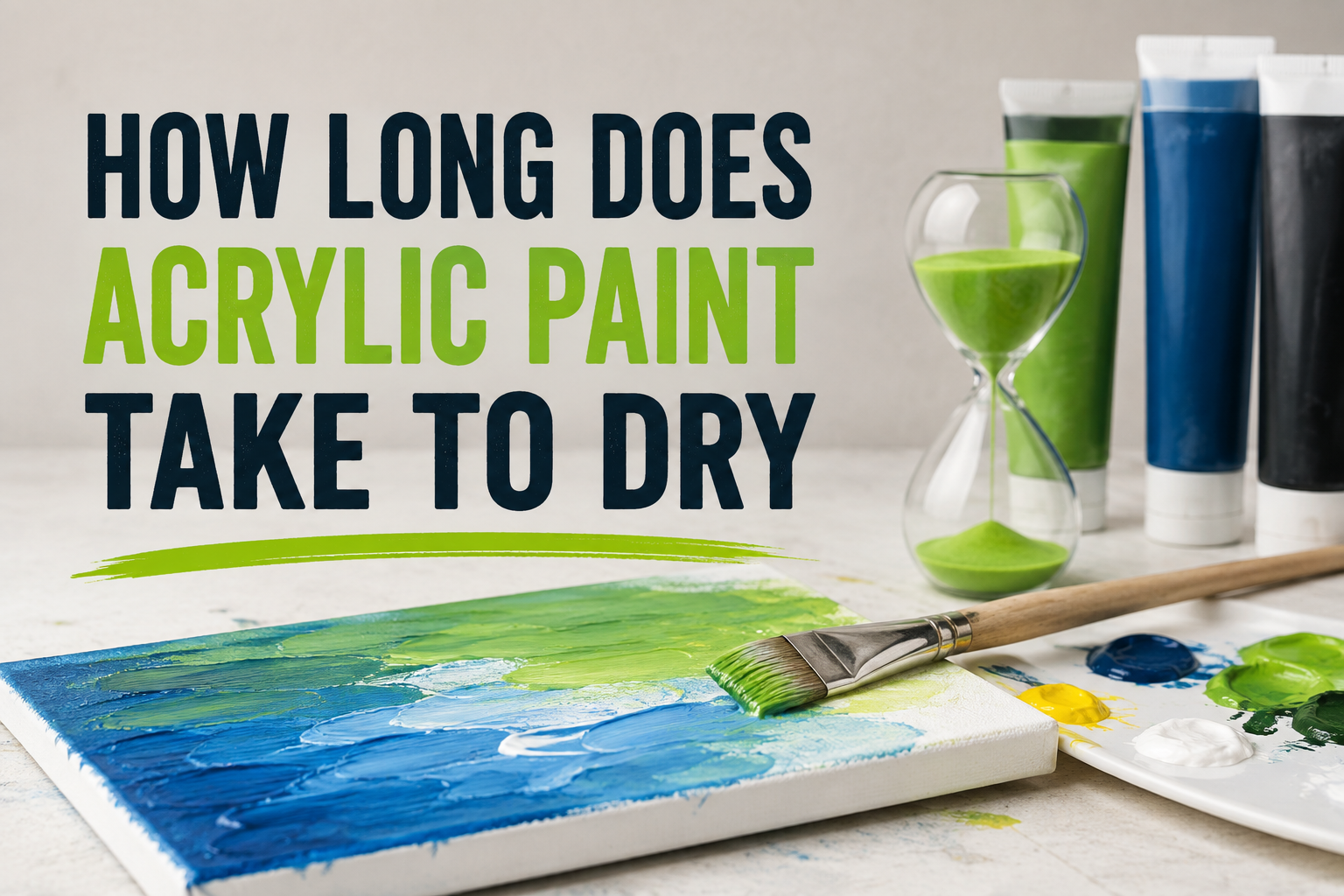

If you’ve ever picked up a brush and started painting with acrylics, you’ve probably paused at some point and wondered, “how long does acrylic paint take to dry?” It’s one of the most common questions beginners and even experienced artists ask, because getting the timing right can make or break your artwork. Paint too soon over a wet layer, and you might smudge your hard work. Wait too long, and you could be wasting valuable studio time.
- Understanding Acrylic Paint Drying Process
- Average Drying Times
- Factors That Affect Drying Time
- Drying Time by Application Type
- Drying Time by Surface
- How to Speed Up Acrylic Drying Time
- How to Slow Down Drying Time (For Blending)
- How to Tell If Acrylic Paint Is Fully Dry
- Common Mistakes That Affect Drying
- Frequently Asked Questions
- Conclusion
- Related Articles
The good news is that acrylic paint is known for being one of the fastest-drying paint types available, especially when compared to oil paints. But the exact drying time isn’t always a fixed number — it depends on several factors that we’ll walk through in detail below.
Understanding Acrylic Paint Drying Process
Before diving into exact timeframes, it helps to understand what’s actually happening when acrylic paint “dries.” Unlike some paints that dry purely through evaporation, acrylic paint goes through a two-part process: evaporation and polymerization.
When you apply acrylic paint to a surface, the water content in the paint begins to evaporate into the air. As the water leaves, the tiny acrylic polymer particles suspended in the paint start moving closer together. Eventually, these particles fuse together to form a continuous, flexible film. This fusing process is what gives dried acrylic paint its durable, plastic-like finish.
It’s important to understand the difference between “dry” and “cured.” A painting can feel dry to the touch within half an hour, but that doesn’t mean the paint film has fully hardened all the way through. Curing is a much slower, deeper process where the paint continues to harden internally, even though the surface already feels solid.
Average Drying Times
So, how long does acrylic paint take to dry in real, practical terms? Here’s a simple breakdown of the different drying stages you can expect.
| Drying Stage | Typical Time |
|---|---|
| Touch-dry (surface) | 20–30 minutes |
| Safe to apply another layer | About 1 hour |
| Fully cured (hardened throughout) | 24 hours minimum |
| Complete internal cure (thick layers) | Up to several weeks |
In most everyday painting situations, you’ll find that a thin layer of acrylic paint becomes touch-dry within 20 to 30 minutes. This means the surface no longer feels tacky or wet when lightly touched. If you’re planning to add another layer or detail work, waiting about an hour is generally a safe bet.
However, full curing is a different story. Even though your painting might look and feel completely dry after a day, the paint film underneath may still be settling and hardening for up to a month, particularly with thicker applications.
Factors That Affect Drying Time
Not every acrylic painting dries at the same speed, and that’s completely normal. Several variables influence how quickly or slowly your paint sets.
Paint thickness and number of layers play one of the biggest roles. A thin wash of color will dry far quicker than a thick, textured layer applied with a palette knife. The thicker the paint, the longer it takes for moisture trapped inside to escape.
Humidity levels in your environment also matter a great deal. Acrylic paint dries through evaporation, so if the surrounding air is already saturated with moisture, the water in your paint has nowhere to go, slowing the process considerably. Painting in a dry climate, on the other hand, speeds things up.
Temperature works similarly to humidity. Warmer rooms encourage faster evaporation, while cold spaces slow it down. Most artists find that room temperature, around 70°F (21°C), offers a nice balance between manageable working time and reasonable drying speed.
Air circulation and ventilation can noticeably change drying speed too. A gentle breeze or fan moving air across the painting helps whisk away moisture faster than stagnant air.
Brand and paint formula are often overlooked but genuinely important. Heavy body acrylics, which have a thicker, buttery consistency, naturally take longer to dry than fluid or soft body acrylics, which are thinner and more liquid.
The surface or material you’re painting on affects drying time as well. Porous surfaces like raw canvas or watercolor paper tend to absorb some moisture, which can speed up surface drying, while non-porous surfaces like glass or sealed wood may dry more slowly on the surface since there’s nowhere for moisture to be absorbed.
Drying Time by Application Type
The way you apply your paint changes how quickly it sets. Here’s a general comparison:
- Thin wash or glaze: Dries in as little as 10–15 minutes since it contains more water and less pigment volume.
- Standard brush strokes: Typically touch-dry within 20–30 minutes, which is considered the average benchmark most people refer to.
- Thick or impasto application: Can take several hours to feel dry on the surface and days to weeks to fully cure underneath.
- Airbrushed acrylics: Dry almost instantly on the surface, often within a few minutes, because the paint is applied in extremely thin, misted layers.
Drying Time by Surface
The material beneath your paint also influences how fast it sets. The table below offers a general guide, though actual results can vary based on paint brand and environmental conditions.
| Surface | Approximate Touch-Dry Time |
|---|---|
| Canvas | 20–30 minutes |
| Wood | 30–45 minutes |
| Paper | 10–20 minutes |
| Fabric/Textile | 30–60 minutes |
| Plastic or Metal | 45–60 minutes |
Canvas remains one of the most popular surfaces for acrylic painting largely because it offers a predictable, moderate drying time. Paper tends to dry the fastest due to its absorbent nature, while smoother, non-porous materials like plastic or metal often take a bit longer since the paint has nowhere to soak into.
How to Speed Up Acrylic Drying Time
If you’re working under a deadline or simply feel impatient, there are several practical ways to speed things along. Using a hairdryer on a low, cool setting and gently waving it over the painting can accelerate evaporation without disturbing the paint. Positioning a small fan nearby to keep air moving works in a similar way.
Applying thinner layers rather than thick globs of paint will naturally cut down drying time since there’s simply less moisture to evaporate. Increasing the room temperature slightly, or moving your painting to a warmer, drier spot in your home, can also help. Some brands also offer fast-drying acrylic mediums that you can mix directly into your paint to shorten the waiting period even further.
How to Slow Down Drying Time (For Blending)
On the flip side, sometimes fast drying is a problem rather than a benefit — especially if you’re trying to blend colors smoothly. Acrylic paint’s quick-drying nature can make seamless blending tricky compared to oils. To slow things down, many artists turn to slow-dry or “open” acrylic formulas, which are specifically designed to stay workable for longer.
Adding a retarder medium to your regular paint is another popular trick, as it extends the working time without changing the paint’s final properties. Working in a naturally cooler or more humid room can also buy you extra minutes. Many artists also swear by a wet palette, a simple tool that keeps paint moist on your palette for hours or even days, preventing it from drying out before you’re ready to use it.
How to Tell If Acrylic Paint Is Fully Dry
Figuring out whether your painting is truly ready for the next step doesn’t have to be guesswork. A simple visual check involves looking for any remaining sheen or wet-looking patches, since dried acrylic paint typically appears matte and even. You can also lightly touch an inconspicuous area of the painting; if it feels tacky, sticky, or leaves a mark, it needs more time. Color is another subtle clue, as acrylic paint often dries slightly darker or more matte than it appeared while wet.
One common mistake beginners make is varnishing or framing their artwork too early. Even if the surface feels dry, applying varnish before the painting has fully cured can trap moisture underneath, leading to cloudiness, cracking, or an uneven finish later on.
Common Mistakes That Affect Drying
A few habits tend to trip up painters when it comes to drying time. Painting in layers that are far too thick is one of the most frequent issues, since it dramatically extends both surface drying and internal curing time. Working in a poorly ventilated room can also slow things down unnecessarily. Perhaps the most damaging mistake is rushing the process altogether, whether that means stacking layers too soon, packing artwork for shipping too early, or varnishing before the recommended 24-hour to two-week curing window has passed.
Frequently Asked Questions
Does acrylic paint dry darker or lighter? Most acrylic paints dry slightly darker or more matte than their wet appearance, a phenomenon often called “acrylic color shift.” This happens because the milky-white polymer emulsion becomes clear as it dries, slightly altering how light reflects off the pigment.
Can you speed dry acrylic paint in an oven or microwave? This isn’t recommended. Ovens and microwaves can cause uneven heating, warping of certain surfaces, or even damage to the paint film. It’s safer to stick to gentle methods like fans or hairdryers on a cool setting.
How long before I can varnish an acrylic painting? Most experts recommend waiting at least 24 to 72 hours for thin applications, though waiting a full two weeks is safer for thicker paintings to ensure the paint has cured all the way through.
How long before I can frame or ship acrylic artwork? It’s best to wait at least one to two weeks before framing behind glass or shipping, since trapped moisture in a sealed environment can damage both the artwork and any packaging materials.
Conclusion
So, how long does acrylic paint take to dry? In short, most acrylic paint becomes touch-dry within 20 to 30 minutes, safe for a second layer within about an hour, and fully cured within 24 hours to a few weeks depending on thickness and conditions. Factors like humidity, temperature, paint thickness, and the surface you’re using all play a role in the final timeline.
Whether you’re trying to speed things up with a fan or slow them down with a retarder medium for smoother blending, understanding the drying process gives you far more control over your creative results. With a little patience and the right techniques, you’ll know exactly when your acrylic masterpiece is ready for its next step.
Related Articles
How to Remove Chalk Paint: 5 Easy Methods That Actually Work
Can You Use Latex Paint Over Oil-Based Primer? A Complete Guide