
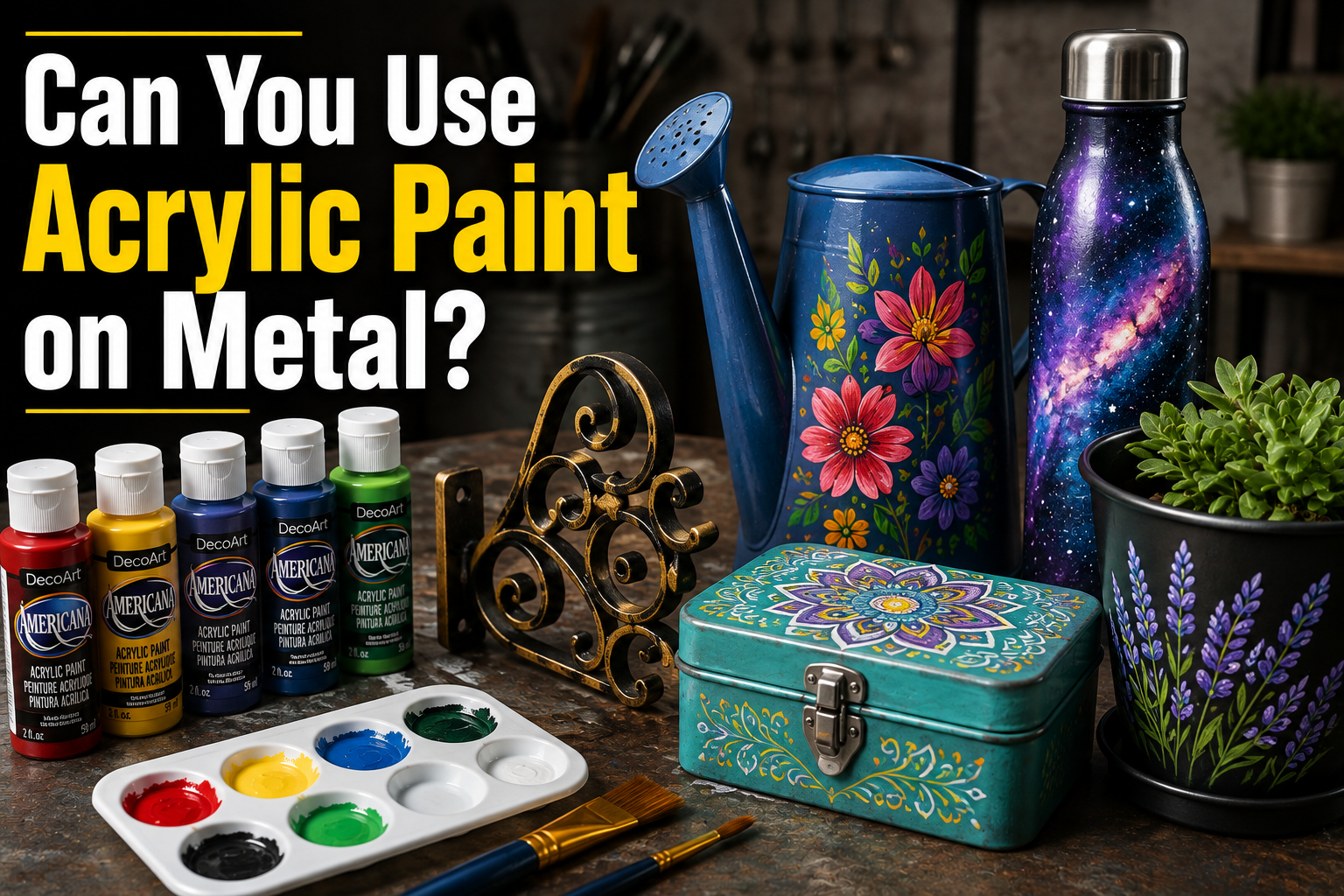

Yes, you can use acrylic paint on metal, and it holds up well on everything from steel and iron to aluminum and galvanized surfaces. The catch is that acrylic will not grip bare, slick metal on its own. Success comes down to two things the paint cannot do for you: cleaning and dulling the surface first, and priming it so the acrylic has something to bond to. Skip those and the paint peels; do them and a painted railing, planter, or piece of furniture lasts for years.
- Does acrylic paint actually stick to metal?
- Why bare metal fights the paint?
- What you’ll need?
- Choosing the right acrylic and primer
- How to paint metal with acrylic, step by step?
- Aluminum, galvanized, and stainless steel need extra care
- Do you need to seal acrylic paint on metal?
- Common mistakes that make paint peel
- Conclusion
- Frequently asked questions
- Does acrylic paint need primer on metal?
- Will acrylic paint wash off metal?
- Can you use craft acrylic paint on metal?
- How do you get acrylic paint to stick to aluminum?
- Do you have to seal acrylic paint on metal?
- Related Articles
This guide covers why prep matters so much on metal, which acrylics and primers to use, the full step-by-step method, how the rules shift for tricky metals like aluminum and galvanized steel, whether you need to seal it, and the mistakes that cause paint to flake off.
Does acrylic paint actually stick to metal?
It does, once the metal is prepared. Acrylic paint is pigment suspended in an acrylic polymer, and as the water evaporates that polymer cures into a tough, flexible plastic film. On a properly primed metal surface that film bonds tightly, resists weather and color fading, and will not simply wash off with soap and water after it cures.
Paint professionals recommend acrylic on metal precisely because it is versatile, low-odor, quick-drying, and easy for a beginner to apply by brush, roller, or spray. The problem is never the acrylic itself; it is the surface. Bare metal is smooth, non-porous, and often coated in a thin film of oil or oxidation.
Paint has nothing to sink into and nothing to grab. That is why the same paint that flakes off an untouched steel gate will last for years on the same gate cleaned, sanded, and primed. Prep is not an optional nicety on metal; it is the whole job.
Why bare metal fights the paint?
It helps to understand what you are up against, because it explains every prep step that follows. Metal presents three problems at once. It is non-porous, so unlike wood it cannot absorb paint and hold it mechanically; the film only sits on top.
It is smooth, so there is no texture for the paint to key into. And it is chemically active, meaning most metals carry a thin layer of oxidation, and many arrive with a factory film of oil that repels water-based paint outright.
Prep answers each of those in turn. Cleaning removes the oil and grime so the paint can make contact. Sanding adds the tooth the smooth surface lacks. Primer bridges the non-porous, chemically active metal to the acrylic above, and on the trickiest metals a self-etching primer goes a step further by biting into the surface chemically. Seen this way, the steps are not a ritual; each one neutralizes a specific reason bare metal rejects paint.
What you’ll need?
Gather your supplies before you start so nothing dries or stalls mid-project. For prep you want soap or a degreasing cleaner, rubbing alcohol or mineral spirits for stubborn oil, a wire brush for rust, and fine sandpaper or a sanding sponge in roughly 220 grit, plus lint-free cloths.
For coating you need a metal primer suited to your surface, your acrylic paint, and a way to apply both: a quality brush, a roller with the right nap, or spray cans for detailed or mesh-like shapes. Painter’s tape masks off anything you want to keep paint-free, and a clear acrylic sealer finishes outdoor or high-handling pieces.
One practical note on application method: spray gives the most even coverage on railings, chairs, and intricate metalwork where a brush would leave marks or pool in crevices, while a brush or roller suits flat panels and lets you work more slowly. Whatever you choose, plan for at least two coats of primer and two of paint, because thin, layered coats always outperform one heavy pass on metal.
Choosing the right acrylic and primer
Two choices shape the result: the paint and, even more important, the primer beneath it.
| Product | What to look for | Why it matters |
| Acrylic paint for metal | Acrylic labeled for metal or exterior use; craft acrylic only for indoor decor | Metal and exterior acrylics carry more binder and weather resistance. Plain craft acrylic works indoors but needs sealing and won’t survive outside. |
| Acrylic spray paint | Spray acrylic made for metal | Sprays give the most even coverage on railings, mesh, and detailed shapes where a brush drags or pools. |
| Metal primer | Rust-inhibitive primer for your metal type | The single most important product. It bonds to the metal and gives the acrylic its grip; it also blocks rust. |
| Self-etching primer | For slick, non-porous metals: aluminum, galvanized, stainless | Chemically bites into metals that ordinary primers slide off, so the whole system holds. |
If you take one thing from this section, make it the primer. On most metals a rust-inhibitive primer is essential, and on smooth non-oxidizing metals a self-etching primer is what stops the finish from peeling. The paint gets the attention, but the primer decides whether the job lasts.
On metal, the primer matters more than the paint. Clean, dry, and dull, then primed, is what turns acrylic from peel-prone to permanent.
How to paint metal with acrylic, step by step?
Work through these in order. The prep steps are not filler; they are where a lasting finish is won or lost.
- Clean the surface. Wash the metal with soap and water or a general cleaner to strip dirt, dust, and grease, then rinse. For stubborn oil, wipe it down with rubbing alcohol or mineral spirits. Paint will not bond over a greasy film.
- Remove rust and old flaking paint. Take off loose rust and peeling paint with a wire brush or sandpaper down to sound metal. Rust left behind keeps spreading under the new paint and pushes it off.
- Sand to dull the surface. Scuff the metal with fine sandpaper, around 220 grit, to give it a slight tooth. The goal painters repeat is simple: clean, dry, and dull is what acrylic grips best.
- Wipe away all dust. Remove every trace of sanding dust with a clean, slightly damp lint-free cloth and let the surface dry fully. Acrylic will not bond over grit.
- Prime the metal. Apply a rust-inhibitive metal primer, or a self-etching primer on aluminum, galvanized, or stainless. Two thin coats beat one thick one; let the first dry before the second, and respect the primer’s cure time.
- Apply thin coats of acrylic. Brush, roll, or spray at least two thin coats, letting each dry before the next. Thin coats level better and resist runs; thick coats sag and stay soft. Acrylic dries fast, but on metal it can take longer to cure fully, so be patient before handling.
- Let it cure, then seal if needed. Give the paint time to harden. For outdoor pieces or anything handled often, finish with a clear acrylic sealer or varnish unless your paint is already rated for exterior use.
Manufacturers and pros back this approach. Paint specialists quoted by Family Handyman stress that metal must be clean, dry, and dull before acrylic goes on, and Rust-Oleum’s self-etching primer is a common choice for the bare aluminum and slick metals a standard primer struggles to grip.
Aluminum, galvanized, and stainless steel need extra care
Not all metals behave the same under paint, and the smooth, corrosion-resistant ones are exactly where beginners get peeling. Aluminum, galvanized steel, and stainless steel do not rust the way plain steel does, but their slick, non-porous surfaces give ordinary primer little to hold. The fix is a self-etching primer, which chemically etches into the metal to create a bond a standard primer cannot.
A few metal-specific notes help. Galvanized steel has a zinc coating that reacts badly with some primers and causes blistering, so a primer made for aluminum and galvanized surfaces is worth seeking out.
Stainless steel resists rust and technically needs no rust primer, but it still needs etching or thorough scuffing so the paint can grip. And any bare metal you sand should be primed promptly, because a freshly exposed surface starts oxidizing right away, and paint bonds worse to a lightly rusted face.
Do you need to seal acrylic paint on metal?
It depends on where the piece lives. Acrylic made for exterior metal cures into its own weather-resistant film and generally needs no extra sealer. Standard or craft acrylic is a different story: outdoors, or on anything that gets handled, washed, or knocked, an unsealed craft-acrylic finish will wear through.
For those pieces, add a clear coat once the paint has fully cured. A clear acrylic varnish or sealer, in gloss, satin, or matte, forms a barrier against moisture, UV, and abrasion and noticeably extends the life of the finish. Outdoor metal, in particular, benefits from a sealer unless the paint itself is rated for the job. Indoor decor that never gets touched can often go without.
Common mistakes that make paint peel
- Skipping the primer. Acrylic straight on bare metal is the number one reason paint flakes off. On slick metals, skipping the self-etching primer does the same.
- Painting over grease or dust. Any oil, dust, or moisture left on the surface breaks the bond. Clean, then wipe with alcohol or mineral spirits, then let it dry.
- Leaving rust in place. Paint over rust and the rust keeps working underneath, lifting the finish. Take it back to sound metal first.
- Not dulling a glossy surface. Acrylic needs tooth. A quick scuff-sand on smooth or previously glossy metal makes the difference between grip and slide.
- Coats too thick, cured too fast. Heavy coats sag and stay soft, and handling metal before the acrylic has cured smears or peels it. Thin coats and patience win.
- No sealer outdoors. Unsealed craft acrylic outside will not last. Use exterior-rated paint or add a clear protective coat.
Conclusion
Acrylic paint works well on metal as long as you do the prep the paint depends on. Clean the surface, remove rust, scuff it dull, wipe off the dust, and prime it, using a self-etching primer on aluminum, galvanized, or stainless.
Then apply thin coats of acrylic, let them cure, and seal the piece if it lives outdoors or gets handled. Rush the prep and the paint peels; do it properly and acrylic gives metal a tough, colorful finish that holds up for years.
Frequently asked questions
Does acrylic paint need primer on metal?
Almost always, yes. Bare metal is too smooth and non-porous for acrylic to grip, so a rust-inhibitive primer is essential on most metals, and a self-etching primer on slick ones like aluminum and galvanized. Stainless resists rust but still needs etching or scuffing.
Will acrylic paint wash off metal?
Not once it has cured over proper prep. Fully cured acrylic on a cleaned, sanded, and primed surface forms a tough film that does not wash off with soap and water. It fails only if the metal was not prepped or the paint is worn out.
Can you use craft acrylic paint on metal?
Indoors, yes, on decor that stays dry and untouched, but seal it with a clear coat. For outdoor pieces or anything handled or washed, use an acrylic made for metal or exterior use, since craft acrylic will not survive those conditions unsealed.
How do you get acrylic paint to stick to aluminum?
Clean and lightly sand the aluminum, then apply a self-etching primer. Ordinary primer slides off aluminum’s slick, non-oxidizing surface, so the etching primer is what creates the bond. Then apply thin coats of acrylic over the primed surface.
Do you have to seal acrylic paint on metal?
Only sometimes. Acrylic rated for exterior metal cures into a weather-resistant film and needs no sealer. Standard or craft acrylic on outdoor or high-handling pieces should get a clear acrylic varnish or sealer once cured; indoor decor often does not.
Related Articles
Can You Use Acrylic Paint on Wood?
Best Paint for Kitchen Cabinets: How to Choose