
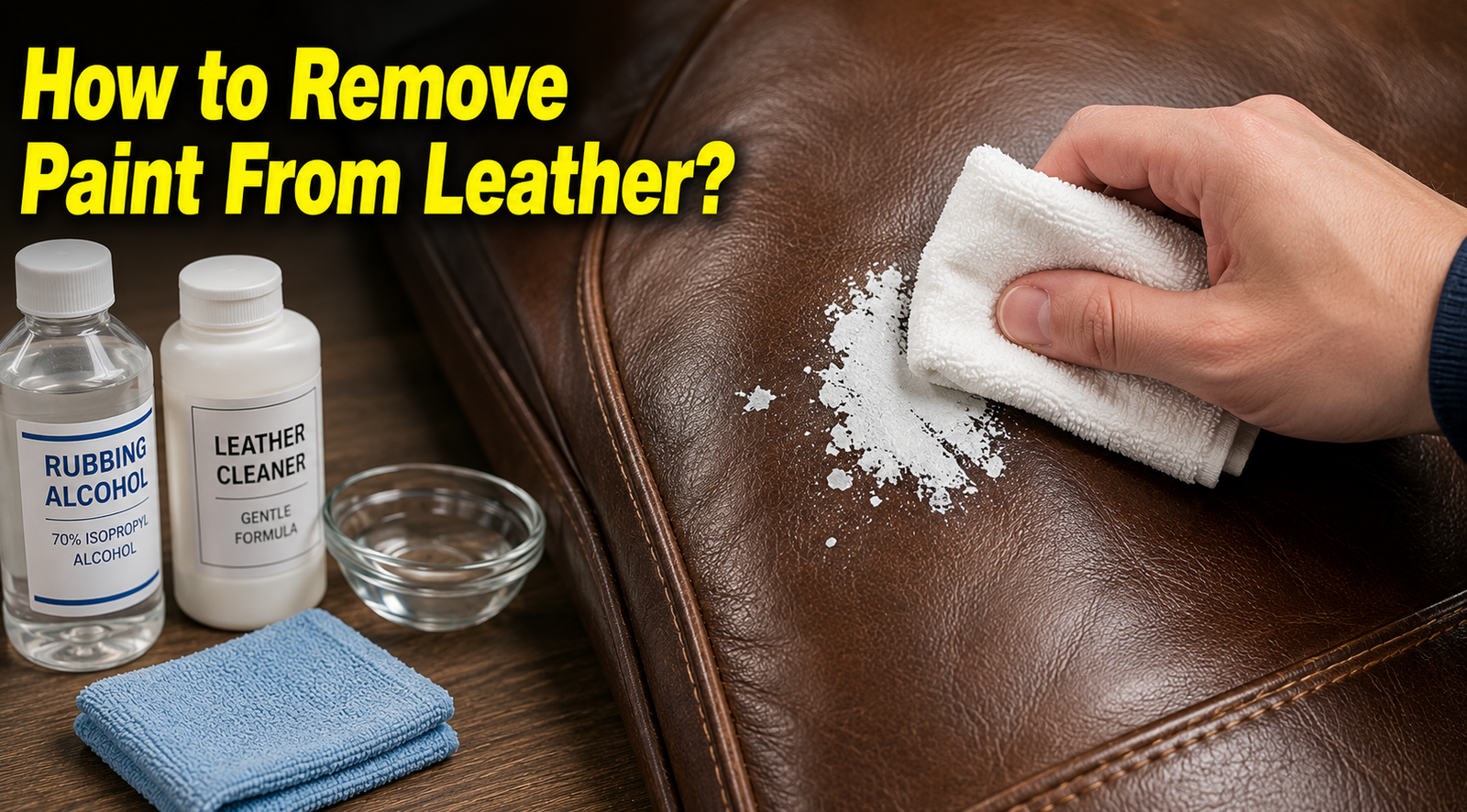

To get paint off leather, soften it and lift it gently, starting with the mildest method. Fresh paint blots away with mild soapy water. For dried acrylic or latex, rubbing alcohol on a cotton swab breaks the bond so you can lift the paint off. Oil-based paint responds to a dab of baby oil. Blot, never scrub, test a hidden spot first, and always condition the leather when you’re done.
- Check two things before you start: your leather and your paint
- How to remove fresh, wet paint?
- How to remove dried acrylic or latex paint?
- How to remove dried oil-based paint?
- Always condition the leather afterward
- What not to use on leather?
- Special cases: couches, car seats, shoes, and suede
- When to call a professional?
- Conclusion
- Frequently asked questions
- Does rubbing alcohol damage leather?
- Can I use nail polish remover to get paint off leather?
- How do I get dried paint off a leather couch?
- Will paint come out of suede or nubuck?
- Do I really need to condition leather after removing paint?
- Related Articles
A drop of paint on a leather jacket, couch, or car seat feels like a disaster, but most stains come out if you act carefully and match the method to the paint. The most common way people ruin leather isn’t the spill, it’s grabbing the wrong product. Here’s what actually works, and what to avoid.
Check two things before you start: your leather and your paint
Sixty seconds of checking saves you from permanent damage. Two things decide your method: the kind of leather and the kind of paint.
Your leather
Most leather couches, jackets, car seats, and shoes are finished (or pigmented) leather, which has a sealed protective coat. This type is the most forgiving and can handle gentle solvents.
Aniline, suede, and nubuck are different: they’re soft, unsealed, and absorbent, so liquids soak in and stain, and the methods below can leave marks.
If your leather has a suede-like nap or darkens the instant water touches it, treat it as delicate and skip to the suede note near the end, or go straight to a professional.
Your paint
Acrylic and latex are water-based and the easiest to lift. Oil-based paint dries slowly and seeps in, so it needs a different approach. Not sure which you have? Dab a little rubbing alcohol on a hidden painted spot: if color lifts, it’s water-based. Fresh paint of any kind is far easier than dried, so speed matters more than anything else.
| Quick reference: match the paint, start with the mildest remover, and always finish by conditioning the leather. | |||
| Paint type | Best remover | Good to know | |
| Acrylic (dried) | Rubbing alcohol on a cotton swab | Softens the film so it lifts; the most common craft paint | |
| Water-based / latex | Mild soapy water, then alcohol | Easiest to remove, especially before it fully cures | |
| Oil-based | A dab of baby oil, then mild soap | Slow-drying, so act fast; may need a leather-safe solvent | |
| Enamel / spray | Rubbing alcohol, repeated passes | Hard-drying; patience beats pressure | |
How to remove fresh, wet paint?
Caught it while it’s still wet? This is the easy case, and it’s mostly about not making it worse. Move fast and resist the urge to wipe.
- Blot up the excess with a dry paper towel or cloth. Dab straight down; wiping smears the paint wider and pushes it into the grain.
- Mix a few drops of mild soap into warm water and dampen a soft cloth.
- Gently dab the spot, working from the outside of the stain inward.
- Wipe away residue with a clean, barely damp cloth, then pat dry.
For water-based paint, that’s usually the whole job. If it was oil-based and a shadow remains, let it dry and move to the oil-based method below. Either way, plan to condition the spot afterward.
How to remove dried acrylic or latex paint?
Dried water-based paint is still very doable, it just needs patience. The idea is to rehydrate the paint film so it releases from the hide, not to force it off. Climb this short ladder and stop as soon as the paint lifts.
Step 1: Lift what you can, gently
Use your fingernail, a plastic scraper, or the edge of a credit card to coax up any raised, flaking paint. Keep it light and go slow. Never use a knife or anything sharp, which can nick or tear the surface.
Step 2: Rubbing alcohol on a cotton swab
Dampen a cotton swab or ball with rubbing alcohol (isopropyl alcohol) and dab the paint, then rub in small circles with a light touch. The alcohol softens the acrylic binder so the pigment lets go. Work a small area at a time and switch to a clean swab as paint transfers onto it. Use it sparingly; the goal is to dissolve the paint, not soak the leather.
Step 3: Wipe and reassess
As the paint breaks up, wipe it away with a clean cloth. Repeat the dab-and-lift a few times for stubborn spots. Deeply set paint that has cured for a long time may not come out completely at home, and that’s the point to stop rather than scrub harder.
How to remove dried oil-based paint?
Oil-based paint is the tougher customer because it seeps into the fibers as it cures. The gentle first move is an oil, which helps break it down without the harshness of a strong solvent.
- Scrape up any raised paint gently with a plastic card or your fingernail.
- Dab a small amount of baby oil (or another light oil) onto the paint with a cotton ball and let it sit a minute or two to soften it.
- Wipe gently in small circles, lifting the softened paint as you go.
- Clean the area with a cloth dampened in mild soapy water to remove the oil residue, then pat dry.
For splatter that won’t budge, a leather-safe solvent such as mineral spirits, used lightly on a cloth and tested on a hidden spot first, is the next step. Work in a ventilated space, keep your touch light, and stop if you see any color transfer from the leather itself onto your cloth. Oil-based stains are the ones most likely to need a professional, so don’t force it.
Always condition the leather afterward
This step isn’t optional, and most quick guides leave it out. Every method above, alcohol, oil, soap, and especially solvents, pulls natural oils out of the hide. Skip conditioning and the cleaned spot can dry out, stiffen, or crack over the following weeks.
Once the paint is gone and the area is dry, work a small amount of leather conditioner into the spot and the area around it with a soft cloth, then buff gently. It restores moisture, evens out the look so the cleaned patch doesn’t stand out, and keeps the leather supple. Think of it as the difference between removing the stain and actually finishing the repair.
What not to use on leather?
Avoiding these is as important as the steps above. Several popular home fixes are exactly what damage leather, so steer clear of them:
- Acetone and nail polish remover. These dissolve the leather’s protective topcoat and factory color along with the paint, leaving a permanent pale or sticky patch. If you must use a polish remover, choose an acetone-free one and test first.
- Vinegar. Often recommended, but its acidity can dry out and damage many leather finishes over time. Mild soap and alcohol do the job with less risk.
- Sandpaper or abrasive pads. They grind away the grain and finish. There’s no gentle way to sand finished leather.
- Heavy scrubbing. Pressure pushes paint deeper and can scuff the surface. Light, patient dabbing wins every time.
- Soaking it in water. Too much moisture stains and stiffens leather. Keep every cloth damp, not wet, and dry the area after.
For a deeper rundown of what works for each paint and leather type, this leather care guide from Vintage Leather Sydney is a solid reference from full-grain leather specialists, and it flags the same damaging picks to avoid.
Special cases: couches, car seats, shoes, and suede
The core method is the same everywhere, but a few items have their own quirks worth knowing.
- Leather couches. Usually finished leather, so the alcohol and soap methods apply. Work in small sections and condition the whole cushion afterward so the cleaned area blends in.
- Car seats. Also typically finished leather. Check whether your seats are genuine leather or vinyl, since vinyl handles solvents differently, and keep liquids off the stitching and seams.
- Shoes and boots. A cloth with a little rubbing alcohol lifts most paint. Condition after so the flex points don’t crack, and buff to match the surrounding shine.
- Suede and nubuck. This is the exception to everything above. Don’t use liquids or oils. For dried paint, try gently lifting it and using a suede brush or suede eraser, and if that fails, take it to a professional. Wet methods will leave a worse mark than the paint.
When to call a professional?
Some stains are worth handing off. If the paint has cured deep into the grain, if the item is suede, aniline, or high-value, or if gentle methods only lift part of the stain, a leather repair specialist has pH-balanced products and color-matching tools that home remedies can’t match.
The same goes for large oil-based spills. Knowing when to stop is part of protecting the piece: pushing harder with the wrong product usually turns a small mark into permanent damage.
Conclusion
Getting paint off leather comes down to a simple approach: check your leather and paint, soften the stain, and lift it gently with the mildest method that works. Soapy water handles fresh paint, rubbing alcohol clears dried acrylic and latex, and baby oil tackles oil-based.
Skip acetone, vinegar, and sandpaper, blot instead of scrub, and always condition afterward. Move quickly, stay gentle, and most spills lift with the leather still soft and intact.
Frequently asked questions
Does rubbing alcohol damage leather?
Used sparingly, it’s safe on finished leather and is the best remover for dried acrylic. Dab lightly, don’t soak the surface, and condition the spot afterward, since alcohol pulls oils from the hide. Always test a hidden area first.
Can I use nail polish remover to get paint off leather?
Better to avoid it. Acetone strips leather’s finish and color along with the paint, leaving a permanent mark. If you have no other option, use an acetone-free remover and test a hidden spot, but rubbing alcohol is the safer choice.
How do I get dried paint off a leather couch?
Gently lift any raised paint with a plastic card, then dab with rubbing alcohol on a cotton swab and rub in small circles. Wipe clean, repeat if needed, and condition the cushion so the cleaned area blends in.
Will paint come out of suede or nubuck?
Sometimes, but not with the liquid methods used on finished leather. Try lifting dried paint and using a suede brush or eraser. Water, alcohol, and oils leave stains on suede, so stubborn paint is a job for a professional.
Do I really need to condition leather after removing paint?
Yes. Alcohol, oils, and solvents dry out the hide, and an unconditioned spot can crack or stiffen later. A little leather conditioner restores moisture and evens the look, finishing the repair properly.
Related Articles
How to Get Dried Paint Off Brushes and Save Them?
Does Rubbing Alcohol Remove Paint? What It Works On
How to Make Skin Color With Paint (Easy Mixing Guide)