

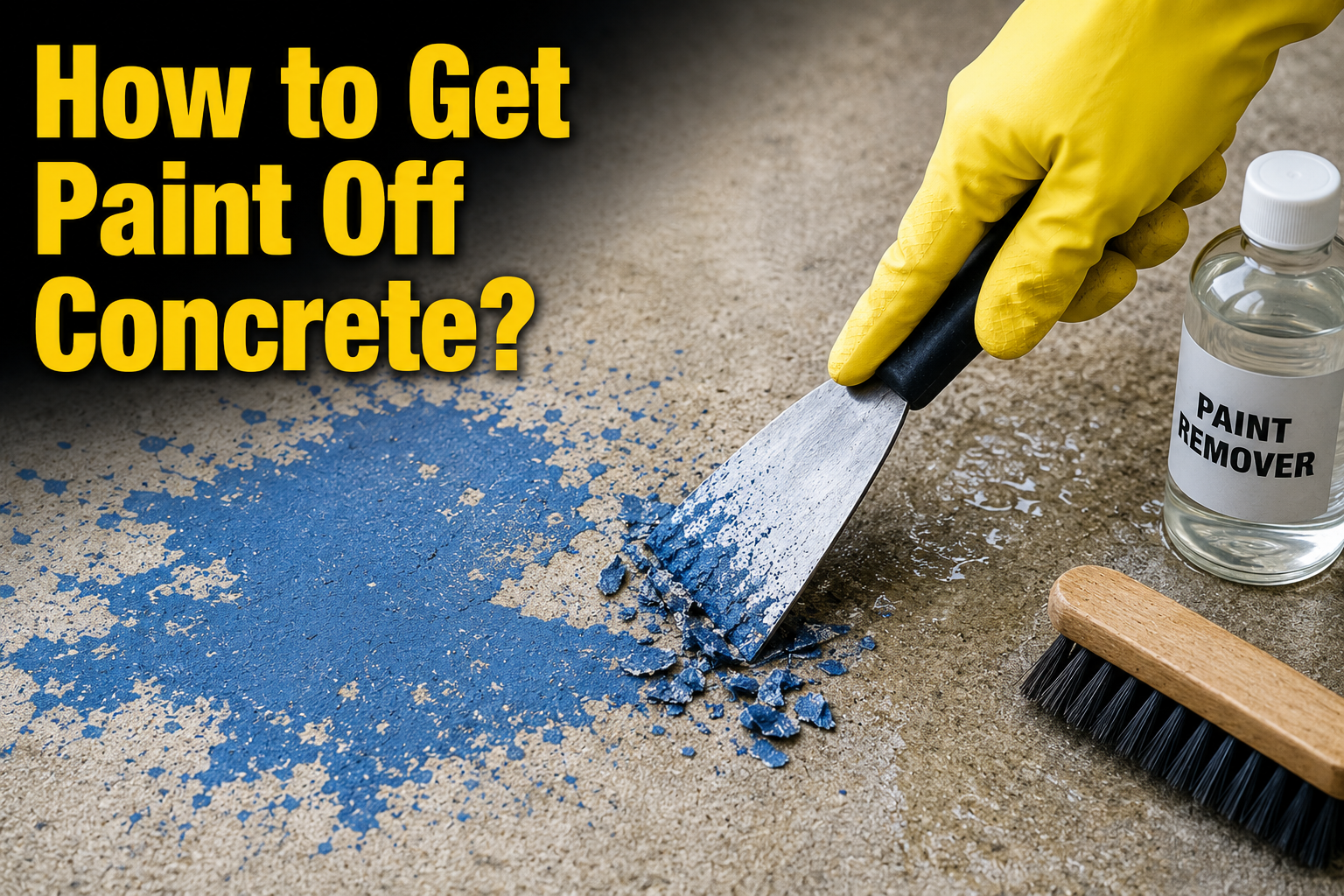

To get paint off concrete, the right fix depends on how old the spill is. If the paint is still wet, scrape up the excess and wash the spot with warm, soapy water before it soaks in. If it has dried, soften it with a paint stripper made for concrete, or scrub it off with hot soapy water and a stiff wire brush, then scrape, rinse, and repeat until it lifts. That is the short version.
Which method is right comes down to three things: whether the paint is wet or dry, whether the surface is indoors or outside, and how big the area is. A small drip on a garage floor needs almost nothing. A whole painted patio may need a stripper or a pressure washer. This guide walks through each situation, and how to stay safe with the chemicals and dust involved.
Before you start: size up the job
Two minutes of checking saves hours of scrubbing. Answer three quick questions before you pick a method.
- Is the paint wet or dry? Wet paint wipes away with soap and water. Dried paint needs a stripper, heat, or a good scrub.
- What kind of paint is it? Water-based latex or acrylic paint comes off far more easily than oil-based or spray paint, which usually need a solvent or a stripper.
- How big is the area, and is it indoors or out? A small spot calls for a hand method. A large outdoor slab is a job for a pressure washer or a grinder.
Then get the surface ready. Sweep the spot clean and let it dry, scrape off any loose or flaking paint, and test your chosen cleaner on a small hidden patch first, because some strippers can discolor or pit concrete. Wear gloves and eye protection, and open doors and windows if you are working inside.
One check comes before all of that. If the concrete was painted before 1978, the paint may contain lead, and sanding or dry-scraping it releases dust that is unsafe to breathe. Test for lead first, and if it is present, use a chemical or heat method instead of sanding, or hire a certified pro. The EPA’s lead information explains how to test and work safely in older homes.
As a quick guide: a small fresh spill needs only a scraper and soapy water, a dried spot on a floor calls for a stripper or a hot-water scrub, a large outdoor slab suits a pressure washer, and a thick old coating that resists everything is a job for a grinder or a pro. Start gentle and work up only as needed.
How to remove fresh, wet paint?
Fresh paint is the easy case, so move fast before it dries. Start by lifting the excess: drag a plastic scraper or an old card across the spill to pick up as much as you can, then blot the rest with paper towels. Blot, do not wipe, or you will smear the paint into a wider stain.
Then clean the spot by paint type. For water-based latex or acrylic paint, warm water with a little dish soap and a scrub brush is usually enough; for a stubborn acrylic smudge, a little acetone on a rag lifts it.
For oil-based paint, dampen a rag with paint thinner and wipe the area, then wash it with soap and water. Rinse well and let it dry. Move quickly either way, because bare concrete is porous and drinks paint in like a sponge, which makes it far harder to remove once it sets.
How to remove dried paint with a stripper?
Once paint has dried and gripped the concrete, a paint stripper is the most reliable fix. Reach for a gel stripper on a wall or any vertical surface, since it clings instead of running off, and a liquid or gel on a flat floor. Here is the basic process.
- Clear and dry the spot. Sweep away dirt and scrape off any flaking paint, so the stripper touches bare paint.
- Brush on the stripper. Spread an even layer over the paint with an old brush, broom, or squeegee, following the amount and method on the label.
- Let it work. Leave it for the full dwell time on the label, usually several minutes to an hour, so it can break the paint down. Do not let it dry out.
- Scrape it off. Once the paint bubbles or softens, lift it with a putty knife or a stiff wire brush, working along the surface rather than gouging into it.
- Reapply if needed. Thick or old paint often takes a second round. Spread fresh stripper on whatever is left and wait again.
- Rinse and clean. Hose or mop up the residue, then go over the spot with a degreaser so no stripper is left behind.
Choose a water-based, soy, or citrus stripper labeled safe for concrete. Avoid the old, fast-acting strippers built around methylene chloride, which work quickly but give off fumes that can cause dizziness, blackouts, and even death.
That is why the EPA banned methylene chloride paint strippers for home use. The safer substitutes take a little longer and are well worth it, and you should still test any stripper on a hidden patch first.
The no-chemical way: hot water and a wire brush
If you would rather skip strong chemicals, a good scrub handles many spills. Pour hot water with a squirt of dish soap over the spot, let it sit for a few minutes to soften the paint, then work it loose with a stiff wire brush. Wipe up the loosened paint and water when the spot comes clean.
For old, stubborn stains, a wire-cup brush chucked into a drill does the same job much faster. Hold light pressure and move it steadily over the paint. On a large surface like a wall or foundation, an angle grinder with a wire cup covers the big areas, and the handheld brush cleans up corners and thick spots. Warm vinegar poured on and left for about fifteen minutes is a gentler option for light stains, though it works more slowly than a commercial stripper.
Heat helps too. A heat gun on a medium-high setting, held a few inches from the surface and moved slowly, softens paint until it bubbles, so you can lift it with a putty knife while it is still gooey. Even simpler, pour very hot water over the spot and cover it with a hot, wet towel for a few minutes to loosen the paint before you scrub. Both work well paired with a pressure wash on outdoor concrete.
Pressure washing a large outdoor area
For a driveway, patio, or sidewalk covered in paint, a pressure washer is often the quickest route, and it is for outdoor concrete only. Use a machine rated at around 3,000 psi and at least 4 gallons per minute for enough force to strip paint.
Wear eye and ear protection, and start a little farther back to see how the concrete reacts before moving closer. Keep the nozzle moving, and hold it at a slight angle a steady distance from the surface, so you clean the paint without gouging or pitting the concrete.
A surface-cleaner attachment gives a more even result on big flat areas. Softening the paint first with hot water helps it release, and you can spot-treat any bits left behind with a stripper. Rinse peeled paint into a spot where you can collect it, rather than letting it run into a storm drain.
When paint won’t come off: grinding, blasting, and resurfacing?
Some coatings are too tough for the methods above, and then it comes down to taking off the top of the concrete itself. A concrete grinder fitted with a vacuum port shaves away a thin layer along with the paint while catching most of the dust.
Sandblasting, or the newer dustless blasting that mixes water with the grit, can clear large or heavily painted areas, but it throws off fine silica dust that is harmful to breathe, so wear a respirator and full cover or hire a contractor with the right gear.
Most hardware stores rent grinders and blasters by the day, but these tools take some skill and can scar the concrete, so hiring a pro is often the safer call. If the paint is set in and nothing lifts it, the last option is to resurface or coat the concrete, laying a fresh top over the old surface.
Keep it from happening again
The easiest paint to remove is the paint that never reaches the concrete. Before your next project, put down drop cloths or masking paper to catch drips. For a floor you use a lot, like a garage or basement, a concrete sealer or a floor coating pays off: it fills the pores so spills sit on top instead of soaking in, and the next drop wipes or scrapes away with almost no effort.
Stay safe and clean up the right way
The tools and chemicals here all carry some risk, so treat them with respect. Work in fresh air, and wear gloves, goggles, and a respirator when you are sanding, grinding, or using solvents and strippers. Follow the safety steps on every product label.
Never pour paint, stripper, or paint-filled rinse water down a storm drain or sink. It pollutes local waterways and can clog your pipes. Let the solids settle out, then take the leftover chemical waste to a household hazardous waste drop-off, and check your local rules, since some areas limit certain products.
Conclusion
Getting paint off concrete is mostly about matching the method to the job. Wet paint scrapes up and washes away with warm, soapy water. Dried paint gives way to a concrete-safe stripper or a hot-water scrub with a wire brush, and big outdoor areas come clean with a pressure washer.
Test any chemical on a hidden spot, check for lead on anything painted before 1978, and get rid of the waste safely. Start with the gentlest method that fits, and step up only if you need to.
Frequently asked questions
Does vinegar really remove paint from concrete?
Warm vinegar can loosen light or small paint stains if you pour it on, wait about fifteen minutes, and scrub with a wire brush. It works more slowly and less completely than a commercial stripper, so it suits minor spots more than large or thick paint.
How do you get dried paint off concrete without chemicals?
Pour hot water with a little dish soap on the spot, let it soften, then scrub with a stiff wire brush, or a wire-cup brush on a drill for old stains. For large areas, an angle grinder with a wire cup speeds it up.
Will a pressure washer remove paint from concrete?
Yes, on outdoor concrete. Use around 3,000 psi and at least 4 gallons per minute, keep the nozzle moving at a slight angle, and soften the paint with hot water first. Take care not to gouge or pit the surface.
What removes oil-based paint from concrete?
Wipe fresh oil-based paint with a rag dampened in paint thinner, then wash with soap and water. For dried oil-based paint, use a concrete-safe paint stripper, following the label and testing a hidden spot first.
Can old paint on concrete contain lead?
Yes. Concrete painted before 1978 may have lead-based paint, and sanding or dry-scraping it releases harmful dust. Test for lead first, use chemical or heat methods rather than sanding, or hire a certified professional.
Related Articles
How to Make Skin Color With Paint (Easy Mixing Guide)
How to Clean Oil Paint Brushes (Solvent & Oil-Free)
How to Remove Gold Leaf From Paper and Paintings?
How to Get Latex Paint Out of Clothes?