

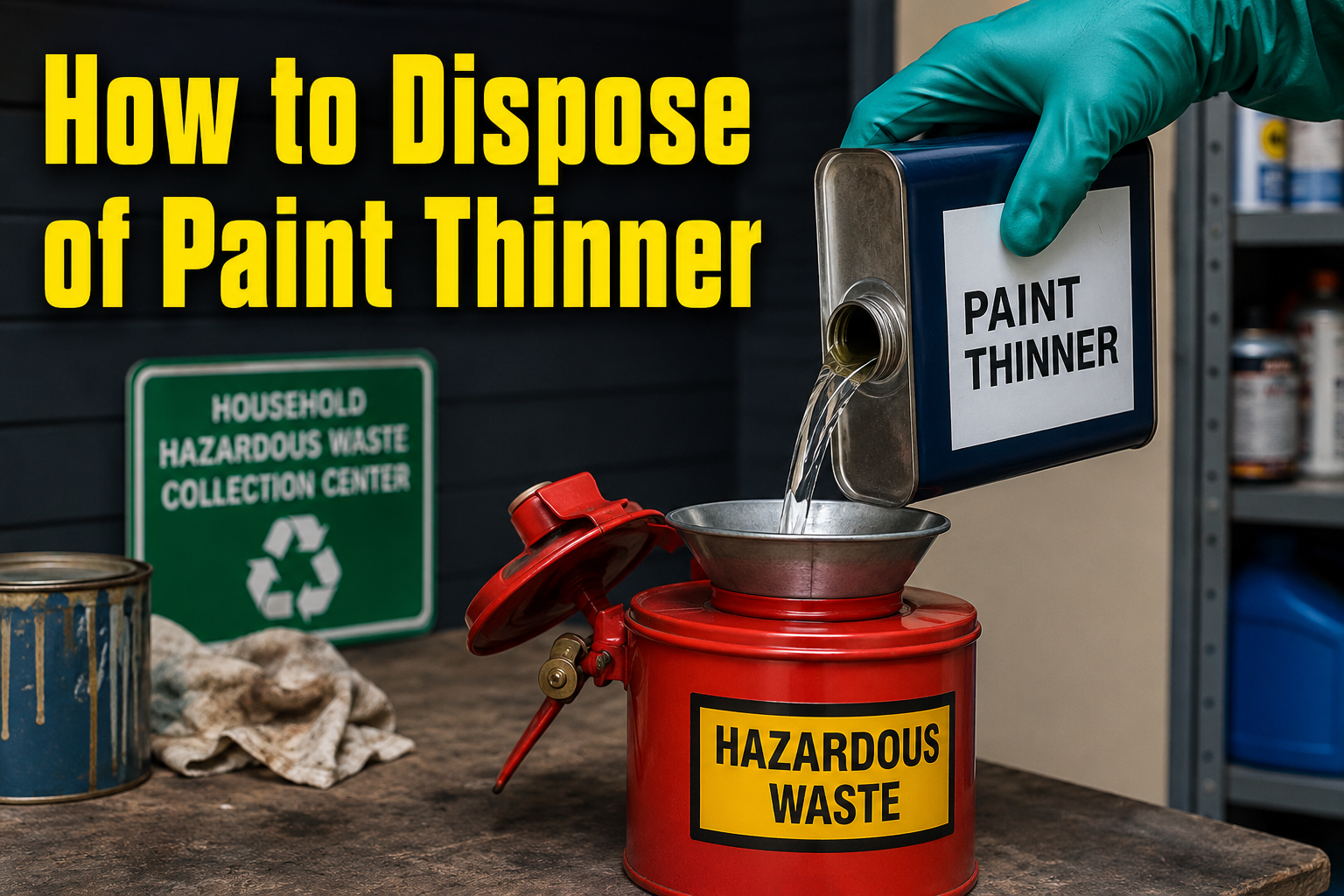

Do not pour paint thinner down a drain, a toilet, a storm sewer, or onto the ground. It is a flammable, toxic material classed as household hazardous waste, and dumping it pollutes water and soil and is against the rules in many places.
The best thing to do is reuse it, by letting the paint settle out and pouring off the clear solvent. When you truly cannot reuse it, take the leftover liquid, and the paint sludge where your area requires it, to a household hazardous waste drop-off or collection event.
Rules vary from place to place, so always check with your local waste authority. This guide covers how to reuse thinner, what to do with the sludge, how to find and use a hazardous waste site, and how to store and carry it safely along the way.
Why you can’t just pour it out or bin it?
Paint thinner, whether it is mineral spirits, turpentine, acetone, or a branded brush cleaner, is a solvent that catches fire easily and gives off harmful fumes. That is why it counts as household hazardous waste, the same category as motor oil, pesticides, and oil-based paint.
Poured down a sink or toilet, it can damage your pipes and septic system and pass straight through into rivers, lakes, and groundwater. Poured on the ground or into a storm drain, it goes almost directly into local waterways and harms wildlife.
The trash is not a safe answer either. Liquid solvent in a bin is a fire risk, and while federal rules in the United States technically allow household hazardous waste in ordinary trash, many states and towns do not, so binning it can break your local law.
Regulators generally advise keeping these products out of the drain, off the ground, and away from storm sewers, and using a hazardous waste collection program instead. The fumes matter too, since breathing solvent vapor in a closed room is a health hazard in its own right. Every common thinner carries these risks, so when in doubt, treat paint thinner as hazardous and handle it accordingly.
The one rule to remember: paint thinner never goes down a drain, a toilet, a storm sewer, or onto the ground, and the liquid does not belong in the trash. It is hazardous waste, and dumping it pollutes water and can break local law.
First, what counts as paint thinner?
It helps to know what is in the can, because several products go by the name thinner. The most common is mineral spirits, also sold as white spirit. Turpentine, acetone, lacquer thinner, denatured alcohol, and branded brush cleaners all do a similar job and all count as thinners.
They differ in strength and smell, but they share the traits that matter here: they are flammable and they give off fumes, which makes every one of them household hazardous waste.
Even so-called low-odor or water-washable versions still need proper disposal. The good news is that the plan is the same for all of them, reuse first, then hazardous waste.
Best option: reuse it first
Most used thinner is not actually worn out. It is still mostly good solvent with paint particles floating in it, so the greenest and cheapest choice is to let those particles drop out and use the solvent again. Here is how.
- Seal and settle. Pour the used thinner into a clean glass jar or its original container, seal it tightly, label it, and set it somewhere safe, out of reach of children and pets and away from any heat or flame. Let it stand undisturbed so the paint solids sink to the bottom. A small jar may clear overnight, while a large amount can take days, weeks, or even months.
- Pour off the clear liquid. Once the solvent above the sludge looks clear, carefully pour it into another clean, labeled jar, stopping before the sludge at the bottom follows. A coffee filter or paper filter helps catch any last particles.
- Reuse it. Seal and store the clear thinner and use it again for cleaning brushes or thinning oil-based paint. Mineral spirits, turpentine, and similar solvents can be recycled this way many times over.
Keeping one settling jar going in the workshop means you rarely need to buy or throw away thinner at all.
One quick check saves effort: if the poured-off solvent turns clear or only lightly tinted, it is fine to reuse. If it stays cloudy and full of fine paint no matter how long it sits, or it smells sour or off, treat it as waste and send it to hazardous waste instead. It also helps to keep separate jars for very different colors, so you do not muddy a light color later with settled dark pigment.
Dealing with the leftover sludge
The paint sludge left at the bottom is still hazardous, so do not tip it down the drain. Check your local rules first, because they differ.
Where your area allows it, you can mix small amounts of that sludge, or a small amount of leftover non-halogenated solvent, into an absorbent such as plain clay cat litter with no additives, sawdust, or vermiculite, and let it dry outdoors, in the open air, well away from any flame, spark, or heat, and out of reach of children and pets.
Once it is fully dry and hard, wrap it in a plastic bag and put it in the household trash, spreading larger amounts across several trash days. If your local rules do not allow this, or you are unsure, take the sludge to a household hazardous waste site along with any liquid.
If you can’t reuse it: take it to household hazardous waste
When reuse is not an option, a household hazardous waste program is the right place for leftover thinner. To find one, call your city or county solid waste or sanitation department, or check its website, and ask about a permanent drop-off site or a scheduled collection day. Many communities hold collection events in spring and fall, and some run year-round facilities.
The U.S. Environmental Protection Agency’s household hazardous waste page explains how these programs work and how to find management options in your area, and it is a good starting point.
Before you go, note a few practical points: sites usually set a quantity limit per visit, they will not accept leaking, unlabeled, or empty containers, and they may not take waste from a business, which must use a licensed hazardous waste contractor instead. Bring the thinner in a sealed, clearly labeled container that is not leaking.
A couple of extra tips can save a trip. If your town has no site or collection day, some hardware stores, paint retailers, or auto shops accept certain solvents, so it is worth a few calls. Many one-day collection events ask you to register in advance, so check before you load the car.
And acetone, though it evaporates and mixes with water more readily than mineral spirits, is still flammable and still belongs at a hazardous waste site rather than down the drain.
Store and transport it safely
Whether you are saving thinner to reuse or holding it for collection day, store and move it with care.
- Keep it in its original container or a clean, clearly labeled, airtight one. Never store solvents in a food or drink container.
- Never mix paint thinner with other chemicals or waste, since incompatible products can react, ignite, or leak.
- Keep it away from heat, sparks, and open flame, and out of the reach of children and pets.
- Store it upright where it cannot tip or be knocked over, ideally in a garage or shed rather than living space.
- To transport it, secure the container upright so it will not spill, and keep the vehicle ventilated. If a container is rusting or corroding, do not move it yourself, and call your local hazardous waste official or fire department.
- Leave a little headspace rather than filling to the brim, keep the lid sealed to limit fumes and evaporation, and write the contents and date on the label so you know what is inside later.
Special cases: businesses, large amounts, and spills
A few situations need a different approach. Waste from a business, a workshop, or a charity does not qualify as household waste and must go to a licensed hazardous waste contractor, not a household drop-off.
Large amounts take longer to settle before you can pour off clean solvent, and hazardous waste sites cap how much they take per visit, often a few gallons, so you may need more than one trip or a special large-volume pickup.
And if you spill thinner, do not hose it into a drain: soak it up with an absorbent like cat litter, let the absorbent dry outdoors away from any flame, and dispose of it as hazardous waste or per your local rules.
Rags, burning, and empty containers
A few last hazards catch people out. Rags and paper towels soaked in thinner or oil-based paint can heat up and catch fire on their own as they dry, so never leave them balled up.
Lay them flat outdoors to dry, or seal them in a metal container with a lid, and dispose of them following local guidance. Never try to burn paint thinner or pour it into a fire.
And once a container is completely empty and dry, handle it with care, since some residue remains; recycle empty metal cans where your local rules allow, or otherwise put the dried, empty container in the trash.
Use less, throw away less
The easiest thinner to dispose of is the thinner you never waste. Buy only as much as a job needs, reuse what you have by settling and pouring off the clear solvent, and switch to water-based paints and cleaners where they will do the job, since those rinse out with soap and water and avoid the hazardous-waste problem altogether.
And if you have thinner that is still good but you will not use, do not throw it out at all, offer it to a neighbor, a school art department, or a local community group, so it gets used rather than becoming waste.
Conclusion
Getting rid of paint thinner safely comes down to a simple order. Never pour it down a drain, onto the ground, or into a storm sewer, and do not toss the liquid in the trash.
Reuse it first by letting the paint settle and pouring off the clear solvent, and when you cannot, take the leftover liquid, and the sludge if your area requires it, to a household hazardous waste drop-off.
Store and carry it in a sealed, labeled container, and check your local rules, which always have the final say.
Frequently asked questions
Can I pour paint thinner down the drain?
No. Paint thinner is hazardous, and pouring it down a drain or toilet can damage your pipes and septic system and pollute rivers, lakes, and groundwater. Reuse it, or take it to a household hazardous waste site.
Can you throw paint thinner in the trash?
Usually not. Liquid solvent in the trash is a fire hazard, and many states and towns ban it even though federal rules allow it. Check your local rules, and take leftover thinner to a hazardous waste program instead.
How do you reuse old paint thinner?
Let the used thinner sit sealed and undisturbed until the paint sinks to the bottom, from overnight to several weeks. Pour off the clear solvent into a clean, labeled jar, filtering it if needed, and use it again.
Where can I dispose of paint thinner near me?
Take it to a local household hazardous waste facility or collection event. Call your city or county solid waste department, or check its website, for the nearest site, hours, and any quantity limits.
How do I get rid of the paint sludge at the bottom?
Where local rules allow, mix small amounts into cat litter, sawdust, or vermiculite, dry it outdoors away from flame, then bag it and bin it. Otherwise, take the sludge to a household hazardous waste site. Never pour it down the drain.
Related Articles
How to Make Skin Color With Paint (Easy Mixing Guide)
How to Clean Oil Paint Brushes (Solvent & Oil-Free)
How to Get Paint Off Concrete (Wet, Dried & Stubborn)
How to Remove Gold Leaf From Paper and Paintings?