

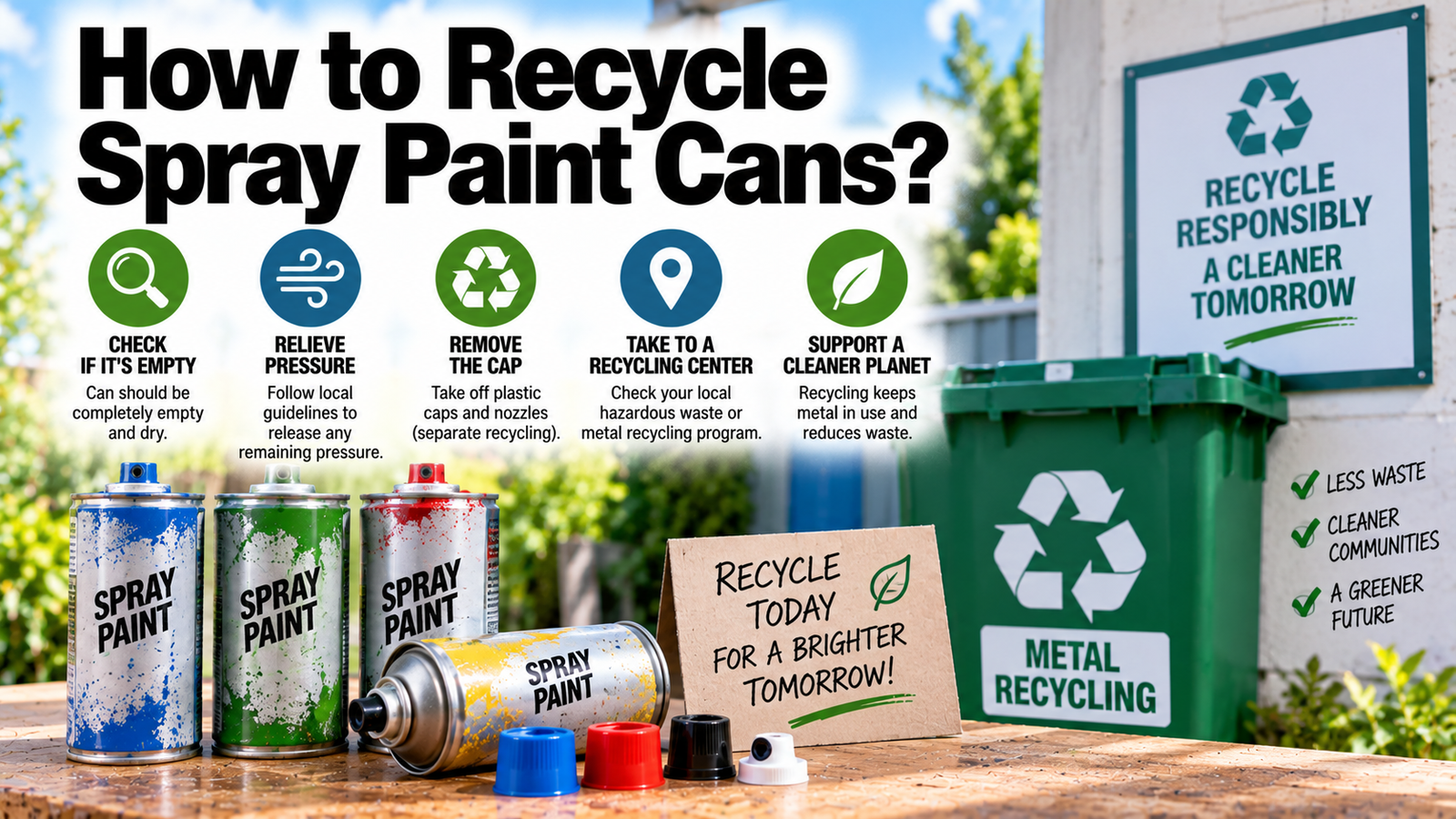

Whether you can recycle a spray paint can comes down to one thing: is it completely empty? A truly empty can is just scrap metal, aluminum or steel, and many recycling programs will take it. A can with any paint or propellant still inside is a different story: it’s pressurized hazardous waste, and it has to go to a household hazardous waste drop-off, never your trash or curbside bin, and it should never be punctured at home.
- Can you recycle spray paint cans?
- The one question that decides everything: is it empty?
- How to prep an empty spray paint can for recycling?
- What to do with a full or partial spray paint can?
- Never do these things with a spray paint can
- Find your local rules
- Conclusion
- Frequently asked questions
- Related Articles
That single distinction, empty versus not empty, decides everything about how you handle the can, and getting it wrong can be dangerous. A pressurized can thrown in the trash can explode when it’s crushed by a garbage truck or at a landfill, and has caused fires at recycling facilities. Here’s how to tell which kind of can you have and dispose of each one the safe, responsible way.
Can you recycle spray paint cans?
Yes, when they’re empty. Spray paint cans are made of aluminum or steel, both valuable metals that can be recycled over and over into new products. That’s the good news, and it’s why it’s worth the small effort to recycle them instead of tossing them.
The complication is what’s inside. Even a can that seems done often holds a little residual paint and pressurized propellant, and that propellant is frequently flammable. That’s why the rules aren’t as simple as “metal goes in the recycling bin.” The pressure and the leftover product are what turn an otherwise recyclable can into something that needs careful handling. Everything below flows from that.
It’s worth the effort, though, and not just to avoid a hazard. Aerosol cans are made of high-value metals that can be recycled indefinitely into new products, yet only a minority of them ever reach a recycling stream; the rest go to landfill, where the metal is wasted and any leftover contents can still cause problems. Recycling an empty can correctly keeps a genuinely reusable material in circulation and keeps a potentially dangerous item out of the regular waste system. So the small effort of checking and prepping a can pays off twice, for safety and for the environment.
The one question that decides everything: is it empty?
Before you do anything else, confirm whether the can is truly empty. This is the fork in the road, and there’s an easy way to check.
Spray the can until nothing at all comes out, pointing it at scrap paper or cardboard. Then shake it and listen: if you hear liquid sloshing, it isn’t empty. If the nozzle sprays nothing, makes no hissing sound, and you hear no liquid, the can is empty of both product and propellant. Make sure the nozzle isn’t just clogged, since a blocked tip can fake an empty can. A genuinely empty can has released all its pressure and holds only a trace of dried residue.
The test: spray until nothing comes out, then shake and listen. No spray, no hiss, no sloshing means empty. Any liquid sound means it’s still hazardous and not ready to recycle.
If the can passes this test, it’s ready to prep for recycling. If it fails, or if you’re not sure, treat it as a full or partial can and handle it as hazardous waste, covered further down. When in doubt, err on the side of hazardous, not the recycling bin.
How to prep an empty spray paint can for recycling?
Once you’ve confirmed the can is empty, a little prep gets it ready to recycle correctly.
- Remove the plastic cap. The cap is usually plastic (often a #5), while the can is metal, and the two are recycled differently. Take the cap off and recycle it separately if your program accepts that plastic, or trash it if not.
- Remove the spray tip and any straw. Pull off the nozzle/spray tip, and if the can came with a thin plastic application straw, put that in the trash. Do not try to force off a nozzle that won’t budge; just leave it if it resists.
- Leave the can intact. Don’t crush it and don’t puncture it. Even an empty can should go in whole. Recyclers have the equipment to process it safely.
- Check that your program accepts it. Acceptance varies. Many larger city programs take empty aerosol cans because they have the technology to crush them safely, but some don’t. Confirm before you put it in your curbside bin.
- Recycle it. Place the empty can in your accepted recycling stream, or take it to a scrap metal recycler or recycling center that accepts aerosol cans.
That’s it for an empty can. The whole process takes a minute, and it keeps a valuable, endlessly recyclable piece of metal out of the landfill.
What to do with a full or partial spray paint can?
If the can still has paint or pressure inside, it does not go in the trash or the recycling bin. A non-empty aerosol can is considered household hazardous waste because of its pressurized, flammable contents, and it needs to be handled accordingly.
The safest route is to use it up. If there’s usable paint left, finish the project, spray it out onto scrap, or pass it to someone who can use it, so the can empties through normal use. If that’s not practical, take the can to a household hazardous waste (HHW) collection site or event. Most communities run HHW drop-off locations or periodic collection days that accept aerosol cans, paints, solvents, and similar items, and this is exactly what they’re for. Store the can upright, away from heat and out of children’s reach, until you can drop it off.
Full or partial cans are hazardous waste. Use them up if you can; otherwise take them to a household hazardous waste site. Never the trash, never curbside recycling.
One note on paint-recycling programs: dedicated services like PaintCare take leftover house paint, but they generally do not accept aerosol spray paint, so an HHW site is usually the right destination for spray cans specifically. Check what your local program accepts before you go.
The best way to deal with a half-full can, of course, is to not have one. A little planning goes a long way: buy only what a project needs, store cans upright in a cool, dry place with the cap on so they last for future touch-ups, and keep the nozzle clear by turning the can upside down and spraying briefly after each use. A can you finish through normal use never becomes hazardous waste at all, it just ends up as an empty, recyclable shell. Reducing and reusing sits above recycling for a reason: the greenest can is the one you use up completely.
Never do these things with a spray paint can
A few actions are genuinely dangerous, and they’re worth spelling out because people do them without realizing the risk.
- Never puncture the can. Do not poke a hole in it to drain leftover paint or release pressure. A pressurized can can explode and injure you. Puncturing and draining is a regulated process done by commercial handlers with special equipment, not something to attempt at home.
- Never crush a non-empty can. Crushing a pressurized can can rupture it. Leave cans whole.
- Never put a non-empty can in the trash. It can explode when compacted in a garbage truck or landfill, and it’s often against the rules where you live.
- Never put a non-empty can in curbside recycling. Leftover contents and pressure can cause fires or injuries at the recycling facility.
- Never expose cans to heat or flame. Even “empty” cans can hold flammable residue. Keep them away from heat sources, and don’t incinerate them.
Find your local rules
Here’s the honest caveat that applies to this whole topic: the exact rules depend on where you live. Recycling programs, HHW services, and even the definition of what counts as accepted vary by city, county, and state. What one town takes at the curb, another only accepts at a drop-off event.
So the smartest move is to check your local guidance before you toss or recycle anything. Your city or county waste department’s website is the definitive source, and a search tool like Earth911’s recycling locator lets you enter your material and zip code to find nearby options for aerosol cans. A quick call to your local waste service also works, and they can tell you whether they want empty cans in the curbside bin or at a specific drop-off.
Two minutes of checking saves you from a fine, a rejected bin, or worse, a dangerous mistake. When the local answer conflicts with a general guide, follow the local one; they know how their facilities are equipped.
Conclusion
Recycling spray paint cans safely comes down to one question: is the can completely empty? Spray it out and shake it to check. If it’s truly empty, remove the cap and tip and recycle the metal can, confirming your local program accepts aerosol cans first. If any paint or pressure remains, treat it as household hazardous waste and take it to an HHW drop-off, never the trash or curbside bin. And never puncture, crush, or heat a can. Check your local rules, and you’ll dispose of every can responsibly and safely.
Frequently asked questions
Can empty spray paint cans go in the recycling bin? Often yes, if your local program accepts aerosol cans. Make sure the can is completely empty, remove the plastic cap and tip, and leave the can whole. Acceptance varies, so confirm with your program first.
How do I know if a spray paint can is empty? Spray it until nothing comes out, then shake it. If there’s no spray, no hissing, and no liquid sloshing inside, and the nozzle isn’t just clogged, it’s empty of both paint and propellant.
What do I do with a spray paint can that still has paint in it? Use it up if you can, or take it to a household hazardous waste drop-off site or collection event. Don’t put a non-empty can in the trash or curbside recycling, and never puncture it.
Can you throw spray paint cans in the trash? Not if they still contain paint or pressure; that’s hazardous and can explode when compacted. A completely empty can may be trash-safe in some areas, but recycling the metal is better where it’s accepted.
Is it safe to puncture a spray paint can to empty it? No. Puncturing a pressurized can at home is dangerous and can cause it to explode. Empty cans only through normal spraying, and leave puncturing to commercial handlers with proper equipment.
Related Articles
How to Spray Paint: Technique, Prep and Recoat Timing
Can You Paint Ceramic Tile? A Complete Step-by-Step Guide