
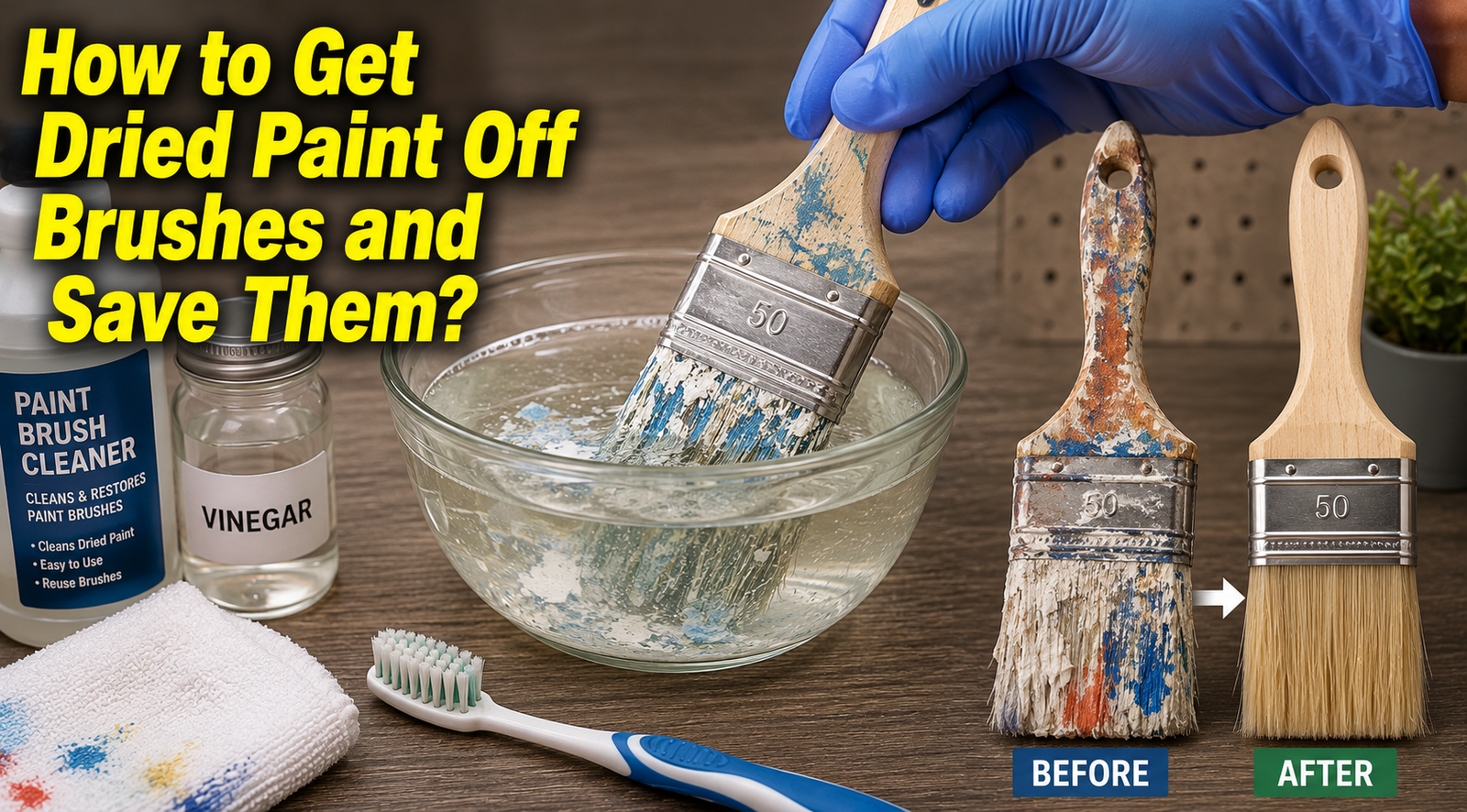

To get dried paint off a brush, soften it with the right solvent, then comb it out. For water-based paint like latex or acrylic, soak the bristles in warm soapy water, vinegar, or rubbing alcohol. For oil-based paint, use mineral spirits or a brush restorer.
- First, figure out what kind of paint dried on the brush
- What you’ll need?
- Step 1: Scrape off the loose, dried paint
- Step 2: Soak the bristles in the right solvent
- Step 3: Work the paint out and comb the bristles
- Step 4: Wash, reshape, and dry properly
- Mistakes that ruin the brush
- When a brush is beyond saving?
- Conclusion
- Frequently asked questions
- Can you get dried paint out of a paintbrush?
- What dissolves dried acrylic or latex paint on a brush?
- Does vinegar really clean dried paint off brushes?
- How long should I soak a brush to remove dried paint?
- Why do the bristles fall out after I clean a brush?
- Related Articles
Soak only the bristles, work the softened paint free with a comb or your fingers, wash with mild soap, then reshape and dry the brush flat. Keep the metal ferrule out of the liquid and never use hot water, both of which loosen the glue that holds the brush together.
A brush stiff with dried paint isn’t necessarily ruined. A good brush is worth saving, and with a soak and a little patience you can usually bring it back. The trick is matching the solvent to the paint and being gentle with the bristles. Here’s how to do it right.
First, figure out what kind of paint dried on the brush
This is the step that decides your whole approach, because the solvent that dissolves one type of paint does nothing to the other. There are two families to sort between.
Water-based paint (latex and acrylic) is the most common for home projects. It dries into a flexible, rubbery film, and it softens with mild, water-friendly cleaners. Oil-based paint (alkyd and enamel) is tougher. It cures into a hard, brittle, glassy film that water can’t touch, so it needs a real solvent.
Not sure which you’ve got? Look at the dried paint in good light: if it bends when you flex the bristles, it’s water-based; if it’s hard and cracks, it’s oil-based. Or run a quick test, dab a little rubbing alcohol on the bristles with a cotton swab. If the color softens and transfers, it’s water-based. If nothing happens, treat it as oil-based.
| Quick reference: match the soak to the paint. When in doubt, test with rubbing alcohol before you commit to a solvent. | |||
| Paint type | What to soak in | How to tell | |
| Water-based (latex, acrylic) | Warm soapy water, warm vinegar, fabric softener, or rubbing alcohol | Dried film is flexible and rubbery; it bends | |
| Oil-based (alkyd, enamel) | Mineral spirits, or a commercial brush restorer | Dried film is hard, brittle, and glassy; it cracks | |
| Not sure | Test first, then match the row above | Dab rubbing alcohol on a swab; latex softens, oil doesn’t | |
What you’ll need?
Gather a few things before you start so the process goes smoothly:
- A soak solution. Warm soapy water, distilled vinegar, fabric softener, or rubbing alcohol for water-based paint; mineral spirits or a brush restorer for oil-based.
- A tall, narrow jar or cup. Deep enough for the bristles to hang free without the ferrule sitting in the liquid.
- A brush comb or an old fork. For working the softened paint out of the bristles.
- Mild dish soap or brush soap. For the final wash after the solvent.
- Gloves, and ventilation for solvents. Mineral spirits gives off fumes and is flammable, so open a window and wear gloves.
- A rag or paper towels. For wiping paint off as it loosens.
Step 1: Scrape off the loose, dried paint
Before any soaking, remove what you can mechanically, so there’s less to dissolve. Work gently here, because forcing hardened paint around only pushes it deeper into the base of the bristles.
- Hold the brush over a rag or the trash.
- Use a comb, the edge of a putty knife, or your fingernail to flake off the loose, crusted paint on the outside of the bristles.
- Comb from the ferrule toward the tip, following the bristles, never against them.
Don’t try to force out the paint packed deep near the metal yet. That’s what the soak is for. The goal at this stage is just to clear the easy stuff.
Step 2: Soak the bristles in the right solvent
Soaking is what does the real work, softening the paint so it releases from the bristles. Pour your chosen solvent into the jar, enough to cover the bristles but not so much that it reaches the ferrule.
This is the most important rule for saving the brush: keep the ferrule out of the liquid, and don’t soak longer than you need to. Long soaks let solvent creep into the metal base and dissolve the glue holding the bristles, so they splay out or fall away. Suspend the brush if you can, by pushing a skewer through a hole in the handle and resting it across the rim, so the bristles hang without touching the bottom.
For water-based paint
Soak in warm soapy water, distilled vinegar, diluted fabric softener, or rubbing alcohol. Vinegar is the classic home remedy and can work, especially warmed, but in side-by-side tests rubbing alcohol tends to break down dried latex and acrylic faster. Give it anywhere from thirty minutes to a couple of hours, checking as you go.
For oil-based paint
Use mineral spirits or a dedicated brush restorer. Swish the brush in the solvent and press gently on the bottom of the jar to work it in. Fully cured oil paint is stubborn, so a restorer product designed to soften hardened paint may work best. Keep the soak as short as it takes, and test the bristles often.
Whatever the paint, resist the urge to leave the brush soaking overnight. It’s tempting, but hours in solvent turn the bristles too soft and floppy and loosen the ferrule. Short, repeated soaks beat one long one every time.
Step 3: Work the paint out and comb the bristles
Once the paint has softened, it’s time to free it from the bristles. This is where the paint actually leaves the brush, so take your time.
- Put on gloves and work the bristles between your fingers to break up the softened paint.
- Comb through the bristles with a brush comb or old fork, pulling from the ferrule to the tip.
- Wipe the loosened paint onto a rag as it comes free.
- If a lot of paint remains, return the brush to fresh solvent for another short soak and repeat.
Comb with the bristles, never against the grain, and don’t crush the brush against the jar, which snaps hairs at the base. If your solvent has gone dark and murky, swap in a clean batch so you’re not just redepositing dissolved paint back into the bristles. For paint packed right up against the ferrule, a needle can gently pick out stubborn chunks.
Step 4: Wash, reshape, and dry properly
Solvent only unlocks the paint; soap and water finish the job and how you dry the brush determines whether it keeps its shape. Don’t skip this part.
- Wash the bristles with mild dish soap or brush soap in lukewarm water, working up a lather to lift out leftover solvent and paint.
- Rinse until the water runs clear and the bristles no longer feel slick.
- Gently squeeze out the water and reshape the bristles to a clean point or edge with your fingers.
- Lay the brush flat, or hang it bristles-down, to dry completely.
Use lukewarm water, never hot. Heat softens the glue inside the ferrule just like a long solvent soak does, so hot water can cost you the brush. And never stand a wet brush on its bristles or dry it handle-down: water wicks up into the ferrule, swells the handle, loosens the glue, and bends the bristles out of shape. Flat or bristles-down is the only safe way. A dab of hair conditioner or brush conditioner worked in before drying helps restore softness to bristles that stiffened up.
Mistakes that ruin the brush
Avoiding these missteps is what separates a revived brush from a wrecked one:
- Soaking the ferrule. Solvent in the metal base dissolves the glue and the bristles fall out. Keep the liquid to the bristles only.
- Leaving it to soak overnight. Long soaks turn bristles limp and loosen the glue. Use short, repeated soaks instead.
- Using hot water. Heat melts the ferrule glue. Lukewarm water only, for both soaking and washing.
- Scrubbing or crushing the bristles. Force snaps hairs at the base and packs paint deeper. Comb and wipe gently.
- Drying it bristles-up. Water runs into the ferrule and warps the brush. Dry flat or bristles-down every time.
- Skipping the soap wash. Solvent alone leaves residue that hardens later. Always finish with soap and water.
For the manufacturer’s own take on cleaning and reviving brushes, this guide to cleaning paint brushes from Sherwin-Williams walks through soaking and drying, and it lines up with the same core idea: soften the paint, protect the ferrule, and dry the brush the right way.
When a brush is beyond saving?
Sometimes a brush is simply too far gone, and knowing when to stop saves you time and frustration. If paint has cured rock-hard all the way into the ferrule, if the bristles have permanently splayed or lost their spring, or if the brush was a cheap disposable one to begin with, it’s usually not worth the effort.
A quality brush that cost real money is worth an evening of soaking; a bargain chip brush usually isn’t. If you’ve done a couple of soak-and-comb rounds and the bristles still won’t come clean or hold a shape, let it go.
The real fix is next time: wet paint rinses out in under a minute with soap and water, so cleaning a brush the moment you finish is always easier than reviving a dried one.
Conclusion
Getting dried paint off a brush comes down to matching the solvent to the paint and treating the bristles gently. Identify whether the paint is water-based or oil-based, soak just the bristles in the right solution, comb the softened paint out, then wash with soap, reshape, and dry flat.
Keep the ferrule out of the liquid and stick to lukewarm water so you don’t loosen the glue. Do that, and most stiff brushes come back to life instead of heading for the bin.
Frequently asked questions
Can you get dried paint out of a paintbrush?
Usually, yes. Soak the bristles in the right solvent, water-based cleaners for latex and acrylic, mineral spirits for oil-based, then comb the softened paint out and wash with soap. A good brush often comes back to near-new if the paint hasn’t cured rock-hard into the ferrule.
What dissolves dried acrylic or latex paint on a brush?
Warm soapy water, distilled vinegar, fabric softener, and rubbing alcohol all soften dried water-based paint. Rubbing alcohol tends to work fastest in practice. Soak the bristles, work the paint loose, then rinse and wash with mild soap.
Does vinegar really clean dried paint off brushes?
It can, especially warm distilled vinegar on water-based paint. But hands-on comparisons often find rubbing alcohol and commercial brush cleaners work better and faster. Vinegar is worth trying since it’s cheap and on hand, just don’t expect miracles on stubborn stains.
How long should I soak a brush to remove dried paint?
Thirty minutes to a couple of hours, checking as you go. Don’t leave it overnight, since long soaks turn bristles floppy and loosen the ferrule glue. Short, repeated soaks with combing in between work better and are safer for the brush.
Why do the bristles fall out after I clean a brush?
Usually because solvent or water reached the ferrule and dissolved the glue holding the bristles. Keep liquid to the bristles only, avoid long soaks and hot water, and dry the brush flat or bristles-down to keep the glue intact.
Related Articles
Does Rubbing Alcohol Remove Paint? What It Works On
How to Make Skin Color With Paint (Easy Mixing Guide)
How to Clean Oil Paint Brushes (Solvent & Oil-Free)