

To remove gold leaf, start with the gentlest method and only push harder if you must. Loose or fresh leaf usually lifts off with a soft brush, a kneaded eraser, or a dab of the solvent that matches the glue underneath.
Leaf that is firmly stuck, especially on paper or over paint, is much harder to remove and can damage what sits under it. On a painting of any real value, the safest first step is not a solvent at all, it is a call to a conservator.
How hard the job is comes down to two things: what the leaf is sitting on, and what glued it down. This guide covers both, with separate steps for paper and for paintings, plus how to match the right solvent to the adhesive and how to work without harming the piece or yourself.
What actually holds gold leaf down?
Gold leaf is metal beaten so thin it is almost weightless, and on its own it barely clings to anything. What holds it in place is the adhesive under it, called size. So removing leaf is really about breaking or dissolving that glue, and the glue is what decides how easy the job is.
Two questions tell you what you are dealing with. First, is the leaf loose or burnished? Freshly laid leaf that has not been rubbed down often brushes away with almost no effort, while leaf that has been burnished tight to the surface is truly bonded.
Second, what size was used? Water-based and acrylic sizes soften with water or mild solvents, oil-based size needs a stronger solvent like mineral spirits, and traditional water gilding, where leaf is burnished onto a gesso and clay base, is the toughest of all to shift. Whatever you try, test it on a hidden corner first.
It also helps to know how the leaf went on. Loose leaf is applied straight onto the size, while transfer leaf comes stuck to a backing sheet. Either way, once it is down and burnished it behaves the same, and a surface that was sealed with varnish over the leaf will fight you harder, since you have to get through that layer too.
Removing loose or fresh gold leaf
If the leaf is loose or the size is still fresh, you are in the best possible case. Sweep the surface with a soft, dry brush, a clean makeup brush works well, to lift away the flakes that are not stuck. A gentle puff of air, or canned air held at a distance, clears the rest without scratching.
For small loose bits and the fine crumbs gilders call skewings, press a kneaded putty eraser onto the leaf and lift it straight off, or lay a piece of low-tack tape over the area and peel it away slowly. Keep everything gentle.
Rubbing or scrubbing at this stage just grinds stray gold into the surface and makes a bigger mess. Wear cotton or nitrile gloves as you go, since the oils on your fingers dull and mark the leaf, and work over a clean tray so you can save the loose flakes to reuse.
Removing gold leaf from paper
Paper is the hardest surface to win on, so go in with careful expectations. It is porous and soaks up water and solvents, which means wet methods can buckle, stain, or leave tide lines, and a solvent strong enough to cut the size can also lift the paper’s own coating and rough up the surface.
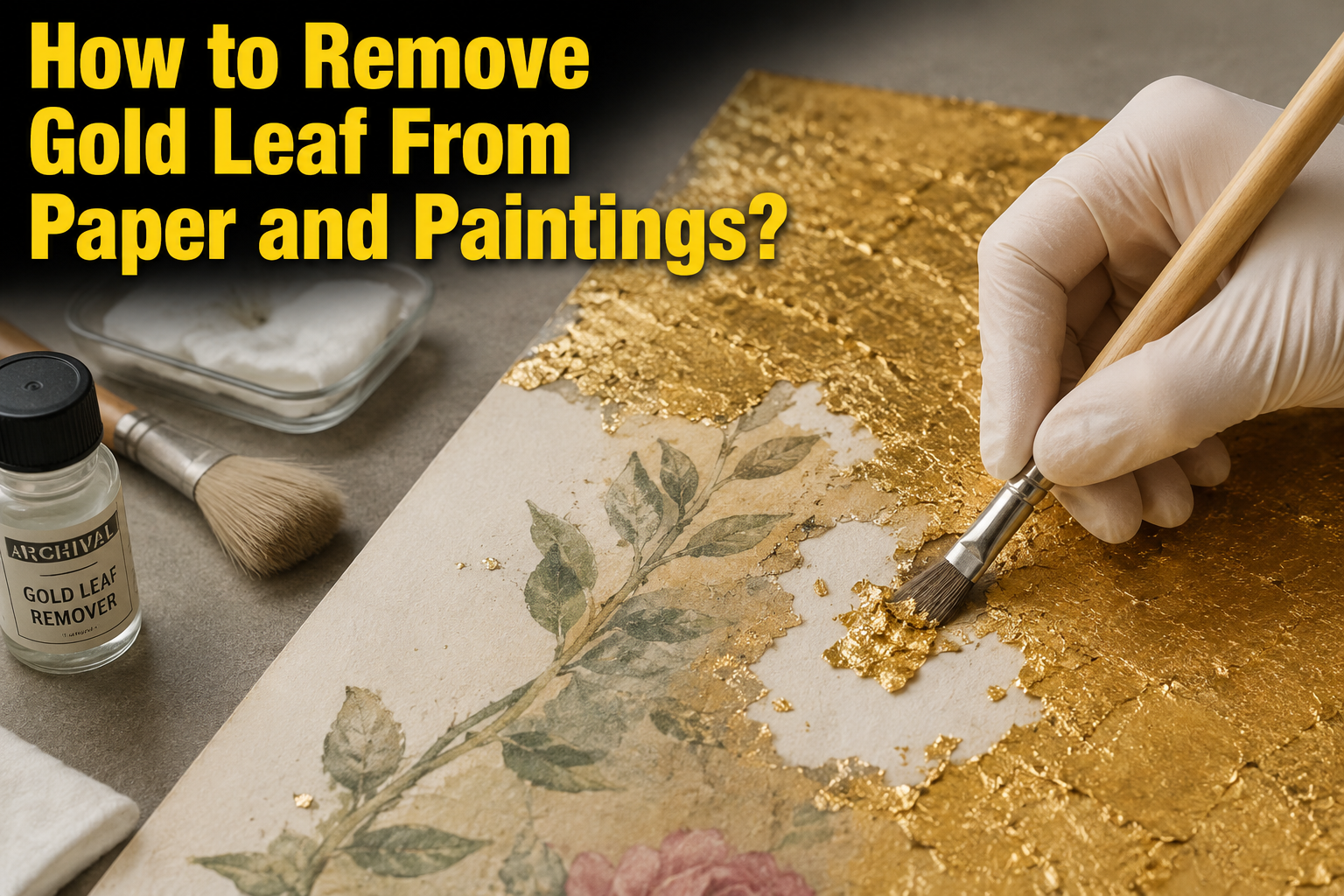
Start dry and mild. A kneaded eraser, pressed and lifted, takes off loose leaf without touching the paper much. Follow with a soft vinyl eraser used very lightly if bits remain. For leaf held by size, barely dampen a cotton swab with the matching solvent, water for a water-based size or a whisper of isopropyl alcohol or acetone for an acrylic one, and roll it over a tiny area, blotting dry right away. Work one small patch at a time and keep the paper as dry as you can.
Be honest about the outcome. You can usually lift loose leaf and thin out size-bonded leaf, but removing well-stuck leaf from paper cleanly, with no mark left behind, often is not possible. Skip heat guns and heavy soaking, which cockle and scorch paper fast.
If the paper is artwork or a document you care about, stop before you damage it and take it to a paper conservator, who may be able to reduce or hide the leaf rather than strip it, and will know how to do it without wrecking the sheet.
Removing gold leaf from a painting
On a painting, removing gold leaf is a job to think twice about, because the same solvents that dissolve gilding size also dissolve oil and acrylic paint and varnish. Wipe the wrong spot with acetone or mineral spirits and you can take the artwork off along with the gold. That is why leaf on a painted canvas or panel is not a casual DIY fix.
For any painting with financial or sentimental value, or any real age, talk to a qualified painting conservator before you touch it. They can test the surface, identify the paint and the adhesive, and remove the leaf without harming the work, or tell you honestly if it cannot be done safely. You can find one through the American Institute for Conservation’s find-a-professional tool, which lets you search by specialty, including paintings and gilded surfaces.
If the piece is a worthless practice study and you accept the risk of ruining it, use the gentlest approach from the paper section: mechanical lifting first, then the weakest solvent that works, always tested on an out-of-the-way corner, and worked in tiny amounts.
Stop the moment you see paint start to move. Bear in mind that older paint and varnish grow more fragile with age, and a conservator will run a small solvent spot test before doing anything, which is exactly the caution the artwork deserves.
Match the solvent to the adhesive
When you do reach for a solvent, use the weakest one that works and step up only if you have to. Matching it to the glue saves the surface and your effort.
| Adhesive | Try first | If it’s stubborn |
| Water-based or acrylic size | Warm water, or a barely damp swab | A little isopropyl alcohol, then acetone as a last resort |
| Oil-based size | Mineral spirits (white spirit) on a swab or cloth | A dedicated solvent-based remover, used sparingly |
| Water gilding (gesso and clay) | Little lifts it cleanly at home | A conservator, rather than stronger chemicals |
Whatever you use, test it first on a hidden spot, apply it in small amounts, and give it a moment to work rather than scrubbing. Wipe or blot as the size softens, and rinse or clear any residue when you are done.
Other surfaces: frames, wood, metal, and glass
Hard, non-porous surfaces are far more forgiving than paper or paint, so you have more room to work. On a metal frame, glass, or sealed wood, you can carefully scrape the leaf with a razor held at a low angle, wet-sand it with fine 400 to 600 grit paper, or lift it with a mild abrasive cleaner.
Glass in particular lets a razor slide the leaf right off. Solvents also bite better on these surfaces without soaking in and causing damage.
Even so, test in one spot first, take extra care on gilded antique frames, which are often gilded over gesso and are easier to gouge than they look, and treat reverse-glass gilding gently, since the gold sits on the back and scratches easily.
What about imitation leaf, composition leaf, or gold paint?
Make sure you know what you actually have, because it changes the fix. Real gold leaf will not tarnish, but imitation or composition leaf, sometimes called Dutch metal, is brass and does tarnish, so it is usually sealed with a varnish that you must cut through first.
Gold paint and liquid gilding are different again: they are paint, not leaf, so you remove them the way you would remove that type of paint, with the solvent that matches it. A quick test tells them apart, since leaf peels and flakes in thin sheets while paint wipes and dissolves.
A tip for gilders: make future mistakes easier to fix
If you are the one applying the leaf, plan for second thoughts. Lay your leaf over a surface you have sealed first, or over a thin removable isolation layer, so a mistake lifts off that top coat instead of biting into the artwork or the bare paper.
And fix errors early: while the size is still fresh, misplaced leaf wipes or lifts away far more easily than it will once everything has cured and been burnished.
Work safely
The solvents in this job carry real hazards. Acetone, alcohol, and mineral spirits are flammable and can irritate your skin and lungs, so work with the windows open or outdoors, wear gloves and eye protection, and read the safety data sheet that comes with any product. Do not trust random online posts for what is safe to breathe.
Two things to avoid: never use harsh industrial acids or oven cleaner on artwork. Those belong to metal recovery and heavy stripping, not to a painting or a sheet of paper, and they will destroy the piece and can seriously hurt you. Always test any method on a hidden area, keep it to a small spot, and protect the surrounding surface while you work.
Conclusion
Removing gold leaf is really about the glue underneath and the surface it sits on. Loose or fresh leaf lifts off easily with a soft brush, a kneaded eraser, or a light touch of the right solvent.
Firmly bonded leaf is much harder, paper rarely comes fully clean, and a valuable painting belongs with a conservator, not a bottle of acetone. Start with the gentlest method, test first, and step up only when you truly need to.
Frequently asked questions
Does gold leaf come off easily?
It depends on the glue. Loose or freshly laid leaf often brushes or lifts off with almost no effort. Leaf that has been burnished tight to the surface is bonded by its size and is much harder to remove cleanly.
How do you get gold leaf off paper?
Start dry: press a kneaded eraser onto the leaf and lift, then use a soft eraser lightly for what remains. For size-bonded leaf, use a barely damp swab of the matching solvent on a tiny area, blotting at once. Well-stuck leaf may not come off without marking the paper.
Can you remove gold leaf from a painting yourself?
It is risky, because the solvents that lift gilding size also dissolve paint and varnish. For any painting you value, consult a painting conservator first. Only attempt it on a worthless piece, at your own risk, using the gentlest method and testing a corner.
What dissolves gold leaf adhesive?
Match the solvent to the size. Water or a mild solvent softens water-based and acrylic size, mineral spirits handles oil-based size, and traditional water gilding usually needs a conservator rather than a stronger chemical.
Will rubbing alcohol remove gold leaf?
Isopropyl alcohol can soften acrylic or water-based size and lift the leaf on sturdy surfaces. Use it lightly and test first, since on paper it can still damage the surface, and on a painting it can attack the paint.
Related Articles
How to Make Skin Color With Paint (Easy Mixing Guide)
How to Clean Oil Paint Brushes (Solvent & Oil-Free)
How to Get Paint Off Concrete (Wet, Dried & Stubborn)
How to Get Latex Paint Out of Clothes?