
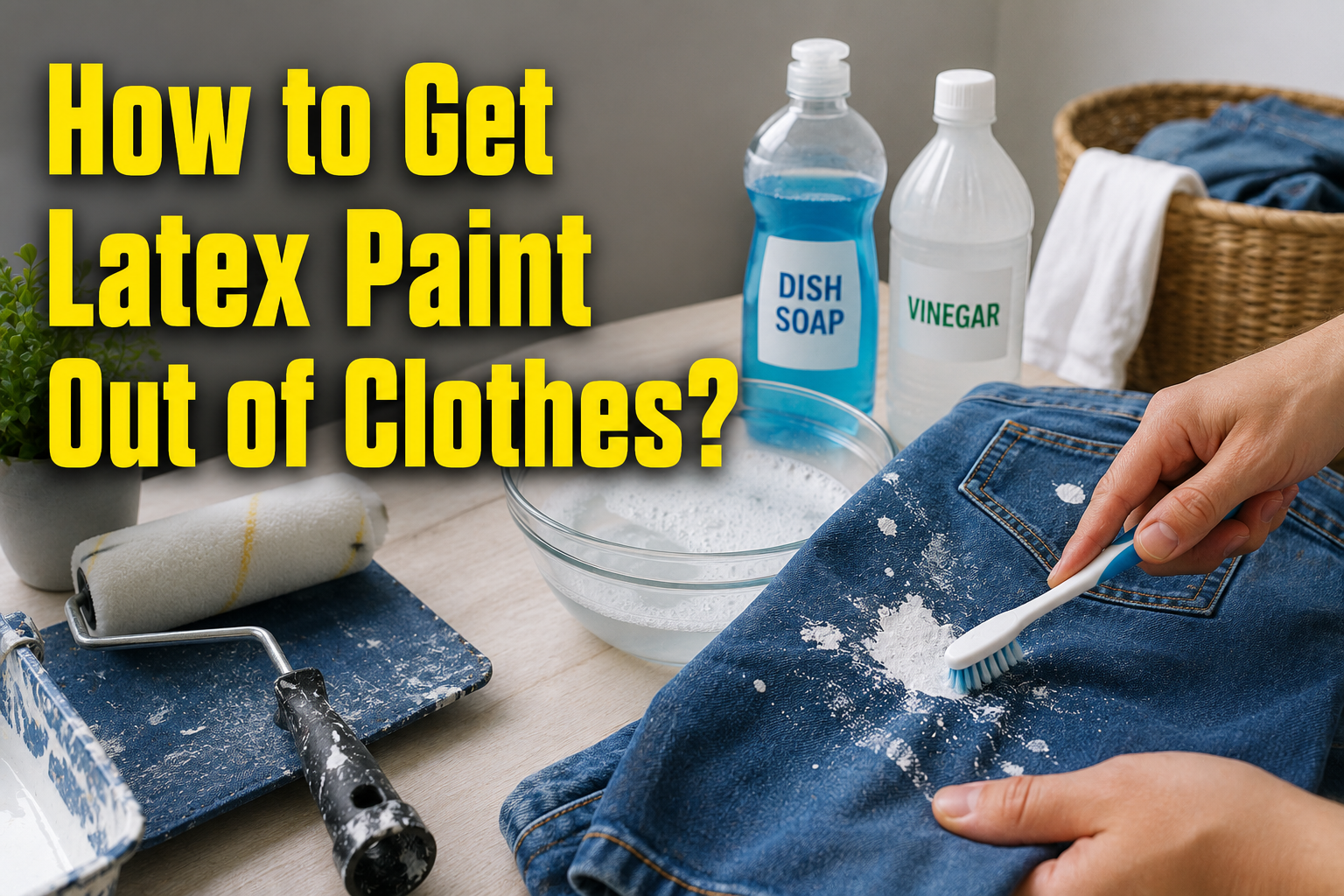

Fresh latex paint is water-based, so most of the time you can wash it out if you move fast. Scrape off the excess, flush the stain from the back under warm running water, work in a little dish soap or laundry detergent, and machine-wash the garment warm.
The whole trick is treating it before it dries, and not putting the item in the dryer until the stain is completely gone. Dried latex is a tougher job that needs softening first, and sometimes a solvent, but it can often still be saved.
This guide walks through both cases, fresh and dried, plus how to step up to rubbing alcohol, acetone, or a commercial remover when detergent alone will not do it, and how to check your fabric so you do not trade a paint stain for a hole.
Why fresh latex paint washes out but dried paint fights back?
Latex paint is water-based, which is exactly why speed matters. While it is still wet, the paint is basically pigment carried in water and acrylic binders, and water keeps it loose and easy to rinse away. That is the window you want to catch.
Once it dries, those acrylic binders cure into a thin, water-resistant film, the same quality that makes the paint durable on a wall. On fabric, that film grips the fibers and no longer dissolves in plain water, so dried paint has to be softened or broken down before it will let go.
The sooner you treat a spill, the less of that film you have to fight. Acrylic craft paint is the same water-based family, so the steps below work for it too.
Before you start: check the fabric and grab a few things
Two minutes of prep protects the garment. First, read the care label. These methods are for washable fabrics, so if the tag says dry clean only, or the item is silk, wool, or acetate, take it to a professional instead of experimenting.
Second, whenever you plan to use a solvent like alcohol or acetone, test it on a hidden seam or inside hem first to make sure it does not strip the color. It also helps to work over a folded towel or a stack of paper towels, which catches the paint you flush out and keeps it from spreading to the other side of the fabric.
It helps to have these on hand:
- A dull scraper: a spoon, butter knife, or old credit card.
- Dish soap or liquid laundry detergent.
- An old toothbrush or soft brush, and a few clean cloths or paper towels.
- Warm water and a sink or bowl for soaking.
- Rubbing (isopropyl) alcohol, and acetone or non-acetone nail polish remover if your fabric can take it.
- Gloves, and a store-bought paint remover only if you expect a tough dried stain.
How to remove fresh, wet latex paint?
Fresh paint is the easy case, so work quickly and in this order.
- Scrape off the excess. Lift away as much wet paint as you can with a spoon, butter knife, or credit card. Scrape gently and do not rub, which only pushes paint deeper into the weave.
- Flush from the back. Turn the garment inside out and run warm water through the back of the stain. Pushing water from behind forces the paint back out the way it came in, and the running water keeps it loose and active.
- Work in soap. Put a small amount of dish soap or liquid laundry detergent, about an eighth of a teaspoon, right on the stain. Work it into a lather, scrub gently with a cloth or soft brush, then rinse. Repeat the soap-and-rinse until no more paint lifts.
- Machine-wash warm. Launder the item on its own in the warmest water the care label allows. Add an oxygen-based stain remover if a faint mark remains.
- Air dry and check. Hang the garment to dry, then look at the stain in good light.
That last step matters more than it sounds. Line-dry the item instead of tumbling it, because dryer heat bakes in any trace of paint you cannot see while the fabric is wet and makes it permanent, a point Maytag’s laundry stain guide stresses as well. If the stain is still there once it is dry, repeat the steps before you ever put it in the dryer.
How to remove dried latex paint?
Dried paint takes more patience, but the approach is the same idea: soften the film, then lift it. Start by scraping off the hardened excess with a dull knife, and press a strip of duct tape onto the spot and peel it away to pull off loose flakes.
Then rewet and work it. Dampen the back of the stain with warm water, mix roughly half laundry detergent and half warm water, and blot that firmly into the stain with a cloth. Rinse and repeat, blotting hard each time, until the paint stops transferring to your cloth.
If the whole area is stiff with paint, soaking the garment in warm, soapy water for thirty minutes to an hour first will loosen the film and make the blotting easier. For a lot of dried stains this alone gets you most of the way. If the paint is stubborn, move on to a solvent.
When detergent isn’t enough: alcohol, acetone, and removers?
When soap and water stall, step up one strength at a time. Start with rubbing alcohol, which softens the dried acrylic film. Ordinary isopropyl alcohol works, and in a pinch hand sanitizer or hairspray both contain enough alcohol to help. Dab it onto the stain with a white cloth or cotton ball, scrub gently with an old toothbrush, and rinse.
If alcohol is not enough and your fabric can handle it, try acetone or nail polish remover next. Lay the garment on paper towels, apply a little acetone, and blot from the edges of the stain inward.
Acetone is stronger, so two cautions matter: never use it on acetate, triacetate, or modacrylic fabrics, because it dissolves those fibers, and test it on a hidden spot first, since it can lift dye.
For a heavy, dried-on stain that still will not budge, a commercial paint remover is the last resort, used outdoors or by an open window with gloves and a mask. If a faint shadow of color lingers after the paint is gone, soaking a colorfast or white item in warm water with an oxygen-based bleach often clears it.
Two rules for every solvent here. Always test on a hidden seam first, since alcohol, acetone, and removers can strip color or damage some fabrics. And never put a garment that is still wet with any of them into the washer or dryer, because these liquids are flammable. Rinse the solvent out completely by hand first, then launder as usual.
What about acrylic, water-based stain, or spray paint?
Make sure you know what you spilled, because it changes the fix. Acrylic craft paint and water-based wood stain are close cousins of latex, so the water-first steps here handle them, though a set stain may need a dab of acetone to shift the last of it.
Spray paint is the odd one out: most spray paint is lacquer or oil-based, so it will not budge with water and behaves more like oil paint, which means a solvent such as paint thinner and a lot of patience. If your paint can says oil-based or alkyd, treat it that way rather than with the water method above.
What comes clean, and what may not?
Fabric decides how well any of this works. Cotton and denim are the most forgiving, and even a paint remover usually leaves them wearable, though strong solvents can pull a little dye from dyed denim.
Polyester and cotton blends generally clean up well, but still test first. Spandex, nylon, and athletic fabrics are the hardest, and solvents can damage them, so expect to improve a stain rather than erase it.
For silk, wool, acetate, or anything labeled dry clean only, skip the home solvents and take it to a dry cleaner, and tell them what the stain is. Leather and suede are their own case: keep water and acetone off them and go to a leather cleaner instead.
Prevent the next paint stain
The easiest stain to remove is the one you never get. Change into old clothes or throw on an apron or a paint smock before you start, and roll your sleeves up out of the way.
Keep a damp rag and a little dish soap within reach so you can catch a splatter the second it lands, while it is still wet and easy. A few seconds of setup saves a whole cleanup later.
Mistakes that set a stain for good
A few habits turn a fixable stain into a permanent one. Letting the paint dry is the big one, so treat spills right away. Tumble-drying before the stain is fully gone bakes it in, so always air dry and check first.
Rubbing at the spot or scrubbing from the front drives paint deeper, so work from the back and blot from the edges inward. And jumping straight to acetone or a stripper, before trying water, soap, and a fabric test, is how people ruin the garment along with the stain.
Conclusion
Getting latex paint out of clothes comes down to speed and order. While it is wet, scrape off the excess, flush the stain from the back under warm water, work in dish soap, and wash warm.
If it has dried, soften it with detergent and water first, then step up to rubbing alcohol, acetone, or a remover, checking the fabric at every stage.
Above all, keep the garment out of the dryer until the stain is truly gone, because heat is what makes a paint stain permanent.
Frequently asked questions
Does dried latex paint come out of clothes?
Often, yes, though not always fully. Scrape off the hard excess, soften the stain with a half-detergent, half-water mix, then step up to rubbing alcohol or acetone if needed. Older, thicker paint is harder, and some may remain.
Will rubbing alcohol remove latex paint from clothes?
Yes, isopropyl alcohol softens the dried acrylic film so you can lift it. Dab it on with a cloth, scrub gently with a toothbrush, and rinse. Test a hidden spot first, and rinse the alcohol out before washing.
Can I use acetone on latex paint stains?
You can on sturdy fabrics like cotton, but never on acetate, triacetate, or modacrylic, which acetone dissolves. It can also strip dye, so test a hidden area first and blot from the edges of the stain inward.
Why can’t I put the garment in the dryer?
Dryer heat sets any paint still in the fabric permanently, even a trace you cannot see while it is wet. Always air dry and check the stain first, and never machine-dry a garment still wet with a flammable solvent.
How do I get latex paint out of jeans?
Denim handles treatment well. Scrape off the excess, flush from the back with warm water, and work in dish soap; for dried paint, follow with rubbing alcohol or a remover. Strong solvents can lift a little denim dye, so test first.
Related Articles
How to Make Skin Color With Paint (Easy Mixing Guide)
How to Clean Oil Paint Brushes (Solvent & Oil-Free)
How to Get Paint Off Concrete (Wet, Dried & Stubborn)
How to Remove Gold Leaf From Paper and Paintings?