
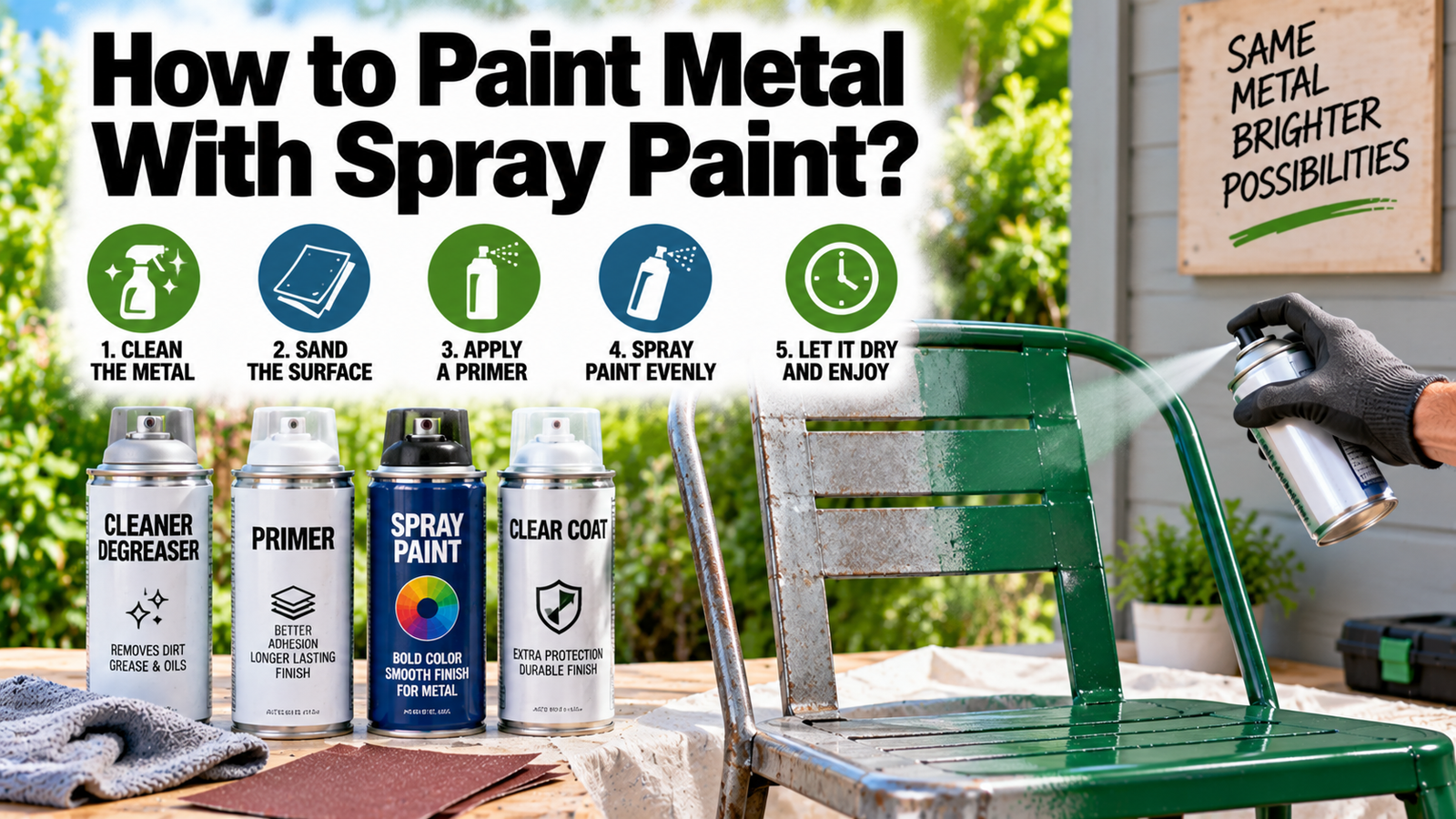

To paint metal with spray paint, clean and sand the surface, prime it, then spray two or three light coats of a paint made for metal, holding the can about 10 to 12 inches away. That is the whole job in one sentence. The reason people end up with drips, peeling, or a gritty finish is almost always the prep, not the paint. Get the surface right and the spraying part is easy.
- What you need before you start
- Step 1: Set up a safe, clean workspace
- Step 2: Clean and degrease the metal
- Step 3: Sand and remove rust
- Step 4: Prime the metal (and when you can skip it)
- Step 5: Apply the spray paint
- Step 6: Seal it and let it cure
- How long does spray paint take to dry on metal?
- Common mistakes that ruin a metal paint job
- Conclusion
- Frequently asked questions
- Related Articles
This guide walks through the full process for furniture, railings, tools, fixtures, and other metal odds and ends around the house. It also covers how to handle rust, when you can skip primer, and how long to wait before you use the item again.
What you need before you start
Gather everything first so you are not hunting for a rag with wet paint on your hands. Here is the short list for a typical project:
- Spray paint made for metal, plus a matching metal primer
- A degreaser or mild dish soap, and clean cloths
- Sandpaper (120 to 220 grit) and a wire brush or steel wool for rust
- Painter’s tape and a drop cloth, cardboard, or newspaper
- A respirator or mask rated for paint fumes, safety glasses, and gloves
Buy a little more paint than you think you need. A small can covers less than the label suggests once you apply proper thin coats, and running out mid-project leaves a visible line.
Step 1: Set up a safe, clean workspace
Spray paint fumes are strong, so work outdoors or in a garage with the doors and windows open. Pick a spot out of direct wind, which blows dust and pollen onto wet paint and pushes the spray around. Avoid painting in direct sunlight, because the heat makes the paint dry too fast and leaves a rough, uneven finish.
Lay down a drop cloth or cardboard, then use painter’s tape to mask off any part of the item you want to keep paint-free, like glass, handles, or hardware. Put on your mask, glasses, and gloves before you open a single can.
Temperature matters. Most spray paints go on best between about 50°F and 90°F, with low humidity. Cold or damp air slows drying and can leave a cloudy, weak finish.
Step 2: Clean and degrease the metal
Paint will not stick to a dirty surface, so this step is not optional. Wipe the metal down with warm water and a little dish soap, or a dedicated degreaser, to lift off grease, dust, and grime. Oily spots can be cleaned with a cloth and a solvent like denatured alcohol.
Rinse if you used soap, then dry the metal completely. Any moisture left behind can get trapped under the paint and cause bubbling or early rust. Wait until the surface is bone dry before moving on.
Step 3: Sand and remove rust
Shiny metal is slick, and paint struggles to grip it. Lightly scuff the whole surface with 120 to 220 grit sandpaper until it looks dull, almost like brushed nickel. You are not trying to gouge it, just take the shine off so the primer can bond.
If there is rust, remove it now with a wire brush, steel wool, or coarse sandpaper. Rust left under paint keeps spreading and lifts the finish from below. For heavy rust, a rust converter primer that turns rust into a paintable surface can save a lot of scrubbing. Once you are done sanding, wipe away all the dust with a clean, dry cloth or a tack cloth so nothing sits between the metal and the primer.
Step 4: Prime the metal (and when you can skip it)
Primer is what makes a spray paint job last. It helps the color coat grip, evens out the surface, and adds a layer of rust protection. Choose a primer made for metal, and match it to the type of metal you have.
| Metal type | How to tell | Priming advice |
| Ferrous (steel, iron, cast iron) | A magnet sticks to it | Prone to rust. Use a rust-inhibiting metal primer. |
| Non-ferrous (aluminum, copper, brass) | A magnet does not stick | Sand to dull the shine; a self-etching or all-metal primer helps adhesion. |
| Galvanized (zinc-coated steel) | Dull grey, spangled pattern | Needs a primer made for galvanized metal, or paint bonds poorly. |
| Previously painted | Existing coat of paint | Scrape off loose paint, sand smooth, then prime bare spots. |
Spray the primer in thin, even passes and let it dry fully before the color coat, usually 20 to 30 minutes, though the can will give an exact time. Some newer paint-and-primer-in-one products let you skip a separate primer on lightly rusted or clean metal. They are convenient, but for anything that lives outdoors or gets handled a lot, a dedicated primer still gives the toughest result. Brand how-to pages like Krylon’s guide to spray painting metal break down which of their products need priming and which do not.
Step 5: Apply the spray paint
This is the part everyone worries about, but good technique comes down to a few simple habits. Shake the can hard for about a minute before you start, and give it a quick shake every so often as you go.
- Hold the can 10 to 12 inches from the surface. Too close causes drips; too far leaves a dusty, gritty finish.
- Spray in steady, sweeping passes. Start the spray just before the object and release just after it, so you never pause on the surface.
- Overlap each pass by about a third. This blends the strokes and prevents stripes.
- Apply light coats, not one heavy one. Two or three thin coats look far better and drip far less than a single thick blast.
- Wait between coats. Most metal spray paints are ready to recoat after about 5 to 30 minutes. Check the can, because some have a recoat window you should not miss.
Keep the item on a raised surface, like a couple of scrap wood blocks, so you can reach the edges and underside. Rotating the piece as you work helps you catch every angle without touching wet paint.
If a run or drip forms, do not dab at it. Wipe the fresh paint off completely with a cloth, let it dry, and respray that area. Dabbing at a drip just leaves a bigger mark.
Step 6: Seal it and let it cure
For items that face weather, sun, or heavy handling, a clear topcoat adds shine and a layer of protection. Apply it the same way as the paint, in thin coats, after the color has dried to the touch. On indoor decorative pieces a clear coat is optional.
Then comes the hardest part: waiting. Paint that feels dry is not the same as paint that is cured. Give the finish a full cure before you put the item back to work, or you will leave fingerprints and marks in a coat that looked ready.
How long does spray paint take to dry on metal?
Thin coats of spray paint on metal are usually dry to the touch within 10 to 30 minutes. That means the surface feels dry, but the paint underneath is still soft. You can recoat in that window, but you should not handle or use the item yet.
Full curing, where the paint hardens all the way through and reaches its real strength, takes about 24 to 48 hours for most spray paints. Heavy-duty or outdoor finishes can need up to 72 hours. Warm, dry, moving air speeds this up; cold or humid air slows it down. When in doubt, wait the full day before using the piece.
Common mistakes that ruin a metal paint job
Most failed spray jobs trace back to the same handful of slip-ups. Avoid these and your finish will hold up for years:
- Skipping the prep. Painting over grease, dust, or rust is the number one reason paint peels.
- One thick coat. Heavy coats sag, drip, and trap solvent underneath so they stay soft.
- Painting in bad conditions. Wind, direct sun, cold, or high humidity all wreck the finish.
- Not shaking the can. Poorly mixed paint sprays unevenly and can spit or clog.
- Rushing the cure. Using the item too soon leaves permanent marks in soft paint.
Conclusion
Painting metal with spray paint is mostly about the prep: clean it, sand it dull, knock off any rust, and prime it before you ever pick up the color. Then spray two or three light coats from about a foot away, seal it if it lives outdoors, and let it cure a full day before use. Do that and you get a smooth, even finish that resists rust and holds up for years, not one that peels by next season.
Frequently asked questions
Do I have to use primer on metal?
For lasting results, yes. Primer helps the paint grip and blocks rust. Some paint-and-primer-in-one sprays skip it on clean or lightly rusted metal, but a separate primer is safer for anything outdoors. See Krylon’s spray paint FAQ for product-specific advice.
Can I spray paint over rust?
Remove loose rust first with a wire brush or sandpaper. For light rust, a rust-converter primer lets you paint over what is left. Painting straight over active rust just lets it spread under the finish.
How many coats of spray paint does metal need?
Usually two to three thin coats. Thin coats look smoother and drip far less than one heavy coat. Let each one dry within the recoat window listed on the can before adding the next.
Can I use regular spray paint on metal?
Paint made for metal bonds better and resists rust, so it is worth using. General-purpose spray paint can work over a proper metal primer, but bare metal really needs a metal-specific primer underneath.
How long before I can use the painted item?
It feels dry in 10 to 30 minutes, but wait 24 to 48 hours for a full cure before handling or using it. Outdoor pieces may need up to 72 hours to fully harden.
Related Articles
How to Paint a Popcorn Ceiling (Step by Step)