

Stripping wallpaper is a miserable job, so painting straight over it is tempting, and with the right prep it works well. There is one rule that decides everything, though, and getting it wrong is why some people end up with paint bubbling off the wall in sheets. Do it properly and you can turn a dated, papered room into fresh painted walls in a weekend. Here is how to paint over wallpaper so it looks clean and stays put.
- Should you paint over it or strip it?
- The one rule that prevents bubbling: oil-based primer
- Prepping the seams and surface
- How to paint over wallpaper, step by step
- Mistakes that cause bubbling and peeling
- Conclusion
- Frequently asked questions
- Can you paint directly over wallpaper?
- What primer should you use over wallpaper?
- Why is my wallpaper bubbling after painting?
- Do you have to remove wallpaper seams before painting?
- Is it better to paint over wallpaper or remove it?
- Related Articles
Should you paint over it or strip it?
Painting over wallpaper is a real shortcut, but it is not always the right one. It will never look quite as flawless as a bare, freshly painted wall, because seams and any texture can still show through. For many rooms that is a fair trade to skip the strip job. The paper’s condition and type decide it.
| Paint over it if… | Strip it instead if… |
| The paper is smooth and firmly stuck to the wall | It is peeling, bubbling, or lifting in several places |
| Seams are tight and can be smoothed flat | It is textured (the pattern will show through paint) |
| The wall underneath may be damaged or hard to strip | It is fabric-backed vinyl (usually easy to peel off) |
| You want a faster, lower-mess job | You need a truly flawless, smooth finish |
Here is a genuinely useful quirk to know: the wallpapers that are easiest to paint over tend to be the hardest to strip, and the ones you should not paint (like fabric-backed vinyl) often peel off easily. So before you commit, test a small corner. Try to lift the paper. If it comes away in clean sheets, removing it may be less work than you feared. If it fights you and tears into tiny scraps, painting over it starts to look smart.
One more consideration: stripping paper can damage the wall underneath, especially on drywall. If the wall below is in poor shape or the paper is stuck like glue, painting over well-bonded paper is often the safer, faster choice.
Texture deserves its own warning. Paint does not hide a raised pattern; it can actually emphasize it, since the new color throws the relief into sharper contrast. Grasscloth, embossed, or woodchip papers will still read clearly through two coats. If you love that look, fine, plenty of people do. If you want smooth walls, a textured paper is a sign to strip it or plan on a full skim coat rather than a simple paint-over.
The one rule that prevents bubbling: oil-based primer
If you take away nothing else, take this: prime with an oil-based or shellac primer, never a water-based one. This is the rule that makes or breaks the whole job. Water-based primer and paint soak through the paper and reactivate the old wallpaper glue, which softens, and the paper bubbles and lifts, even after you have painted over it. An oil-based primer seals the paper and the glue underneath so nothing moves.
Trusted options painters reach for include Kilz Original and Sherwin-Williams Fast Drying Oil-Based Primer. A shellac-based primer works too and has a bonus: it blocks old stains and the inks in vintage wallpaper from bleeding up through your new paint. If your paper is dark or boldly patterned, ask for the primer to be tinted gray, which helps your topcoat cover in fewer coats.
The single most common way this job fails: using a water-based primer to save on smell and cleanup. It reactivates the glue and the paper bubbles. Oil or shellac only, over wallpaper.
The trade-off with oil and shellac primers is honest: they smell strong while you apply them, so open the windows and run a fan, and they clean up with mineral spirits or denatured alcohol rather than soap and water. The upside is worth it. They seal fast, most let you topcoat within an hour or so, and they lock the paper down so the rest of the job behaves like painting a normal wall. For rolling primer over the paper, a medium 3/8 to 1/2-inch nap gives even coverage without flooding the seams.
For the topcoat, oil or latex both work over a sealed oil primer, but avoid high-sheen finishes. Satin and gloss catch the light and highlight every seam and imperfection. A flat or matte finish in a lighter, neutral color hides flaws best.
Prepping the seams and surface
Paint highlights every flaw underneath it, so the prep is where a good result is won or lost. Two things need attention before any primer goes on: the seams and the cleanliness.
The seams are the giveaway. Every strip of wallpaper has edges, and without attention they telegraph straight through the paint as visible lines. To handle them:
- Secure loose edges first. Glue down any lifting seams with wallpaper paste so they lie flat. Paint that creeps under a loose edge makes it look worse.
- Smooth the seams. Skim a thin layer of spackle or drywall mud over the seams to bridge them, let it dry, then sand smooth. Keep it thin, you are levelling the ridge, not building a speed bump.
- Caulk the perimeter. Run a thin bead of caulk where the paper meets the ceiling, baseboards, and trim to seal those edges and stop them lifting.
Then clean, but carefully. Wipe away dust and grease so the primer can grip, but do not soak the walls. Water loosens wallpaper glue, the very thing you are trying to keep intact. A dry duster, or a lightly damp microfiber cloth with a touch of degreaser for greasy spots, is all you want. Let the wall dry completely, ideally 24 hours, before you prime.
It is tempting to rush this stage because it feels like busywork before the real painting. Resist that. Every bump you leave, every unsmoothed seam, every trace of grease, becomes permanent once the paint locks it in. Spending an extra hour here is far cheaper than repainting a wall that bubbled or peeled a month later. Think of the prep as the actual job and the painting as the reward at the end.
How to paint over wallpaper, step by step
With the paper deemed paintable and the seams sorted, the process is methodical. Give the oil primer plenty of time to dry, and work in sections to keep a wet edge.
- Repair and secure the paper. Glue down loose seams, patch any small damaged spots, and make sure the whole surface is flat and firmly stuck.
- Smooth and caulk the seams. Spackle over the seams, sand them flush once dry, and caulk the edges where the paper meets ceilings, trim, and baseboards.
- Dust and clean, no soaking. Wipe the walls down with a duster or barely damp cloth to lift dust and grease. Avoid water. Let everything dry fully.
- Tape and cover. Run painter’s tape along the ceiling, trim, and baseboards, and lay drop cloths to protect the floor.
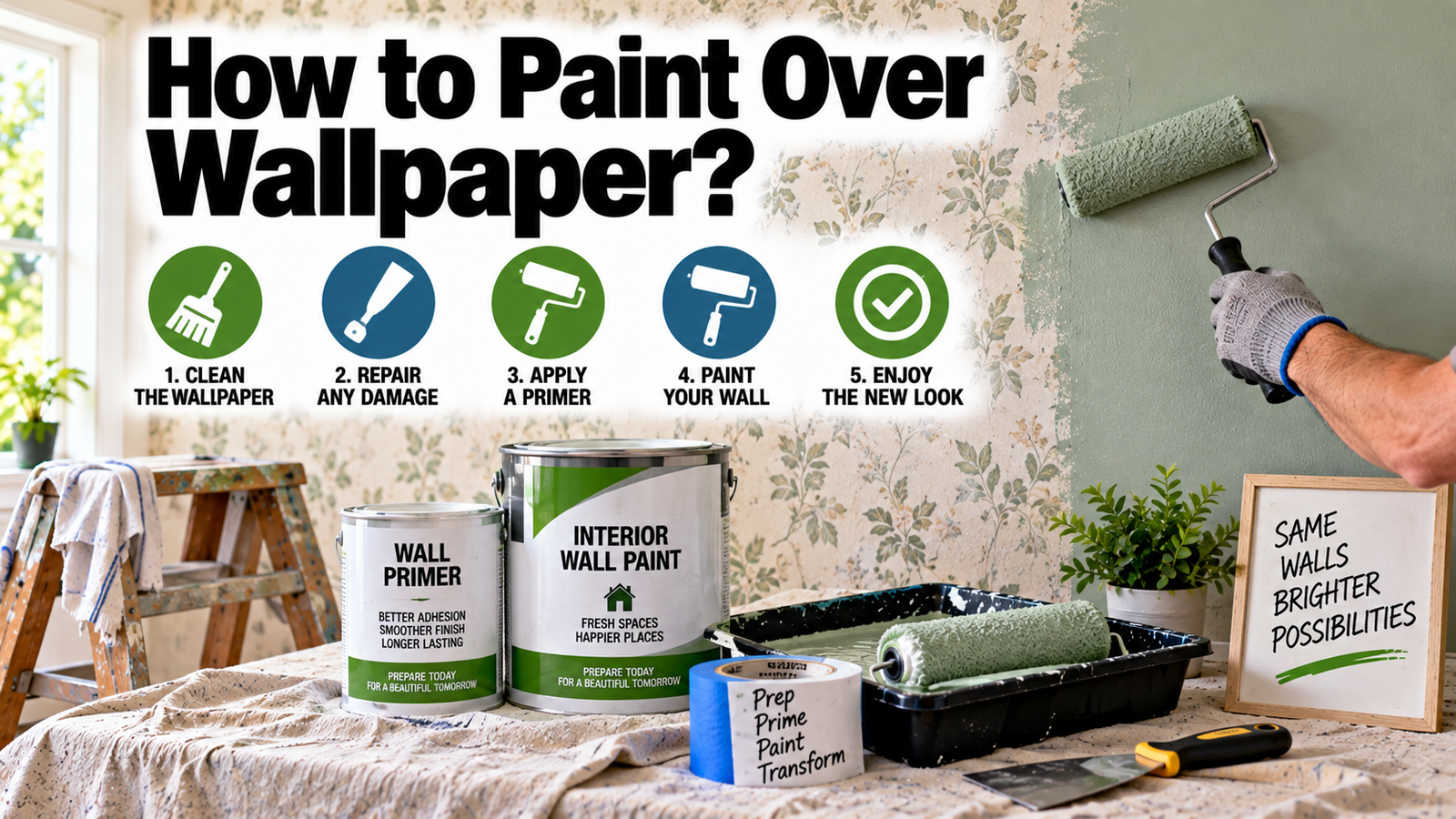
- Prime with oil or shellac. Cut in the edges with a brush, then roll an even coat of oil-based (or shellac) primer over the whole surface. Let it dry fully per the label before painting.
- Roll on the first coat. Cut in the perimeter with a brush, then roll the paint in three-foot sections in a W pattern, filling it in and keeping a wet edge so sections blend without lap lines.
- Add a second coat. Let the first coat dry, then apply a second for solid, even coverage. Patterned or dark paper may need a thin third coat to fully hide it. Pull the tape while the last coat is slightly wet.
Mistakes that cause bubbling and peeling
Almost every wallpaper paint-job failure traces to one of these. Avoid them and your walls will hold.
- Using a water-based primer. The number one mistake. It reactivates the glue and the paper bubbles. Oil-based or shellac primer only.
- Soaking the walls to clean them. Water loosens the paste just like the wrong primer does. Dust and lightly wipe, never wash down.
- Skipping the seams. Unsmoothed seams show as lines through the paint no matter how many coats you add. Spackle and sand them first.
- Painting over damaged or peeling paper. Paint will not hide rips, bubbles, or lifting edges. If the paper is in poor shape, strip it instead.
- Using a glossy topcoat. High sheen highlights every seam and flaw. Stick to flat or matte for the most forgiving finish.
Conclusion
Painting over wallpaper is a genuine time-saver when the paper is smooth, tight, and firmly stuck. The job comes down to a few non-negotiables: smooth and caulk the seams, clean without soaking, and, above all, seal the paper with an oil-based or shellac primer so the glue never reactivates. Finish with two coats of a flat or matte paint. Get those right and you skip the worst of the strip job while still ending up with fresh, even walls that stay put for years.
Frequently asked questions
Can you paint directly over wallpaper?
Yes, if the paper is smooth, firmly attached, and not peeling or heavily textured. You still need to smooth the seams and seal the surface with an oil-based primer first. Painting bare paper without priming usually leads to bubbling.
What primer should you use over wallpaper?
An oil-based or shellac primer, never water-based. Water-based products reactivate the wallpaper glue and cause bubbling. Kilz Original and Sherwin-Williams Fast Drying Oil-Based Primer are common picks; shellac also blocks stain bleed-through.
Why is my wallpaper bubbling after painting?
Almost always because water-based primer or paint soaked through and softened the old glue. Once it bubbles, the fix is to strip that section, repair the wall, and start over with an oil-based primer.
Do you have to remove wallpaper seams before painting?
You do not remove them, but you must smooth them. Skim a thin layer of spackle over each seam, sand it flush, and caulk the perimeter edges. Untreated seams show as visible lines through the paint.
Is it better to paint over wallpaper or remove it?
It depends on the paper. Smooth, tight, hard-to-strip paper is a good candidate for painting over. Peeling, textured, or fabric-backed vinyl paper is better removed. Test a corner: if it strips off in clean sheets, removing it may be easier than you think.
Related Articles
Should You Paint the Walls Before Staining Stairs?
Can You Die From Sleeping in a Freshly Painted Room?