
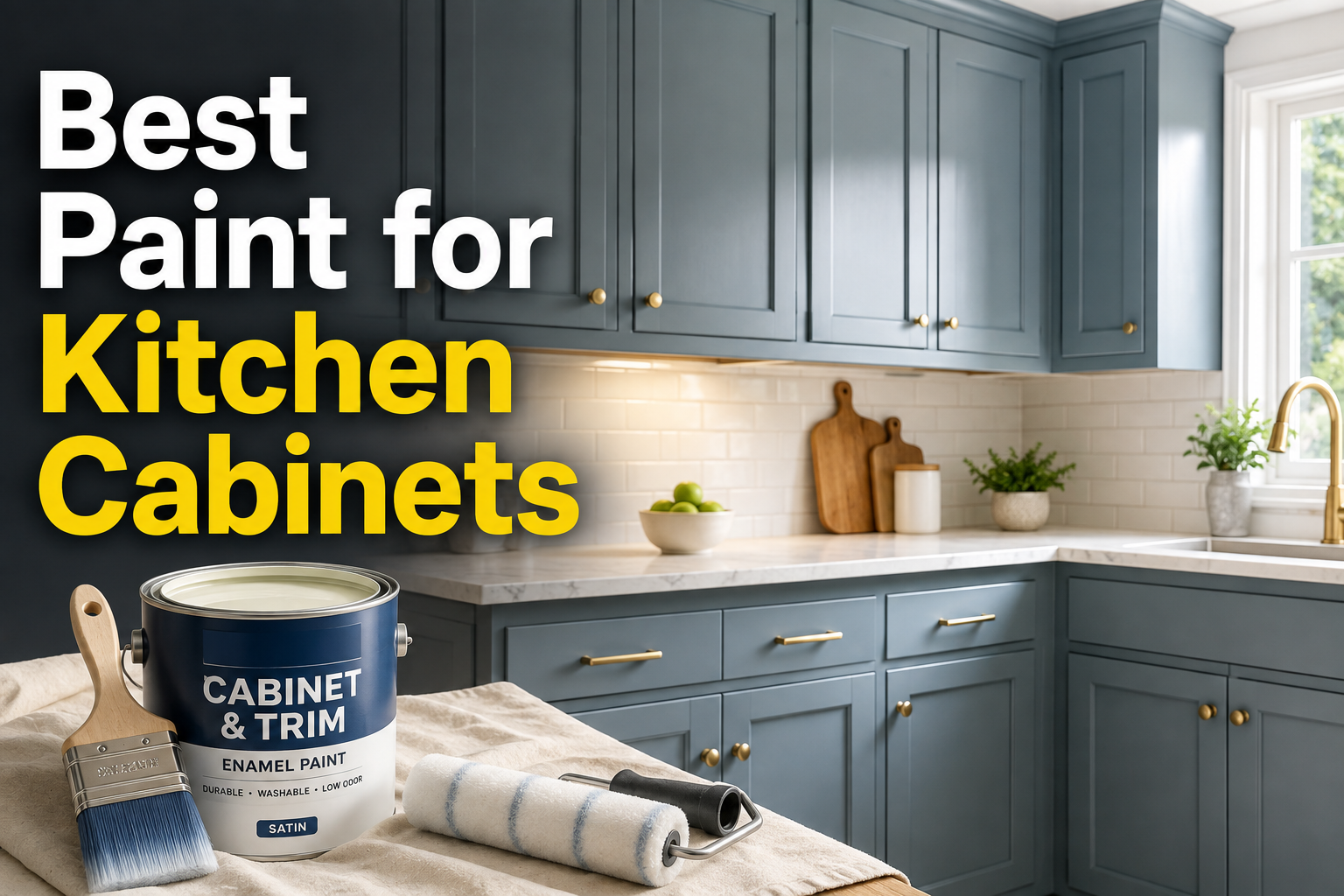

The best paint for kitchen cabinets is a waterborne alkyd or urethane hybrid enamel in a satin or semi-gloss finish. These paints cure to a hard, smooth, almost plastic-like shell that resists the chips, scuffs, grease, and constant handling that cabinets take every day. Regular wall paint, even premium latex, stays soft and fails fast on cabinets no matter how nice it looks going on.
- The short answer: what paint is best?
- Why kitchen cabinets need a special paint?
- The main types of cabinet paint compared
- What sheen is best: satin or semi-gloss?
- Don’t skip the primer
- Does the cabinet material change the paint?
- Top cabinet paints worth knowing
- Conclusion
- Frequently asked questions
- Related Articles
If you remember one thing, make it this: the durability of a cabinet finish comes from the paint’s chemistry, not its shine. This guide explains what to buy, which sheen to pick, why primer matters, and how the cabinet material changes your choice, so you can walk into the paint store knowing exactly what you need.
The short answer: what paint is best?
For almost every kitchen, choose a water-based hybrid enamel made for cabinets and trim. Benjamin Moore Advance (a waterborne alkyd) and Sherwin-Williams Emerald Urethane Trim Enamel are the two names professionals mention most. Both cure hard, level out brush and roller marks for a near-factory finish, and clean up with water.
Pair that paint with a good bonding primer and a satin or semi-gloss sheen, and you have the combination most painters would use in their own homes. The rest of this guide is about why that answer holds up and how to adjust it for your specific cabinets.
Why kitchen cabinets need a special paint?
Cabinets live the hardest life of any painted surface in the house. Lower doors get bumped with hips and knees, handles are touched hundreds of times a week, and everything near the stove collects cooking grease that later gets scrubbed off. Wall paint is built to cover large surfaces that nobody touches, so it never develops the toughness cabinets need.
A proper cabinet paint does two things wall paint cannot. It self-levels, meaning the wet film relaxes and flattens as it dries so brush and roller marks soften into a smooth surface. And it cures hard rather than just drying, forming a non-porous film that shrugs off chips, scratches, moisture, and repeated cleaning. That hardness has to come from the resin in the paint, which is why cabinet enamels are sold as a separate category.
A high sheen alone will not save a soft paint. You can put semi-gloss over ordinary wall paint and still scratch it with a fingernail. The shine is the look; the resin is what survives the kitchen.
There is also the problem of blocking, which wall paint handles badly. Blocking is when two freshly painted surfaces stick together after you close a door or drawer, then tear when you open it. Cabinet doors press against their frames constantly, so a paint that never fully hardens will bond to itself and pull away in patches. A true cabinet enamel cures hard enough that the surfaces separate cleanly, which is one more reason the resin type matters more here than anywhere else in the house.
The main types of cabinet paint compared
Three broad categories show up when you shop for cabinet paint. Here is how they stack up for a kitchen:
| Paint type | Why people pick it | Trade-offs |
| Waterborne alkyd / urethane hybrid enamel | The pro favorite: cures hard, self-levels, water cleanup, low odor, resists yellowing | Costs more than standard latex; slightly longer cure |
| Traditional oil-based (alkyd) enamel | Hardest, most durable classic finish | Strong fumes, slow drying, mineral-spirit cleanup, yellows over time |
| Acrylic latex (cabinet-grade) | Easy to use, low odor, budget-friendly | Softer film; only use versions made for cabinets, never wall latex |
The clear modern winner is the hybrid enamel. It gives you the smooth, hard finish oil paint was famous for without the fumes, long dry times, and yellowing that made oil a hassle. Traditional oil still cures a touch harder, but most painters no longer think the downsides are worth it. Standard wall latex, flat or eggshell, does not belong on cabinets at all.
What sheen is best: satin or semi-gloss?
Skip flat and matte finishes in a kitchen entirely. They are porous, mark easily, and cannot be scrubbed without damage. That leaves two good choices for cabinets: satin and semi-gloss.
Satin has a soft, low-key glow and is more forgiving of small dents and grain. It hides fingerprints and surface flaws better, which makes it a smart pick for older or less-than-perfect cabinets.
Semi-gloss is shinier, more durable, and the easiest to wipe clean, so it shines near the stove and sink where grease and splatter land. The catch is that its reflectivity shows off every imperfection, so the prep has to be clean.
For most kitchens, semi-gloss is the safe default for its scrubbability, while satin wins if you want a softer modern look or your cabinets have visible wear. Both are correct; it comes down to how much shine and how much forgiveness you want.
Don’t skip the primer
Primer is not an optional extra on cabinets, it is half the job. A good bonding primer grips the slick factory finish so your paint has something to hold onto, and it blocks stains and old colors from bleeding through. Skipping it is one of the most common reasons a cabinet paint job peels within a year.
Clean the cabinets with a degreaser first, then scuff-sand with 180 to 220 grit to give the primer a bit of tooth. For previously painted or glossy surfaces, a shellac- or oil-based bonding primer such as Zinsser BIN gives the strongest grip. Home Depot’s cabinet paint buying guide is a helpful overview of primer and sheen options if you want to compare products before you buy.
A typical system is one coat of primer and two thin coats of enamel, with a light sanding between coats. Let each coat dry fully; rushing the recoat is how you trap softness under the surface.
How you apply the paint matters almost as much as the paint itself. Spraying gives the smoothest, most factory-like result, but a quality synthetic brush and a high-density foam roller can look nearly as good if you work in thin coats and sand lightly between them. Thin coats are the theme throughout: they level better, cure harder, and avoid the drips and ridges that a heavy coat leaves behind. Patience during the curing stage pays off too, since these enamels can take days or even a couple of weeks to reach full hardness, so treat freshly painted cabinets gently at first.
Does the cabinet material change the paint?
The paint category stays the same, but the primer and prep shift with the material. Most kitchen cabinets are wood, MDF, or laminate, and each behaves differently under paint.
- Wood: The easiest to paint. Clean, sand, prime, and apply your enamel. Grain-filling primer helps if you want to hide the wood texture.
- MDF: Soaks up primer aggressively, so use a high-build primer and expect an extra coat to build a smooth base. A foam roller keeps flat panels smooth.
- Laminate: Resists paint more than any other surface. A dedicated bonding primer like Stix is essential; without it, paint will not stick.
In every case, the enamel topcoat is the same. It is the primer that adapts to help the paint bond to that particular surface.
Top cabinet paints worth knowing
A few products come up again and again from both pros and DIYers who have lived with the results:
- Benjamin Moore Advance: A waterborne alkyd enamel that repeatedly tops blind tests for durability and smoothness. A frequent overall pick for cabinets.
- Sherwin-Williams Emerald Urethane Trim Enamel: A urethane hybrid that levels beautifully and cures very hard. A favorite among DIYers for hiding brush strokes.
- INSL-X Cabinet Coat: A purpose-built acrylic urethane enamel that offers strong value for cabinets and trim.
- Behr and other store-brand hybrids: Budget-friendly urethane alkyd options that punch above their price for at-scale projects.
You can read the full specs on a manufacturer page like Benjamin Moore Advance, but any quality waterborne alkyd or urethane enamel labeled for cabinets and trim will serve you well. The brand matters less than the type.
Conclusion
For kitchen cabinets, buy a waterborne alkyd or urethane hybrid enamel, put it in satin for a soft look or semi-gloss for easy cleaning, and pair it with a solid bonding primer. Names like Benjamin Moore Advance and Sherwin-Williams Emerald Urethane come up again and again for good reason. Prep well, prime, and lay on two thin coats, and you get a hard, smooth, factory-like finish that survives years of real kitchen use instead of chipping within months.
Frequently asked questions
Can I use regular wall paint on kitchen cabinets?
No. Standard wall latex stays soft and fails quickly on cabinets. Use a cabinet-grade enamel, ideally a waterborne alkyd or urethane hybrid, which cures hard and stands up to touching, grease, and scrubbing.
Is satin or semi-gloss better for cabinets?
Both work. Semi-gloss is more durable and easier to wipe clean, so it suits busy kitchens. Satin is softer-looking and hides imperfections better. Avoid flat and matte, which mark easily and cannot be scrubbed.
Do I need to prime kitchen cabinets before painting?
Yes. A bonding primer helps the paint grip the slick surface and blocks stains from bleeding through. Skipping primer is a top reason cabinet paint peels. Clean, sand, then prime before your topcoats.
How many coats of paint do cabinets need?
Usually one coat of primer and two thin coats of enamel. Sand lightly between coats and let each dry fully. High-build or stain-blocking primers can change this slightly.
Do I have to sand cabinets before painting?
Yes, at least a light scuff-sand with 180 to 220 grit, even on clean cabinets. Sanding creates a tooth for the primer to grip and helps prevent peeling later. Always clean off grease first.
Related Articles
Does Rubbing Alcohol Remove Paint? What It Works On
How to Make Skin Color With Paint (Easy Mixing Guide)