

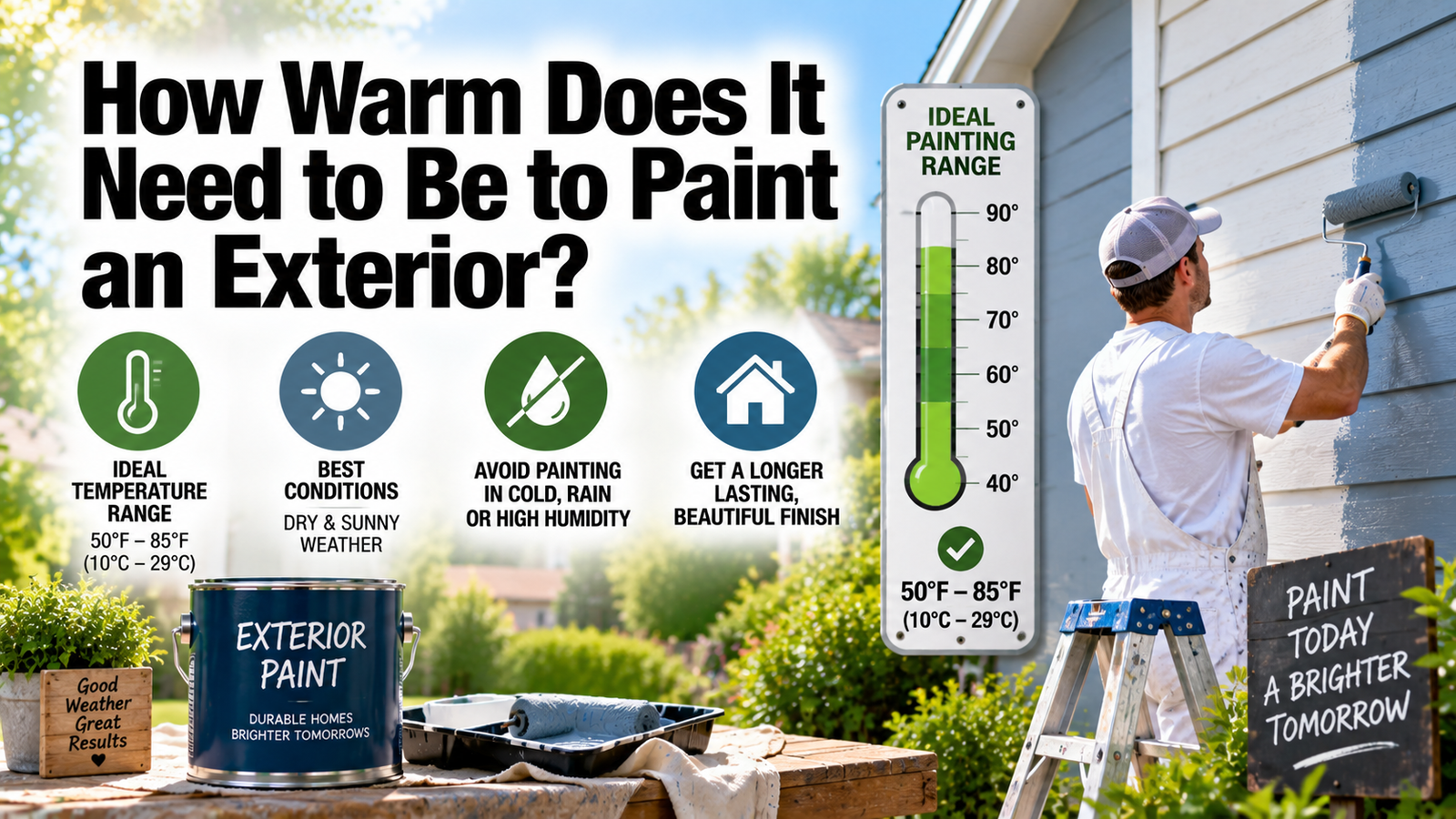

For most exterior paint, it needs to be at least 50°F for latex or acrylic paint and about 40°F for oil-based, with the sweet spot for either around 60 to 85°F. Some premium paints are specially formulated to go as low as 35°F. But the daytime reading is only half the answer: the temperature also has to stay above the paint’s minimum for hours after you finish, while the paint dries and cures, or the job can still fail.
- How warm does it need to be to paint an exterior?
- Exterior painting temperature ranges by paint type
- Why overnight lows matter as much as the daytime high?
- Surface temperature vs air temperature
- Don’t forget humidity and the dew point
- When it’s too hot to paint?
- Tips for painting in marginal weather
- Conclusion
- Frequently asked questions
- Related Articles
Paint too cold and it won’t bond or dry properly, leaving you with cracking and peeling later. Paint too hot and it dries before it can level out, giving you lap marks and poor coverage. Here’s the full window, the difference between paint types, and the factors, surface temperature, overnight lows, and humidity, that decide whether your paint job lasts.
How warm does it need to be to paint an exterior?
The short version: latex and acrylic paints, the most common choice for exteriors, generally need 50°F or warmer. Oil-based paints tolerate a slightly wider and lower range, down to about 40°F. For either type, the ideal band most pros aim for is roughly 60 to 85°F, with little wind and no rain in the forecast.
Why the minimum matters so much comes down to how the paint dries. Water-based (latex) paint cures when its tiny particles coalesce, or melt together, and that process needs warmth. Too cold and the particles never fuse properly, so the film stays weak and can crack or peel. Traditional latex needs temperatures above about 60°F to cure well, which is why spring and fall can be tricky. The good news is that modern low-temperature exterior paints are engineered to cure down to 35°F, so if you’re painting in cool weather, look for one of those and follow its label.
Exterior painting temperature ranges by paint type
Here’s how the common paint types compare. Always treat these as general guidance and check your specific product’s label, since formulas vary.
| Paint type | Workable range | Notes |
| Latex / acrylic | About 50 to 85°F | Most common for exteriors; needs warmth to cure. Traditional formulas prefer above 60°F. |
| Oil-based | About 40 to 90°F | Tolerates a lower minimum and hot surfaces a bit better than latex. |
| Low-temp acrylic | As low as 35°F | Special formulas made for cool weather; follow the label closely. |
| Ideal for either | About 60 to 85°F | The sweet spot: paint flows and cures well with little risk. |
For most home exteriors, a quality 100% acrylic latex is the go-to, so 50°F is the number to remember as your practical floor unless you’ve bought a low-temperature formula.
Why overnight lows matter as much as the daytime high?
This is the factor that catches people out. It’s not enough for the temperature to hit the minimum for a couple of hours in the afternoon. The paint needs to stay warm enough to cure, and that curing continues long after you’ve packed up the brushes.
Picture painting at 4 p.m. when it’s a mild 45°F, then watching the thermometer drop to 28°F a few hours after sundown. That freeze hits paint that hasn’t finished drying, and the job is likely ruined. As a rule of thumb, you want at least 4 hours of drying before the evening dew falls, and ideally a full 24 hours above the paint’s minimum temperature while it cures. That’s why a warming trend beats a cold snap, even if both days hit the same afternoon high.
The overnight rule: check the low, not just the high. Aim for 24 hours above the paint’s minimum after you finish, and never paint into a night that will dip below it.
The practical move is to plan around the forecast: paint on days when the temperature stays steady and dry for at least 24 to 48 hours, and start in mid-morning or early afternoon so the coat has the warmest part of the day to set before evening cooling.
Surface temperature vs air temperature
Your weather app tells you the air temperature. The paint cares about the surface temperature, and the two can be very different. This matters at both ends of the range.
In the morning, walls and especially shaded sides can be colder than the air, and may still hold frost or dew even after the air has warmed. Wait until any frost has melted and the surface is fully dry before you start. In the afternoon sun, the opposite happens: a surface in direct sun can run up to 30°F hotter than the air. On an 85°F day, a sun-baked wall can reach well over 100°F, which is too hot for latex. A quick test is to place your hand on the surface, if it’s too hot to hold your hand there comfortably, it’s too hot to paint. For precision, an inexpensive infrared thermometer reads the surface directly.
Don’t paint in direct sun. Follow the shade around the house so you’re always painting surfaces that are within the paint’s temperature range, not baking hot.
Don’t forget humidity and the dew point
Temperature isn’t the only weather number that matters. Humidity affects how paint dries, and the dew point sets a hidden lower limit you shouldn’t cross.
The industry standard, per Benjamin Moore’s exterior temperature guide, is to paint only when the surface temperature is more than 5°F above the dew point, the temperature at which moisture starts to condense. Paint too close to the dew point and condensation can form on or under the fresh film, ruining adhesion and drying. High humidity in general slows drying, which leaves the wet surface exposed longer to dust, insects, and problems. Combine that with the temperature rules and you get the real target: a warm, dry, low-humidity day, well clear of the dew point, with no rain expected for several hours after you finish.
Rain deserves its own mention, because it undoes a paint job faster than almost anything. Make sure the surface is fully dry before you start; painting over a damp wall, even one that looks dry, wrecks the bond. And build in a buffer afterward: most pros want several hours of dry weather, often 4 or more, before rain can touch the fresh coat. If rain does catch paint before it has dried, you may see bubbling; the advice is to leave those bubbles alone, since many settle back down once the water evaporates, and only scrape and repaint if they don’t. A dry surface going on and dry weather coming off are both non-negotiable for a lasting finish.
When it’s too hot to paint?
Cold gets all the attention, but heat causes just as many failed paint jobs. Above roughly 85 to 90°F, or on any surface that’s baking in the sun, paint dries too fast for its own good.
When paint dries too quickly, it doesn’t have time to level out, so you get visible brush and roller marks, lap marks where wet and drying areas meet, and uneven coverage. On a very hot surface the paint can skin over before it bonds, leading to blistering, cracking, or peeling. Fast drying also traps more airborne debris in the finish. The fixes are the same ones that solve cold: paint in the shade, work during the milder parts of the day rather than peak afternoon heat, and check surface temperature, not just air. Oil-based paint handles heat a little better than latex, but extreme surface temperatures cause problems for any paint.
Tips for painting in marginal weather
If you have to paint when conditions aren’t perfect, a few habits tilt the odds back in your favor.
- Keep the paint itself warm. Cold paint from a chilly garage is too thick to flow, even if the air has warmed. Store cans indoors overnight and bring them out only when you’re ready to use them. Labels refer to air, surface, and material temperature.
- Chase the sun’s shade. Paint whichever side of the house is shaded and within range at that hour, moving around as the day goes on.
- Start and stop with time to spare. Give each coat several hours of good conditions before dew or a temperature drop. Don’t paint late in the day in cool weather.
- Use a low-temperature paint for cool seasons. If you’re painting in spring or fall, a paint rated to 35°F buys you a wider window, but still aim for 24 hours above freezing and a warming trend.
- Watch the whole forecast. Check for rain, high wind, humidity, and overnight lows, not just the daytime high. Wind dries paint too fast and blows debris onto it.
Conclusion
As a working rule, paint an exterior when it’s at least 50°F for latex or acrylic and 40°F for oil-based, with 60 to 85°F ideal, and use a low-temperature paint if you need to go down toward 35°F. But the number on your weather app isn’t the whole story: keep the temperature above the paint’s minimum for a full day of curing, paint surfaces that are in range rather than frosty or sun-baked, stay well above the dew point, and avoid extreme heat that dries paint too fast. Nail the timing and your exterior paint will flow on smoothly and last for years.
Frequently asked questions
What is the minimum temperature to paint outside? About 50°F for most latex and acrylic paints, and around 40°F for oil-based. Some special low-temperature paints are rated down to 35°F. Always check your product’s label for its exact minimum.
Can you paint an exterior in cold weather? Yes, with the right paint and timing. Use a paint formulated for low temperatures, paint during the warmest part of the day, and make sure it stays above the minimum for about 24 hours while it cures.
Is it bad to paint in direct sunlight? Yes. Direct sun can heat a surface up to 30°F above the air temperature, drying the paint too fast and causing lap marks, poor adhesion, and blistering. Paint in the shade and follow it around the house.
Why does overnight temperature matter for exterior painting? Paint keeps curing for hours after you finish. If the temperature drops below the minimum overnight, the film can fail to cure and end up cracking or peeling, even if the afternoon was warm enough.
How hot is too hot to paint a house? Above roughly 85 to 90°F air temperature, or any surface too hot to keep your hand on comfortably, is too hot. Paint dries before it can level out, leaving marks and weak adhesion.
Related Articles
What Is Elastomeric Paint? A Complete Guide