

If you’ve been researching ways to protect a stucco, concrete, or masonry exterior from cracking and water damage, you’ve probably come across the term “elastomeric paint” more than once. But what is elastomeric paint, really, and how is it different from the paint already in your garage? In short, elastomeric paint is a thick, rubber-like exterior coating engineered to stretch and flex with a building’s surface instead of cracking under stress. This guide breaks down exactly how it works, where it makes sense to use it, what it costs, and how to apply and maintain it, so you can decide with confidence whether it’s the right investment for your property.
- What Is Elastomeric Paint, Exactly?
- How Elastomeric Paint Differs From Regular Exterior Paint
- Elastomeric Paint vs. Elastomeric Roof Coating
- How Elastomeric Paint Works
- What Surfaces Is Elastomeric Paint Used On?
- Benefits of Elastomeric Paint
- Drawbacks and Limitations of Elastomeric Paint
- Elastomeric Paint Cost: What to Expect
- How Elastomeric Paint Is Applied
- Is Elastomeric Paint Right for Your Property?
- How to Maintain an Elastomeric Paint Coating
- Frequently Asked Questions
- Conclusion
- Related Articles
What Is Elastomeric Paint, Exactly?
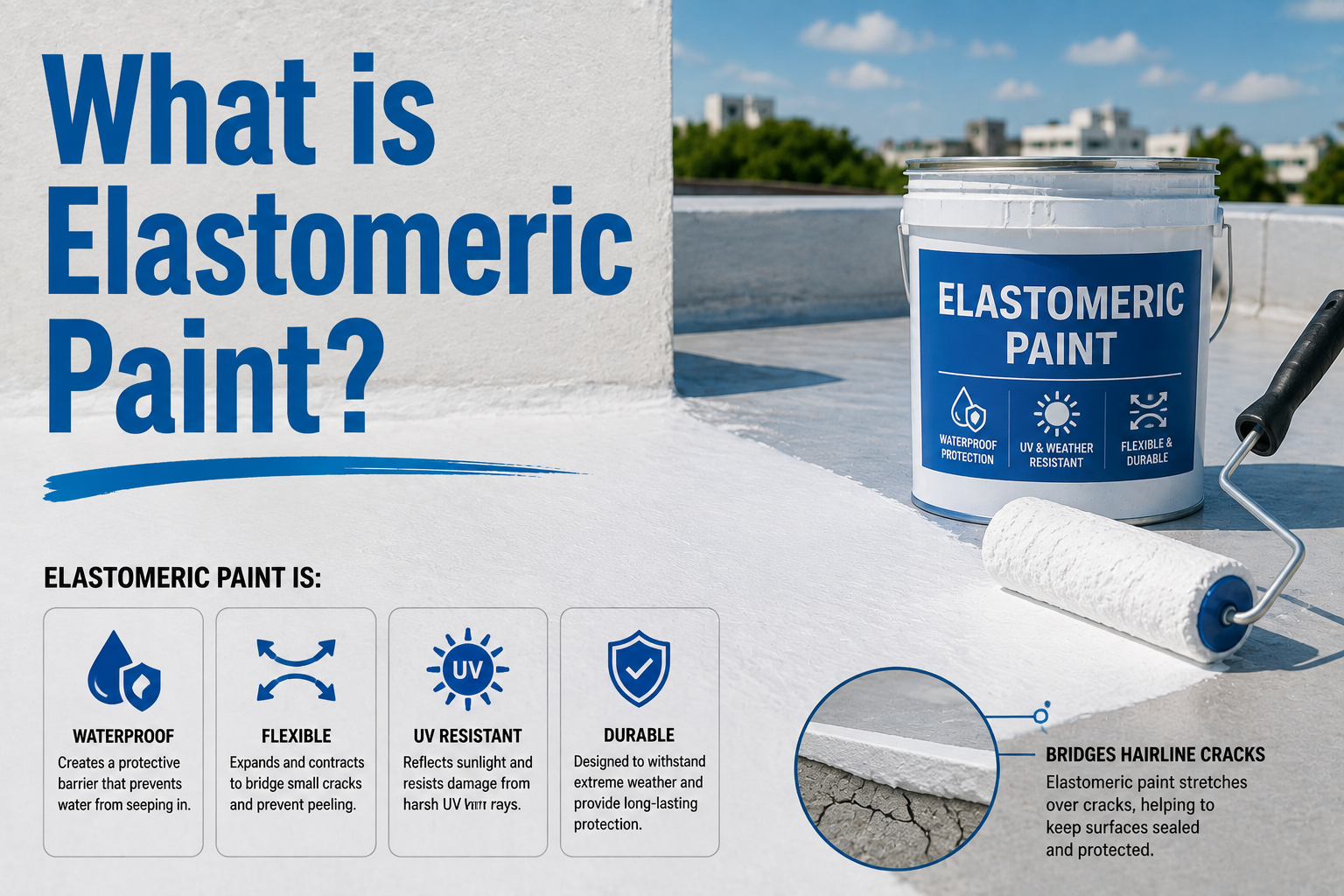
Elastomeric paint is a high-build exterior coating made primarily from acrylic polymers, though some formulations use silicone, polyurethane, or butyl rubber as the base. The word “elastomeric” comes from “elastomer,” a term for a polymer with rubber-like elasticity. That elasticity is the whole point: once cured, the coating can stretch anywhere from 200% to over 500% of its original size, depending on the formula, and then snap back to its original shape without tearing.
That flexibility matters because buildings move. Stucco, concrete, and masonry expand and contract with temperature swings, settle slightly over time, and develop hairline cracks as they age. A standard latex or acrylic paint film is rigid and thin, so it eventually cracks right along with the substrate. Elastomeric paint is applied four to ten times thicker than a standard exterior coat, which lets it physically bridge those small cracks and keep flexing as the building moves beneath it.
How Elastomeric Paint Differs From Regular Exterior Paint
The biggest differences between elastomeric paint and standard exterior paint come down to thickness, elasticity, and purpose:
- Thickness: Regular exterior paint is typically applied at 2–4 mils per coat (a mil is one-thousandth of an inch). Elastomeric coatings are applied at 8–20 mils per coat, and a finished job often reaches a total dry film thickness of 10–15 mils or more across multiple coats.
- Elasticity: Standard paint has minimal stretch and will crack once a substrate shifts even slightly. Elastomeric paint is formulated specifically to stretch and rebound.
- Purpose: Regular paint is primarily decorative with some weather resistance. Elastomeric paint is a functional waterproofing system that happens to also be decorative.
Elastomeric Paint vs. Elastomeric Roof Coating
This is a common point of confusion, since both products share the word “elastomeric.” Elastomeric wall paint and elastomeric roof coatings are chemically similar (both rely on flexible acrylic or polyurethane polymers), but they’re formulated for different exposures.
Roof coatings are engineered for horizontal surfaces that face standing water, ponding, and direct sun exposure at a steeper UV angle, so they’re typically thicker, more reflective, and rated for foot traffic.
Wall coatings are formulated for vertical surfaces and prioritize crack-bridging and rain-shedding over walkability. Using a wall product on a roof (or vice versa) usually voids the manufacturer’s warranty, so always confirm the product is rated for the surface you’re coating.
How Elastomeric Paint Works
Key Ingredients and Formula Types
Elastomeric coatings get their performance from long polymer chains that allow the dried film to move without breaking apart. The most common types include:
- 100% acrylic elastomeric: The most widely used residential and commercial option. Water-based, breathable relative to other elastomerics, and available in a full range of colors.
- Silicone elastomeric: Offers excellent UV and water resistance, often used on roofs and in extreme climates.
- Polyurethane elastomeric: Known for high abrasion resistance, common in industrial and high-traffic applications.
- Butyl rubber elastomeric: Solvent-based, highly waterproof, but less common for general building exteriors due to stronger odor and VOC content during application.
In addition to the polymer base, formulations typically include pigments for color, mildewcide to resist mold and algae growth, and fillers that add body and help the coating bridge cracks.
Mil Thickness and Why It Matters
Manufacturers specify a minimum dry film thickness (DFT) for a reason: apply the coating too thin, and it loses its waterproofing and crack-bridging ability; apply it too thick in a single pass, and it can trap moisture, sag, or take much longer to cure properly. Most manufacturers recommend two coats totaling 10–15 mils DFT for wall applications, though the exact spec varies by product. A wet-film thickness gauge is the standard tool contractors use to verify they’re hitting the manufacturer’s target during application, rather than guessing.
What Surfaces Is Elastomeric Paint Used On?
Elastomeric paint performs best on masonry and cementitious surfaces that are prone to hairline cracking, including:
- Stucco and EIFS (Exterior Insulation and Finish Systems)
- Poured concrete and concrete block (CMU)
- Brick and other masonry
- Cement fiber board siding (such as HardiePlank)
- Tilt-up concrete panels on commercial and industrial buildings
It’s a poor match for solid wood siding, previously oil-painted surfaces, and vinyl siding, which we’ll cover in more detail in the limitations section below.
Benefits of Elastomeric Paint
- Waterproofing: Once cured, elastomeric paint creates a continuous, seamless membrane that sheds wind-driven rain and resists water intrusion far better than standard paint.
- Crack bridging: The coating’s elasticity lets it stretch over hairline cracks up to about 1/16 inch without splitting, keeping moisture out of small imperfections.
- Longevity: A properly applied elastomeric coating can last 10–15 years before needing a full recoat, roughly double the lifespan of standard exterior paint.
- UV and weather resistance: High-quality acrylic and silicone formulations resist chalking, fading, and breakdown from sun exposure.
- Mildew resistance: Built-in mildewcide additives help limit mold and algae growth on the surface.
- Energy efficiency: The added thickness and, in reflective/light colors, higher solar reflectance can modestly reduce heat transfer into the building, which may lower cooling costs in hot climates.
- Reduced maintenance: Fewer cracks and less water intrusion translate into fewer repair calls over the life of the coating.
Drawbacks and Limitations of Elastomeric Paint
No coating is a perfect fit for every building, and a fair comparison has to include the downsides.
- Higher upfront cost: Elastomeric paint typically costs 30–75% more than standard exterior acrylic paint, both in material and labor, due to the thicker application and longer cure times.
- Not DIY-friendly: Because of its thickness, elastomeric paint is difficult to spray without specialized high-pressure equipment, and rolling it evenly takes practice. Inexperienced application often results in visible lap marks, pinholing, or uneven thickness.
- Breathability concerns: Elastomeric coatings have low vapor permeability, meaning they don’t let much moisture vapor escape from the wall assembly. On older homes, historic masonry, or any wall that was designed to “breathe,” trapping moisture behind the coating can lead to spalling, efflorescence, or wood rot in framing members.
- Difficult to reverse: Because it’s so thick and adhesive, removing elastomeric paint later (if you switch to a different finish) is far more labor-intensive than removing standard paint.
- Substrate sensitivity: It won’t bond well over glossy oil-based paint, chalky or powdery surfaces, or substrates with trapped moisture, so proper surface testing before application is essential.
Elastomeric Paint Cost: What to Expect
Cost is one of the most frequently searched — and least answered — questions about elastomeric paint. As a general guideline for the U.S. market:
- Material cost: Roughly $60–$120 per 5-gallon bucket for quality acrylic elastomeric paint, which typically covers 150–250 square feet per coat at proper mil thickness (coverage is lower than standard paint because of the thicker application).
- Installed cost: Professionally applied elastomeric coating generally runs $3.50–$7.00 per square foot, including surface prep, primer, and two coats, though industrial or difficult-access jobs can run higher.
- Cost factors: Surface condition (crack repair adds cost), substrate type, number of coats required, building height/access, and regional labor rates all influence the final price.
While the upfront investment is higher than standard paint, the extended 10–15 year lifespan often makes the cost per year of protection comparable to, or lower than, repainting with standard paint every 5–7 years.
How Elastomeric Paint Is Applied
Getting a durable result depends on following the right sequence and respecting the manufacturer’s environmental requirements.
- Inspect and test the surface. A contractor should check for trapped moisture with a moisture meter, identify any incompatible existing coatings, and assess crack severity.
- Clean the surface. Pressure washing removes dirt, chalking paint, mildew, and loose debris so the coating can bond properly.
- Repair cracks and damage. Cracks larger than hairline size need to be filled with an appropriate patching compound; elastomeric paint bridges small cracks but isn’t a substitute for structural repair.
- Prime the surface. A compatible masonry primer improves adhesion, especially on porous or chalky substrates.
- Apply the coating. Most manufacturers call for two coats applied by brush, roller, or airless sprayer (with back-rolling to work the material into the surface), allowing full recoat time between passes — typically 4–24 hours depending on temperature and humidity.
- Respect application conditions. Most elastomeric products require application temperatures between 50°F and 90°F, with no rain expected for at least 24–48 hours after the final coat. Applying it outside this window can prevent proper film formation and elasticity.
- Allow full cure time. While the surface may feel dry within a day, full cure (when the coating reaches its rated elasticity and waterproofing) can take up to 30 days.
Because of the thickness, equipment requirements, and sensitivity to application conditions, this is a job best left to an experienced contractor rather than a weekend DIY project.
Is Elastomeric Paint Right for Your Property?
Elastomeric paint tends to be the right call when:
- Your building has visible hairline cracking in stucco, concrete, or masonry
- You’re in a climate with heavy rain, high humidity, or wide temperature swings
- You want to extend the repaint cycle to reduce long-term maintenance costs
- The surface is a modern, non-breathable substrate like stucco, EIFS, or concrete
It’s usually not the right call when:
- The building is historic or has traditional lime plaster/masonry designed to allow moisture vapor to escape
- The surface is solid wood siding, which needs to breathe to avoid trapped moisture and rot
- There’s already an unresolved moisture intrusion problem behind the wall (elastomeric paint can trap that moisture in rather than solve it)
- Budget constraints rule out the higher upfront material and labor cost
If you’re unsure which category your property falls into, a qualified painting contractor can perform a moisture test and substrate evaluation before recommending a coating system.
How to Maintain an Elastomeric Paint Coating
Maintenance is minimal compared to standard paint, but it’s not zero:
- Annual inspection: Walk the exterior once a year to check for new cracks, peeling at edges, or signs of moisture behind the coating.
- Gentle cleaning: A low-pressure wash once or twice a year removes dirt and mildew buildup without damaging the film.
- Spot repair: Address any small cracks or chips promptly with a compatible patch product before they widen.
- Plan for recoating: Even durable elastomeric coatings benefit from a maintenance recoat around the 10-year mark to renew UV protection and flexibility.
Frequently Asked Questions
How long does elastomeric paint last? Most quality elastomeric coatings last 10–15 years when properly applied and maintained, roughly double the life of standard exterior paint.
Is elastomeric paint the same as elastomeric roof coating? No. They use similar polymer technology, but wall coatings and roof coatings are formulated differently for their specific exposure (vertical vs. horizontal, foot traffic, ponding water), so they aren’t interchangeable.
Can elastomeric paint be used on wood siding? It’s generally not recommended. Elastomeric paint has low vapor permeability, which can trap moisture in wood and accelerate rot rather than prevent it.
Is elastomeric paint waterproof? Yes, when applied at the manufacturer’s specified thickness, elastomeric paint forms a continuous waterproof membrane that resists wind-driven rain and bridges hairline cracks.
Can I apply elastomeric paint myself? It’s possible, but not recommended for most DIYers. The thickness requires specialized spray equipment or careful back-rolling, and mistakes in mil thickness or application temperature can compromise its performance.
How much does elastomeric paint cost? Professionally installed elastomeric coating typically runs $3.50–$7.00 per square foot, depending on surface prep, number of coats, and regional labor rates.
What temperature can elastomeric paint be applied at? Most products require application between 50°F and 90°F, with no rain expected for at least 24–48 hours after the final coat.
Can you paint over elastomeric paint? Yes, but only with a compatible product. Because of its rubbery, flexible film, standard oil-based paints often struggle to adhere; another elastomeric or a specifically compatible acrylic topcoat is the safer choice.
Conclusion
Elastomeric paint is a thick, flexible, waterproofing coating built to bridge hairline cracks and stand up to years of weather exposure on stucco, concrete, masonry, and cement board surfaces. It offers real advantages over standard exterior paint — longer lifespan, superior water resistance, and reduced long-term maintenance — but it comes with tradeoffs in cost, breathability, and application difficulty that make it a poor fit for every building, particularly older homes and wood siding.
The best next step is to have a qualified painting contractor evaluate your surface, check for existing moisture issues, and confirm whether elastomeric paint is the right long-term investment for your property before you commit to a full exterior coating project.
Related Articles
Is Acrylic Paint Washable? Complete Guide to Removing It From Any Surface
How to Clean an Oil Painting Safely at Home?
Can You Paint Over Polyurethane? A Complete Step-by-Step Guide