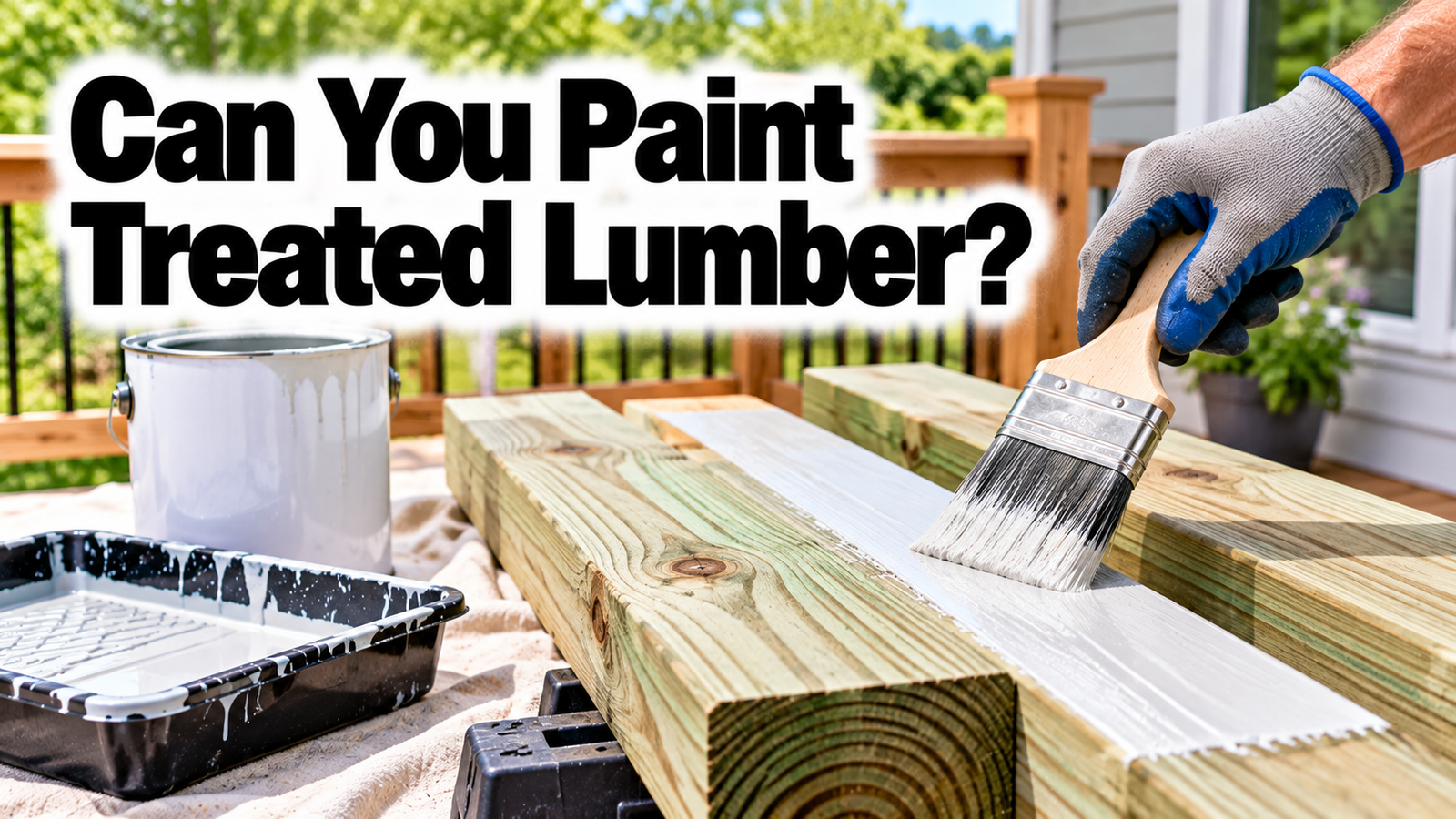

Yes, you can paint treated lumber, but not the day you bring it home. Pressure-treated wood leaves the yard soaked with waterborne preservative, and that moisture has to dry out before paint will stick. Rush it and the paint peels within a season. Wait for the wood to dry, use the right primer and paint, and the finish can hold for years. The good news is that treated lumber takes paint just as well as plain wood once it is ready, so this comes down to timing and a few simple steps, not to whether it can be done at all. Here is how to tell when it is ready and how to do the job so it lasts.
- Why you have to wait to paint treated lumber
- How long does treated lumber take to dry before painting?
- How to tell when treated wood is dry enough to paint
- What paint and primer to use on treated lumber
- How to paint treated lumber step by step
- Painting older treated wood that has been outside
- A quick safety note on treated wood
- Why treated wood paint still peels, and how to avoid it
- Conclusion
- Frequently asked questions
- Related Articles
Why you have to wait to paint treated lumber
Paint fails on fresh treated lumber for one main reason: water. The preservative that protects the wood is forced deep into the board under pressure, carried in water. So the lumber you pick up at the store is often still damp inside, sometimes heavy and cool to the touch. Paint needs a dry surface to grip. Spread a coat over wet wood and the trapped moisture pushes its way back out, lifting the film off in sheets a few weeks or months later.
There is a second, smaller reason. The copper-based chemicals used today leave the surface a little slick when it is fresh, so giving the board time to dry lets primer bite into it properly. You can read about the common copper preservatives, mostly ACQ, copper azole, and micronized copper, on the National Pesticide Information Center’s treated wood page. Older treated wood used CCA, which contained arsenic. It was pulled from most home projects around the end of 2003, so anything you buy now is the newer copper type.
The point is simple. Treated wood is not damp because something is wrong with it. It is damp because that is how the protection gets inside. Your job is to let that water leave before you lock a coat of paint over the top of it.
How long does treated lumber take to dry before painting?
There is no single number, because it depends on how wet the boards were and the weather where they sit. Drying can take anywhere from a couple of weeks to a few months. Thin, kiln-dried boards in hot, dry air are ready fast. Thick, soaking-wet timber in a damp or cold climate can take most of a season. A simple way to picture it: the heavier and cooler a board feels when you lift it, the longer it still needs to sit.
A good general target with today’s micronized copper lumber is about 30 days of dry weather before you paint, though strong sun and low humidity can shorten that and steady rain will stretch it out. The manufacturer’s own painting and staining guidance walks through how the timing tracks with the weather.
One shortcut exists. If you buy KDAT lumber, which stands for kiln-dried after treatment, the mill has already dried it for you. That wood can often take primer within a few days instead of weeks. It costs a bit more, but when you want to paint soon, it saves a long wait.
How to tell when treated wood is dry enough to paint
Test the wood, do not count days on a calendar. The easiest check is the water test. Sprinkle a few drops on the board and watch what happens. If the water beads up and sits on top, the wood is still too wet, so wait several days and try again. If the drops soak in within a minute or so, the wood is ready to take a finish.
For a more exact reading, use a moisture meter, the same cheap tool flooring installers use. Press the pins into the wood in a few spots. A reading at or below about 15 percent means you are clear to prime and paint. Much higher than that and the wood needs more drying time.
The test works because dry wood is thirsty. A board still full of preservative has no room for more water, so the drops sit on top. Once the wood has given up its extra moisture, it pulls new water in, which is the same way it will pull in primer and paint and hold onto them.
Check more than one board, and test the thick parts, not just the thin edges. A deck frame can have dry rails and a still-damp post. Painting the dry pieces and leaving the wet ones for later is fine. The rule is to only coat wood that passes the test.
What paint and primer to use on treated lumber
Use an exterior primer first, then a quality exterior acrylic latex paint on top. That two-part combination is what holds up on treated wood outdoors. Skipping the primer is the most common reason a paint job fails early.
For the primer, you have two solid choices:
| Primer type | Best for | Notes |
| Oil-based (alkyd) primer | Strong grip and stain blocking | Dries slower and needs mineral spirits to clean up |
| Latex primer for exterior wood | Easy cleanup and low odor | Pick one that clearly says exterior; not every latex primer qualifies |
For the top coat, go with two coats of exterior acrylic latex paint. Acrylic latex flexes as the wood swells and shrinks through the seasons, which is exactly what you want on an outdoor deck frame, fence, or railing. It also sheds water and resists fading better than cheap interior paint pressed into outdoor duty.
Buy paint that is rated for exterior use, and check that your primer and top coat get along, which usually means staying inside one brand’s system or reading both labels before you buy. A gallon covers roughly 350 to 400 square feet per coat, so measure your deck or fence first and you will not run out halfway through.
Think hard before painting any treated surface that lies flat and holds puddles, like the walking boards of a deck. Standing water works paint loose faster than almost anything, so those boards usually do better with a penetrating stain that soaks in instead of a film that sits on top. Railings, posts, fence boards, and trim take paint well because water runs off them.
Whatever you choose, prime the cut ends. Every time you saw a board you open up raw, unsealed wood that drinks in water. A dab of primer on each fresh cut keeps moisture out at the weakest point.
How to paint treated lumber step by step
Once the wood passes the water test, the job itself is straightforward.
- Clean the surface. Sweep off dirt, then wash with plain water or a deck cleaner and let it dry fully. Any grime left under the paint turns into a weak spot.
- Sand the rough patches. A light pass with medium grit knocks down splinters and raised fibers so the primer sits flat. Wipe away the dust when you finish.
- Prime everything. Brush or roll one even coat of exterior primer over every face, and press a little extra into the cut ends. Let it dry for the time listed on the can.
- Paint the first coat. Apply a thin, even coat of exterior acrylic latex. Thin and even beats thick and gloppy every single time.
- Paint the second coat. Let the first coat dry, then add a second. Two thin coats cover better and last far longer than one heavy layer.
- Let it cure. Keep foot traffic, pets, and furniture off the fresh paint for a day or two so the film hardens all the way through.
Work on a mild, dry day whenever you can. Hot sun can skin over the paint before it bonds to the wood, and a surprise shower can ruin a coat that has not set yet. Early morning or late afternoon in fair weather gives you the best window.
Painting older treated wood that has been outside
Treated wood that has sat outdoors for a year or more is a different starting point. The good news is it is almost always dry enough to paint by now. The catch is that sun and rain leave the surface gray, rough, and sometimes a little flaky, and paint will not stick to that worn top layer.
Clean it first. Scrub off the gray weathered film and any mildew with a deck cleaner, rinse, and let it dry for a few days. Sand down the roughest spots so you reach sound wood. After that it is the same routine as new lumber: prime every surface, then two thin coats of exterior acrylic latex. If the old wood already has a finish on it, scrape off anything loose and sand the edges smooth before you prime.
Take your time on the cleaning step here. Any gray, powdery residue left on the surface acts like dust under the paint, and a fresh coat will flake off it no matter how good the paint is.
A quick safety note on treated wood
Treated wood is fine to build with and paint, but the dust and the offcuts deserve a little care. When you sand or cut it, wear a dust mask and work outside or in a well-aired space so you are not breathing the fine particles. Sweep up the sawdust instead of letting it blow across a garden bed, and wash your hands before you eat.
One firm rule: never burn treated scraps, not in a fire pit and not in a wood stove. The smoke and ash carry the preservative chemicals. Bag the leftover pieces and put them out with the regular trash. None of this changes how you paint; it just keeps the spare material from turning into a problem.
Why treated wood paint still peels, and how to avoid it
Almost every peeling job traces back to one of three things: the wood was still wet, there was no primer, or the paint went on too thick. Fix those and your finish will outlast most of what else is on the house.
Moisture is the big one. If you are not sure the wood is dry, wait another week and test again. A short delay now beats scraping and repainting next spring. Next, never treat the primer as a step you can skip to save an hour. The primer is the layer that actually grips the wood, and the color coat alone has little to hold onto. Last, resist loading up the brush. Paint protects by bonding, not by thickness, so thin coats bond best and heavy ones trap moisture and crack.
Conclusion
Yes, you can paint treated lumber, as long as you let it dry first. Sprinkle a few drops of water on the board, and once they soak in instead of beading up, the wood is ready. Prime every surface including the cut ends, then add two thin coats of exterior acrylic latex. Dry wood, a real primer, and thin coats are the whole secret to a finish that lasts years instead of months.
Frequently asked questions
Can you paint treated wood right after buying it?
No. Fresh treated lumber is usually still damp with preservative, and paint will not stick to wet wood. Wait until a few drops of water soak in rather than bead up, which often takes several weeks.
Do you have to prime pressure-treated wood before painting?
Yes. Primer is the layer that actually grips the wood and blocks stains from bleeding through. Use an exterior oil-based or latex primer made for outdoor wood, then paint over it. Skipping primer is the top cause of peeling.
What kind of paint works best on treated lumber?
Exterior acrylic latex paint. It flexes as the wood expands and shrinks outdoors, so it resists cracking and peeling. Apply two thin coats over primer for the longest-lasting result.
How long should treated wood dry before painting?
Usually a few weeks to a few months, depending on how wet the boards are and the weather. With today’s micronized copper lumber, about 30 days of dry weather is a common target. KDAT lumber can be ready in days.
Is it better to paint or stain treated wood?
Stain usually lasts longer on flat, walked-on surfaces like deck boards because it soaks in and sheds water. Paint works well on railings, fences, posts, and trim that do not hold puddles.
Related Articles
How Much Does a 5 Gallon Bucket of Paint Weigh?
How to Get Paint Off Concrete (Wet, Dried & Stubborn)
Is Acrylic Paint Washable? Complete Guide to Removing It From Any Surface