

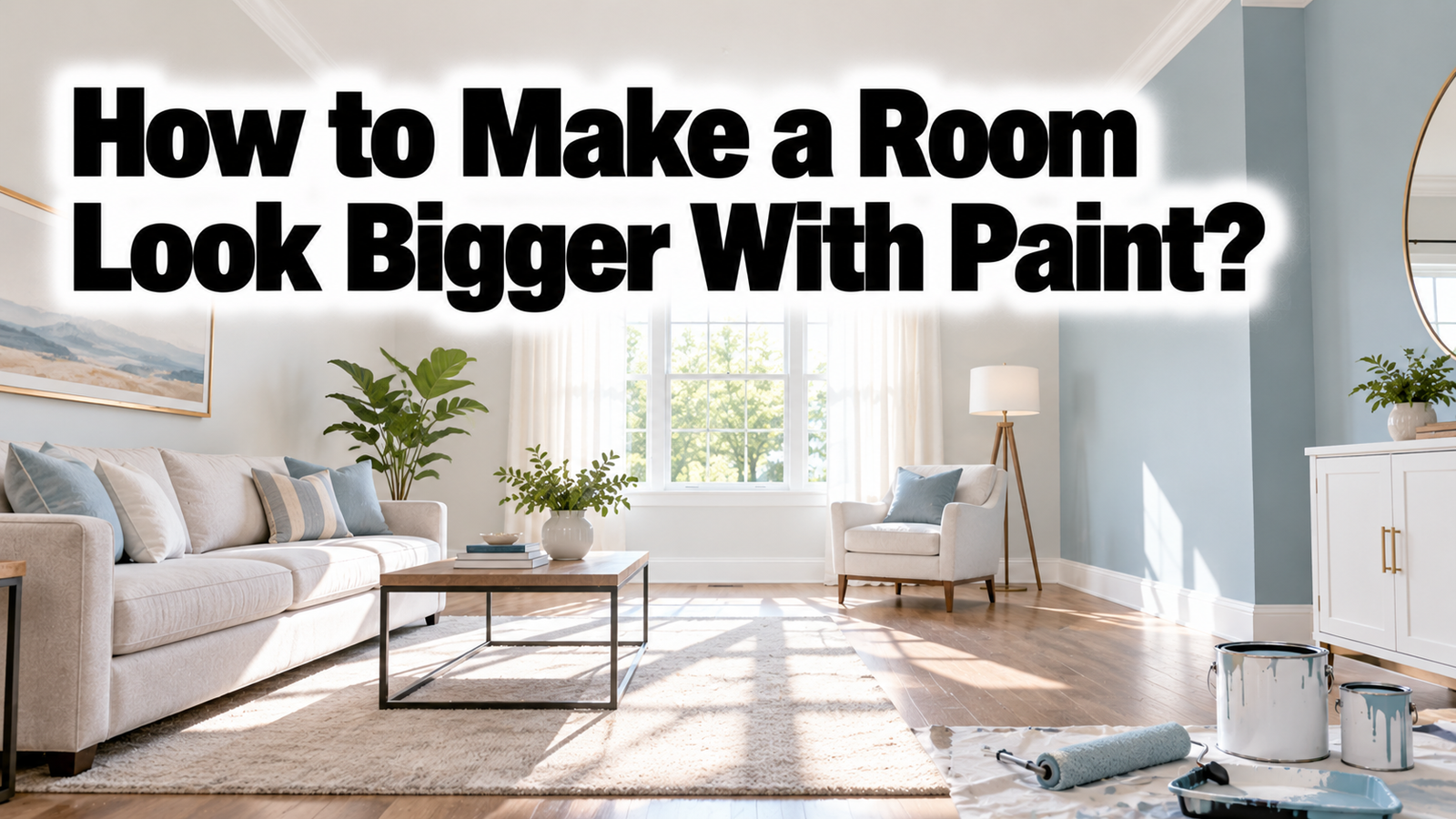

The fastest way to make a room look bigger with paint is to use light, cool colors with a high light reflectance value, and to carry one close tone across the walls, trim, and ceiling so the eye never stops at a hard edge. Light then bounces around the room instead of getting soaked up, the corners soften, and the space reads as more open than it measures. The color you pick does most of the work, but how you use it on the ceiling, the trim, and any awkward wall is what turns a tight box into a room that breathes. Here is how to do it, surface by surface.
- Why light colors make a room feel bigger
- Paint the walls, trim, and ceiling in close tones
- What color should the ceiling be?
- The best paint colors to make a room look bigger
- Pick the right paint finish
- Match your color to the room’s light
- Use paint to fix an awkward room shape
- Mistakes that make a room feel smaller
- A simple paint plan you can copy
- Conclusion
- Frequently asked questions
- Related Articles
Why light colors make a room feel bigger
Light colors make a room feel bigger because they reflect light instead of absorbing it. Every paint color has a light reflectance value, or LRV, a number from 0 to 100 that tells you how much light it bounces back. Pure black sits near 0 and soaks up almost everything. Pure white sits near 100 and throws most of it back into the room. A soft white or pale gray usually lands around 70 to 85, and that reflected light is what fills in shadows and makes the walls feel further away.
Shadows are the enemy of a small room. When corners and edges fall into shade, the brain reads them as close, and the room shrinks. A high-reflectance color keeps those corners lit, so the walls seem to step back. For a quick rule, aim for a wall color with an LRV of about 60 or higher in a small or dark room, and go higher still if the room gets little natural light.
Natural light changes everything too. A color that looks airy in a bright showroom can turn flat and gray in a north-facing room. Paint a large sample on the actual wall, look at it in the morning and again at night, and pick the shade that still feels light once the sun is gone.
Paint the walls, trim, and ceiling in close tones
Keeping the walls, trim, and ceiling in close tones is the single biggest trick for making a room feel larger. Sharp contrast between a wall color and bright white trim draws a hard line around the room, and that line tells your eye exactly where the box ends. Soften the line and the box seems to expand.
In a small room, paint the trim either the same color as the walls or a shade or two lighter in the same family. The baseboards, door frames, and window casings then melt into the walls, the edges blur, and the space flows without interruption. This also makes short walls look longer, because nothing chops them into sections.
The same idea works for built-ins, radiators, and busy moldings. Paint them to match the wall and they quietly disappear. Save strong trim contrast for large rooms that can afford to show off their edges. A tight space wants calm, continuous color, not a frame drawn around every surface.
What color should the ceiling be?
In most small rooms the ceiling should be lighter than the walls, which pulls the eye upward and makes the room feel taller. A clean, soft white overhead acts a little like a skylight, spreading reflected light down over everything below.
There is a second option that works well in rooms with low ceilings. Paint the ceiling the same color as the walls, or a slightly lighter tint of it. When the wall color runs straight up and over with no break, you lose the hard line where the wall meets the ceiling, and the eye cannot tell exactly where the room stops. The ceiling seems to float higher than it really is.
Avoid a dark or heavily colored ceiling in a small space. It presses down on the room and makes the walls feel shorter. If you love a moody ceiling, save it for a room with real height to spare. Keep the ceiling finish flat or matte so it does not throw glare or show every roller mark.
The best paint colors to make a room look bigger
The best paint colors for a small room are soft, light, and slightly cool, because cool colors appear to recede while warm, dark colors seem to advance toward you. A pale blue wall looks like it is drifting away. A deep red wall looks like it is leaning in.
That does not mean the room has to be white. Soft greiges, pale grays, gentle greens, and barely-there blues all open a space while adding more character than plain white. The key is to keep them light and low in contrast. Here are reliable choices and what each one does:
| Color family | What it does in a small room |
| Soft white or warm off-white | Reflects the most light and gives a clean, airy base |
| Pale gray | Recedes quietly and suits almost any light |
| Greige (gray plus beige) | Warms the room without closing it in |
| Pale blue | Reads as cool and open, like sky or water |
| Soft sage green | Feels calm and fresh while still staying light |
| Blush or pale peach | Adds warmth to a dark room without going heavy |
Watch the undertone. A gray with a blue base stays cool and open, while a gray with a green or purple base can turn muddy in low light. Hold your top two or three samples next to each other on the wall, not on the counter, and the undertones show up fast. The one that still looks clean and light beside the others is usually the right call.
Whatever family you choose, pick from the lightest end of the strip. If you are painting rooms that connect, carrying one light color through all of them makes the whole space feel larger, because the eye travels without hitting a new wall of color at every doorway.
Pick the right paint finish
The right finish for making a room look bigger is usually eggshell or satin, because a touch of sheen reflects light and helps the walls glow. Flat and matte finishes soak light up, which can make a dark room feel even flatter, though they do hide bumps and patches well on an older wall.
Think of it as a trade. In a room with decent light, eggshell or satin bounces light around and lifts the whole space. On a very bumpy or damaged wall, a matte finish forgives the flaws but gives up some of that glow. For most small rooms, eggshell is the safe middle ground.
Use a slightly higher sheen on the trim, like satin or semi-gloss, even when the trim is the same color as the walls. The small shift in finish catches the light along the edges and adds a quiet sense of depth. Skip high gloss on large wall areas in a small room, because it shows every imperfection and can feel hard.
Match your color to the room’s light
The direction a room faces changes how any paint color looks, so match the shade to the light you actually have. North-facing rooms get cool, soft light that pulls colors toward gray and blue, so a warm off-white or a greige keeps them from feeling cold. South-facing rooms get strong, warm light all day, so cooler colors stay fresh and open there.
East-facing rooms are bright and warm in the morning and cooler by afternoon, while west-facing rooms flip that around. Low-light rooms, like a hallway or a bathroom with one small window, need the highest-reflectance colors you can find, because there is little daylight to bounce around. In a room that runs on lamps at night, check your sample under those bulbs too, since warm bulbs push colors yellow and cool bulbs flatten them.
Use paint to fix an awkward room shape
Paint can correct a room’s proportions as well as its size. The trick is to decide which surfaces you want to push away and which you want to pull in.
For a room with a low ceiling, keep the ceiling bright white and run the wall color right up to it with no border. The unbroken color stretches the walls upward. Narrow vertical elements, like a tall painted panel or subtle vertical stripes in two close tones, add even more height.
For a long, narrow room, paint the two short end walls a slightly deeper or warmer shade than the long side walls. The end walls then appear to step forward, the length looks shorter, and the room feels more square and balanced.
Doors count as walls in a small room. Paint a door the same color as the wall around it and it stops breaking up the surface, which keeps the eye moving. A contrasting door does the opposite and acts like a full stop.
A single accent wall can add depth to a boxy room, but keep it in the same family as the other walls and only a few shades deeper, so it reads as gentle depth rather than a hard stop. One strong wall in a clashing color boxes the room in instead.
Mistakes that make a room feel smaller
A few common choices quietly shrink a room. The biggest is high contrast: dark walls next to bright white trim and a bright white ceiling draw a sharp outline around the space and advertise its size.
Using too many colors is the next trap. A different shade on every wall chops the room into pieces and stops the eye from traveling. One light color, carried all the way around, always feels more open.
Heavy, dark ceilings press down and shorten the walls. Very glossy dark walls show every lump and bounce it back at you. And skipping the test pots almost always backfires, because a color that looked soft on a tiny chip can turn dark and heavy across a whole wall. Paint a large sample, live with it for a day, then commit.
A simple paint plan you can copy
If you want a plan that works in almost any small room, start with one light, cool-leaning color at the lightest end of a strip. Put it on all four walls in an eggshell finish. Paint the trim the same color in satin, so it blends in but still catches a little light. Keep the ceiling a clean soft white, or the same wall color if the ceiling is low.
Then stop. In a tight space, skip the bold accent wall and the dark trim. The quiet, continuous color is what makes the room feel open, and the small change in finish between walls and trim gives you just enough depth. This one plan does more for a small room than any clever color combination.
Conclusion
To make a room look bigger with paint, reach for light, cool, high-reflectance colors and keep contrast low. Carry one close tone across the walls, trim, and ceiling so the edges blur, use an eggshell finish to bounce light around, and keep the ceiling light so the room feels taller. Test your color on the real wall first. Done right, a small room reads as calm, bright, and noticeably more open than its square footage.
Frequently asked questions
What is the best paint color to make a small room look bigger?
A soft, light, slightly cool color with a high light reflectance value works best. Pale gray, greige, soft white, and barely-there blue or sage all open up a room. Pick from the lightest end of the color strip and keep contrast low.
Should the ceiling be the same color as the walls?
In a room with a low ceiling, yes. Running one color up the walls and across the ceiling hides the line where they meet, so the ceiling seems higher. In a room with normal height, a lighter ceiling than the walls usually feels more open.
Do dark colors always make a room look smaller?
Not always. A dark color lowers contrast if the trim and ceiling stay close to it, which can feel cozy and even deep. But in a small, low-light room, dark walls absorb light and usually make the space feel tighter.
What paint finish makes a room look bigger?
Eggshell or satin. The slight sheen reflects light and helps the walls glow, which makes the room feel more open. Flat finishes hide wall flaws but soak up light, so save them for bumpy walls or very bright rooms.
Does painting the trim the same color as the walls really help?
Yes. Matching the trim to the walls removes the hard outline around the room, so the edges blur and the walls seem to stretch. It is one of the easiest ways to make a small space feel larger.
Related Articles
Do You Italicize Painting Titles?
How Long Should Primer Dry Before Painting?