
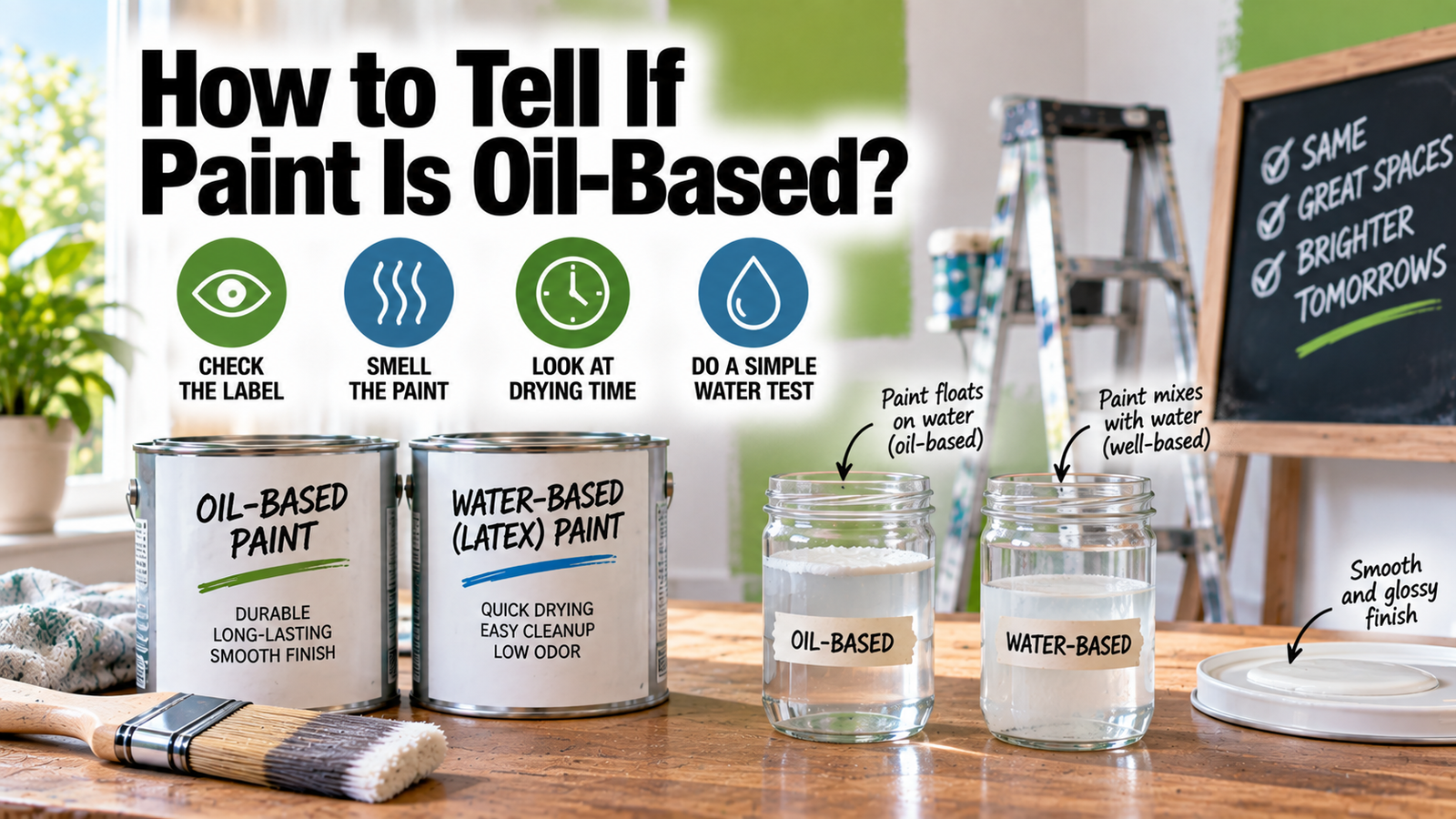

To tell if paint is oil-based, rub a cotton ball soaked in rubbing alcohol over a small spot. If no paint comes off, it is oil-based. If color rubs off onto the cotton, it is water-based (latex). That one test takes about a minute and settles it. This matters because oil and latex paint do not stick to each other well, so knowing what is already on the surface tells you how to prep before you repaint. Here is the full test, the backup clues, and what to do once you know.
The quick answer
The fastest reliable way to check is the alcohol test. Latex paint softens when alcohol or acetone touches it, and oil-based paint does not. So if you wipe a hidden spot with rubbing alcohol and nothing transfers to the cloth, you are looking at oil-based paint. If the cloth picks up color and the surface feels a little tacky, it is latex.
A couple of quick looks can back this up. Oil-based paint tends to feel smooth and hard, often with a glossy sheen. It also yellows as it ages, so old white trim that has gone slightly cream is a hint. None of these looks alone is proof, though, so always run the rub test before you decide.
The alcohol or acetone test, step by step
This is the test worth trusting. You need a cotton ball or clean rag and some rubbing alcohol. Acetone or nail polish remover works too, as long as it is not labeled “acetone-free,” since acetone-free remover will not react.
- Pick a hidden spot. Choose an out-of-the-way area, like the back of a door, inside a cabinet, or a low corner of the trim, in case the test leaves a mark.
- Clean it first. Wipe the spot with a damp cloth and let it dry. Dirt or grease can throw off the result.
- Soak the cotton. Dampen the cotton ball or rag with rubbing alcohol (or acetone).
- Rub firmly. Rub the spot back and forth for about 10 to 15 seconds.
- Read the result. If paint softens or color comes off on the cotton, it is latex. If nothing comes off and the surface is unchanged, it is oil-based.
Testing white paint with a white cotton ball makes the result hard to read. Use a dark cloth or a colored cotton pad so any transferred paint shows up clearly.
Test a few different spots if the surface has been repainted over the years, since one wall can hold layers of both kinds. The top layer is the one that matters for your next coat, so focus on what a fresh scuff or rub reveals on the surface.
A backup: the scratch test
If you do not have alcohol or acetone handy, there is a slower check. Press your fingernail firmly into the paint, or paint a small test patch of latex on the surface, let it dry overnight, and try to scratch it off. Oil-based paint is hard and resists a fingernail. A fresh latex patch over oil will scratch off easily because it never bonded. The alcohol test is quicker and cleaner, so use the scratch test only as a fallback.
Other clues that point to oil-based paint
Before or alongside the rub test, a few signs can raise your suspicion. Treat these as hints, not proof.
- The feel. Oil-based paint cures into a hard, smooth, almost glassy surface. Latex feels a touch softer and more rubbery.
- The sheen. Oil often dries to a noticeable gloss, especially on trim, doors, and cabinets.
- Yellowing. Oil-based whites and pale colors tend to go yellow or cream over the years. Latex holds its color far better.
- The age of the home. Oil-based paint was common on trim and woodwork before the early 2000s, so older houses are more likely to have it.
- Where it is. Oil was a favorite for high-wear surfaces like trim, doors, railings, and cabinets, more than for large wall areas.
Here is how the two compare at a glance:
| Clue | Oil-based paint | Latex (water-based) paint |
| Alcohol test | Nothing comes off on the cotton | Softens and rubs off onto the cotton |
| Feel and sheen | Smooth, hard, often glossy | Softer, slightly rubbery, often more matte |
| Age of the home | Common before the early 2000s | Standard in most newer work |
| Over time | Can yellow and get brittle | Stays truer in color, stays flexible |
| Cleanup | Needs mineral spirits | Cleans up with soap and water |
Why it matters before you repaint?
Knowing the paint type matters because latex will not stick to oil-based paint on its own. If you brush latex straight over an oil surface without prepping, it cannot grip the hard, slick finish. The new coat may look wet and splotchy, dry slowly, and then crack or peel away in sheets, sometimes only after you have finished the whole job and pulled off the tape.
Oil and latex behave differently as they dry, and they simply are not compatible without help. Get the surface type right first and you save yourself from redoing the entire project. That is the whole reason the one-minute test is worth doing.
What to do if it is oil-based?
You do not have to strip oil-based paint to repaint over it. You just have to prep it so a new coat can bond. Most people today switch to latex for the topcoat because it is easier to use and cleans up with water, and that is fine as long as you prime first.
- Sand the surface. Scuff-sand with about 100-grit sandpaper until the gloss is dull. This gives the primer something to grip.
- Clean off the dust. Wipe away all sanding dust with a damp cloth and let it dry fully.
- Apply a bonding primer. Use a primer that says “bonding” on the label. The word bonding is what tells you it is made to grip a slick oil surface. An oil-based or shellac primer also works and grips well.
- Paint your topcoat. Once the primer is dry, apply two coats of a quality latex paint, following the dry time on the label between coats.
If you would rather keep it simple, you can also stick with an oil-based topcoat over oil-based paint, which needs less prep. For most interior repaints, though, sanding plus a bonding primer plus latex is the common, dependable route. For a plain-English walkthrough, the Glidden guide to painting over oil-based paint is a helpful reference.
What to do if it is latex?
If the test says latex, your job is easier. Latex over latex bonds well, so you usually do not need a special primer at all. Clean the surface, patch and sand any rough spots, spot-prime bare patches or stains, and apply your new latex coat. You can also put latex over a latex surface in most cases without stripping anything. The main thing is a clean, sound surface, and you are ready to go.
Conclusion
To tell if paint is oil-based, rub a hidden spot with rubbing alcohol or acetone: no transfer means oil, color on the cotton means latex. Back it up with the feel, the sheen, and the age of the surface. It matters because latex will not stick to oil without prep, so if the paint is oil-based, sand it, apply a bonding primer, then paint. Get this right and your new coat looks clean and stays put instead of peeling.
Frequently asked questions
What is the easiest way to tell if paint is oil-based?
Rub a hidden spot with a cotton ball soaked in rubbing alcohol for 10 to 15 seconds. If no paint comes off, it is oil-based. If color transfers to the cotton, it is latex.
Can I use nail polish remover instead of rubbing alcohol?
Yes, as long as it contains acetone. Check the label and avoid any remover marked “acetone-free,” since that will not react with the paint and the test will not work.
Can you paint latex over oil-based paint?
Yes, but not directly. Scuff-sand the surface to dull the gloss, wipe off the dust, apply a bonding primer, then paint with latex. Skipping the primer causes the new coat to peel.
Does oil-based paint turn yellow over time?
Often, yes. Oil-based whites and light colors tend to yellow or go cream as they age. Latex holds its color much better, so yellowed old trim is a common sign of oil paint.
Why does it matter which type of paint is already on the wall?
Because oil and latex do not bond to each other well. Painting the wrong type over the other without prep leads to a splotchy, slow-drying coat that cracks and peels, forcing a redo.
Related Articles
How to Thin Latex Paint: Water, Ratios and Limits
How to Thin Paint for a Spray Gun: Ratios by Paint