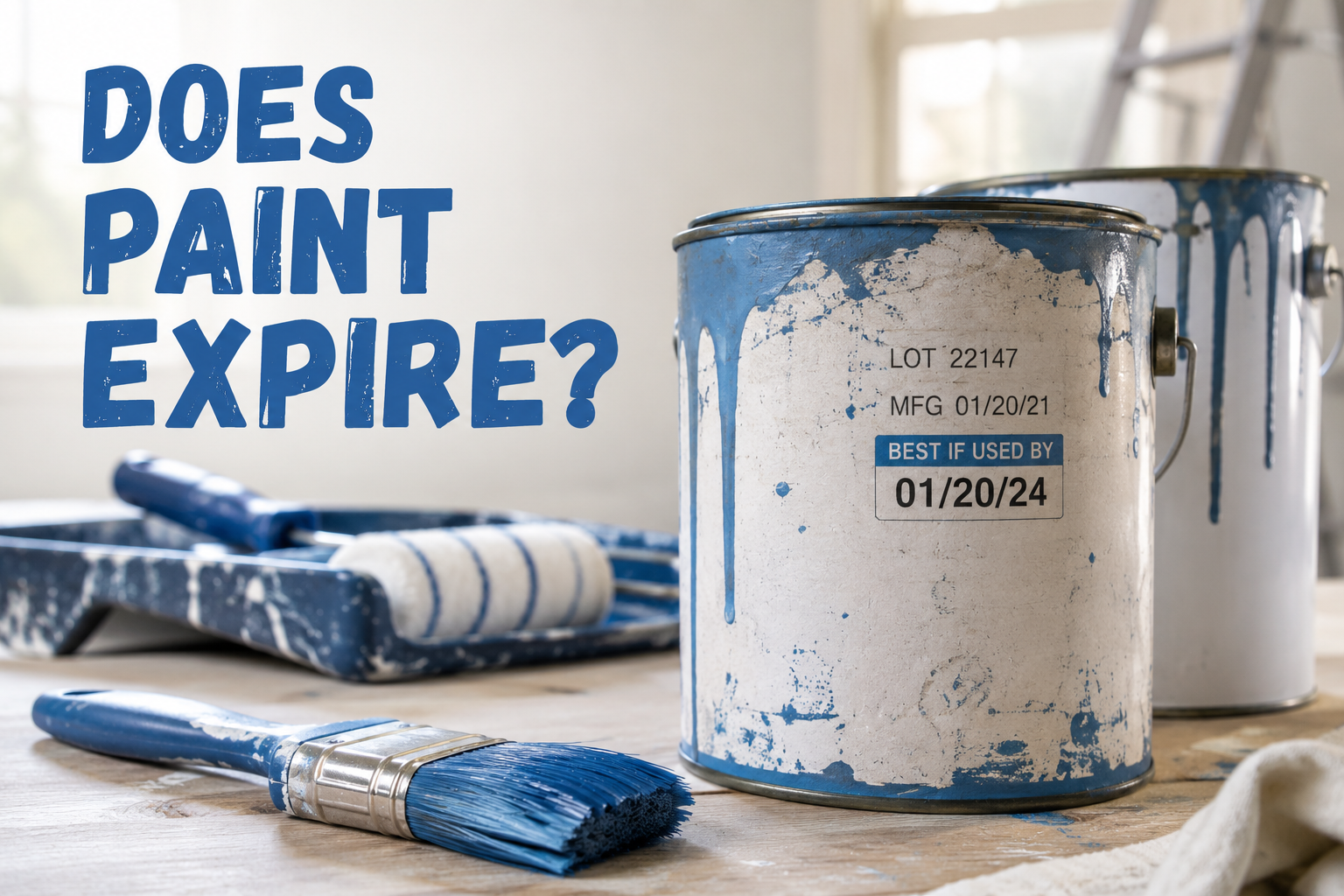

If you have ever opened an old can of paint sitting in your garage and wondered whether it is still good to use, you are not alone. Many homeowners keep leftover paint for years, hoping to use it for touch-ups later. But does paint expire? The short answer is yes, paint does expire, just like many other household products. Over time, the chemical composition of paint changes, and this can affect how well it performs on your walls, furniture, or trim.
- 2. Does Paint Really Expire?
- 3. How Long Does Paint Last? (Shelf Life by Type)
- 3.1 Latex/Acrylic (Water-Based) Paint
- 3.2 Oil-Based Paint
- 3.3 Chalk Paint
- 3.4 Spray Paint
- 3.5 Primer
- 3.6 Enamel Paint
- Paint Shelf Life Comparison Table
- 4. Signs Your Paint Has Expired
- 5. How to Test Old Paint Before Using It
- 6. What Happens If You Use Expired Paint?
- 7. How to Store Paint to Make It Last Longer
- 8. Can You Revive Old Paint?
- 9. How to Dispose of Expired Paint Safely
- 10. Frequently Asked Questions (FAQ)
- 11. Conclusion
- Related Articles
Understanding paint’s shelf life matters more than most people realize. Using expired paint can lead to wasted money, poor coverage, uneven texture, and disappointing results after hours of hard work. In some cases, it can even cause unpleasant odors or minor health irritation. This guide walks you through everything you need to know about paint expiration, including how long different types of paint last, the telltale signs that paint has gone bad, how to test it before use, proper storage techniques, and safe disposal methods.
Whether you are cleaning out a storage closet or planning your next home improvement project, this article will help you make a confident decision about whether that old can of paint deserves a second life or a trip to the disposal center.
2. Does Paint Really Expire?
Yes, paint really does expire, although it does not spoil in the same dramatic way that food does. Instead, paint degrades gradually as its ingredients break down over time. Paint is made up of a combination of pigments, binders, solvents, and additives, and each of these components can change or separate as the years pass.
Sealed vs. opened paint makes a significant difference in how long the product remains usable. An unopened can of paint that has never been exposed to air will typically last much longer than one that has been opened and resealed multiple times. This is because oxygen and contaminants introduced during use speed up the breakdown process.
So what actually causes paint to go bad? A few key factors are responsible:
- Air exposure causes the paint to slowly dry out and form a skin or film on top.
- Temperature fluctuations can cause the ingredients to separate or the texture to thicken unevenly.
- Bacterial or mold growth can develop in water-based paints, especially if moisture gets into the can.
- Chemical breakdown of binders and solvents over long periods reduces the paint’s ability to adhere properly to surfaces.
In short, paint expiration is a real and gradual process influenced by how it is stored, how often it is opened, and the environment it is kept in.
3. How Long Does Paint Last? (Shelf Life by Type)
Not all paint types age the same way. The shelf life of paint depends heavily on its formulation, whether it is water-based or oil-based, and how it has been stored. Below is a breakdown of common paint types and their typical shelf lives.
3.1 Latex/Acrylic (Water-Based) Paint
Latex and acrylic paints are the most commonly used paints for interior walls due to their easy application and quick drying time. Unopened cans of latex paint can last around 2 to 3 years when stored properly in a cool, dry place. Once opened, the shelf life shortens to roughly 1 to 2 years, as exposure to air introduces contaminants that speed up degradation.
3.2 Oil-Based Paint
Oil-based paints tend to have a longer shelf life compared to water-based options because their chemical makeup is more resistant to bacterial growth. An unopened can of oil-based paint can last up to 5 years or more, while an opened can typically remains usable for about 2 to 3 years if sealed tightly after each use.
3.3 Chalk Paint
Chalk paint, often used for furniture and decorative projects, generally has a shorter shelf life due to its unique matte formulation. Unopened, it can last around 1 to 2 years, while opened cans should ideally be used within 6 months to a year for best results.
3.4 Spray Paint
Spray paint cans are pressurized and sealed, which helps them last longer than traditional paint cans. Unopened spray paint can last up to 2 to 3 years, though the quality of the spray nozzle and internal pressure can decline over time, even if the paint itself is still usable.
3.5 Primer
Primer shelf life is similar to latex or oil-based paints, depending on its formulation. Most primers last around 2 to 3 years unopened and about 1 to 2 years once opened.
3.6 Enamel Paint
Enamel paints, known for their durable and glossy finish, typically last 2 to 5 years unopened, and around 1 to 2 years after opening, depending on storage conditions.
Paint Shelf Life Comparison Table
| Paint Type | Unopened Shelf Life | Opened Shelf Life |
|---|---|---|
| Latex/Acrylic (Water-Based) | 2–3 years | 1–2 years |
| Oil-Based | 5+ years | 2–3 years |
| Chalk Paint | 1–2 years | 6 months–1 year |
| Spray Paint | 2–3 years | Varies (nozzle dependent) |
| Primer | 2–3 years | 1–2 years |
| Enamel Paint | 2–5 years | 1–2 years |
4. Signs Your Paint Has Expired
Knowing the signs of expired paint can save you from a frustrating painting experience. Here are the most common indicators that your paint has gone bad:
- Bad or sour smell — Fresh paint has a mild chemical odor, but expired paint often develops a sour, rancid, or rotten-egg smell caused by bacterial growth, especially in water-based formulas.
- Clumps, chunks, or lumps — If you notice solid clumps that will not dissolve when stirred, this is a clear sign the paint has broken down.
- Separation that won’t stir back together — Some separation is normal in older paint, but if the liquid and solid components refuse to blend even after thorough stirring, the paint has likely expired.
- Change in color or consistency — Paint that looks noticeably different from when it was purchased, whether thicker, thinner, or discolored, may no longer perform as expected.
- Mold or mildew on the surface — Visible mold spots, usually appearing as fuzzy patches on top of the paint, indicate contamination and mean the paint should be discarded.
- Skin or film formation — This is especially common in oil-based paints, where a rubbery layer forms on top of the paint due to air exposure.
If you notice one or more of these signs, it is a strong indication that the paint should not be used, regardless of how long it has technically been stored.
5. How to Test Old Paint Before Using It
Before tossing out an old can of paint, it is worth performing a few simple tests to determine whether it is still usable.
The stir test involves mixing the paint thoroughly with a wooden stick to see if it returns to a smooth, uniform consistency. If it blends well without lumps, it may still be good.
The smell test is one of the quickest ways to check paint quality. A strong sour or unpleasant odor is a red flag that bacteria have developed inside the can.
The brush or swatch test is the most reliable method. Apply a small amount of paint to a scrap piece of wood, cardboard, or an inconspicuous wall area. Let it dry and observe whether it dries evenly, adheres properly, and matches its original color and texture.
If the paint fails any of these tests, particularly the smell or brush test, it is best to avoid using it and consider proper disposal instead.
6. What Happens If You Use Expired Paint?
Using expired paint can lead to several frustrating outcomes. Poor coverage is one of the most common issues, where the paint fails to hide the surface underneath evenly, requiring multiple extra coats. Adhesion problems may also occur, causing the paint to peel, crack, or flake shortly after application.
Uneven texture is another common result, especially if the paint has clumps or separation that were not fully mixed out before application. This can leave a bumpy, inconsistent finish on your walls or furniture.
Odor issues can also persist even after the paint has dried, which is particularly problematic for enclosed spaces like bedrooms or offices. In some cases, expired paint, especially if contaminated with mold or bacteria, may cause minor skin or respiratory irritation for sensitive individuals during application.
While using slightly aged paint is not usually dangerous, these performance and comfort issues make it clear why checking your paint’s condition beforehand is a smart step.
7. How to Store Paint to Make It Last Longer
Proper storage plays one of the biggest roles in determining how long paint remains usable. Here are some best practices to extend the shelf life of your paint.
Sealing the can tightly after every use is essential. Make sure the lid is pressed down evenly using a rubber mallet or the flat side of a screwdriver to create an airtight seal.
Storing paint in a location with a stable, moderate temperature is important. Extreme heat or cold can cause the paint to thicken, separate, or freeze, ruining its texture and consistency.
Choosing the best storage location also matters. Avoid storing paint in garages, attics, or sheds where temperatures fluctuate drastically between seasons. Instead, opt for a climate-controlled space like a basement or an interior closet.
Some people believe storing cans upside down helps create a better seal by allowing the paint itself to form a barrier against the lid, reducing air exposure. While this method can help slightly, it is not a guaranteed fix and should be combined with proper sealing.
Placing a layer of plastic wrap over the can opening before sealing the lid is another effective trick. This extra barrier helps prevent air from reaching the paint and slows down the drying process.
8. Can You Revive Old Paint?
In some cases, old paint can be revived and made usable again. If the paint has minor separation, stirring it thoroughly, sometimes for several minutes, can help restore its consistency.
Straining the paint through a mesh strainer or old pantyhose can remove small clumps or dried bits, making the remaining paint smoother and more usable.
However, there are times when it is simply not worth attempting to save the paint. If it has a strong sour smell, visible mold, or has completely hardened, these are signs that the paint has degraded beyond repair and should be disposed of instead of used.
9. How to Dispose of Expired Paint Safely
When paint can no longer be saved, disposing of it properly is important for both safety and environmental reasons.
For latex paint disposal, the easiest method is to let the paint dry out completely, either by leaving the lid off in a well-ventilated area or by mixing in cat litter or a commercial paint hardener to speed up the process. Once fully dried, the can can often be thrown away with regular household trash, depending on local regulations.
Oil-based paint disposal requires more caution, as oil-based paints are typically classified as hazardous waste. These should never be poured down drains or thrown directly into the trash. Instead, they need to be taken to a local hazardous waste disposal facility.
Checking local hazardous waste guidelines is essential, as rules vary by city and region. Many municipalities offer scheduled hazardous waste collection days or drop-off centers specifically for paint and other chemical products.
For those looking for eco-friendly disposal options, donating usable leftover paint to community organizations, schools, or theater groups is a great alternative. Some recycling centers also accept paint for repurposing into new products, reducing environmental waste.
10. Frequently Asked Questions (FAQ)
Does paint expire if never opened? Yes, even unopened paint expires eventually, though it lasts significantly longer than opened paint. Unopened latex paint can last 2 to 3 years, while oil-based paint can last 5 years or more.
Can old paint make you sick? In rare cases, expired paint contaminated with mold or bacteria can cause mild skin or respiratory irritation, especially for people with sensitivities. It is generally not highly toxic, but it is best avoided if visibly spoiled.
How can I tell the age of my paint can? Many paint cans have a manufacture date or batch code printed on the bottom or side of the can. If this is not visible, estimating based on your purchase receipt or memory is the next best option.
Does paint expire faster in cold or hot climates? Yes, extreme temperatures in either direction can speed up paint degradation. Excessive heat can cause the paint to thicken or dry out faster, while freezing temperatures can cause the texture to become clumpy or separate permanently.
Is it safe to donate old paint? Yes, as long as the paint has been tested and shows no signs of spoilage, such as bad odor, mold, or lumps, it is generally safe to donate to community centers, schools, or local charities.
11. Conclusion
So, does paint expire? Absolutely. While paint does not spoil overnight, it gradually breaks down over time due to air exposure, temperature changes, and natural chemical shifts within its ingredients. Knowing the signs of expired paint, such as bad odor, clumping, separation, or mold, can help you avoid using a product that will not perform well.
By understanding the average shelf life of different paint types, testing paint before use, and following proper storage techniques, you can make the most of every can and reduce unnecessary waste. And when paint truly reaches the end of its usable life, disposing of it safely protects both your home and the environment.
Taking a few extra minutes to check your paint’s condition before starting a project can save you time, money, and frustration, ensuring your walls, furniture, or trim look their absolute best.
Related Articles
What Is Eggshell Paint? A Complete Guide to Finish, Uses, Pros & Cons
Does Spray Paint Come Out of Clothes? Complete Removal Guide
How to Make Puffy Paint at Home: A Complete Guide
Is Acrylic Paint Washable? Complete Guide to Removing It From Any Surface