
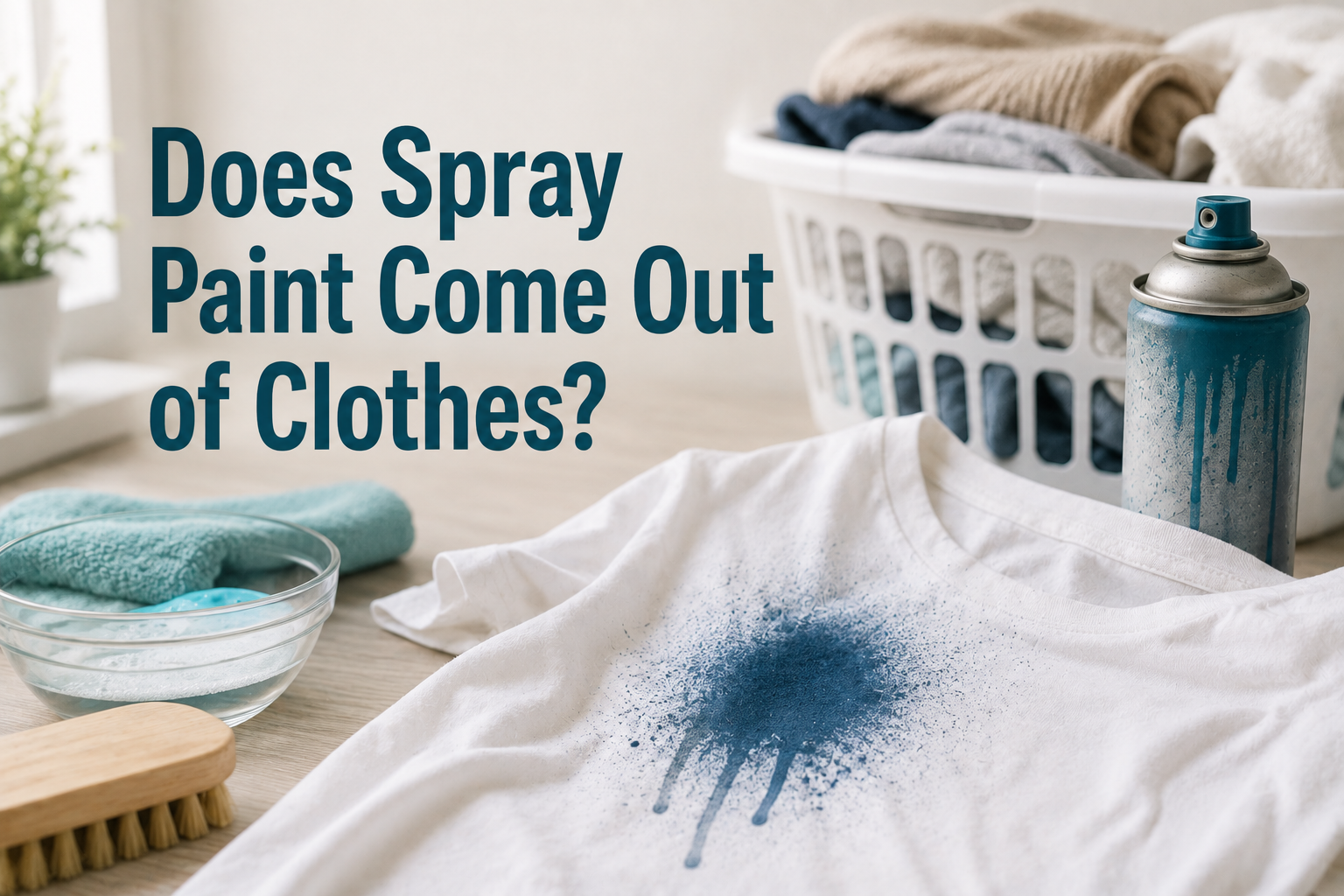

If you’ve just noticed a bright streak of color on your favorite shirt or jeans, you’re probably asking yourself one urgent question: does spray paint come out of clothes? The short answer is yes, in most cases, but the outcome depends heavily on how fast you act, what kind of paint you’re dealing with, and the type of fabric involved.
- Understanding Spray Paint Types
- Key Factors That Affect Removal Success
- Tools & Supplies You’ll Need
- Step-by-Step: Removing Fresh/Wet Spray Paint
- Step-by-Step: Removing Dried Spray Paint
- Method-by-Method Breakdown
- Fabric-Specific Guidance
- Common Mistakes to Avoid
- When Spray Paint Won’t Come Out?
- Preventive Tips for Future Spray Paint Projects
- Frequently Asked Questions (FAQ)
- Conclusion
- Related Articles
Spray paint stains have a reputation for being stubborn because the fine mist settles deep into fabric fibers almost instantly. Unlike a spilled drink or a food stain, spray paint often contains binders and pigments designed to stick to surfaces permanently once cured. That’s exactly what makes it tricky to remove from clothing.
This guide walks you through everything you need to know, from identifying the type of paint you’re dealing with, to step-by-step removal methods for both wet and dried stains, fabric-specific advice, common mistakes people make, and what to do if the stain simply won’t budge.
Understanding Spray Paint Types
Not all spray paints behave the same way, and knowing which one landed on your clothes will help you choose the right removal approach.
Oil-based (solvent) spray paint is the most common type used for furniture, metal, and outdoor projects. It creates a durable, glossy finish and is generally the hardest to remove from fabric once it dries, since it bonds tightly with fibers.
Water-based (latex or acrylic) spray paint is more common in craft projects and some home improvement uses. It’s typically easier to remove, especially while still wet, because it hasn’t fully cured into a plastic-like coating.
Enamel spray paint sits somewhere in between. It dries hard and glossy like oil-based paint but may respond to similar solvents used for oil-based removal.
Knowing the paint type matters because the wrong solvent can either fail to break down the stain or, in some cases, spread the pigment further into the fabric.
Key Factors That Affect Removal Success
Several variables determine whether a spray paint stain will come out completely, partially, or not at all.
Time is the biggest factor. A wet stain treated within minutes has a much higher chance of full removal than one left to dry overnight. Once spray paint dries, it hardens and binds more permanently to fabric threads.
Fabric type also plays a major role. Tightly woven, sturdy materials like denim and cotton can typically handle stronger solvents without damage. Delicate fabrics such as silk or wool require gentler treatment, since harsh chemicals can weaken fibers or cause discoloration.
The amount of paint matters too. A light overspray mist is far easier to treat than a heavy, saturated blotch. Thicker paint deposits may need to be physically scraped away before any solvent treatment begins.
Tools & Supplies You’ll Need
Before starting, gather your supplies so you’re not searching for items mid-treatment while the stain sets further.
| Category | Items |
|---|---|
| Household items | Dish soap, rubbing alcohol, hairspray, warm and cold water |
| Commercial products | Acetone (nail polish remover), turpentine, dedicated paint remover |
| Tools | Soft-bristled brush, dull knife or spoon, old towels or rags, disposable gloves |
Having gloves on hand is especially important when using acetone or turpentine, as these can irritate skin with prolonged contact.
Step-by-Step: Removing Fresh/Wet Spray Paint
Acting quickly gives you the best chance of a full recovery, so don’t wait once you notice the stain.
First, avoid the instinct to rub the area, as this pushes the paint deeper into the fibers and spreads it outward. Instead, gently blot the excess paint with a clean cloth or paper towel to lift as much as possible off the surface.
Next, turn the garment inside out and rinse the stained area under cold running water. Cold water helps prevent the paint from setting, while hot water can actually cause certain paints to bond faster with fabric.
Once rinsed, apply a small amount of dish soap directly to the stain and work it in gently with your fingers or a soft brush. Let it sit for a few minutes before rinsing again. If any color remains, a bit of rubbing alcohol dabbed onto the spot can help break down the remaining pigment before washing the garment as usual.
Step-by-Step: Removing Dried Spray Paint
Dried stains take more effort, but they’re often still treatable.
Start by scraping off any raised or flaking paint using a dull knife or the edge of a spoon. Be careful not to tear the fabric while doing this — light, controlled scraping is key.
Next, apply your chosen solvent (rubbing alcohol or acetone for oil-based and enamel paints, or hairspray as a gentler alternative) directly onto the stain. Let it sit for several minutes so it can soften the dried paint.
Using a soft brush or cloth, gently work the solvent into the stain in small circular motions. You should start to see the paint lifting or breaking apart. Repeat this process as needed, then rinse thoroughly and wash the garment on a normal cycle to remove any remaining residue.
Method-by-Method Breakdown
Different situations call for different tools. Here’s a closer look at the most effective methods people use.
Rubbing alcohol method: Works well on both wet and dried paint, especially on sturdier fabrics. Apply directly to the stain, let it sit, then blot and rinse.
Acetone/nail polish remover method: Effective on oil-based and enamel paints but should be spot-tested first, since it can damage certain synthetic fabrics like acetate or triacetate.
Hairspray method: A gentler, old-school trick that works because many hairsprays contain alcohol. Spray directly onto the stain, let sit briefly, then blot and wash.
Dish soap and warm water method: Best for fresh, water-based paint. Gentle enough for everyday use without risking fabric damage.
Commercial paint remover method: Designed specifically for tough stains, these products can be more effective on dried or heavy paint deposits, but always follow label instructions and test on a hidden area first.
WD-40 method: Some people find success using WD-40 to loosen dried paint before washing with dish soap, though this works best as a pre-treatment rather than a standalone solution.
Fabric-Specific Guidance
Treating the stain correctly also means respecting the limits of your fabric.
Cotton and denim are generally forgiving and can handle stronger solvents like acetone or rubbing alcohol without major concern, making them the easiest fabrics to treat.
Delicate fabrics such as silk, wool, and rayon need a much lighter touch. Harsh solvents can cause fading, texture damage, or shrinkage, so it’s best to start with the gentlest option, like diluted dish soap, and consider professional cleaning for valuable items.
Synthetic fabrics like polyester, nylon, and spandex can react unpredictably to acetone, sometimes melting or discoloring. It’s safer to test any solvent on an inconspicuous area first, or stick with alcohol-based or soap-based treatments.
Common Mistakes to Avoid
A few common missteps can turn a treatable stain into a permanent one.
Rubbing the stain instead of blotting tends to spread the paint and push it deeper into the fibers rather than lifting it out. Using hot water early in the process can also set certain paint types, making them far harder to remove later. Skipping a patch test before applying a strong solvent is another frequent mistake, since it can lead to unexpected fabric damage or discoloration. Finally, letting the stain dry completely before attempting any treatment significantly lowers your chances of full removal.
When Spray Paint Won’t Come Out?
Despite best efforts, some spray paint stains are simply too set-in to fully remove, particularly if the paint has cured for days or the fabric absorbed a heavy amount.
Signs that a stain may be permanent include a hardened, glossy patch that doesn’t respond to any solvent, or noticeable fabric damage from repeated treatment attempts.
If the stain won’t lift, you still have options. Some people choose to dye the garment a darker color to disguise the mark, while others get creative with patches, embroidery, or fabric paint to turn the stain into an intentional design. For valuable or sentimental clothing, taking the item to a professional cleaner who specializes in stain removal is often worth the cost.
Preventive Tips for Future Spray Paint Projects
The easiest way to deal with spray paint stains is to avoid them altogether during future projects.
Wearing protective clothing or coveralls whenever you’re spray painting is the simplest safeguard. Laying down drop cloths or protective sheeting in your work area also helps catch overspray before it reaches your clothes. It’s also smart to keep a small “quick-response kit” nearby, stocked with rubbing alcohol, dish soap, and a clean rag, so you can treat any accidental splatter immediately rather than after it’s had time to dry.
Frequently Asked Questions (FAQ)
Does spray paint come out of jeans? Yes, denim is a sturdy fabric that generally responds well to rubbing alcohol or acetone treatment, especially if the stain is treated before it fully dries.
Can dried spray paint be removed after washing and drying? It’s more difficult once a garment has been through a full wash-and-dry cycle, since heat from the dryer can set the stain further. It’s not impossible, but expect to need stronger solvents and more effort.
Does spray paint ruin clothes permanently? Not always. Many stains, especially fresh ones, can be fully removed with prompt treatment. However, heavily saturated or long-dried stains on delicate fabrics have a higher chance of leaving a permanent mark.
What’s the best household product for spray paint removal? Rubbing alcohol is often considered the most versatile and accessible option for most fabric types, though dish soap is a safer starting point for water-based paints.
Conclusion
So, does spray paint come out of clothes? In most cases, yes, especially if you act quickly and use the right method for the paint type and fabric involved. Fresh, wet stains are the easiest to treat with simple rinsing, blotting, and dish soap, while dried stains require a bit more patience and stronger solvents like rubbing alcohol or acetone.
Keep in mind that results can vary, and not every stain will disappear completely, particularly on delicate fabrics or paint that’s been left to set for an extended period. With realistic expectations and the right approach, though, you have a solid chance of saving your clothing rather than tossing it aside.
Related Articles
Will Goo Gone Damage Auto Paint? The Complete Safety Guide
How to Clean an Oil Painting Safely at Home?
How to Get Road Paint Off Car: Safe & Easy Removal Guide
How to Remove Paint from Plastic: 7 Easy & Safe Methods That Work