

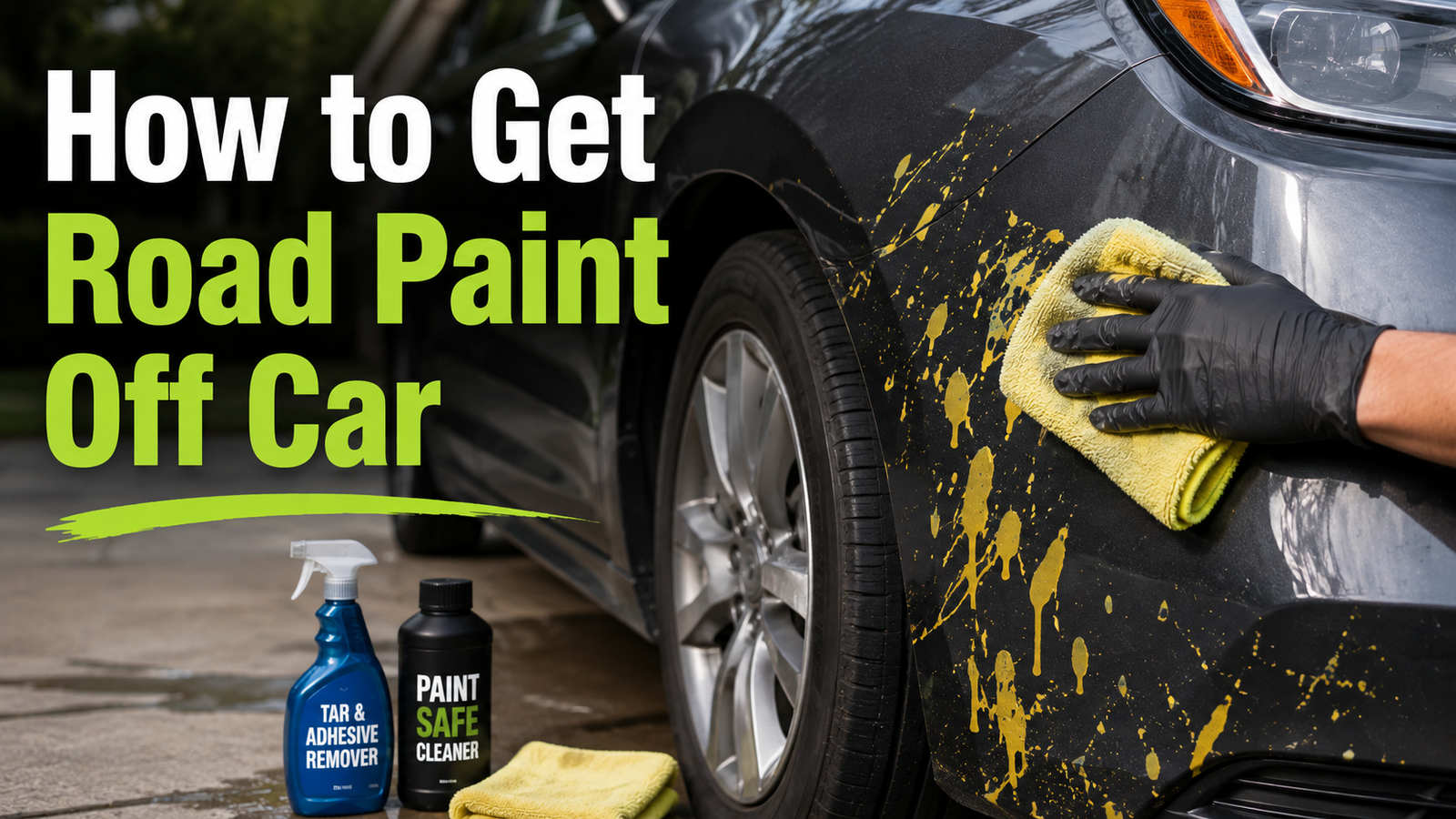

Finding road paint stuck on your car after driving through a freshly marked construction zone or lane-painting area can be frustrating. Many drivers panic and try to scrub it off with whatever is nearby, which often ends up damaging the clear coat or leaving scratches.
- Why Does Road Paint Stick to Your Car?
- Things You Need Before Removing Road Paint
- Step-by-Step Methods to Remove Road Paint
- Using Rubbing Alcohol
- Using a Clay Bar
- Using Commercial Paint Removers
- Using a Plastic Scraper for Stubborn Spots
- Home Remedies vs Commercial Products
- Mistakes to Avoid When Removing Road Paint
- Aftercare: Protecting Your Car’s Paint
- Frequently Asked Questions
- Conclusion
- Related Articles
If you are wondering how to get road paint off car surfaces without ruining the finish, the good news is that the right technique makes the process quick and completely safe.
Knowing how to get road paint off car body panels the correct way protects your vehicle’s shine while saving you money on repainting or professional detailing. This guide walks you through safe, practical, and tested methods that work on both fresh and dried road paint, along with tools you already have at home and products you can buy if needed.
Why Does Road Paint Stick to Your Car?
Road paint is designed to bond strongly with rough surfaces like asphalt, which is why it grips onto a car’s smooth painted body just as stubbornly. Understanding what makes it different from regular paint helps you choose the correct removal method without causing damage.
How Road Paint Differs From Regular Paint?
Road marking paint is formulated with thermoplastic or fast-drying resins that allow it to withstand weather, tire friction, and heavy traffic. This makes it far tougher and more adhesive than household or automotive paint. Once it dries on a car’s surface, it hardens into a layer that resists ordinary washing and requires targeted removal techniques.
Why Quick Removal Matters?
The longer road paint sits on your car, the harder it becomes to remove without affecting the clear coat underneath. Fresh paint is soft and can often be lifted with minimal effort, while dried paint bonds tightly to the surface. Acting quickly reduces the risk of permanent staining or the need for professional detailing.
Things You Need Before Removing Road Paint
Before starting the removal process, gather the right tools and understand basic safety steps. Using improvised tools without preparation is one of the biggest reasons car owners accidentally scratch their paintwork.
Tools and Supplies Checklist
Having the correct supplies on hand makes the entire process smoother and reduces the chances of damaging your car’s surface. Below is a simple checklist to prepare before you begin.
| Item | Purpose |
| Microfiber cloths | Gently wipe and lift paint without scratching |
| Isopropyl rubbing alcohol | Breaks down road paint bonds |
| Detailing clay bar | Lifts embedded paint particles |
| Car wash soap and water | Cleans the area before and after treatment |
| Plastic razor blade or scraper | Removes stubborn dried paint |
| Rubbing compound | Restores shine after paint removal |
| Car wax or sealant | Protects the surface once cleaned |
Safety Precautions to Follow
Always work in a shaded area, since direct sunlight can dry out cleaning agents too quickly and reduce their effectiveness. Wear gloves when handling alcohol-based solutions or commercial removers, since prolonged skin contact can cause irritation. Test any product on a small hidden area first to confirm it does not affect your car’s paint or clear coat.
Step-by-Step Methods to Remove Road Paint
There are several proven methods to remove road paint from a car, ranging from simple household solutions to specialized products. Choosing the right one depends on how fresh the paint is and how large the affected area is.
Using Rubbing Alcohol
Soak a microfiber cloth in isopropyl alcohol and gently press it against the paint spot for a few seconds to let it soften the bond. Rub in small circular motions rather than pressing hard, since excessive pressure can dull the clear coat. Repeat the process with a fresh section of cloth until the paint lifts away completely.
Using a Clay Bar
A detailing clay bar works well for road paint that has partially bonded to the surface but hasn’t hardened completely. Lubricate the area with car wash soap and water, then glide the clay bar back and forth until the paint particles transfer onto the clay. This method is gentle and safe for regular use without harming the paintwork.
Using Commercial Paint Removers
For paint that has dried and hardened over time, a dedicated tar and paint remover designed for automotive use offers stronger results. Apply the product following the manufacturer’s instructions, usually by spraying it directly on the stain and letting it sit before wiping away. These products are formulated specifically to dissolve road paint without harming factory clear coats.
Using a Plastic Scraper for Stubborn Spots
When paint remains after chemical treatments, a plastic razor blade can carefully lift the remaining residue. Keep the surface wet throughout this process and hold the scraper at a low, flat angle to avoid gouging the paint. Never use metal tools, as they can permanently scratch or dent the vehicle’s surface.
Home Remedies vs Commercial Products
Both home remedies and commercial products have their place depending on the severity of the paint stain and how much time you want to spend on the task.
When to Use Home Remedies
Home remedies like rubbing alcohol and clay bars work best for small, fresh paint spots that haven’t had time to harden. They are budget-friendly and use items most car owners already have at home, making them a convenient first attempt before reaching for stronger solutions.
When to Use Commercial Products
Commercial paint removers are better suited for larger stains, dried paint, or situations where home remedies haven’t fully worked. These products are engineered for automotive surfaces, offering faster and more reliable results, though they usually cost more than household alternatives.
| Factor | Home Remedies | Commercial Products |
| Cost | Low | Moderate to high |
| Effectiveness on dried paint | Limited | Strong |
| Availability | Household items | Auto stores |
| Risk of damage | Low if used correctly | Low if instructions followed |
| Best for | Fresh, small spots | Large or hardened stains |
Mistakes to Avoid When Removing Road Paint
Many car owners unintentionally cause more harm than good by using incorrect tools or aggressive techniques. Avoiding these common mistakes keeps your car’s finish intact throughout the removal process.
Using Metal Tools or Steel Wool
Metal scrapers, steel wool, or abrasive pads might seem effective for scraping off tough paint, but they leave deep scratches on the clear coat. These marks are often more noticeable and costly to fix than the original paint stain itself.
Using Harsh Chemicals Like Acetone
Acetone and other strong solvents can strip away not just the road paint but also your car’s clear coat and wax layer underneath. This leaves the surface dull, unprotected, and more vulnerable to future stains and weather damage.
Aftercare: Protecting Your Car’s Paint
Once the road paint has been fully removed, taking a few extra steps helps restore the shine and protect the surface from future damage.
Polishing the Treated Area
If the treated spot looks dull or slightly uneven after paint removal, applying a light rubbing compound with a soft cloth can restore its smoothness. Work in gentle circular motions and wipe away residue with a clean microfiber cloth afterward.
Applying Wax or Sealant
Finish the process by applying a coat of car wax or sealant over the cleaned area to rebuild a protective layer. This step not only restores shine but also makes it harder for future paint splashes or road debris to stick to the surface.
Frequently Asked Questions
Does rubbing alcohol damage car paint? When used in moderation and wiped off promptly, rubbing alcohol is generally safe for automotive paint and won’t cause lasting damage.
Can WD-40 remove road paint from a car? Yes, WD-40 can help loosen road paint, though it should be followed by a proper wash to remove any oily residue left behind.
How long can road paint stay on a car before it becomes hard to remove? Road paint typically starts hardening within a few hours, so treating it within the same day gives the best results.
Conclusion
Removing road paint from your car doesn’t have to be stressful once you know the right approach.
Starting with gentle methods like rubbing alcohol or a clay bar, and moving to commercial removers only when necessary, keeps your car’s finish safe throughout the process.
Avoiding metal tools and harsh chemicals, followed by proper polishing and waxing, ensures your vehicle looks as good as new after the paint is gone.
Related Articles
What Is Latex Paint? Meaning, Types & Uses Explained
How to Remove Chalk Paint: 5 Easy Methods That Actually Work