
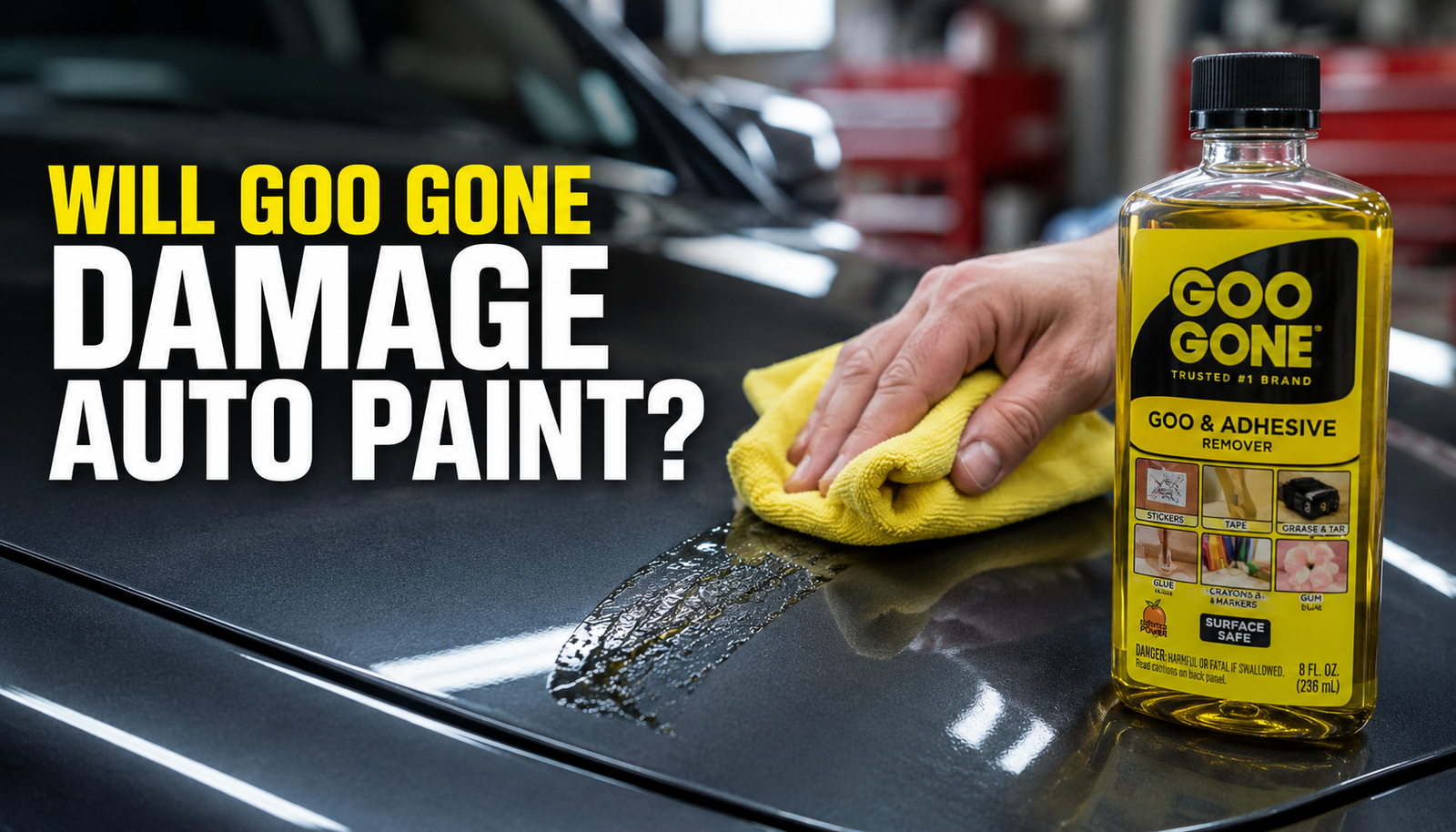

If you’ve ever peeled off a bumper sticker, price tag, or parking permit and been left with a sticky, gunky residue on your car, you’ve probably reached for a bottle of Goo Gone.
- What Is Goo Gone Made Of?
- How Car Paint Is Structured?
- Can Goo Gone Damage Auto Paint? (Core Answer)
- Factors That Increase the Risk of Damage
- Safe Way to Use Goo Gone on Car Paint
- How to Test Before Full Application?
- Alternatives to Goo Gone for Car Paint Safety
- What to Do If Goo Gone Damages Your Paint?
- Expert Tips & Best Practices
- Frequently Asked Questions (FAQ)
- Conclusion
- Related Articles
It’s one of the most popular household adhesive removers, and it works incredibly well on glass, plastic, and countertops. But when it comes to your vehicle’s paint job, a common and completely valid question pops up: will Goo Gone damage auto paint?
The short answer is that it depends on how you use it. Goo Gone is not automatically harmful to your car’s finish, but it isn’t automatically safe either. The outcome largely comes down to contact time, the condition of your paint, and how carefully you apply and remove the product.
In this guide, we’ll break down exactly what’s in Goo Gone, how car paint is built, when the product is risky, and how to use it the right way so you don’t end up with a hazy or discolored spot where your sticker used to be.
What Is Goo Gone Made Of?
Goo Gone is a solvent-based adhesive remover designed to break down the sticky bonds in glue, tape residue, tar, sap, gum, and similar substances. Its cleaning power comes primarily from petroleum distillates and citrus oil extracts, which work together to loosen and dissolve adhesive molecules so they can be wiped away.
These same ingredients are also what raise the concern for car owners. Petroleum-based solvents are strong enough to cut through glue, which means they can also interact with the wax layer, sealant, or even the clear coat on your vehicle if given enough time and exposure.
Goo Gone isn’t a single formula, either. The brand makes several variants, and knowing the differences can help you pick the safest option for automotive use:
| Product Variant | Primary Use | Automotive Safety Notes |
|---|---|---|
| Goo Gone Original | General household adhesive removal | Stronger solvent smell; use sparingly and rinse fast |
| Goo Gone Automotive | Formulated specifically for cars | Designed to be gentler on clear coat and trim |
| Goo Gone Spray Gel | Vertical/sticky surface application | Clings longer, so contact time needs monitoring |
| Goo Gone Original Pen | Small precision spot removal | Good for tiny areas like decals or emblem residue |
If you’re specifically treating your vehicle, the Automotive-labeled version is generally the safer starting point since it’s formulated with car surfaces in mind.
How Car Paint Is Structured?
To understand why the question “will Goo Gone damage auto paint” doesn’t have a simple yes-or-no answer, it helps to know what you’re actually working with. Modern vehicle paint isn’t a single layer, it’s a system.
Underneath everything is the primer, which helps paint adhere to bare metal or plastic panels. On top of that sits the base coat, which is the layer that actually gives your car its color. Covering the base coat is the clear coat, a transparent protective layer that provides gloss, depth, and UV protection. The clear coat is the layer that takes the brunt of any chemical exposure, including cleaners, adhesive removers, and solvents like those found in Goo Gone.
Several factors influence how vulnerable that clear coat is at any given time:
- Age of the paint job – Older paint tends to be more porous and reactive to solvents.
- Oxidation level – Sun-damaged or oxidized clear coat has micro-cracks that let chemicals penetrate deeper.
- Presence of wax or sealant – A well-maintained wax layer acts as a buffer between the solvent and the clear coat.
- Ceramic coating – Vehicles with ceramic coatings usually have an added layer of chemical resistance.
- Paint finish type – Glossy factory paint behaves differently than matte, satin, or vinyl-wrapped surfaces.
Can Goo Gone Damage Auto Paint? (Core Answer)
Here’s the core of the matter: on healthy, well-maintained glossy clear coat, a quick application of Goo Gone followed by prompt rinsing is unlikely to cause noticeable damage. Detailers and everyday car owners use it regularly for spot treatment of stickers and residue without issue.
That said, risk increases significantly under certain conditions:
Short-term light use is generally considered low risk. Applying a small amount, letting it sit for the recommended time, and washing it off promptly rarely causes visible harm to healthy clear coat.
Prolonged contact is where trouble starts. If Goo Gone is left sitting on the paint for an extended period, especially in the sun, the solvents have more time to break down oils in the clear coat, which can lead to a dulled, hazy, or slightly softened finish.
Wax, sealant, and ceramic coatings are almost always affected to some degree. Even if the paint itself remains untouched, Goo Gone will typically strip away protective wax or sealant in the treated area, leaving that spot more exposed until you reapply protection.
Matte, satin, and vinyl-wrapped surfaces carry a higher risk. These finishes don’t have the same glossy clear coat structure and can absorb solvents differently, sometimes resulting in visible sheen changes, staining, or lifting of vinyl edges.
Older or already oxidized paint is more vulnerable across the board. Because oxidized clear coat is more porous, it offers less resistance, so the same amount of product that would be harmless on newer paint could cause a duller patch on older paint.
Factors That Increase the Risk of Damage
Most paint damage from Goo Gone doesn’t happen because the product is inherently dangerous. It happens because of how it’s used. The main risk multipliers include:
- Leaving product on too long without rinsing – The longer the solvent sits, the more it interacts with the clear coat.
- Using excessive amounts or aggressive scrubbing – Scrubbing hard while the surface is softened by solvent can create micro-scratches or swirl marks.
- Applying under direct sunlight or high heat – Heat accelerates chemical reactions and evaporation, concentrating the solvent and increasing damage potential.
- Using it near plastic trim, rubber seals, or decals – Goo Gone can discolor or soften certain plastics and rubber trim pieces if it’s not wiped away quickly.
Avoiding these four mistakes eliminates the vast majority of horror stories you might read online about Goo Gone ruining a paint job.
Safe Way to Use Goo Gone on Car Paint
If you’re going to use Goo Gone on your vehicle, following a careful process makes a significant difference in the outcome. Here’s a step-by-step approach that minimizes risk:
- Wash the area first. Remove loose dirt and debris so you’re not grinding grit into the paint later.
- Apply a small amount directly to the residue, not broadly across the panel.
- Let it sit for the shortest effective time, usually just a minute or two, rather than the maximum time listed on the label.
- Gently wipe with a soft microfiber cloth. Avoid rough sponges, brushes, or abrasive pads.
- Rinse immediately with water once the residue lifts, don’t let the product air-dry on the paint.
- Wash the entire panel with car soap to remove any leftover solvent film.
- Reapply wax or sealant to the treated spot to restore the protective layer that was stripped away.
Using a plastic scraper or trim tool (never metal) can also help lift stubborn residue without needing to increase contact time or scrub harder.
How to Test Before Full Application?
Before treating a visible panel, it’s worth doing a quick patch test, especially if your car has an older paint job, a wrap, or an unfamiliar finish. Pick a small, hidden area such as inside the door jamb, under the fuel door, or a lower rocker panel section that isn’t easily visible.
Apply a small dot of Goo Gone, wait about the same amount of time you’d use for the real application, then wipe and rinse it off.
Inspect the spot closely, ideally in good lighting, for any dulling, discoloration, or softness in the finish. Wait a few hours and check again, since some reactions aren’t immediately obvious. If the test spot looks unchanged, you’re generally safe to proceed on the actual area.
Alternatives to Goo Gone for Car Paint Safety
If you’d rather not risk it, or if your patch test shows a reaction, there are several alternatives that are gentler on automotive finishes.
| Method | Effectiveness on Adhesive | Paint Safety | Cost |
|---|---|---|---|
| Automotive-specific adhesive remover | High | Very high (formulated for paint) | Moderate |
| Diluted isopropyl alcohol | Moderate | High, if diluted and rinsed quickly | Low |
| Clay bar treatment | Moderate-High | High, minimal chemical exposure | Moderate |
| Warm soapy water + patience | Low-Moderate | Very high, zero chemical risk | Very low |
| Goo Gone (Original or Automotive) | High | Moderate, depends on usage | Low-Moderate |
Automotive-specific removers are formulated with car finishes in mind and are usually the safest choice if you’re dealing with tough residue on a daily driver. For lighter jobs, a clay bar combined with detailing spray can lift residue without introducing strong solvents at all.
What to Do If Goo Gone Damages Your Paint?
If you’ve already used Goo Gone and you’re noticing a problem, don’t panic, most mild reactions are fixable.
Watch for the common signs of damage: a hazy or cloudy patch, a dull spot that doesn’t match the surrounding gloss, or a faint discoloration compared to the rest of the panel.
As an immediate step, wash the area thoroughly with car soap and water to remove any remaining solvent residue, then let it dry completely before assessing the damage. In many cases, a light machine or hand polish can restore lost gloss, since the haze is often just a thin layer of disturbed clear coat rather than a deep chemical burn. Applying a quality wax or sealant afterward helps seal and protect the corrected area.
If the polish doesn’t resolve the haze, or if the clear coat feels rough, sticky, or visibly etched, it’s time to consult a professional detailer. In rare, severe cases where the clear coat has been significantly compromised, localized repainting or clear coat reapplication may be necessary, though this is uncommon with typical Goo Gone use.
Expert Tips & Best Practices
Detailers who regularly deal with adhesive residue tend to agree on a few best practices. Choosing the Automotive-specific formula over the Original household version is generally recommended for any paint-adjacent task, since it’s designed with clear coat sensitivity in mind.
Weather matters more than most people realize. Working in a shaded, cool environment rather than direct summer sun reduces solvent reactivity and gives you more control over contact time. In cold weather, the product may take slightly longer to work, but the risk of heat-accelerated damage is lower.
Frequency also plays a role in long-term paint health. Occasional spot use, a handful of times a year for stickers or tar spots, is very different from using Goo Gone as a regular cleaning product across large panels. For routine cleaning, stick to pH-balanced car soap and reserve solvent-based removers for targeted adhesive problems only.
Frequently Asked Questions (FAQ)
Is Goo Gone safe for all car colors? Color itself doesn’t significantly change the risk, what matters more is the condition and type of clear coat over that color. However, darker colors can make dullness or haze more visually obvious than lighter shades.
Does it remove wax permanently? Not permanently, but it will strip wax or sealant from the treated area on contact. You’ll need to reapply protection to that spot after cleanup.
Can it be used on chrome or plastic trim? It can be used cautiously on chrome, but it’s riskier on certain plastics and rubber trim, where it may cause discoloration or a hazy residue if left too long. Always wipe trim areas quickly.
How long can I leave it on the paint? Shorter is always better. Aim for the minimum time needed to loosen the residue, generally a minute or two, rather than letting it sit for an extended period.
Is there a version labeled safe for cars? Yes, Goo Gone Automotive is specifically marketed and formulated for use on vehicle surfaces, making it a better first choice than the general household formula.
Conclusion
So, will Goo Gone damage auto paint? In most cases, used correctly, on healthy clear coat, with prompt rinsing, it won’t cause noticeable harm. The real risk comes from extended contact time, aggressive scrubbing, high heat, and using it on already-vulnerable finishes like matte, vinyl wraps, or oxidized paint.
The safest approach is simple: test on a hidden spot first, apply sparingly, don’t let it sit longer than necessary, rinse thoroughly, and reapply wax or sealant afterward. If you’re dealing with a wrap, matte finish, or older paint job, consider reaching for a dedicated automotive adhesive remover or a gentler alternative like a clay bar instead.
Used thoughtfully, Goo Gone can be a handy tool in your car care routine rather than a risk to your paint’s finish.
Related Articles
How to Get Acrylic Paint Off Wood: Easy Step-by-Step Guide
Can You Paint Air Dry Clay Before It Dries? Full Guide
How to Remove Paint from Plastic: 7 Easy & Safe Methods That Work