
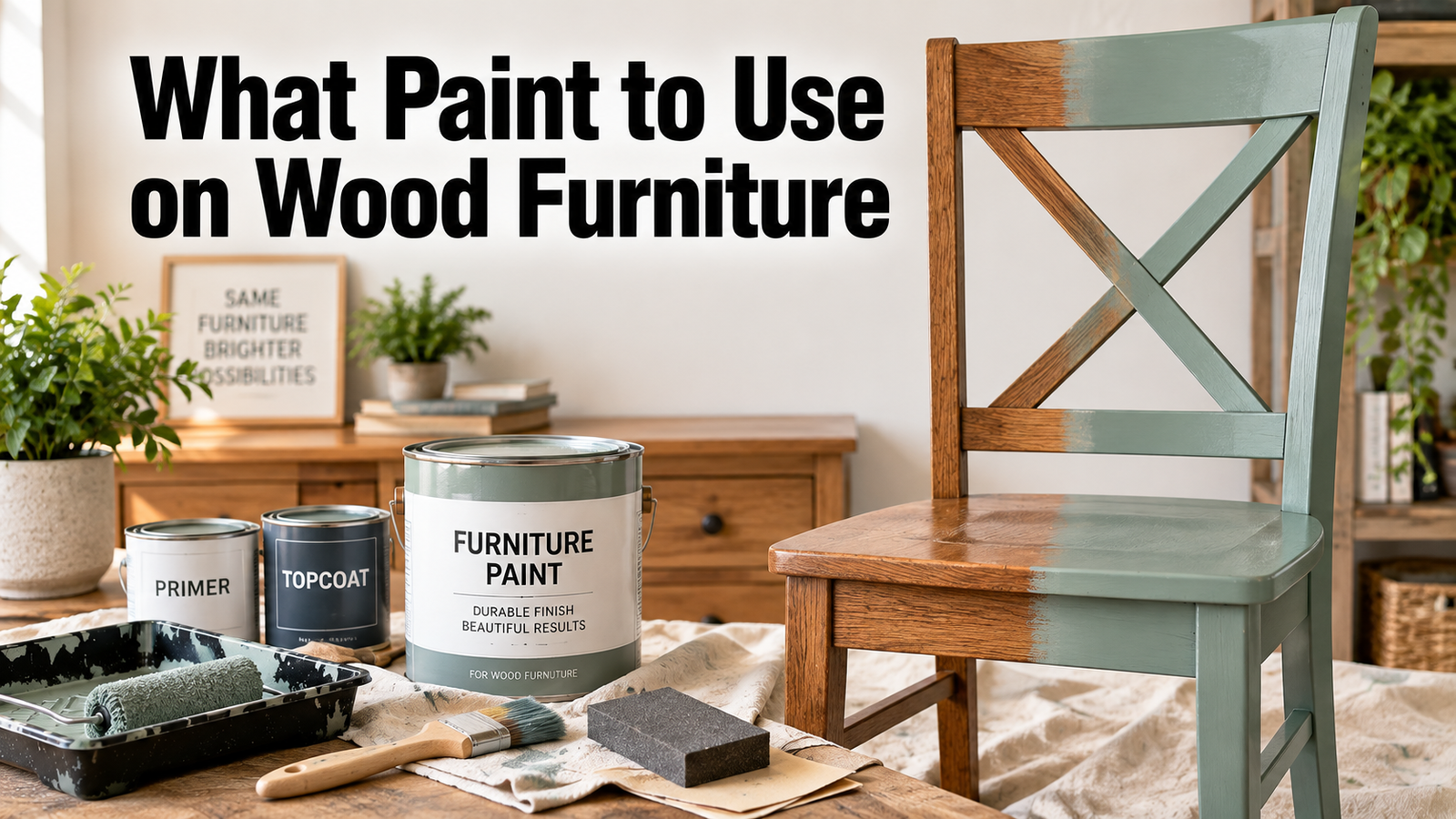

For most wood furniture, a hybrid alkyd enamel is the best paint to use. It cures to a hard, factory-smooth finish that resists scratches and daily wear, and it needs no separate topcoat. That’s the short answer. But the right paint really depends on the look you want and how the piece will be used, and there are good reasons to reach for chalk, mineral, milk, or spray paint instead. Here’s a clear breakdown of every option, plus how to match the paint to your project.
What paint to use on wood furniture, in short
If you want one paint that handles almost any piece and lasts, choose a hybrid alkyd enamel like Benjamin Moore Advance. It levels beautifully, dries hard, and skips the extra topcoat step. Furniture painters consistently rank it among the most durable finishes you can get by hand.
That said, no single paint is right for every project. A distressed vintage dresser, a quick refresh of a bookshelf, and a heavily used dining table each call for something a bit different. The rest of this guide walks through the main types so you can pick with confidence.
The main types of furniture paint
There are more furniture paints on the market than ever. Here’s how the main ones compare at a glance, then a closer look at each:
| Paint type | Best for | Topcoat needed? |
| Hybrid alkyd enamel | Durable, factory-smooth finish on high-use pieces | No, it cures hard on its own |
| Chalk paint | Matte, vintage look with minimal prep | Yes, wax or poly |
| Mineral / all-in-one | Easy application, built-in durability | Optional; topcoat for heavy use |
| Milk paint | Raw wood, natural or chippy finishes | Yes, and a bonder on finished wood |
| Latex / acrylic | Budget projects, wide color choice | Yes, for durability |
| Oil-based enamel | Very hard, self-leveling finish | No, but slow to dry, strong fumes |
| Spray paint | Detailed pieces, spindles, quick coverage | Optional topcoat |
Hybrid alkyd enamel combines the toughness of old oil-based paint with the easy soap-and-water cleanup of water-based paint. It self-levels for a smooth, brush-mark-free finish, cures rock-hard, and needs no topcoat. It’s the best all-round choice for durability, though it costs more and takes longer to cure. Behr’s Alkyd Enamel and Sherwin-Williams Emerald Urethane are other strong picks.
Chalk paint gives a soft, matte, vintage look with almost no prep, and it’s beginner-friendly. The catch is that it’s porous and scuffs easily, so it must be sealed with wax or a topcoat. It’s ideal for distressed or farmhouse pieces.
Mineral or all-in-one paint is a modern favorite. Products like Fusion Mineral come pre-mixed with a built-in topcoat, apply smoothly, and are durable enough to skip sealing on light-use pieces, though a topcoat still helps on tables and heavily handled items.
Milk paint is a natural, powder-based paint that penetrates raw wood and creates authentic aged or chippy looks. On previously finished wood it needs a bonding agent to stick, and it always wants a topcoat.
Latex or acrylic (wall) paint is the cheapest option and comes in every color, but it’s the least durable on furniture and really needs a topcoat to hold up. It’s fine for low-use pieces on a budget.
Oil-based enamel dries to an extremely hard, self-leveling finish with no topcoat needed. The downsides are long dry times, strong fumes, and solvent cleanup.
Spray paint shines on detailed pieces with spindles or intricate trim, giving quick, even coverage without drips. A furniture-grade spray like Rust-Oleum Universal works well, with an optional topcoat.
Which one should you choose?
It comes down to the finish you want and how much wear the piece will take. A few simple rules of thumb:
- Want maximum durability and a smooth finish? Go with a hybrid alkyd enamel. Best for dressers, cabinets, and anything handled daily.
- Want a matte, vintage, or distressed look? Use chalk or milk paint, and plan to seal it.
- Want easy application with good durability? A mineral or all-in-one paint is forgiving and often skips the topcoat.
- Painting something with lots of spindles or detail? Reach for spray paint to avoid drips.
- On a tight budget for a low-use piece? Latex paint with a topcoat will do.
Match the paint to the job and the whole project gets easier, since you’re working with the paint’s strengths instead of fighting them.
Do you need a primer?
Sometimes, and it depends on both the paint and the wood. Many modern furniture paints, including chalk, mineral, and all-in-one formulas, are designed to grip without a separate primer, especially after a light sanding. That’s part of their appeal.
You should still prime in a few situations. Use a bonding primer on slick surfaces that can’t be sanded well, like laminate or MDF. Use a stain-blocking primer when painting white or light colors over wood with heavy tannins, such as knotty pine or cherry, or the tannins will bleed through and yellow your finish. When you do prime, pair the primer type with your paint (a latex primer under latex paint, for example) for the best adhesion.
Do you need a topcoat?
This is the rule that trips up the most people, so it’s worth stating plainly: whether you seal depends entirely on the paint. Porous paints need protection; hard-curing enamels don’t.
- Seal these: chalk, milk, latex, and mineral paints are porous or softer and benefit from a topcoat, especially on tables and high-traffic pieces. A water-based polyurethane or polycrylic, such as Minwax Polycrylic, is the most durable choice, while wax gives a soft, low-sheen feel but wears off and needs reapplying every six months to a year.
- Do NOT seal these: alkyd enamel and oil-based paints cure hard on their own, and adding a topcoat can actually harm their adhesion and performance.
The single most common finishing mistake is topcoating an alkyd or enamel paint. These cure hard on their own, and a sealer over them can cloud or weaken the finish. Only seal porous paints like chalk and milk.
If you’re painting a piece for yourself in a low-use spot, you can often skip sealing a porous paint. For dining tables, high-traffic surfaces, or anything you’re selling, seal it.
What sheen to pick
Sheen affects both looks and cleanability. For furniture, satin and semi-gloss are the most practical choices. Satin has a soft, low glow that hides minor nicks and fingerprints, which makes it forgiving on everyday pieces. Semi-gloss reflects more light for a sleek, modern look and wipes down easily, which suits kitchen tables and kids’ furniture.
Matte and flat finishes look beautiful and photograph well, but they mark more easily and are harder to clean, so save them for low-use or decorative pieces. Whatever sheen you choose, remember that a glossier finish shows every imperfection, so smooth prep matters more as the shine goes up.
Matching the paint to the piece
To make it concrete, here’s how the choices play out on common projects. For a dining table, durability is everything, so use a hybrid alkyd enamel, or a mineral paint sealed with a tough water-based poly. For a dresser or nightstand that gets daily use, alkyd enamel or a good all-in-one paint gives a lasting, smooth finish.
For a distressed or farmhouse look, chalk or milk paint delivers the matte, aged character, sealed with wax or poly. For chairs or pieces with lots of spindles, spray paint avoids drips and reaches tight spots. And for a quick budget refresh of a low-use piece like a bookshelf, latex paint with a protective topcoat is perfectly fine. In every case, clean the piece well and give glossy surfaces a light scuff first, because even the best paint fails on a dirty or slick surface.
Conclusion
So, what paint should you use on wood furniture? For durability and a smooth, lasting finish, a hybrid alkyd enamel is the best all-round pick, and it needs no topcoat. Choose chalk or milk paint for a matte vintage look, mineral or all-in-one for easy application, spray paint for detailed pieces, and latex for budget jobs. Prime slick or tannin-heavy wood, seal porous paints but never enamels, and pick a satin or semi-gloss sheen. Match the paint to the piece and your furniture will look great and last for years.
Frequently asked questions
What is the most durable paint for wood furniture?
Hybrid alkyd enamel, like Benjamin Moore Advance or Sherwin-Williams Emerald Urethane, is the most durable option applied by hand. It cures rock-hard, resists scratches and moisture, self-levels for a smooth finish, and needs no separate topcoat.
Do you need to prime wood furniture before painting?
Not always. Many chalk, mineral, and all-in-one paints grip without primer after a light sanding. Do prime slick surfaces like laminate with a bonding primer, and use a stain blocker on tannin-heavy woods like pine or cherry to prevent bleed-through.
Do you have to seal painted furniture?
It depends on the paint. Porous paints like chalk, milk, and latex need a topcoat, especially on high-use pieces. Alkyd enamel and oil-based paints cure hard on their own and should not be sealed, since a topcoat can harm the finish.
Can you use wall paint on furniture?
You can, and it’s the cheapest option with the widest color range, but latex wall paint is the least durable on furniture. It really needs a protective topcoat and is best reserved for low-use pieces rather than tables or daily-use items.
What sheen is best for painted furniture?
Satin or semi-gloss. Satin hides minor nicks and fingerprints, while semi-gloss looks sleek and cleans easily. Avoid flat and matte on high-use pieces, since they mark more and are harder to wipe down.
Related Articles
Can You Use Acrylic Paint on Wood?
Can You Paint Air Dry Clay Before It Dries? Full Guide
How Long Does Oil Paint Take to Dry? Complete Drying Time Guide
Can You Paint Over Polyurethane? A Complete Step-by-Step Guide