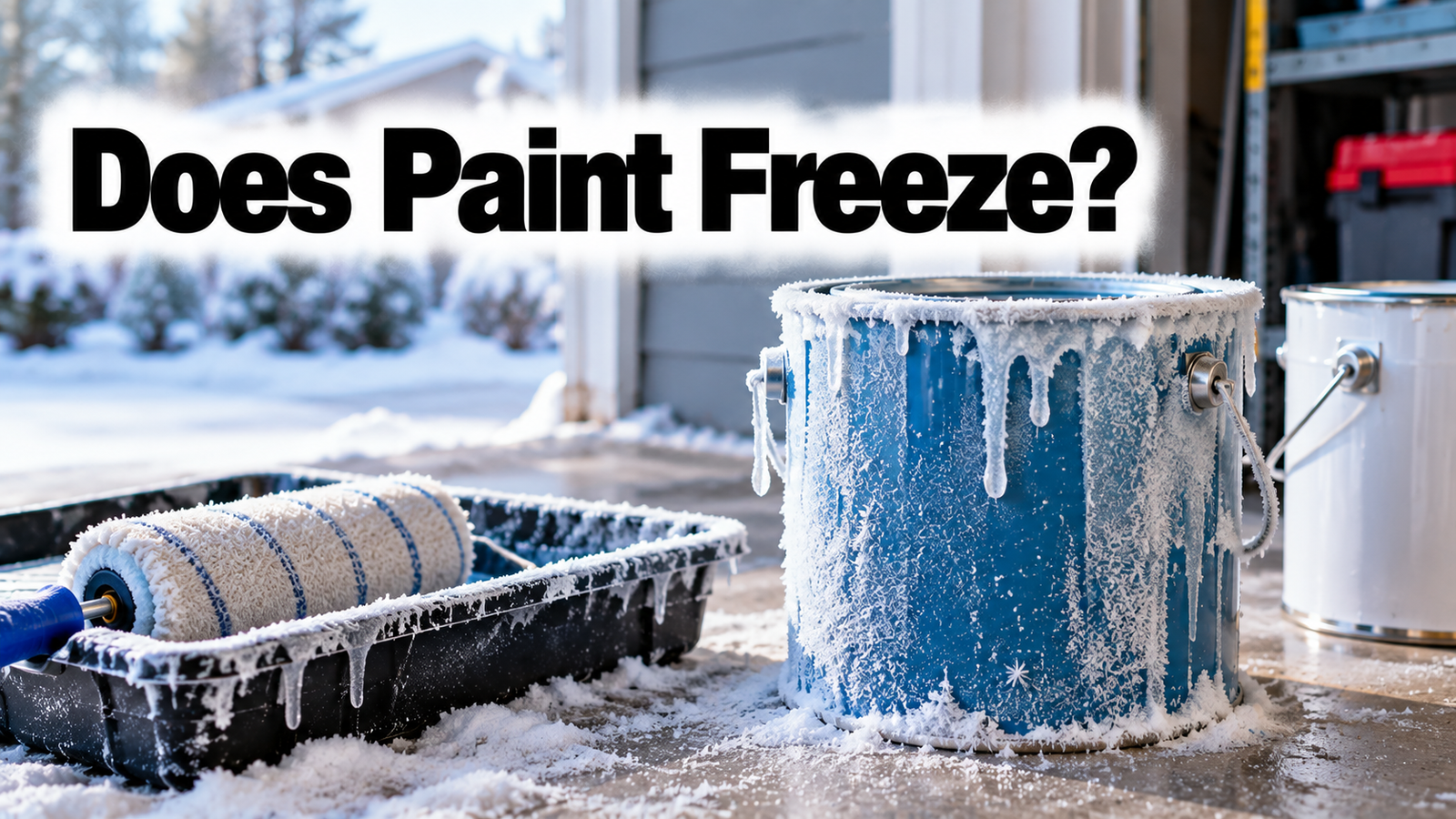

Yes, paint freezes. Water-based paints like latex and acrylic freeze at 32°F (0°C), the same temperature as the water they are made with, which is why cans left in an unheated garage or shed often freeze during their first cold winter night. Oil-based paint is far more resistant: it thickens in the cold but does not freeze until temperatures drop well below anything most homes ever see.
- What temperature does paint freeze at?
- What freezing does to paint
- Can paint freeze on the wall?
- Can you still use paint that froze?
- How to thaw and test frozen paint
- Signs the paint is ruined
- How to keep paint from freezing
- What to do with a ruined can
- Conclusion
- Frequently asked questions
- At what temperature does paint freeze?
- Is paint ruined if it freezes once?
- How long does frozen paint take to thaw?
- Can paint freeze in a car or delivery truck?
- Does spray paint freeze?
- Related Articles
A single freeze does not always ruin the can, though. If the paint thaws slowly and stirs back to a smooth, creamy consistency, it may still be usable. If it thaws into lumps that will not mix out, it is done. Here is what freezing actually does to paint, how to tell whether a frozen can survived, and how to keep it from happening again.
What temperature does paint freeze at?
The freezing point depends on what carries the paint. Water-based products freeze exactly where water does. Oil- and solvent-based products use petroleum-derived carriers with much lower freezing points, so in most climates they thicken in the cold rather than freeze solid.
Some latex paints are made with a small amount of glycol, an antifreeze-like ingredient that lets the paint survive a few freeze and thaw cycles. That protection has been shrinking, because glycols count toward a paint’s VOC total, and modern low-VOC and zero-VOC formulas cut them back or drop them entirely. The practical result: today’s low-VOC latex paint is often more vulnerable to freezing than the cans made twenty years ago.
| Paint type | Freezes around | Freeze risk in a cold garage |
| Latex / acrylic (water-based) | 32°F / 0°C | High: freezes on the first hard night |
| Oil-based house paint | Far below normal winter lows | Low: thickens, but rarely freezes |
| Craft and chalk paints (water-based) | 32°F / 0°C | High: small containers freeze fast |
| Spray paint (aerosol) | Depends on the formula | Moderate: cans lose pressure in the cold |
What freezing does to paint
Latex paint is an emulsion: microscopic polymer particles held evenly in water, along with pigment and additives. When the water freezes, ice crystals expand and rupture those particles, forcing the solids out of suspension. The solids then clump together, and once the emulsion breaks this way, the damage is permanent. No amount of stirring rebuilds particles that have burst.
A useful comparison is milk. Freeze it, thaw it, and you get thin, watery liquid with clumps floating in it. Thawed, ruined latex paint behaves the same way, and the classic description fits: it looks like cottage cheese.
The number of freezes matters as much as the freeze itself. A can that dipped just below freezing for one night has a real chance of surviving. A can that sat in a garage all winter went through dozens of freeze and thaw cycles, one for every cold night followed by a milder day, and each cycle does more damage. That is why paint stored over a full winter is ruined far more often than paint that froze once in a delivery truck.
Oil-based paint reacts to cold differently. Instead of freezing solid, it thickens until it drags under the brush and levels poorly. That change is usually temporary: let the can warm to room temperature on its own, stir well, and it typically returns to normal. The cold itself rarely does permanent harm to an oil-based formula.
Can paint freeze on the wall?
The can is only half the question. Wet paint on a wall can freeze too, and that failure is worse because it happens on the surface you just finished. Fresh latex paint needs time above freezing to form its film. If the temperature drops below 32°F before the coat has dried and started to cure, the water in the film freezes, and the paint can crack, peel, or fail to stick at all.
This is why paint labels carry a minimum application temperature. Standard latex paints generally want 50°F or warmer during application and for a day or two afterward, and that includes overnight lows, not just the afternoon reading. Some modern exterior formulas are rated for application down to 35°F, and the can states it plainly when they are. For any cold-season exterior job, read the label’s temperature line first and check the overnight forecast, because a coat that freezes on the wall costs a full repaint, not just a can.
Can you still use paint that froze?
Sometimes. If the paint froze briefly, thawed slowly, and stirs back to a completely smooth, uniform consistency, it may work fine, especially for low-stakes jobs like a shed interior, a fence, or primer duty under another coat.
Two cautions before you roll it onto anything that matters. First, a freeze can weaken paint without leaving visible lumps. The coat may go on normally and then dry with uneven sheen, patchy color, weak adhesion, or early peeling. Second, freezing typically voids the manufacturer’s warranty, since the label on nearly every water-based can says keep from freezing. For a feature wall, a whole room, or any paid work, the safe move is a fresh can. For touch-ups and rough surfaces, a well-recovered can is a reasonable gamble.
Quick rule: smooth and creamy after a slow thaw means test it on cardboard first. Cottage cheese means toss it.
How to thaw and test frozen paint
Found a frozen can? Work through it in this order:
- Thaw it slowly at room temperature. Bring the can indoors, set it on a towel or cardboard, and leave it alone. A quart takes a few hours; a full gallon can take a day. Never use a heater, hair dryer, or hot water, since fast heat causes more separation.
- Stir thoroughly. Once fully thawed, stir for a couple of minutes with a clean paint stick. A paint store can also shake the can on its mixing machine, which recombines it far better than hand stirring.
- Do the pour test. Pour a little into another container. Usable paint pours smoothly and looks the way it did before the freeze. Ruined paint comes out thick, lumpy, or stringy.
- Smell it. A sour, vinegar-like, or rotten-egg smell means bacteria grew in the can, and the paint goes in the discard pile no matter how it pours.
- Paint a test patch. Brush some onto cardboard or scrap wood. If it spreads evenly, dries to a uniform color and sheen, and does not stay tacky or peel, it passed every check you can run at home.
Signs the paint is ruined
Any one of these signs means the can is done:
- Cottage cheese texture. Thick curds that resist stirring mean the emulsion broke.
- Stringy or ropey strands when you lift the stir stick out of the can.
- Grittiness. Fine grains that persist after a long stir will show in the finish.
- A watery layer that will not blend back in, even after machine shaking.
- A sour or rotten smell, which signals bacterial growth rather than freeze damage, but ruins the paint just the same.
- A test patch that dries blotchy, stays tacky for days, or peels off easily.
How to keep paint from freezing
Prevention is cheap and simple: store paint where water pipes would be safe. The right temperature for storing leftover paint sits between 60 and 80°F (15 to 27°C), and cans should be kept somewhere dry, out of direct sunlight, and out of children’s reach. That points to a basement shelf, a utility closet, or a heated laundry room, and away from the two places most people actually put paint: the garage and the shed.
- Skip unheated spaces in cold climates. A garage or shed swings below freezing on winter nights and back above during the day, which is the exact cycling that destroys latex paint.
- Keep cans off bare concrete. A cold slab pulls heat out of the can and rusts the rim; set cans on a shelf or a piece of cardboard.
- Seal the can properly. Clean the rim, lay a piece of plastic wrap over the opening, and tap the lid down with a rubber mallet. Air ruins paint almost as reliably as frost does.
- Downsize half-empty cans. Transfer small amounts into a smaller sealed container so less air sits above the paint.
- If the garage is the only option, make it seasonal. Bring the cans indoors before the first frost and return them in spring; a paint can takes up little closet space compared to the cost of replacing every color in the house.
- Label everything. Write the room, color, and sheen on the lid so the can is worth keeping in the first place. Opened paint keeps for roughly two years when stored well.
What to do with a ruined can
A ruined can still needs a proper exit. Liquid paint does not belong in the trash, a drain, or a storm sewer. For latex paint, the fix is to solidify it: stir in cat litter, sawdust, or a hardener from the paint aisle, let it dry into a solid, and then most areas allow it in regular household garbage. Oil-based paint counts as household hazardous waste, so take it to a local collection site or drop-off event instead. Some US states also run paint take-back programs through PaintCare that accept leftover paint of both kinds at no charge. Check your city or county rules before tossing anything, since local requirements differ.
Conclusion
Water-based paint freezes at 32°F, and every freeze and thaw cycle pushes it closer to ruin, while oil-based paint mostly shrugs off the cold. If a can froze, thaw it slowly at room temperature, stir it hard, and judge it honestly: smooth and creamy means it may serve for low-stakes work, lumps or a sour smell means it is finished. Better still, store paint indoors between 60 and 80°F on a shelf, sealed tight, and the question never comes up.
Frequently asked questions
At what temperature does paint freeze?
Water-based paints such as latex and acrylic freeze at 32°F (0°C), the same as water. Oil-based house paint has a far lower freezing point and mostly just thickens in the cold, so it survives an unheated garage in nearly any climate.
Is paint ruined if it freezes once?
Not always. A single brief freeze is often survivable if the can thaws slowly at room temperature and stirs back to a smooth, uniform consistency. Multiple freeze and thaw cycles over a winter are much more likely to ruin it for good.
How long does frozen paint take to thaw?
At room temperature, a quart thaws in a few hours and a full gallon can take up to a day. Let it warm naturally. Heaters, hair dryers, and hot water speed the thaw but increase separation and make ruin more likely.
Can paint freeze in a car or delivery truck?
Yes. A can left overnight in a vehicle below 32°F can freeze just like one in a shed. In winter, bring newly bought paint indoors the same day, and ask about freeze exposure if a delivery sat outside in the cold.
Does spray paint freeze?
Cold hurts aerosols in two ways: water-based formulas inside can freeze, and low temperatures drop the can’s pressure so it sprays poorly. Store cans indoors at room temperature and never heat a pressurized can to warm it up.
Related Articles
How Long Should Primer Dry Before Painting?
How Much Does Paint Correction Cost?
How Much Does a 5 Gallon Bucket of Paint Weigh?