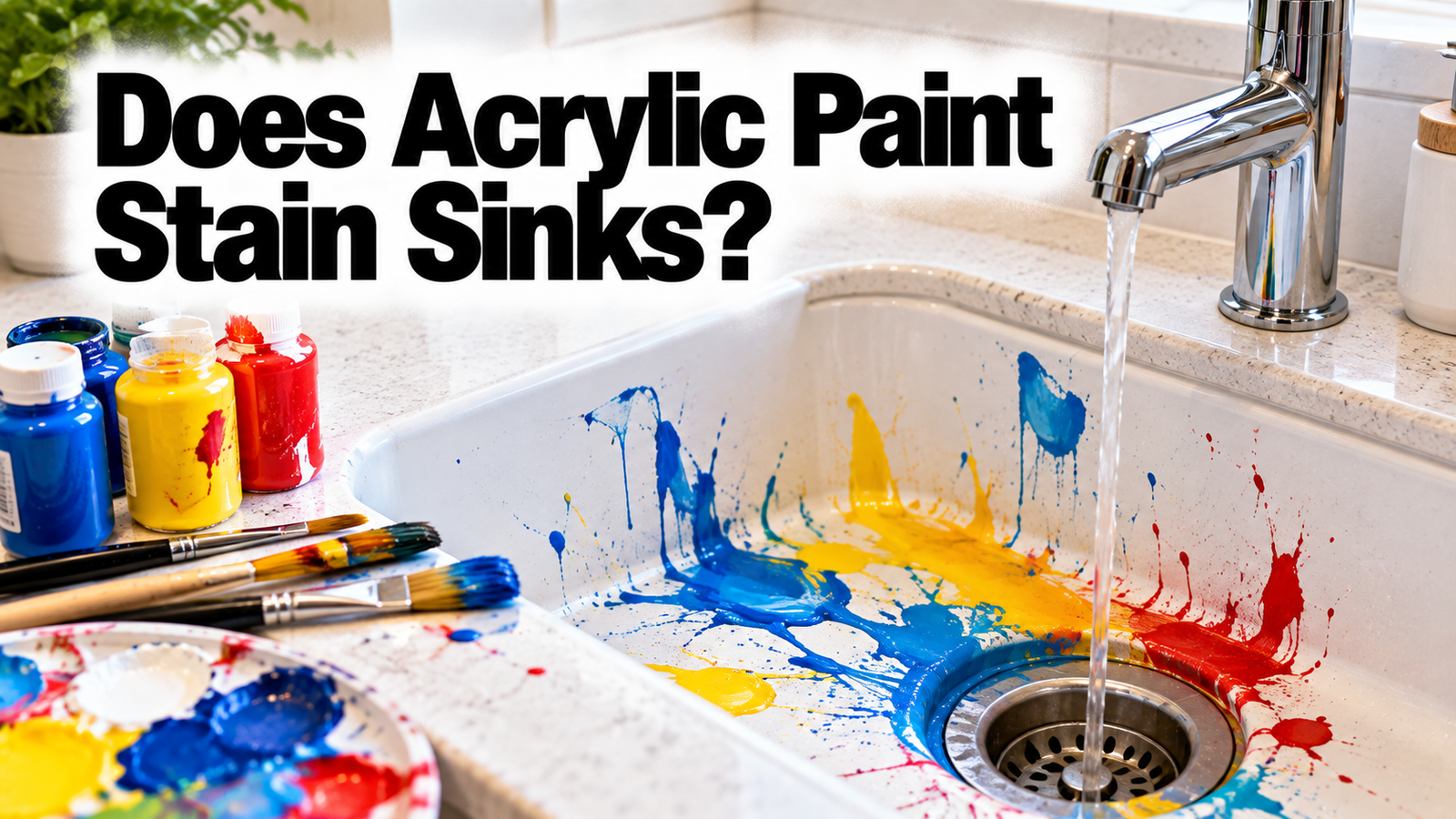

Acrylic paint can stain a sink, but usually only if it dries there. Wet acrylic is water-based, and it rinses away with warm water and a bit of dish soap. Once it dries, it turns into a thin sheet of plastic that grips the surface. On smooth sinks that film peels or scrubs off, but on textured or worn surfaces the pigment can settle in and leave color behind.
- Why dried acrylic paint stains
- Craft paint, artist paint, and paint pens
- Which sinks stain, and which shrug it off
- Wet paint: rinse it now
- How to remove dried acrylic paint from a sink
- What not to use
- The damage you can’t see: your drain
- How to keep paint off your sink in the first place
- Conclusion
- Frequently asked questions
- Will acrylic paint come off a white porcelain sink?
- Does vinegar remove acrylic paint from a sink?
- Is it OK to rinse acrylic paint brushes in the sink?
- Does acrylic paint damage stainless steel sinks?
- Will acrylic paint clog my drain?
- Related Articles
So the honest answer has two parts. Your sink is probably fine if you act fast. And even a dried-on mess is fixable in almost every case, with things you already have at home. Here is what decides the outcome, how to remove paint at every stage, and the one part of the sink that acrylic really can damage: the drain.
Why dried acrylic paint stains
Acrylic paint is pigment mixed into an acrylic polymer emulsion. In plain terms, it is colored plastic suspended in water. While the paint is wet, the water keeps those plastic particles apart, which is why a quick rinse clears everything. As the water evaporates, the particles fuse into one continuous plastic film that no longer dissolves in water. That toughness is the whole point of acrylic as a paint, and it is exactly why soap stops working once the paint has set.
Where the paint lands matters as much as when. On a hard, glassy surface, the dried film sits on top and can be lifted off in flakes. On a porous or lightly textured surface, wet paint flows into tiny pits and scratches before it cures. The pigment locks in where no scraper can reach, and that is what reads as a stain.
Two more details raise the stakes. A thin smear of acrylic can be touch-dry in ten to twenty minutes, so the window for an easy cleanup is short. And some pigments, such as phthalo blue, phthalo green, and quinacridone magenta, are staining pigments by nature. They can tint a surface even after the paint film itself comes off.
Craft paint, artist paint, and paint pens
Not all acrylics grip equally. Cheap craft acrylics carry less binder and pigment, so they usually scrub off with little fight, and most kids’ paints labeled washable are made to release with soap and water. Artist-grade acrylics hold more binder and stronger pigments, which makes them tougher on sinks. Acrylic paint pens, along with leather and fabric acrylics, sit at the top. They are built for maximum adhesion, so treat any spill from them as urgent.
Which sinks stain, and which shrug it off
Sink material decides most of the outcome. Here is how the common ones behave with acrylic paint.
| Sink material | Stain risk | What to know |
| Stainless steel | Low | Non-porous. Dried paint softens and lifts with rubbing alcohol. The main risk is scratching it during cleanup. |
| Porcelain and enamel | Low to medium | The glaze resists stains while it is intact. Worn, scratched, or crazed glaze can hold pigment, especially strong colors. |
| Ceramic and fireclay | Low to medium | Behaves like porcelain. Matte finishes hold pigment more than glossy ones. |
| Acrylic and plastic | Medium to high | Paint bonds well to plastic, and the strong solvents that dissolve paint can also dull the sink itself. |
| Granite and quartz composite | Medium to high | The lightly textured matte surface grips paint, and light colors show every trace. |
A new stainless or glazed white sink will usually survive a paint spill with nothing worse than a few minutes of scrubbing. A matte composite sink, or a plastic laundry sink that has seen years of use, is where dried acrylic tends to hang on. If your sink sits at the risky end of the table, the habits at the end of this article matter more than any removal trick.
Wet paint: rinse it now
If the paint is still wet, you are one minute away from a clean sink. Wipe up any thick blobs with a paper towel and throw them in the trash instead of pushing them toward the drain. Then wash the surface with warm water, dish soap, and a soft sponge. Run the tap generously for an extra thirty seconds afterward so paint solids flush through the trap instead of settling in it. That is the whole job. Every method below exists only for paint that got the chance to dry.
How to remove dried acrylic paint from a sink
Work through these steps in order, from gentlest to strongest, and stop as soon as the paint is gone.
- Soak it in hot, soapy water. Lay a cloth soaked in hot water and dish soap over the paint and leave it for ten to fifteen minutes. This softens the film and sometimes releases thin smears on its own.
- Lift with a plastic scraper. Work a plastic scraper or an old credit card under the edges of the softened paint. Water-based paint often comes off in flakes at this stage. Never use a metal blade or steel wool; they scratch every sink material.
- Bring in rubbing alcohol. Soak a cloth in isopropyl alcohol (70 percent or stronger), press it onto the remaining paint, and leave it for 15 to 30 minutes. Alcohol softens the dried acrylic film so it wipes or peels away. Test a hidden spot first, and dampen the cloth rather than pouring alcohol straight into the basin.
- Scrub the residue with a baking soda paste. Mix baking soda with a little water, spread it over any leftover color, wait a few minutes, then scrub with a soft sponge. It is mildly abrasive, enough to lift pigment without scratching stainless steel or sound porcelain glaze.
- Escalate carefully for the last traces. On porcelain or stainless steel, a melamine sponge used gently can pull out a faint tint. On stainless steel only, a cotton ball with a little acetone dissolves stubborn spots. Keep acetone away from plastic, acrylic, and composite sinks; it can dull or soften them.
- Wash and rinse. Finish with dish soap and warm water to clear off alcohol, loosened pigment, and cleaning residue, then dry the sink.
Most dried acrylic gives up at the rubbing alcohol step. If a shadow of color survives all six steps on a worn or matte surface, the pigment has lodged below the surface, and living with it or refinishing the sink are the remaining options.
What not to use
A few common shortcuts cause more damage than the paint. Skip metal scrapers, steel wool, and scouring powders; they leave permanent scratches, and a scratched surface stains more easily the next time. Keep acetone, lacquer thinner, and strong paint strippers away from plastic, acrylic, and composite sinks, since those solvents attack the sink material along with the paint. Go easy on very hot water in an acrylic sink, which is sensitive to heat as well as solvents. And when you finish, let solvent-soaked cloths and cotton balls dry out and put them in the trash rather than rinsing them in the basin.
The damage you can’t see: your drain
The basin is the visible problem. The drain is the expensive one. Every rinse sends acrylic solids into the P-trap, the curved pipe under the sink, where the heaviest particles settle. They do not dissolve, because they are plastic. Over months of regular rinsing they fuse into a gray sludge that narrows the pipe and can eventually block it. The particles that slip past your plumbing carry on as microplastics into the wastewater system.
The fix is cheap and takes seconds. Wipe brushes, palettes, and containers with a paper towel before they touch water, so most of the solids go in the trash instead of the pipe. Rinse brushes in a jar of water rather than under the running tap. At the end of a session, let the jar sit overnight; the solids settle, the clear water pours off the top, and the sludge wipes out with a paper towel. Golden Artist Colors’ waste disposal guide covers the full routine, and for higher volumes the same company makes a Crash Paint Solids kit that filters rinse water so it can go down the drain clean.
How to keep paint off your sink in the first place
A few habits make sink stains a non-issue, whatever your sink is made of.
- Wipe first, rinse second. Squeeze brushes into a rag or paper towel before rinsing, so most of the paint ends up in the trash, not the water.
- Use a rinse jar. Keep a wide jar or plastic tub of water at your work area and clean brushes there, not in the sink.
- Give paint no time. Wash splatters off the sink the moment the session ends. Acrylic that never dries never stains.
- Protect a risky sink. If your sink is composite, plastic, or older porcelain, do craft cleanup in a cheap plastic basin. Pour off the settled, clear water with the tap running and wipe the sludge into the trash.
- Rinse with volume. When paint water does go down the sink, run the tap generously for a minute so solids flush through the trap.
The one habit that matters most: wipe your brushes on a paper towel before they ever touch water.
Conclusion
Acrylic paint only stains a sink you give it time to dry in. Wet paint rinses away with warm water and dish soap, and even dried paint comes off almost every sink with a hot soak, a plastic scraper, rubbing alcohol, and a baking soda paste. Smooth stainless steel and glazed porcelain clean up best, while matte composite and plastic sinks need faster action. Wipe your brushes before you rinse, and both your sink and your drain stay out of trouble.
Frequently asked questions
Will acrylic paint come off a white porcelain sink?
Almost always, yes. Intact porcelain glaze is non-porous, so dried acrylic sits on top of it. Soften the paint with hot soapy water or rubbing alcohol, lift it with a plastic scraper, and scrub any remaining tint with a baking soda paste.
Does vinegar remove acrylic paint from a sink?
It can help. Warm white vinegar soaked into a cloth and left on the paint for 15 to 30 minutes softens dried acrylic on stainless steel and porcelain. Rubbing alcohol usually works faster, so treat vinegar as the backup when there is no alcohol at hand.
Is it OK to rinse acrylic paint brushes in the sink?
Occasionally, with plenty of running water, it will not hurt most sinks. As a routine it slowly builds plastic sludge in the P-trap. Wipe brushes on a paper towel first, rinse them in a jar, and pour off only the settled, clear water.
Does acrylic paint damage stainless steel sinks?
No. Stainless steel is non-porous, so acrylic cannot soak in, and rubbing alcohol removes the dried film without harming the finish. The only real risk is scratching the steel with metal scrapers or steel wool during cleanup, so stick to plastic tools and soft sponges.
Will acrylic paint clog my drain?
It can, over time. Acrylic solids settle in the curved trap under the sink and fuse into a plastic sludge that water cannot dissolve. Keeping solids out, by wiping tools first and settling rinse water in a jar, prevents the buildup entirely.
Related Articles
Does Paint Have an Expiry Date?
How Long Should Primer Dry Before Painting?