
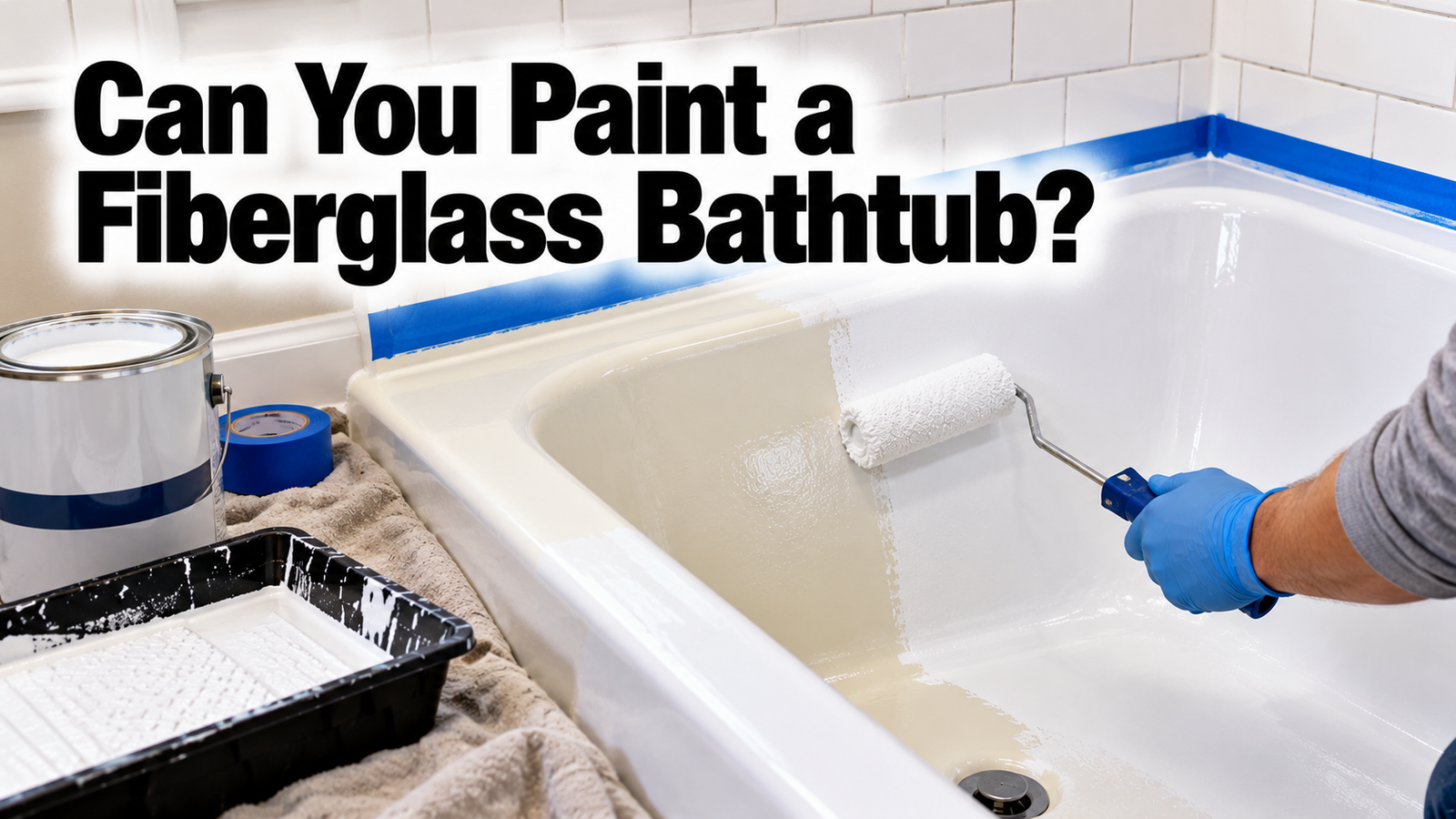

Yes, you can paint a fiberglass bathtub, and it’s a cheap way to cover yellowing, stains, or a dated color without ripping the tub out. The trick is that ordinary paint won’t survive daily hot water and scrubbing. You need an epoxy tub-and-tile refinishing kit, and you need to prep the surface properly. Most of the result is decided before you open the paint. Here’s how to do it right, plus honest notes on safety, durability, and whether to do it yourself or hire a pro.
Can you paint a fiberglass bathtub? The short answer
Yes, with the right product. A fiberglass tub is actually one of the better candidates for refinishing, because its softer surface sands easily and gives paint something to grip. Regular interior paint would crack and peel almost immediately in a tub, so the whole job hinges on using a two-part epoxy coating made for tubs and tile, and on prepping the surface so it bonds.
Painting a tub is much cheaper than replacing it. A new fiberglass tub costs a few hundred dollars before you add removal, disposal, and the near-certain tile repair around it. A refinish, by comparison, refreshes the look and buys you several more years for a fraction of the cost.
Is your tub a good candidate?
Before you commit, check that your tub is worth refinishing. Painting fixes how a tub looks, not structural problems, and a coating will only last if the surface underneath is stable.
- Does it flex? Press on the bottom and sides. If the tub gives or flexes under weight, it’s a poor candidate. The coating can’t move with the surface, so it will crack and fail.
- Is the damage cosmetic or structural? Yellowing, surface stains, small chips, and minor scratches are all fixable. Deep cracks or a tub that’s structurally failing need replacement, not paint.
- Is there mold behind or under it? If water has gotten behind the tub, deal with that first. Paint won’t solve a moisture problem.
The flex test is the one most people skip. A tub that shifts under your weight will crack any coating you put on it, no matter how good your prep. If it flexes, refinishing isn’t the answer.
What paint actually works
Use a two-part epoxy coating sold as a tub-and-tile refinishing kit. Epoxy is the right choice because it bonds tightly to fiberglass, cures rock-hard, and stands up to constant water, heat, and scrubbing. A widely used option is Rust-Oleum Tub & Tile, which comes as a two-part kit you mix just before applying.
One thing to know about epoxy: once you mix the two parts, you have a limited working time before it starts to harden, so only mix what you can use and don’t dawdle. Some kits come as a spray, which lays down the smoothest finish, while others are brushed and rolled. Whatever you choose, make sure the label specifically says tubs, tile, or bath, since those formulas are built for wet, high-contact surfaces.
Safety first: ventilation matters
This is the part that isn’t optional. Epoxy tub coatings give off strong fumes, called VOCs, that are genuinely harmful to breathe in a small, enclosed bathroom. Some refinishing strippers historically used methylene chloride, a chemical the EPA banned for most uses in 2024 after dozens of deaths tied largely to bathtub refinishing. Treat safety as seriously as the painting itself.
- Ventilate hard. Open every window, run the exhaust fan, and set up a box fan to push air out. If the bathroom has no window, rent or buy a portable ventilator.
- Wear a real respirator. Use an organic-vapor respirator, not a paper dust mask, which does nothing against these fumes. Add gloves and eye protection.
- Keep people and pets out, and kill any open flames or pilot lights, since some of these chemicals are flammable.
Don’t rely on a product being labeled low-odor. Ventilate and wear the respirator regardless.
How to paint a fiberglass tub (step by step)
With the right kit and your safety setup in place, here’s the process. Prep is roughly 80 percent of the work and nearly all of the outcome, so take your time with it.
- Remove the caulk and fixtures. Strip the old caulk from the tub seams with a caulk tool, and take off or mask the drain cover, overflow plate, and any hardware. Paint won’t stick to caulk, so it has to go.
- Clean every inch. Scrub away soap scum, body oils, mineral deposits, and water marks. Use a degreaser, and acetone for any oily or waxy spots. Body oils left behind are a top cause of peeling, so when in doubt, clean it again.
- Sand the surface. Scuff the whole tub with fine sandpaper, around 400-grit, to dull the gloss and give the epoxy something to bite. Work evenly, since fiberglass can sand unevenly and show marks. Wipe off all dust with a tack cloth.
- Repair chips and cracks. Fill any chips or gouges with epoxy putty, let it cure, then sand it flush. Color doesn’t matter since you’ll coat over it. Any unrepaired damage will show in the final finish.
- Apply thin coats. Mix the epoxy, then roll it on with a foam roller and cut in edges with a sponge brush, or spray if your kit is a spray. Apply multiple thin coats rather than one thick one, following the recoat window on the label. Thin coats level cleanly and avoid runs.
- Let it cure fully. Leave the tub to cure before any use, usually 24 to 72 hours depending on the product and conditions. Humidity and cold slow the cure, so keep the room controlled.
- Recaulk. Once cured, run a fresh bead of silicone caulk around the tub seams and smooth it with a damp finger. Let it dry overnight before running water.
How long does it last?
A DIY-painted fiberglass tub typically lasts three to five years, and a carefully done job with good maintenance can stretch further. A professional reglaze lasts longer, often seven to fifteen years, because pros use commercial-grade coatings and industrial etching that bond better than store-bought kits.
Durability comes down to two things: how well you prepped and how gently you treat the finish afterward. Skip harsh abrasive cleaners, wipe up standing water, and use a non-slip mat rather than suction-cup mats that can pull at the coating. Good habits are what turn a three-year finish into a five-year one.
DIY or hire a pro?
This mostly comes down to budget, patience, and how flawless you want the result. Here’s the comparison at a glance:
| DIY kit | Professional reglaze | |
| Cost | About $30 to $150 in materials | Roughly $335 to $800 |
| How long it lasts | 3 to 5 years, sometimes less if prep is rushed | 7 to 15 years, often with a warranty |
| Finish | Good, but rollers can leave slight texture | Sprayed, smooth, factory-like gloss |
| Best when | Tight budget, tub in decent shape | You want it flawless and long-lasting |
DIY is the budget path and works well if your tub is in decent shape and you’re willing to prep meticulously and ventilate properly. The finish can look great, though a rolled coat may show slightly more texture than a sprayed one. A pro costs more but delivers a smoother, longer-lasting finish, handles the fumes and equipment, and usually backs the work with a warranty. If your tub has serious damage or you want it to look truly factory-fresh, a pro is the safer bet.
Conclusion
So, can you paint a fiberglass bathtub? Yes, as long as the tub is solid and doesn’t flex, and you use a two-part epoxy tub-and-tile kit rather than ordinary paint. Clean it thoroughly, sand it, repair any chips, ventilate well, and apply thin coats before letting it fully cure. Expect three to five years from a careful DIY job, or longer from a pro. Match the effort to the tub and you get a fresh, glossy finish for a fraction of replacement cost.
Frequently asked questions
What kind of paint do you use on a fiberglass tub?
A two-part epoxy coating sold as a tub-and-tile refinishing kit. Epoxy bonds to fiberglass, cures hard, and resists water, heat, and scrubbing. Regular interior or spray paint will crack and peel quickly in a tub, so avoid it.
Do you have to sand a fiberglass tub before painting?
Yes. Sanding with fine sandpaper, around 400-grit, dulls the glossy surface so the epoxy can grip. Fiberglass sands easily, which is why it takes coatings well. Clean off all dust with a tack cloth before you paint.
How long does a painted fiberglass tub last?
A DIY job usually lasts three to five years, while a professional reglaze often lasts seven to fifteen. Durability depends heavily on prep quality and on avoiding harsh abrasive cleaners and standing water afterward.
Is it safe to paint a bathtub yourself?
It can be, with proper precautions. Epoxy coatings release strong fumes, so you must ventilate aggressively and wear an organic-vapor respirator, not a dust mask. Keep pets and kids out and kill open flames during the work.
Is it better to paint or replace a fiberglass tub?
Paint it if the tub is structurally sound and just looks worn or dated. Replace it if it flexes, is cracked, or is failing, since a coating won’t fix that. Refinishing costs far less and avoids demolition and tile repair.
Related Articles
Does Acrylic Paint Stain Sinks?