


The quickest way to tell if paint might be lead-based is the age of the building: if it was built before 1978, when lead paint was banned for consumer use in the U.S., assume the paint could contain lead until you confirm otherwise. Visual signs like distinctive “alligator” cracking and a chalky residue add to the picture, but they can’t prove it either way. The only way to know for certain is to test the paint, and for a reliable answer that usually means a certified inspector.
Lead paint matters because lead is a serious health hazard, especially for young children and pregnant women, according to the CDC. The reassuring part is that intact, well-maintained paint is far less dangerous than paint that’s peeling, chipping, or being disturbed. Here’s how to read the clues, from the free ones to the definitive ones, and what to do with what you find.
How do you tell if paint is lead-based?
There’s no way to identify lead paint just by looking at a fresh, painted wall; lead paint isn’t a different color or texture when it’s new and intact. Instead, you build confidence from three layers of evidence, in order of how much certainty they give you: the age of the home, visual signs in deteriorating paint, and finally an actual test. The first two tell you how likely lead is; only testing confirms it.
Think of it as narrowing down. Age tells you whether to be concerned at all. Visual signs raise or lower that concern. Testing settles it. Below, each layer in turn.
Start with the age of your home
Age is the single biggest clue, and it’s free. Lead-based paint was banned for residential use in the United States in 1978, so the year your home was built is the first thing to check. The older the home, the higher the odds.
According to the EPA, the likelihood rises sharply with age. Roughly 87% of homes built before 1940 contain some lead-based paint, compared with about 24% of homes built between 1960 and 1978. Homes built after 1978 are very unlikely to have lead paint. Lead paint can turn up in any kind of pre-1978 building, single-family homes, apartments, public housing, in cities, suburbs, and rural areas alike.
The simplest rule: if your home was built before 1978, assume lead paint may be present and take precautions until testing proves otherwise. That’s the EPA’s own recommended default.
One caveat: a past renovation doesn’t guarantee the lead is gone. Old lead paint is very often painted over rather than removed, so it can still be lurking beneath newer coats. If you can, check property records or ask previous owners whether lead was ever tested for or professionally addressed.
Visual signs of lead paint
You can’t see lead in intact paint, but as old paint deteriorates it tends to fail in a few telltale ways. These signs don’t confirm lead, but they raise the odds and tell you where to focus.
- Alligatoring. The most recognizable sign. As lead paint ages it cracks and wrinkles into a scaly pattern that looks like reptile or alligator skin. If you see this kind of cracking, especially on older surfaces, there’s a good chance lead is involved.
- Chalky residue. Old lead paint can leave a chalky powder when it rubs off. A dusty, chalky feel on a painted surface in an older home is another clue.
- Peeling, chipping, and flaking. Deteriorating paint in a pre-1978 home is both a lead clue and a hazard, since it creates chips and dust. Pay special attention to worn spots.
- Multiple old layers. Where paint is already damaged, you may see several sub-layers built up over the years. Older bottom layers are the more likely to contain lead.
Focus your attention on high-wear surfaces, because that’s where deterioration and risk concentrate: windowsills and window frames, doors and door frames, stairs, railings, banisters, and porches. These get bumped, rubbed, and opened and closed constantly, which is exactly what wears paint down into chips and dust.
It’s also worth knowing that lead paint isn’t only an indoor issue. Old exterior paint on siding, porches, railings, and fences was frequently lead-based too, and as it weathers it can shed chips and contaminate the soil around the foundation, where children play. So if you’re sizing up an older property, look at the outside surfaces and the ground beneath them as well as the interior trim. A worn, chalky old porch rail or peeling window exterior deserves the same caution as a cracked interior sill.
How to test paint for lead?
Since sight can only suggest, testing is how you actually confirm lead. There are a few options, and they trade off cost against reliability.
| Method | How it works | Reliability |
| DIY swab kit | A chemical swab (e.g. 3M LeadCheck) changes color if lead is present on the surface | Quick and cheap, but only a limited yes/no and can give inaccurate results |
| Lab paint-chip test | You send a small paint sample to a lab for analysis | More accurate than swabs; tells you if lead is present |
| XRF scan (pro) | An inspector uses an X-ray fluorescence device to read lead through the layers | Highly reliable, non-destructive, done by a certified pro |
| Certified inspection | A certified inspector or risk assessor checks the whole home | Most thorough; also tells you where and whether it’s a hazard |
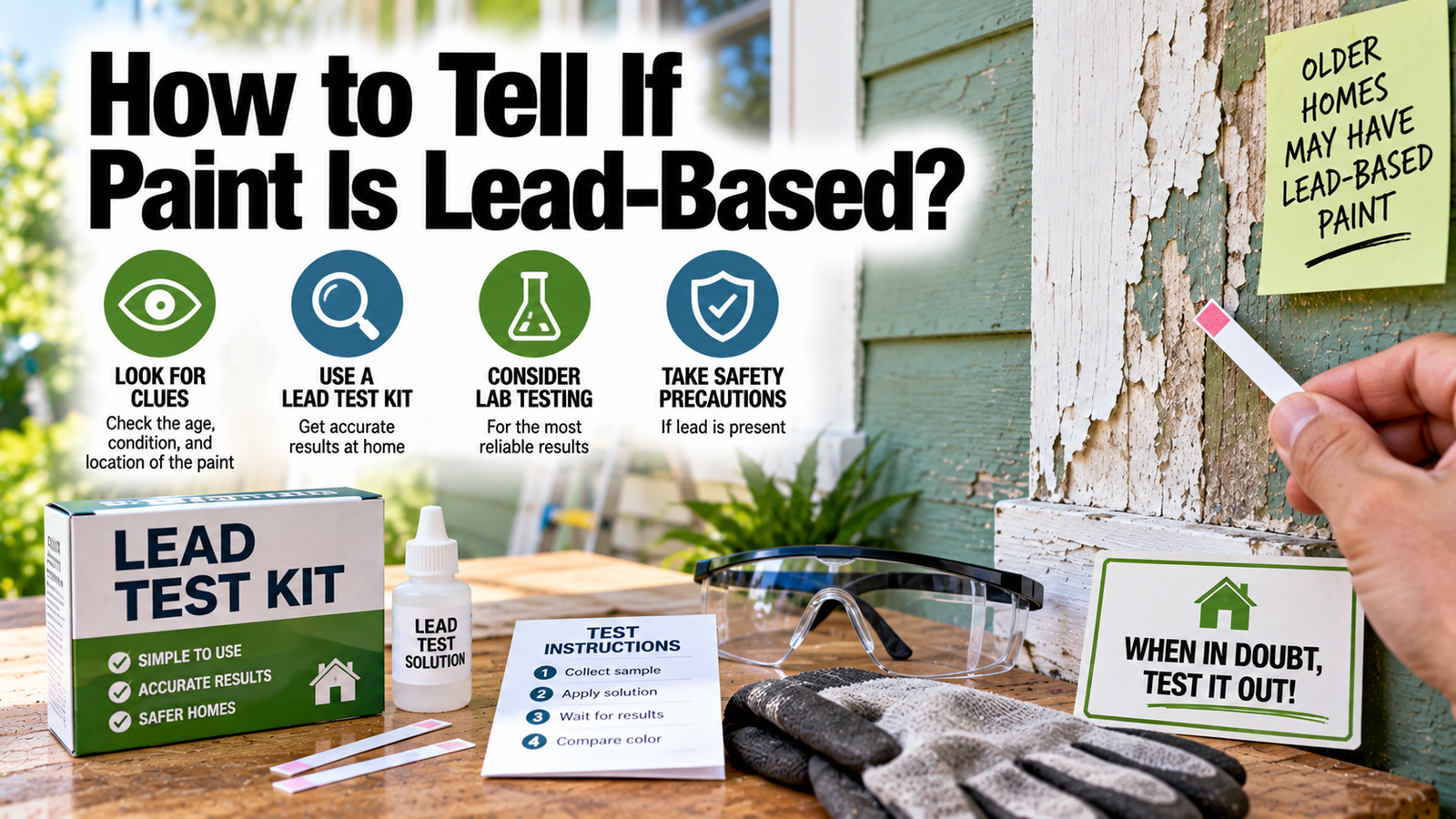
DIY swab kits from the hardware store are the easy first step: you rub the swab on the paint and a color change signals lead. They’re handy for a quick check on wood, metal, or plaster, but experts and the EPA caution that they have real limits. A kit gives only a rough yes/no, can produce inaccurate results, and won’t tell you how much lead is present.
For a dependable answer, especially before any renovation, the EPA recommends hiring a certified inspector or risk assessor. A professional can scan surfaces with an XRF device or take samples, tell you exactly where lead is, and assess whether it’s an active hazard. You can find certified professionals or ask questions through the National Lead Information Center at 1-800-424-LEAD.
Important safety note: never sand, scrape, or heat paint to test or inspect it. Disturbing lead paint creates the exact toxic dust and chips you want to avoid. Test the surface as-is, or have a pro do it.
When lead paint is actually a hazard?
Here’s a point that gets lost in the worry, and it’s an important one: lead paint is mainly dangerous when it’s deteriorating or disturbed, not simply when it exists. Intact, well-maintained lead paint that isn’t chipping or being sanded is generally not an immediate danger.
The hazard comes from lead dust and paint chips, which can be inhaled or swallowed, and those are produced when paint peels, chips, or gets scraped, sanded, or heated. That’s why deteriorating paint, and any renovation that disturbs old paint, is the real concern. Risk is highest on those high-wear surfaces mentioned earlier, and highest of all for young children, who may touch chips or dust and put their hands in their mouths, and for pregnant women. The CDC notes that even low levels of lead exposure can harm a child’s development, which is why prevention matters so much.
The takeaway: don’t panic over intact old paint, but treat peeling, chipping, or soon-to-be-disturbed paint seriously, and keep children away from it.
What to do if you have (or suspect) lead paint?
If age, signs, or a test point to lead, you have practical, measured options, and vacating in a panic usually isn’t the first one.
- Keep it intact and clean. If the paint is in good condition, the safest short-term step is often to leave it undisturbed, keep it well-maintained, and clean up dust with damp methods. Make sure children can’t reach chewable or peeling surfaces.
- Get a professional assessment. A certified inspection or risk assessment tells you where lead is and whether it’s an active hazard, plus what to do about it. That’s the most reliable footing for any decision.
- Consider encapsulation. For intact surfaces, a specialized encapsulating coating can seal the lead paint in place, an option worth discussing with a professional.
- Use lead-safe practices for any work. Renovation, repair, or painting that disturbs pre-1978 paint should follow lead-safe work practices, and in many cases must be done by an EPA-certified (RRP) contractor. Don’t dry-sand or scrape old paint yourself without proper precautions.
- Look after health, too. If you’re worried about exposure, especially for a child, the surest check is a blood lead test through a healthcare provider. Ask your doctor whether one is warranted.
Conclusion
To tell if paint is lead-based, start with age: pre-1978 homes may contain lead, and older ones are far more likely to. Watch for visual clues like alligator cracking and chalking, especially on high-wear surfaces like windows, doors, and stairs, but remember these only suggest lead. Confirm it with a test, using a DIY swab kit for a rough check or, for reliability, a certified inspector.
Above all, don’t disturb suspect paint to inspect it, and take deteriorating paint seriously while not panicking over intact surfaces. When in doubt, test, and bring in a professional for peace of mind.
Frequently asked questions
How do I know if my house has lead paint? Start with its age: homes built before 1978 may contain lead paint, and older ones are more likely to. Visual signs like alligator cracking help, but only a test, ideally by a certified inspector, confirms it.
What does lead paint look like? Intact lead paint looks like any paint. As it ages it often cracks into a scaly “alligator” pattern and can leave a chalky residue. These signs appear as the paint deteriorates, not when it’s fresh.
Are DIY lead paint test kits accurate? They give a quick yes/no but have real limits: they can be inaccurate and don’t tell you how much lead is present. For a reliable result, especially before renovating, the EPA recommends a certified inspector.
Is lead paint dangerous if it’s not peeling? Intact, well-maintained lead paint is generally far less hazardous than paint that’s peeling, chipping, or being sanded. The danger comes from lead dust and chips, so keep old paint intact and undisturbed.
Can I remove lead paint myself? It’s risky. Sanding or scraping old paint releases toxic lead dust. Renovation that disturbs pre-1978 paint should use lead-safe practices and often requires an EPA-certified contractor. When unsure, hire a professional.