

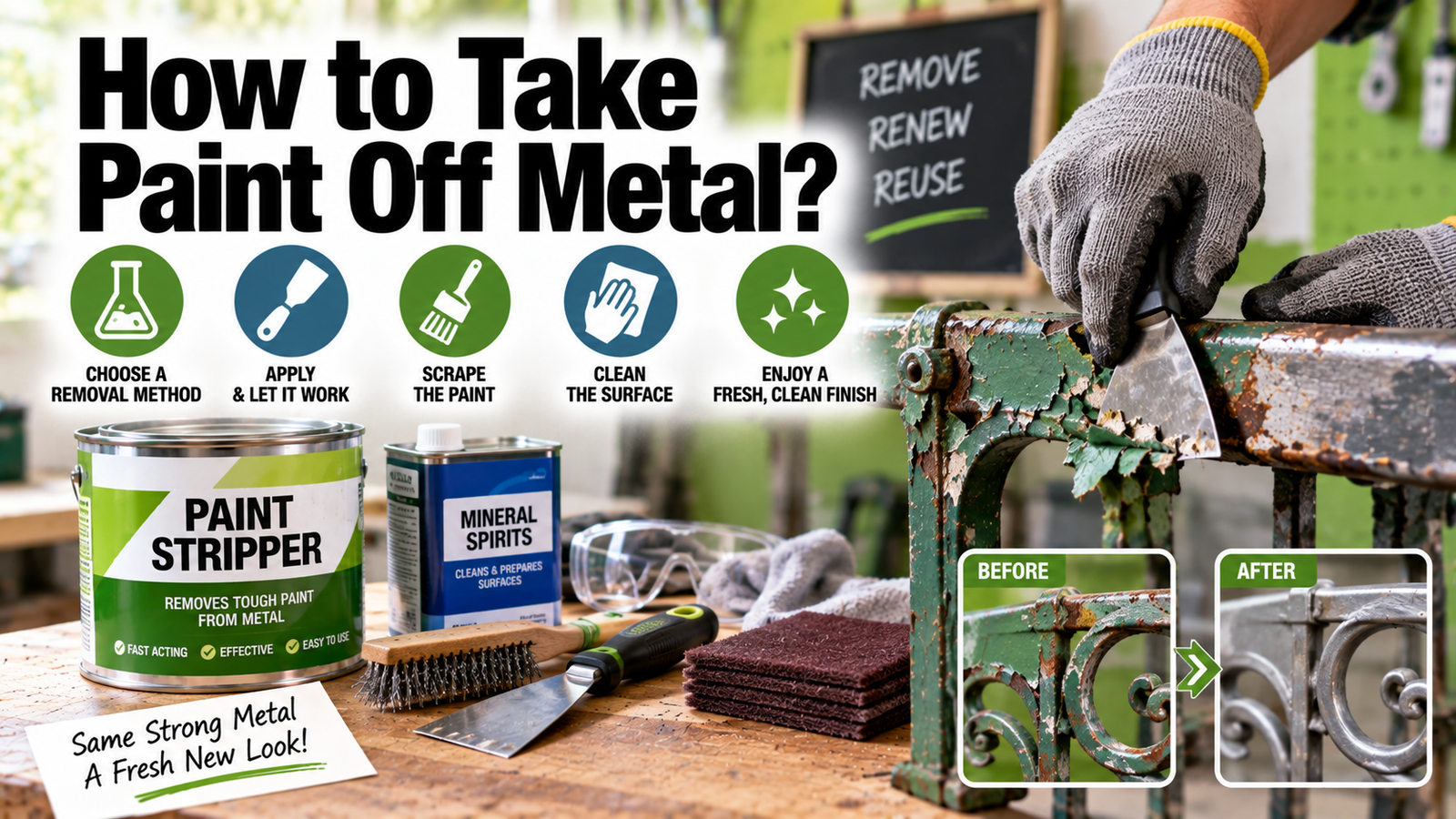

The easiest way to take paint off metal is usually a chemical stripper: brush it on, let it soften the paint, then scrape it away. For simpler jobs a heat gun, a wire brush, or sanding also work, and small hardware can even be boiled clean. The right method depends on the item’s size and shape, the type of metal, and how many layers of paint you are dealing with. Whatever you choose, safety comes first, especially if the paint might contain lead.
This guide covers how to set up safely, the main methods and when to use each, a step-by-step for chemical stripping, and how to avoid the common mistakes that scratch or warp the metal underneath.
Safety first: set up before you strip
Paint removal involves fumes, dust, sharp tools, and sometimes strong chemicals, so a few precautions are worth the small effort. Work in a well-ventilated area, ideally outdoors, or open windows and run a fan if you are inside. Lay drop cloths to catch chips and residue, and clear flammable items out of the way, since strippers can be flammable and grinders can spark.
Protect yourself with the basics: chemical-resistant gloves, safety goggles, and long sleeves, plus a mask or respirator to keep dust and fumes out of your lungs. Switch to heat-resistant gloves for heat-gun or boiling methods. None of this is overkill; it is what turns a messy job into a safe one.
If your item was painted before 1980, test the paint for lead before you touch it. A hardware-store lead swab takes minutes and tells you whether this is a safe DIY job or one for a professional.
The lead point deserves emphasis. Paint from before 1980 may contain lead, and even small exposures are harmful. Use a lead-detecting swab first. If it tests positive, the safest route is a low-dust method like a chemical stripper used wet, or hiring a professional, and you should avoid any sanding or grinding that throws lead dust into the air.
The main methods for removing paint from metal
There is no single best method; the right one depends on the job. Here are the four that cover almost every situation.
Chemical stripper is the most versatile choice. It is a gel or liquid that breaks down and softens the paint so it scrapes off easily, which makes it ideal for detailed or delicate pieces, thick multi-layer coatings, and any spot where scrubbing would be awkward. It is slow and messy and involves harsh chemicals, but it preserves the metal’s shape and does not risk scratching or warping it.
A heat gun softens paint with controlled heat so you can scrape it off, and it shines on many layers over sturdy steel or iron. Keep it moving and use a low setting, because too much heat can warp thin metal, and work with ventilation since heating paint gives off fumes. A wire brush or sanding is best for small jobs and loose, flaking paint; it is cheap and accessible, but go gently on soft metals like aluminum, which scratch and groove easily. Finally, boiling with baking soda handles small removable hardware: simmer the pieces in water with baking soda (or vinegar) until the paint loosens, then scrape. It is chemical-free but only fits pan-sized items and does not always get every bit.
The type of metal should steer your choice as much as the job. Aluminum is soft and scratches easily, so a gentle chemical stripper or a careful hand with a fine abrasive beats an aggressive wire wheel. Cast iron and steel are tough and take heat or a stiff brush well, though old cast iron often hides many stubborn layers that respond best to a stripper. Thin sheet metal, like an old cabinet panel or a car part, warps under too much heat, so keep the gun low and moving or skip it for a stripper. Matching the method to the metal is what keeps you from fixing one problem and creating another.
How to remove paint with a chemical stripper?
Chemical stripping is the go-to for most projects, so here is the method step by step. Read your product’s label first, since dwell times and cleanup vary by brand.
- Set up and gear up. Work in a ventilated area over drop cloths, and put on chemical-resistant gloves, goggles, and long sleeves. Test pre-1980 paint for lead before starting.
- Scrape off loose paint. Remove any flaking or peeling paint first with a plastic scraper so the stripper can reach the layers that are still stuck.
- Apply the stripper. Pour a little into a metal or glass container and brush on a generous, even coat with a disposable chip brush. Do not spread it too thin.
- Let it work. Leave it for the time on the label, anywhere from about 30 minutes to overnight, until the paint bubbles and lifts. For long dwell times or thick paint, cover it with plastic wrap so it does not dry out.
- Scrape away the softened paint. Use a plastic scraper to lift the loosened paint, working with the shape of the item. Repeat on any stubborn spots with a fresh coat.
- Clean and neutralize. Remove the last flecks and residue, then rinse or wipe the metal per the product instructions, often with water or mineral spirits, and dry it fully to prevent rust or water spots.
Take your time on the dwell step. Rushing to scrape before the paint has fully softened is the main reason people end up doing two passes. It also helps to test a small spot first: if the paint lifts cleanly, the whole piece is ready, and if it does not, give it more time rather than forcing the scraper.
Which method should you use?
Match the method to the item in front of you. Here is the quick reference.
| Method | Best for | Watch out for |
| Chemical stripper | Detailed or delicate pieces, thick layers | Fumes; needs gloves and ventilation |
| Heat gun | Many layers on sturdy steel or iron | Can warp thin metal; fumes |
| Wire brush / sanding | Small jobs, loose or flaking paint | Can scratch soft metals like aluminum |
| Boiling + baking soda | Small removable hardware | Only fits pan-sized items |
As a rule of thumb: reach for a stripper on anything detailed, delicate, or thickly painted; a heat gun for lots of layers on solid steel; a wire brush or sandpaper for quick, small touch-ups; and the boiling trick for little pieces of hardware you can drop in a pot. When in doubt, the stripper is the safest bet for the metal itself.
Tips for a clean result
A few habits make the difference between bare, ready-to-refinish metal and a scratched or patchy surface.
- Protect the metal, not just yourself. Use plastic scrapers and go easy with abrasives, since aggressive wire brushing or coarse sandpaper can gouge softer metals and show through your new finish.
- Don’t over-sand. Too fine or too much sanding can polish the surface so smooth that fresh paint struggles to grip later. Aim to remove paint, not to buff the metal.
- Wipe down bare metal before repainting. After stripping, clean the surface with mineral spirits or the recommended solvent so no residue is left to block adhesion.
- Work in sections on big items. For a gate or door, strip one area at a time so the stripper does not dry out before you scrape.
- Dispose of waste properly. Bag paint chips and used materials and follow local rules, especially with lead paint, which needs careful containment and disposal.
Getting the metal clean and bare is most of the job; a careful strip sets up an easy, long-lasting repaint.
One thing to plan for is what happens the moment the paint is off. Bare steel and iron start to flash-rust quickly once exposed, especially if you used a water-based method or rinsed with water, so dry the metal thoroughly and prime it soon rather than leaving it bare for days. If you spot existing rust under the old paint, deal with it now, while the surface is open, with a wire brush or a rust remover, since painting over rust just traps the problem. A clean, dry, rust-free surface is what a new coat needs to actually stick, so treat stripping and priming as two halves of the same job rather than separate projects.
For method-by-metal guidance, Benjamin Moore’s guide to removing paint from metal covers how different metals and paints change the approach, and Bob Vila’s method roundup walks through the safety setup and each technique in more detail.
Conclusion
Taking paint off metal comes down to picking the right method and working safely. A chemical stripper handles most jobs and protects the metal, a heat gun powers through many layers on sturdy steel, and a wire brush or sandpaper suits small touch-ups. Set up with ventilation and protective gear, test any pre-1980 paint for lead first, and use plastic scrapers and gentle abrasives to avoid scratching. Do that, wipe the bare metal clean, and it is ready for a fresh, lasting finish.
Frequently asked questions
What is the easiest way to take paint off metal?
A chemical stripper is usually easiest. You brush it on, let it soften the paint, and scrape it off, which works on detailed shapes and thick layers without scratching the metal. Always use it with gloves and good ventilation.
How do you remove paint from metal without chemicals?
A heat gun softens paint for scraping, a wire brush or sandpaper handles small or flaking areas, and small hardware can be simmered in water with baking soda until the paint loosens. Keep heat moving to avoid warping, and go gently on soft metals.
Can you use sandpaper to take paint off metal?
Yes, for small jobs and loose paint, but carefully. Coarse sandpaper or heavy wire brushing can scratch and groove softer metals like aluminum, and over-sanding can polish the surface so new paint won’t grip. Use it lightly and finish by wiping the metal clean.
How do I know if the paint on my metal item contains lead?
If the item was painted before 1980, assume it might. Use a hardware-store lead-detecting swab to check before you start. If it tests positive, choose a low-dust method like a wet chemical stripper or hire a professional, and avoid sanding or grinding.
Do you have to remove all the old paint before repainting metal?
Not always. If the existing paint is sound and well-bonded, you can often scuff and repaint over it. Full removal is for paint that is flaking, rusting underneath, or built up in thick uneven layers, or when you want a bare-metal finish.
This article is general DIY guidance. For lead paint, large jobs, or anything you’re unsure about, consult a qualified professional and follow local safety and disposal regulations.
Related Articles
How to Tell If Paint Is Lead-Based (A Clear Guide)
How to Tell If Paint Is Oil-Based (Easy Test)
How to Thin Latex Paint: Water, Ratios and Limits