

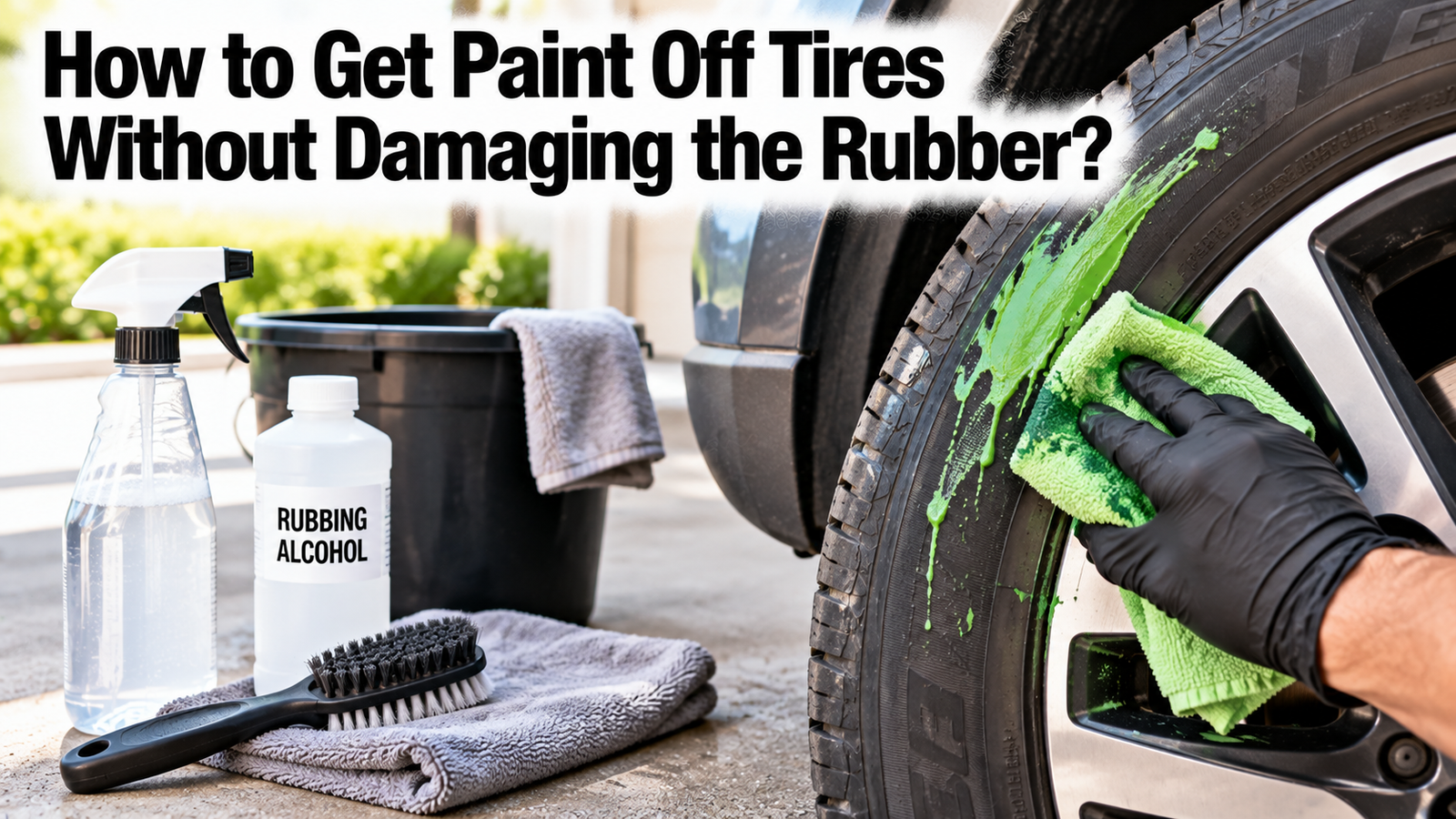

To get paint off tires, start with the gentlest method and work up only if needed. Warm soapy water and a stiff nylon brush, or a pressure wash, handle fresh paint. For dried paint, use a rubber-safe solvent like rubbing alcohol for latex or mineral spirits for oil-based, applied to a cloth and spot-tested first. Then rinse well and re-dress the tire. The catch is that harsh solvents can dry out and crack the rubber, so avoiding the wrong chemicals matters as much as removing the paint.
This guide covers why tires need a careful approach, a step-by-step from mild to stronger methods, which paints call for which cleaner, the chemicals and tools to avoid, and the aftercare that keeps the rubber healthy.
Why tires need a careful approach?
Tire rubber is tough, but it is not indestructible. The rubber compound contains oils and protective additives, antiozonants and antioxidants, that slowly migrate to the surface to shield the tire from sun, ozone, and weathering. Harsh solvents strip those oils along with the paint, which dries the rubber out, hardens it, and speeds up cracking and premature aging. Aggressive tools do the same by scouring off that thin protective layer.
That is why the goal is not just to remove the paint but to do it without stripping the tire’s defenses. In practice that means starting gentle, using rubber-safe solvents sparingly, scrubbing with the right brush, and restoring the surface afterward. It also means being patient: rushing with strong chemicals or hard scrubbing can cost you a tire far sooner than the paint ever would.
It also helps to think about where the paint is and how it got there, because that changes the difficulty. Overspray from painting wheels usually lands as a light mist on the sidewall and comes off relatively easily if you catch it soon. A dropped can or a splatter leaves thicker blobs that need softening.
Road-line paint sprayed up from a freshly striped road is the worst case, since it is applied hot and fast and works into the pores of the rubber before it dries. And old paint on used tires, sometimes a previous owner painted the whole sidewall, can take hours of patient work. Knowing which situation you are in sets realistic expectations and steers you toward the right method rather than the harshest one.
Tires are built to survive heat, sun, and road chemicals, but harsh solvents like acetone or gasoline strip the oils that protect the rubber. Removing paint gently matters as much as removing it at all.
How to get paint off tires? step by step
Work from gentle to stronger, and stop as soon as the paint is gone. Set up outdoors or in a ventilated space with something down to catch runoff, and wear gloves and eye protection once solvents come out.
- Wash the area first. Clean the tire with warm water and mild soap and a soft brush. For fresh paint, this plus a hose or a moderate pressure wash often lifts most of it right off.
- Scrub with a stiff nylon brush. For paint that stays, agitate it with a stiff-bristled nylon brush, never a wire brush, working in small sections. A plastic scraper can lift thick flakes gently.
- Move to a rubber-safe solvent. If scrubbing is not enough, apply the right solvent for the paint (see the table below) to a clean cloth, not directly to the tire, spot-test it on the lower sidewall first, and work it in with gentle circular motions.
- Keep the dwell time short. Let the solvent soften the paint only as long as needed, then agitate and move on. The less time a solvent sits on rubber, the safer it is.
- Rinse immediately and thoroughly. As soon as the paint lifts, rinse the area with water and car soap to stop the solvent action and wash away all residue. Do not let any solvent linger.
- Dry and re-dress the tire. Dry the tire, inspect for any dullness or cracking, and apply a non-silicone tire dressing or protectant to replenish the surface oils and restore the protective barrier.
For paint stuck deep in the tread, a stiff nylon brush with a heavy-duty degreaser works, but avoid pooling solvent in the tread grooves. Tread paint also wears off naturally as you drive, so you can often just let it go.
Which method for which paint?
Match the approach to the paint and how long it has been there. Here is the quick reference.
| Situation | Try this | Note |
| Fresh, wet paint | Soap + water, hose or pressure wash | Easiest; act fast |
| Dried water-based / latex | Rubbing alcohol, stiff nylon brush | Latex often peels or lifts |
| Dried oil-based / enamel | Mineral spirits or Goo Gone on a cloth | Spot-test; short dwell, rinse fast |
| Road-stripe paint | Lubricant or solvent, gentle scrub | Stubborn; patience over force |
Latex and water-based paint is the easier case, since it stays flexible and often peels or dissolves with mild rubbing alcohol. Oil-based paints, enamels, and road stripes bond harder and sink into the tiny pores of the sidewall, so they need a mild hydrocarbon solvent like mineral spirits or a citrus remover to break the binder, plus patience. Whatever the paint, the rule holds: spot-test first, use the mildest thing that works, and rinse fast.
If you would rather avoid solvents entirely, a few gentle household options are worth trying first, especially on fresh or light paint. A baking soda paste made with a little water gives a mild abrasion that scrubs paint without scratching. A cooking oil such as olive or vegetable oil, or a product like WD-40, can act as a lubricant that loosens paint from the rubber so it wipes away more easily.
Warmed vinegar on a cloth can soften a thin layer too. None of these are as fast as a solvent on stubborn oil-based paint, but they are kinder to the rubber and often enough for the common overspray case, and you likely already have them on hand.
What to avoid?
The wrong chemical or tool can trade a paint spot for a cracked, aging tire. Steer clear of these.
- Harsh solvents. Acetone, lacquer thinner, gasoline, and aggressive brake cleaner dissolve the rubber’s protective oils and plasticizers, drying it out and causing brittleness and cracking. Skip them on tires.
- Brake fluid as a paint remover. It is a popular garage trick, but it is hard on rubber and skin and is not environmentally responsible. Use a rubber-safe solvent instead.
- Wire brushes, steel wool, and coarse sandpaper. Abrasive tools score the surface and strip the thin protective layer. Use a stiff nylon brush and, only if you must, very light fine-grit sanding on a tiny spot.
- Long solvent dwell times. Letting any solvent soak on rubber is what does the damage. Keep contact brief and rinse immediately.
- Pooling solvent in the tread. Solvent that collects in the grooves sits against the rubber and degrades it. Work the sidewall carefully and let tread paint wear off if you can.
When in doubt, go gentler and slower. A little extra scrubbing time is far cheaper than a replacement tire.
Aftercare and the easy fallback
Whatever method you used, finish the same way: rinse thoroughly with soap and water, dry the tire, and apply a quality tire dressing or protectant to put back the surface oils and add a UV barrier. This step is what keeps the rubber from aging faster after a solvent has touched it, so do not skip it.
If the paint simply will not come off cleanly, or you are worried about the rubber, there is an easy fallback that detailers use: tire black. A dedicated tire paint or dressing designed to blacken sidewalls can cover stubborn overspray and give a uniform finish, turning a removal headache into a quick cosmetic fix.
It is not a substitute for cleaning off heavy paint, but for light, stubborn marks it is a practical option. One note of caution when working near the wheels: the methods that are safe on rubber can dull or damage the clear coat on the rim, so keep aggressive scrubbing to the tire and use a mild cleaner or a clay bar on the wheel itself.
For more on protecting the rubber, this guide to safely removing paint from a tire details which solvents are safe and which harm the compound, and a tire paint-removal reference covers the tools and the pressure-wash approach step by step.
Conclusion
Getting paint off tires is about balancing removal with rubber care. Start with soap, water, and a stiff nylon brush, step up to a rubber-safe solvent like rubbing alcohol or mineral spirits only if needed, spot-test first, keep dwell times short, and rinse immediately.
Avoid acetone, gasoline, brake fluid, and wire brushes, which damage the rubber, and always re-dress the tire afterward to restore its protective oils. For stubborn marks, tire black is an easy cover-up. Take it gentle and slow, and the paint comes off with the tire none the worse.
Frequently asked questions
What is the best way to get paint off tires?
Start gentle: warm soapy water and a stiff nylon brush, or a moderate pressure wash, especially for fresh paint. For dried paint, use a rubber-safe solvent like rubbing alcohol for latex or mineral spirits for oil-based, applied to a cloth and spot-tested first, then rinse and re-dress the tire.
Will acetone or brake cleaner damage tires?
Yes. Acetone, lacquer thinner, gasoline, and aggressive brake cleaner strip the protective oils in the rubber, drying it out and causing cracking and premature aging. Avoid them on tires and use milder, rubber-safe solvents instead.
How do you get dried spray paint off a tire?
Wash the area, then scrub with a stiff nylon brush. If the paint remains, apply a rubber-safe solvent to a cloth, spot-test it, and work it in gently with short dwell time, rinsing immediately once it lifts. Repeat for stubborn spots rather than scrubbing harder.
How do you remove road-line paint from tires?
Road-stripe paint is stubborn because it bonds hard and sinks into the sidewall pores. Soften it with a lubricant or a rubber-safe solvent, then agitate gently with a nylon brush in small sections. It takes patience; avoid harsh solvents and hard scrubbing that damage the rubber.
Do you need to do anything to the tire after removing paint?
Yes. Rinse thoroughly with soap and water to remove all solvent residue, dry the tire, and apply a non-silicone tire dressing or protectant. This replenishes the surface oils and restores the UV barrier that solvents can strip, keeping the rubber healthy.
This article is general guidance. Spot-test any product first, follow the solvent’s label for safe use and disposal, and consult a tire professional if you notice cracking or damage.
Related Articles
How to Thin Latex Paint: Water, Ratios and Limits
How to Make Stencils for Spray Paint (Step by Step)