
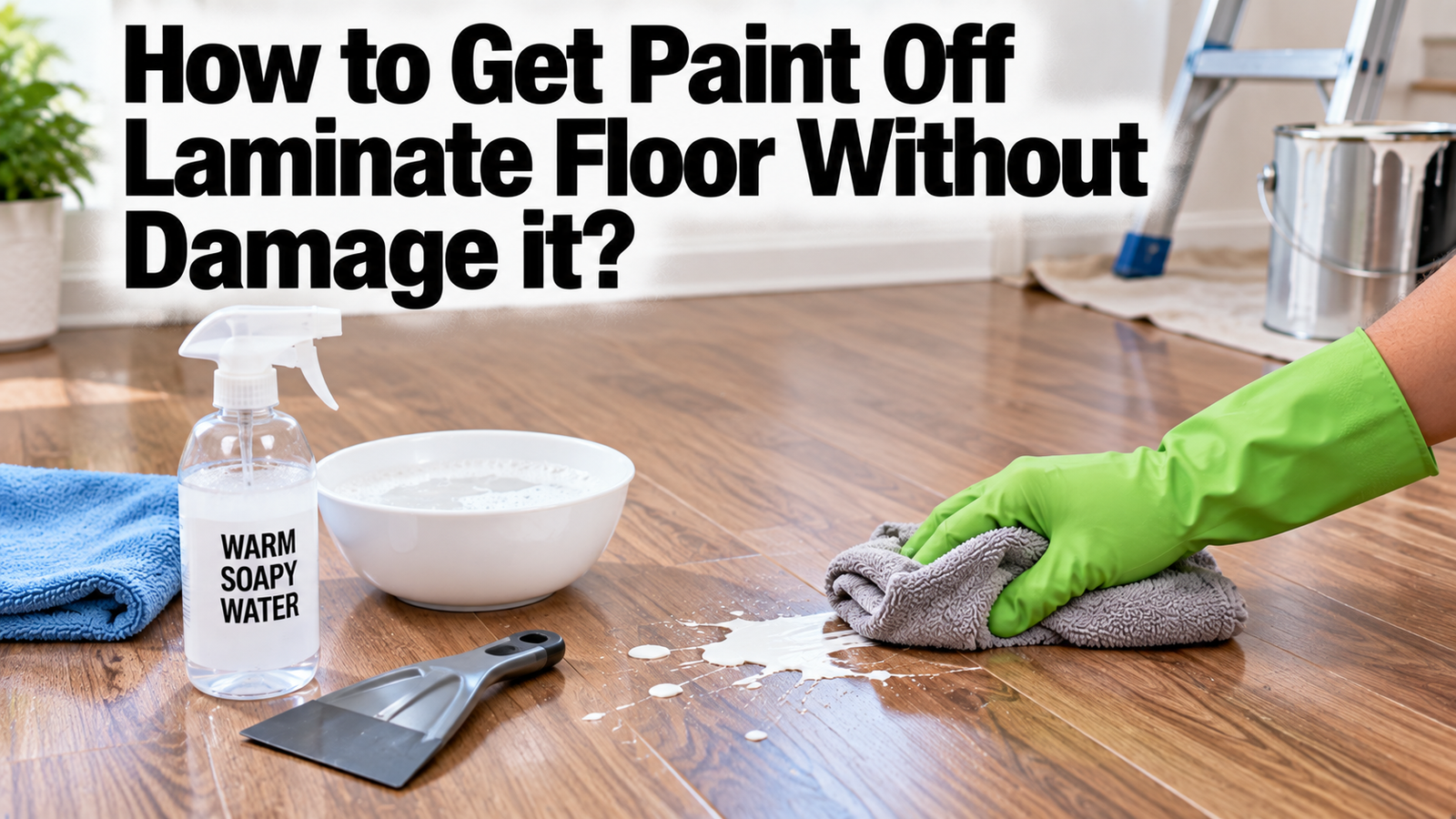

To get paint off a laminate floor, start gentle and work up only if you need to. For fresh paint, blot it up and wipe the spot with warm, soapy water. For dried paint, lift it with a plastic scraper, then soften what remains with rubbing alcohol and wipe it away. Always use plastic tools rather than metal, test any cleaner in a hidden spot first, and dry the floor right after, because laminate is water-resistant, not waterproof, and moisture in the seams can make it swell.
Laminate has a thin protective wear layer that scratches easily and a wood-based core underneath that hates moisture, so the trick is removing the paint without harming either. This guide covers the two golden rules, then walks through fresh and dried paint step by step, plus what to avoid so you do not trade a paint spot for permanent damage.
Two golden rules before you start
Two principles keep you out of trouble on laminate, and both are easy to follow.
First, start with the gentlest method and only escalate if it fails. Soap and water before alcohol, alcohol before stronger solvents. Laminate’s wear layer is delicate, so reaching straight for acetone or a metal scraper risks stripping or scratching the finish permanently, damage that cannot be repaired. Always test whatever you plan to use on a hidden area, such as under furniture or in a closet, before touching the visible spot.
Second, control the moisture. Laminate is water-resistant, not waterproof: its wood-based core can swell, warp, or delaminate if water seeps into the joints between planks. That means you blot rather than soak, wring cloths well, keep liquid off the seams as much as possible, and dry the floor thoroughly the moment you are done. This is also why steam mops are a bad idea for paint on laminate, since the heat and moisture together can ruin the planks.
It is worth knowing how laminate differs from luxury vinyl plank, since people often confuse the two. Vinyl plank has a waterproof core, so a little solvent reaching a seam is not a crisis, while laminate’s HDF or MDF core is only water-resistant and swells if moisture gets in.
The wear layer on both responds similarly to gentle rubbing alcohol or a small amount of acetone, so the cleaning technique is much the same; the real difference is that laminate demands extra diligence about drying and keeping liquid out of the joints. If you are unsure which floor you have, treat it as laminate and stay on the cautious side.
Laminate is water-resistant, not waterproof. Blot rather than soak, keep liquid out of the seams, and dry the floor immediately, or moisture can swell the planks from underneath.
How to remove fresh paint from laminate?
A fresh spill is the easy case, and speed makes all the difference. Act before it dries and it usually comes up completely.
- Blot up the excess. Use a clean cloth or paper towel to blot the paint, working from the outside of the spill inward so you do not spread it. Blot, do not rub.
- Wipe with warm soapy water. Dampen a microfiber cloth with warm water and a drop of mild dish soap, wring it out well, and gently wipe the area until the paint is gone.
- For oil-based paint, use rubbing alcohol. If the paint is gloss or enamel, blot the excess dry, then wipe the remainder with a cloth dampened in rubbing alcohol or a little white spirit rather than water.
- Check the seams. Use a dry cloth or a soft toothbrush to make sure no paint or water has crept into the joints between planks.
- Dry the floor immediately. Wipe the area dry with a soft towel so no moisture lingers on the surface or in the seams.
That is usually all it takes when the paint is still wet. The harder job is paint that has already dried, which is covered next.
How to remove dried paint from laminate?
Dried paint takes more patience but is far from a lost cause. The plan is to lift the bulk mechanically, then soften the rest with the mildest solvent that works. Identify whether it is water-based (emulsion, acrylic) or oil-based (gloss, enamel) first, since that guides your solvent.
- Scrape gently with a plastic tool. Hold a plastic scraper, putty knife, or old credit card at a low angle and gently lift the dried paint. Never use a metal blade, which scratches the wear layer. Even a fingernail is safer than metal.
- Soften what remains with rubbing alcohol. Lay a cloth dampened with rubbing alcohol over the dried paint and let it sit two to three minutes to break the bond, then wipe. Rubbing alcohol handles most dried water-based paint well.
- Work the seams gently. For paint in the joints, dip a soft-bristle toothbrush in a little rubbing alcohol and work along the seam carefully, keeping liquid to a minimum.
- Step up only if needed. If alcohol is not enough, try a citrus-based cleaner, or acetone used sparingly on a cloth. With acetone, dab, never let it sit, and wipe with a damp cloth immediately, since it can dull or damage the finish if left on.
- Clean and dry. Once the paint is gone, wipe the area with a damp cloth to remove any cleaner residue, then dry it completely with a soft towel.
For very stubborn spots, a hairdryer on low held at a safe distance can soften the paint enough to lift with a plastic scraper. Keep the heat moving and never let it dwell, and stop before the surface gets hot.
A common frustration is the faint ring or shadow left behind after a paint dot pops off. That residue is usually a thin film that the initial scrape missed, and it responds to the same approach: a little rubbing alcohol on a cloth, a minute to soften, and a gentle wipe, repeated once or twice rather than scrubbed hard. If a spot still resists after a couple of rounds, it is better to stop and try a slightly stronger cleaner briefly than to keep grinding at one area, which polishes and dulls the wear layer around the mark and can end up more visible than the paint was.
Which method should you use?
Match the approach to the paint and how long it has been there. Here is the quick reference.
| Situation | Try this first | Note |
| Fresh water-based paint | Blot, then warm soapy water | Easiest case; dry the floor after |
| Dried water-based paint | Plastic scraper, then rubbing alcohol | Let alcohol sit a few minutes |
| Oil-based / gloss paint | Rubbing alcohol or mineral spirits | Test first; blot, don’t soak |
| Stubborn residue | Citrus cleaner, or acetone sparingly | Never let acetone sit; wipe fast |
The pattern is always the same: identify the paint, lift what you can with a plastic tool, then use the mildest cleaner that works, testing first and drying after. Water-based paint gives way to soap and water or rubbing alcohol; oil-based needs rubbing alcohol or a touch of mineral spirits; and the stronger options are a careful last resort.
What to avoid?
A few instincts do more harm than good on laminate. Steer clear of these.
- Metal scrapers, blades, and abrasives. Metal tools, steel wool, scouring pads, and wire brushes scratch and strip the wear layer permanently. Use plastic and soft cloths only.
- Soaking the floor. Excess water or letting solvent pool can seep into the seams and swell the core. Blot and wring, never flood.
- Letting acetone or strong solvents sit. They can dull or eat into the finish. If you must use them, dab briefly and wipe off immediately, and test a hidden spot first.
- Steam mops. The combination of heat and moisture can warp or delaminate planks. Skip them for paint removal.
- Scrubbing hard. Aggressive rubbing scratches the finish. Use a light touch and let the cleaner do the work over a couple of gentle passes.
When in doubt, go slower and gentler. It is far easier to try a stronger method next than to undo a scratched or swollen floor. And if a spot truly will not budge with the safe methods here, a small color-matched laminate repair kit or a call to a flooring professional is a better outcome than gouging or bleaching the plank trying to win.
For more detail, this flooring guide to removing paint from laminate breaks down fresh versus dried and paint types, and a home flooring resource on paint removal covers the gentle-first order and safe cleaners.
Conclusion
Getting paint off a laminate floor comes down to being gentle and controlling moisture. Blot fresh paint and wipe with warm soapy water; lift dried paint with a plastic scraper and soften the rest with rubbing alcohol. Test any cleaner in a hidden spot, never use metal tools or let acetone sit, and dry the floor right away to protect the seams. Start with the mildest method and step up only if you must, and most paint comes off cleanly with your laminate none the worse for it.
Frequently asked questions
How do you get dried paint off a laminate floor?
Gently lift the bulk with a plastic scraper held at a low angle, then lay a cloth dampened with rubbing alcohol over what remains for a few minutes to soften it and wipe it away. Avoid metal tools, test first, and dry the floor when you finish.
Will rubbing alcohol damage laminate flooring?
Used gently, rubbing alcohol is generally safe on laminate and is one of the best options for dissolving dried paint. Still test it in a hidden spot first, apply it with a cloth rather than pouring it, and wipe and dry the area afterward.
Can you use acetone or nail polish remover on laminate floors?
Only as a last resort and with care. Acetone can dull or damage the laminate finish if left on, so dab it briefly, never let it sit, and wipe with a damp cloth immediately. Always test a hidden area first and try milder methods before reaching for it.
How do you get paint off laminate without scratching it?
Use only plastic tools, a plastic scraper, putty knife, or old credit card, held at a low angle, and soft microfiber cloths. Never use metal blades, steel wool, or abrasive pads, and use a light touch so you do not scratch the protective wear layer.
Does vinegar remove paint from laminate floors?
Warmed vinegar can soften dried water-based paint enough to scrape gently, but it is not very effective on its own and does little to oil-based paint. Rubbing alcohol is the more reliable choice; treat vinegar as a mild, natural first try.
This article is general guidance. Test any product on a hidden area first and follow the cleaner’s label and your flooring manufacturer’s care instructions.
Related Articles
How to Get Paint Off Tires Without Damaging the Rubber?
How to Make Stencils for Spray Paint (Step by Step)