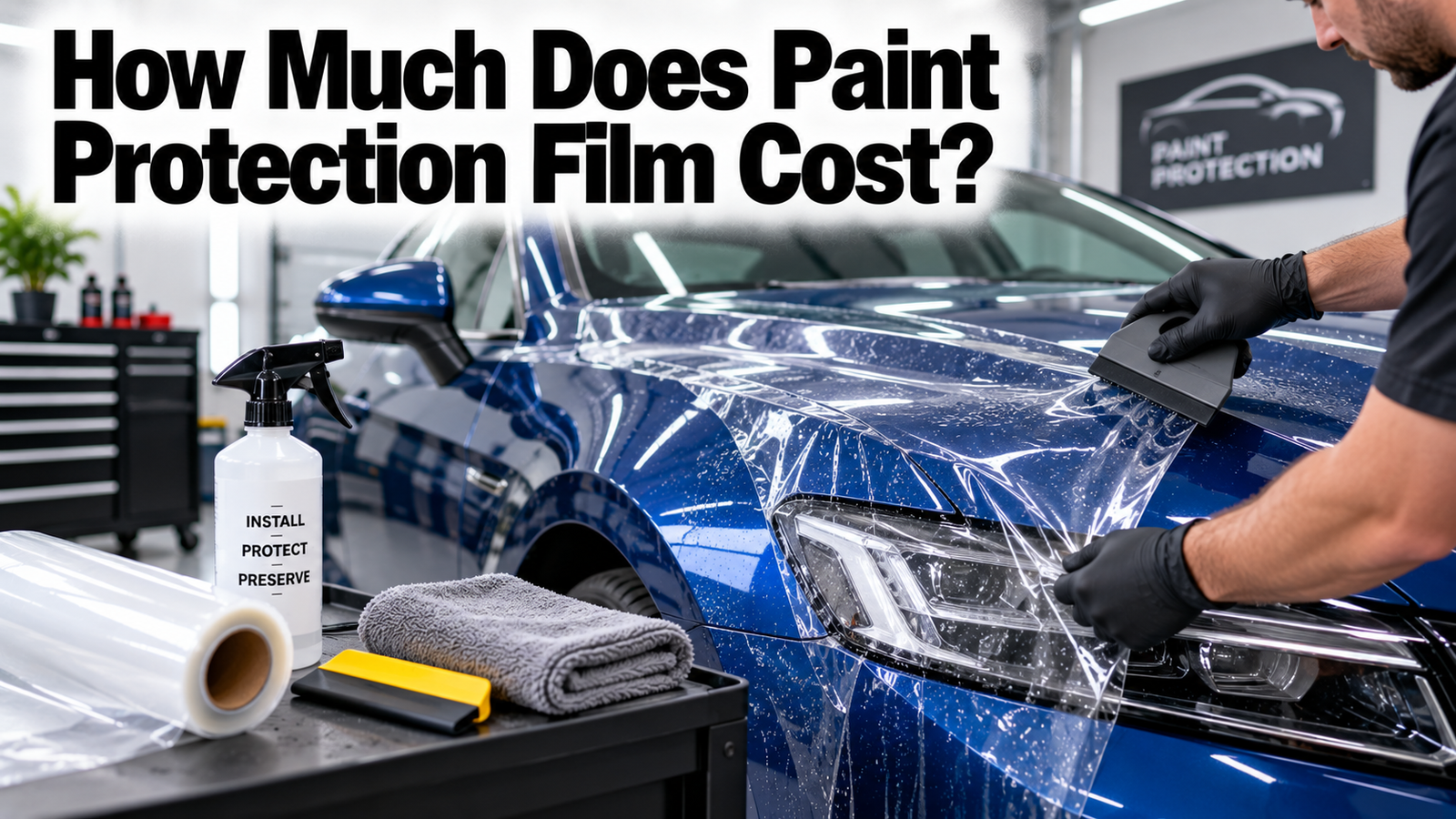

Paint protection film (PPF) costs roughly $600 to $8,000 or more in 2026, and where you land in that range comes down to how much of the car you cover and which film you choose. Partial front coverage runs about $600 to $2,000, full front coverage about $1,500 to $3,500, and a full-vehicle wrap about $5,000 to $8,000+. That’s the whole spread, from a modest bumper-and-hood package to wrapping every painted panel.
If you’ve called a few shops and gotten wildly different quotes, one at $1,200 and another over $4,000 for what sounded like the same thing, this is why. The price is driven by two things: how much coverage you buy and what tier of film goes on. Get those two clear and the confusing quotes suddenly make sense. Here’s the full breakdown.
How much does paint protection film cost?
PPF is a clear, tough urethane film applied over your paint to take the hits your finish otherwise would: rock chips, road debris, scratches, bug acids, and UV. Because it’s a premium material installed by skilled hands, the cost reflects both the film and the labor to fit it cleanly around every curve and edge.
Most installations fall into three coverage packages, and those packages are the biggest driver of the total. A partial front package protects the highest-impact zones, hood, bumper, mirrors, and fenders, for less money. Full front adds the complete leading surfaces and removes the visible film line a partial kit can leave. A full-vehicle wrap covers every painted panel for maximum protection. Below, each package with its typical 2026 price.
PPF cost by coverage package
This is the single biggest lever on price. Here’s what each common package protects and what it typically runs in 2026.
| Package | What it covers | Typical 2026 cost |
| Partial front | Hood edge, bumper, mirrors, fenders: the main impact zones | $600 to $2,000 |
| Full front | Full hood, full fenders, bumper, mirrors, no visible film line | $1,500 to $3,500 |
| Track / enhanced | Full front plus high-wear areas like rockers, A-pillars, headlights | $2,000 to $2,800 |
| Full vehicle | Every painted panel on the car | $5,000 to $8,000+ |
For most new daily drivers and enthusiast cars, installers commonly recommend the full front package as the sweet spot: it covers the surfaces that take the most abuse and avoids the partial kit’s visible edge, without the cost of wrapping the whole car.
Film tiers and price per square foot
The second lever is which film you choose. Not all PPF is equal, and the tier sets both the price per square foot and how long it lasts. In 2026 the market roughly splits into four tiers.
| Film tier | Price per sq ft (installed) | Lifespan |
| Entry-level | About $16 to $22 | 3 to 5 years |
| Premium | About $24 to $32 | 5 to 7 years |
| Self-healing | About $32 to $44 | 7 to 10 years |
| Ceramic PPF | About $44 to $58 | 10 years or more |
Self-healing film is where most daily drivers land for the best long-term value. Its top coat repairs light scratches and swirl marks when warmed by the sun or hot water, and top products from brands like XPEL carry warranties around 10 years. Entry-level film is cheaper up front but shorter-lived; ceramic PPF costs the most and adds a slick, hydrophobic finish on top of the protection.
The two levers together: coverage sets roughly how many square feet you’re paying for, and the film tier sets the price per square foot. Multiply them and you have your ballpark.
You can rough out your own estimate from those two numbers. Take the square footage of the coverage you want, a partial front is a small area, a full front noticeably more, a full wrap the whole car, and multiply by the per-square-foot rate of your chosen film tier. Then add roughly 15% to 30% for labor and another 20% to 40% if you drive a large truck or SUV. It won’t be exact, but it turns a vague “somewhere between $600 and $8,000” into a realistic band for your specific car, which makes it far easier to tell whether a shop’s quote is fair before you ever set foot in the door.
What makes the price swing
Beyond coverage and film tier, a handful of factors nudge the final number up or down, which is why two people buying “full front” can still pay different amounts.
- Vehicle size and shape. A big truck or SUV has more square footage than a compact sedan, often adding 20% to 40%. Complex curves, spoilers, and body lines take longer to wrap cleanly, raising labor.
- Installer skill and reputation. A certified, experienced installer charges more, and it’s usually worth it: clean edges, tucked film, and a warranty depend on the quality of the install.
- Paint correction first. PPF locks in whatever is underneath, so shops often do paint correction before applying it. That prep can add anywhere from a few hundred to a couple thousand dollars.
- Special finishes. Matte or “stealth” film that changes a glossy car to satin is more specialized and less forgiving to install, often $500 to $1,000 more.
- Region. Labor rates vary by market, so the same job can cost more in a high-cost city than in a lower-cost area.
This is also why it pays to look closely at what a quote actually includes. A low number might use entry-level film, skip paint correction, or cover less area than you assumed, while a higher number might bundle correction, a premium self-healing film, and a longer warranty. Two quotes that both say “full front” can describe genuinely different jobs. Ask each installer to spell out the film brand and tier, the exact panels covered, whether prep and correction are included, and the warranty length, and suddenly you’re comparing like with like instead of just chasing the lowest total.
PPF vs ceramic coating: which and what cost?
People shopping for PPF often weigh it against ceramic coating, and they’re not the same thing. It helps to know the difference before comparing prices.
Ceramic coating is a liquid that cures to a thin, hard, glossy layer. It boosts shine, makes the surface hydrophobic so water beads off, and helps with easy cleaning, and it’s much cheaper than PPF. What it does not do is stop rock chips: it’s a chemical and cosmetic shield, not a physical one. Paint protection film is a thick physical barrier that actually absorbs impacts and self-heals scratches, which is why it costs far more. Many owners do both, PPF on the high-impact front end and ceramic coating over the rest, to get physical protection where debris hits and easy-clean gloss everywhere else.
Simple way to choose: want to stop rock chips? That’s PPF. Want shine and easy cleaning at a lower price? That’s ceramic. Many drivers combine them.
Is paint protection film worth it?
Whether the cost pays off depends on your car, your driving, and how long you’ll keep it. PPF isn’t cheap, but neither is fixing the damage it prevents.
Consider the math. Repainting a single damaged panel commonly costs several hundred to a few thousand dollars, and a chip-riddled front end hurts resale value. Good PPF lasts 5 to 10 years, so on a vehicle you plan to keep, a front-end package can pay for itself by preventing repairs and preserving the factory paint that buyers pay a premium for. It makes the most sense if you drive a new or high-value car, log lots of highway miles, live somewhere with gravel, sand, or salt, or simply want to keep the finish looking new.
It makes less sense on an older, lower-value car you won’t keep long, or if your budget is tight and you rarely face harsh road conditions. In that case a full front package with mid-tier film, or ceramic coating alone, may be the smarter spend. The good news is the coverage packages let you match the protection, and the price, to how you actually drive.
Conclusion
Paint protection film costs about $600 to $8,000+ in 2026: roughly $600 to $2,000 for partial front, $1,500 to $3,500 for full front, and $5,000 to $8,000+ for a full wrap. The two things that move the price are how much of the car you cover and which film tier you pick, with self-healing film the sweet spot for most daily drivers. Factor in your vehicle size, whether you want paint correction first, and how long you’ll keep the car. Get two or three quotes from certified installers, and match the coverage to how you drive, and PPF can be a smart way to keep your paint looking new for years.
Frequently asked questions
How much does full front PPF cost? Typically $1,500 to $3,500 in 2026, depending on vehicle size, film tier, and installer. It covers the full hood, fenders, bumper, and mirrors, and is the package most shops recommend for new cars.
How much is it to wrap a whole car in PPF? A full-vehicle PPF wrap usually runs about $5,000 to $8,000 or more, and higher for large trucks, premium film, or special matte finishes. It protects every painted panel.
How long does paint protection film last? Usually 5 to 10 years depending on the film tier and care. Entry-level film lasts around 3 to 5 years, while premium self-healing and ceramic films can last 7 to 10 years or more, often with a warranty.
Is PPF or ceramic coating better? They do different jobs. PPF is a thick physical barrier that stops rock chips; ceramic coating adds shine and easy cleaning but won’t stop impacts. Many owners use PPF up front and ceramic over the rest.
Why do PPF quotes vary so much? Because coverage and film tier vary. A partial front in entry-level film costs a fraction of a full wrap in ceramic PPF. Vehicle size, paint correction, and installer skill also change the total.
Related Articles
How to Clean Walls Before Painting: A Simple Step-by-Step
How Often Should You Paint Your House Exterior?
How to Clean a Paint Gun: Step-by-Step for a Clog-Free Spray