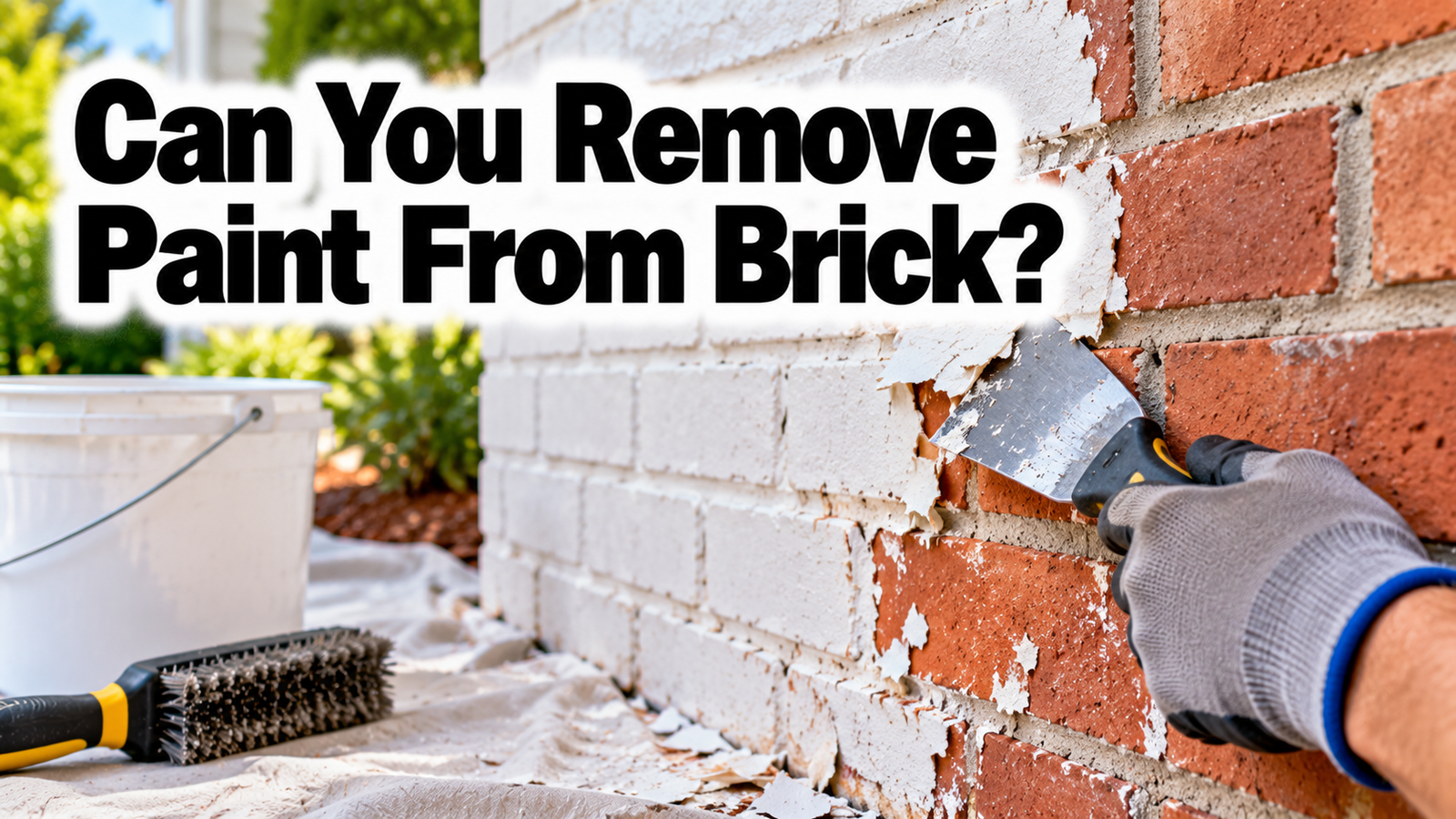

Yes, you can remove paint from brick, but the method matters. Brick is porous, and aggressive scraping, blasting, or harsh chemicals can damage its face and mortar. For many small projects, a masonry-safe paint stripper tested on a hidden patch is the best place to start. Large walls, historic brick, and older paint may need professional help.
- Can you remove paint from brick without damaging it?
- What is the safest way to remove paint from brick?
- How to remove paint from brick step by step
- Which paint-removal methods should you avoid?
- What if the brick is old or the paint will not come off?
- What should you know about lead paint and cleanup?
- When should you hire a professional?
- Conclusion
- Frequently asked questions
- Can vinegar remove paint from brick?
- Will a pressure washer remove paint from brick?
- Can you remove paint from interior brick?
- Can all paint be removed from brick completely?
- Is it better to paint over brick or remove the paint?
- Related Articles
Can you remove paint from brick without damaging it?
Yes, paint can often be removed from brick, but getting every trace off without harming the surface is not always possible. Brick is porous, so paint can settle into tiny holes and rough areas. Older or softer bricks can also lose their outer face if you attack them with hard scraping, grinding, or high-pressure water.
The best approach depends on what you are removing. A few fresh splashes on a brick step are different from several coats covering an entire house. For small spots, start with the gentlest method that might work. For a whole wall, old brick, or a historic building, get advice from a masonry restoration professional before you begin.
A good result means removing as much paint as practical while keeping the brick face and mortar joints intact. A faint stain may remain even after careful work. Chasing every last mark with harsher methods can cause damage that is much more noticeable than the paint.
What is the safest way to remove paint from brick?
For many dried paint coatings, a paint stripper specifically labeled for masonry is a sensible first choice. Gel or paste products can stay in contact with a vertical wall longer than thin liquids. Some systems use a fabric or paper covering to help keep the stripper wet and lift softened paint away from the surface. Choose a product suitable for your brick type and the paint you are removing, and follow its label exactly.
Always test the product on a small, hidden patch first. Apply it as directed, wait for the stated dwell time, then remove the softened paint with a plastic scraper or a brush approved for the product. Check the brick after it has dried. If the test patch changes color, becomes powdery, or shows damage to the mortar, stop and seek specialist advice.
The National Park Service explains that masonry cleaning should begin with the least aggressive workable method and that the surface should be tested before a larger area is treated. Its guidance on cleaning historic masonry is especially useful for older brickwork.
Fresh paint may need less effort. Blot or lift excess paint without spreading it, then use a cleaning method suitable for that paint type and the brick. Do not flood the area with solvent or scrub so hard that the paint is pushed deeper into the pores.
How to remove paint from brick step by step
Use this process for a small, manageable area of ordinary brickwork. Read the stripper instructions before starting, since application and cleanup vary by product.
- 1. Identify the paint and check the brick. Work out whether the paint is fresh or dried and, if possible, whether it is latex, acrylic, oil-based, or masonry coating. Look for crumbling brick, loose mortar, cracks, or signs that the wall is historic. Do not begin aggressive removal on a fragile surface.
- 2. Protect the work area. Cover nearby plants, paving, metal, glass, painted trim, and drains as appropriate for the product. Keep children and pets away. Wear the gloves, eye protection, clothing, and respiratory protection specified on the product label. If working indoors, provide the ventilation the label calls for.
- 3. Remove only loose flakes. Use a plastic scraper or a soft hand tool at a shallow angle. Let the tool do the work and avoid digging into the brick or mortar. Do not dry-sand old paint or use a grinder to speed things up.
- 4. Test the stripper. Apply it to a small, inconspicuous area using the recommended thickness and method. If the instructions call for a covering sheet, use the one supplied or specified by the manufacturer. Leave it for the stated time rather than guessing.
- 5. Lift away the softened paint. Use the recommended scraper, brush, or removal tool. Work in small sections so the product does not dry out and the residue stays manageable. Avoid spreading softened paint over clean bricks, as pigment can leave a stain in porous masonry.
- 6. Repeat only where needed. Multiple coats may need more than one application. Follow the product’s instructions for reapplication and never mix different strippers or cleaners. If the paint is not softening, do not simply switch to a stronger chemical without checking compatibility.
- 7. Remove residue as directed. Some products require water rinsing, while others require a different cleanup method. Use only the rinse method and pressure recommended by the manufacturer. Prevent contaminated runoff from reaching storm drains, soil, or nearby waterways.
- 8. Let the brick dry and inspect it. Wet brick can look darker and hide leftover paint. Once fully dry, check for residue, discoloration, damaged mortar, or a powdery surface. Decide whether a second gentle treatment is worthwhile before continuing.
Which paint-removal methods should you avoid?
Avoid sandblasting, aggressive abrasive blasting, grinding discs, and wire wheels on ordinary or historic brick unless a qualified conservation professional has selected and controlled a method for that specific material. These tools can strip away the hard outer surface of a brick, roughen it, change its appearance, and damage mortar joints. The damage may let moisture enter more easily and can be difficult or impossible to reverse.
Do not assume a pressure washer is safe just because it uses water. High pressure can erode soft brick and mortar, drive water into the wall, and spread dissolved paint or pigment. If a product label permits rinsing with pressure, use the specified setup and test it first. For delicate masonry, gentle hand removal is often the safer choice.
Avoid strong acids, caustic cleaners, and improvised chemical mixtures. Some chemicals can etch brick, weaken mortar, or leave salts and stains behind. Never mix paint stripper with bleach, ammonia, or another cleaner. Follow the safety data and label directions, and keep the product away from surfaces it may damage.
Heat guns and open flames are also poor default choices for brick. Heat may not release paint that has penetrated the pores, and it can create fumes or fire hazards around nearby materials. Use only a method specifically appropriate for the coating and surface, with the right controls in place.
What if the brick is old or the paint will not come off?
Older brick deserves extra care. Some historic brick was softer or was intended to be painted, and the mortar may be weaker than modern cement-rich mortar. Removing the coating can expose damage that the paint had been hiding. If the brick has a crumbling face, sandy mortar, flaking layers, or a long history of paint, pause before treating the full wall.
Paint that remains after stripping may have soaked deep into the pores. The National Park Service notes that complete removal can be impossible without damaging the masonry when paint has penetrated the surface. A small amount of remaining color is sometimes the better outcome than a scarred brick face.
If a first treatment leaves a shadow, allow the area to dry before judging it. You can test another compatible application on a small patch, but do not keep escalating to harsher chemicals or abrasives just to make the surface look uniform. For historic buildings, check local preservation requirements before changing the exterior finish.
If the original brick was designed to be painted, or removal would leave it uneven, repainting with a compatible masonry coating may be more practical than stripping it completely. Ask a mason or preservation specialist to assess the brick and mortar before choosing a finish.
What should you know about lead paint and cleanup?
If the building was constructed before 1978 in the United States, old paint may contain lead. Do not dry-sand, grind, burn, or casually scrape paint when lead may be present. Chips and dust can spread beyond the work area and remain on clothing, tools, floors, and soil.
The U.S. Environmental Protection Agency advises homeowners to use lead-safe practices for renovation work in older housing and recommends hiring a lead-safe certified contractor for projects involving lead-based paint. Read the EPA’s current lead-safe renovation guidance before disturbing paint in an older U.S. home. If you suspect lead, arrange testing or treat the coating as lead-containing until you have reliable information.
Collect paint chips and used materials as the product label and local rules require. Do not sweep fine dust into the air or rinse chemical residue into a storm drain. Keep cleanup materials contained, wash hands after the job, and remove protective clothing carefully. If the work involves a large exterior area, lead concerns, or significant chemical runoff, use a qualified professional.
When should you hire a professional?
Hire a masonry restoration specialist if you want to strip an entire exterior wall, the building is historic, the bricks are soft or damaged, several layers of paint are present, or a test patch causes staining or surface loss. A professional can assess the brick, mortar, coating, access needs, and waste-handling requirements before choosing a treatment.
Professional help is also wise when the work is above ground level, near delicate stone or metal details, or involves suspected lead paint. A contractor should explain the proposed method, show how it will be tested, and describe how runoff and paint waste will be contained. Ask whether the method is designed for your specific brick rather than simply for concrete or general masonry.
For a few isolated paint spots, a careful DIY test may be reasonable. For a large wall, the cost of expert advice can be less than repairing damaged brick or repointing mortar after an unsuitable removal method.
Conclusion
Yes, you can remove paint from brick, but the safest method is the one that loosens the coating without wearing away the brick face or mortar. Start with a small test patch and a masonry-safe stripper, use gentle tools, and follow the product’s cleanup directions. Avoid abrasive blasting, grinding, harsh chemicals, and uncontrolled pressure washing. For old brick, large walls, or possible lead paint, get professional guidance before you start.
Frequently asked questions
Can vinegar remove paint from brick?
Vinegar is not a reliable choice for removing fully dried paint from porous brick. It may have little effect on a cured coating, and scrubbing harder can damage the surface. Use a method made for the paint type and brick, after testing a small area.
Will a pressure washer remove paint from brick?
It may remove some loose paint, but high pressure can erode brick faces and mortar joints. Do not use it as a first step. Only consider rinsing when the product instructions allow it, and test a low-impact method in an inconspicuous spot.
Can you remove paint from interior brick?
Yes, but indoor work needs extra care because dust, fumes, and residue can collect inside the home. Ventilate the area as directed, protect nearby surfaces, and check for lead in older buildings. A masonry-safe gel stripper may be suitable after a small test.
Can all paint be removed from brick completely?
No. Paint can penetrate deep into brick pores, and some pigment may remain after safe removal. Trying to remove every trace can damage the brick or mortar, so a slightly stained surface may be preferable to aggressive treatment.
Is it better to paint over brick or remove the paint?
It depends on the condition and type of brick. If the brick is soft, historic, or already damaged, stripping may do more harm than good. Ask a masonry professional whether careful removal or a compatible masonry coating is the better long-term option.
Related Articles
Can You Paint Carpet? Best Options and Risks
Can You Paint Treated Lumber? Yes, Here’s How