
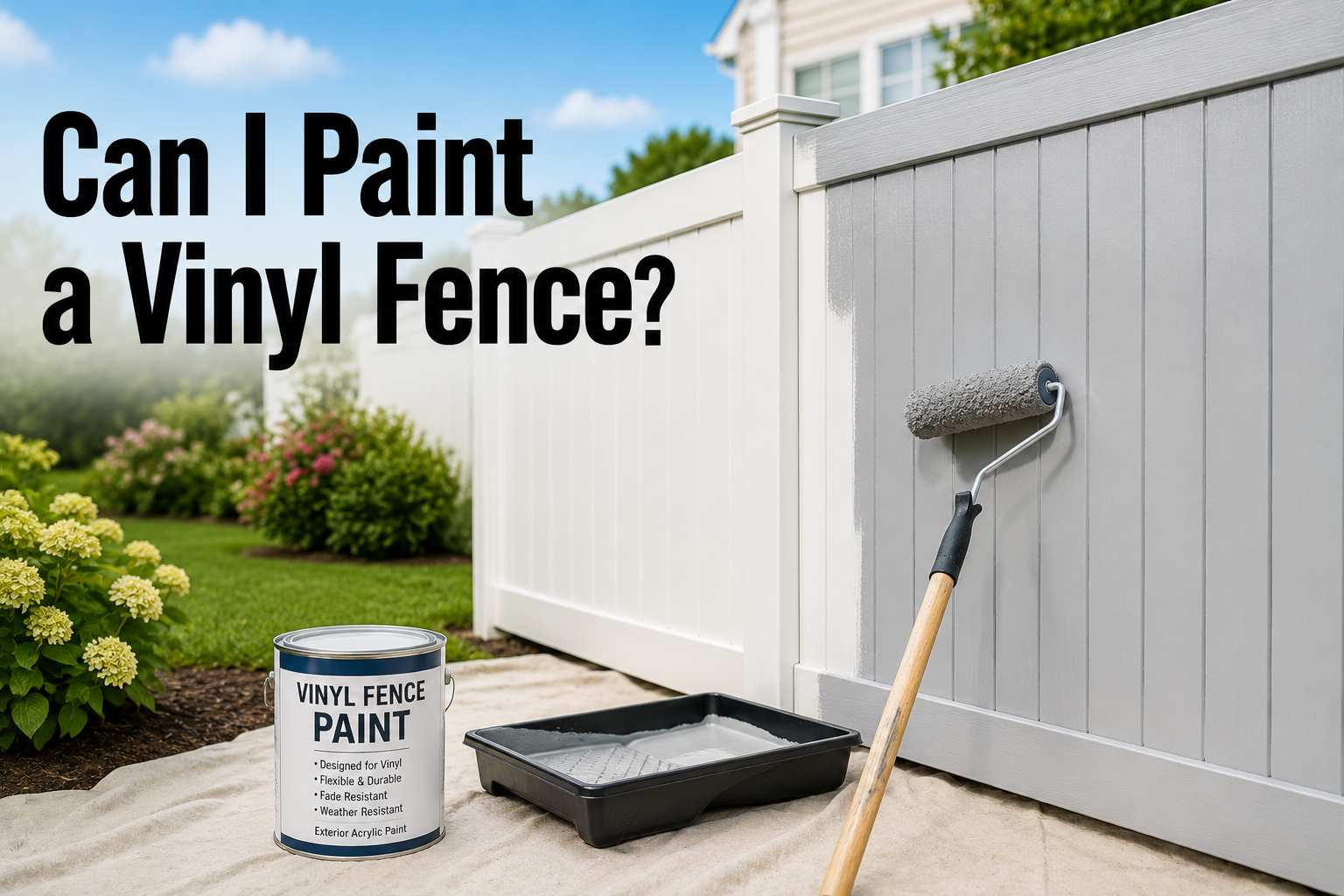

If you’ve been searching “can I paint a vinyl fence,” the short answer is yes — but it’s not as simple as grabbing a can of exterior paint and getting to work. Vinyl (PVC) fencing is manufactured specifically so it never needs a finish coat, which means painting it goes against the grain of what the material is built to do. That doesn’t make it impossible. It just means you need to know what you’re getting into before you commit a weekend — and possibly your fence’s warranty — to the project.
- Can You Paint a Vinyl Fence? The Short Answer
- Why Is Vinyl So Hard to Paint?
- When Painting a Vinyl Fence Makes Sense
- What You’ll Need to Paint a Vinyl Fence
- How to Paint a Vinyl Fence: Step-by-Step
- Step 1: Clean the Fence Completely
- Step 2: Scuff the Surface — Don’t Sand It Smooth
- Step 3: Test a Hidden Section First
- Step 4: Apply a Bonding Primer
- Step 5: Apply Two Thin Coats of Paint
- Step 6: Let It Cure Before Judging the Result
- Step 7: Consider a UV-Protective Clear Coat (Optional)
- How Long Does Paint Last on a Vinyl Fence?
- Cost Comparison: Painting vs. Replacing vs. Buying Pre-Colored Vinyl
- Will Painting Void My Vinyl Fence Warranty?
- Alternatives to Painting a Vinyl Fence
- Frequently Asked Questions
- Final Thoughts
- Related Articles
This guide walks through exactly why vinyl resists paint, when painting actually makes sense, the step-by-step process for doing it correctly, realistic costs and timelines, and the alternatives worth considering first.
Can You Paint a Vinyl Fence? The Short Answer
Yes, you can paint a vinyl fence, but success depends entirely on preparation, product selection, and realistic expectations. Vinyl fencing is colored all the way through during manufacturing, which is why it never needs staining or repainting under normal circumstances. When you add paint on top of that factory finish, you’re asking a coating to bond to one of the least paint-friendly surfaces in residential construction.
That’s not a reason to panic — thousands of homeowners paint vinyl fences every year, particularly to match a new siding color or freshen up an older fence they don’t want to replace. It just means the job requires more care than painting a wood fence, and you should go in with your eyes open about the trade-offs.
Why Is Vinyl So Hard to Paint?
Understanding the “why” here matters, because it explains almost every problem people run into.
Vinyl is non-porous. Wood soaks up paint into its grain, giving the coating something to grip. Vinyl is smooth and closed at the surface, so standard paint just sits on top rather than bonding into it. Without the right primer, even a well-applied coat can peel within a season or two.
Vinyl expands and contracts more than paint can handle. PVC fencing panels are engineered to move with temperature swings — a single fence rail can expand and contract several millimeters between a cold morning and a hot afternoon. Paint film isn’t nearly as flexible as the vinyl underneath it, so repeated thermal cycling causes the paint to crack, craze, and lift at the edges over time.
Dark colors create heat problems. Vinyl fencing is engineered around its factory color’s ability to reflect (or absorb) sunlight. Painting a light-colored fence a dark shade increases how much heat the panels absorb, which can cause warping, bowing, or softening in direct sun — especially in hot climates like the Southwest or Deep South.
It can void your warranty. Most vinyl fence manufacturers explicitly exclude coatings and surface modifications from their warranty coverage. Once you paint the fence, you’re generally on your own if it later cracks, warps, or discolors — even if the underlying cause has nothing to do with the paint.
None of this means painting is off the table. It means the process has to work with these realities instead of against them.
When Painting a Vinyl Fence Makes Sense
Painting isn’t the right move for everyone, but there are a few scenarios where it’s a reasonable choice:
- You just changed your siding or trim color and want the fence to match without the expense of full replacement.
- Your fence is older and slightly yellowed from years of UV exposure, and a light-colored refresh coat would extend its usable life while you plan for eventual replacement.
- You’re renting or reselling soon and want a low-cost visual update rather than a full fence swap.
- You already own the fence and it’s structurally sound, but you’ve simply changed your mind about the original color.
Painting makes less sense if your fence is still under warranty and you want to keep that protection, if you’re chasing a dark or saturated color (heat absorption becomes a real risk), or if the “problem” is actually just dirt, mildew, or mineral staining — all of which come off with cleaning, not paint. Before you buy a single can of primer, hose the fence down with mild dish soap and water, or a diluted white vinegar solution for mildew, and see how much of the discoloration disappears. Homeowners are often surprised how much of what looked like “faded, needs painting” was actually just grime.
What You’ll Need to Paint a Vinyl Fence
Skipping the right materials is the single biggest reason vinyl fence paint jobs fail early. Here’s what to have on hand:
- Bonding primer for plastics/vinyl — this is non-negotiable. Standard exterior primer will not create a durable bond.
- 100% acrylic exterior paint, ideally one marketed specifically for vinyl, PVC, or plastic surfaces. Urethane-modified acrylics tend to hold up best against thermal movement.
- Light-colored paint only. Stick to shades that reflect rather than absorb heat — as a rule of thumb, avoid anything significantly darker than your fence’s original factory color.
- Fine-grit sandpaper (180–220 grit) for light surface scuffing.
- A pressure washer (or garden hose) and mild dish soap for cleaning.
- A paint sprayer, or a high-quality synthetic-bristle brush and foam roller if spraying isn’t practical.
- Painter’s tape and drop cloths to protect landscaping, hardware, and adjacent surfaces.
How to Paint a Vinyl Fence: Step-by-Step
Step 1: Clean the Fence Completely
Wash the entire fence with warm water and mild dish soap using a soft-bristle brush or microfiber cloth. For mildew or algae, use a diluted white vinegar solution and let it sit for a few minutes before rinsing. If you use a pressure washer, keep it on a low setting and hold the nozzle at least a foot away — high pressure at close range can force water into seams and joints. Let the fence dry fully for at least 24 hours before moving on; any trapped moisture underneath the paint will cause bubbling later.
Step 2: Scuff the Surface — Don’t Sand It Smooth
Lightly sand the panels with 180–220 grit sandpaper, just enough to dull the glossy surface and give the primer something to grip. You’re not trying to strip anything away — over-sanding can damage the UV-protective outer layer built into the vinyl itself. Wipe away all dust with a damp cloth and let the surface dry again.
Step 3: Test a Hidden Section First
Before committing to the whole fence, prime and paint a small, inconspicuous panel — the back of a gate post, for example — and let it cure for a few days. This tells you how the product performs on your specific fence before you’ve invested a full weekend and a garage full of paint cans.
Step 4: Apply a Bonding Primer
Apply an even coat of vinyl- or plastic-rated primer using a sprayer, roller, or brush. This step does more to determine the paint job’s lifespan than any other single decision you’ll make. Let it dry completely per the manufacturer’s instructions — usually a few hours, but check the label, since humidity and temperature both affect cure time.
Step 5: Apply Two Thin Coats of Paint
Apply your acrylic exterior paint in thin, even layers rather than one heavy coat. Two thin coats bond and flex better than a single thick one, which is more prone to cracking as the vinyl expands and contracts. Let each coat dry fully — typically 2–4 hours in mild weather — before applying the next. Paint on a dry day with moderate temperatures; avoid painting in direct, high-heat sun or when rain is forecast within 24 hours.
Step 6: Let It Cure Before Judging the Result
Freshly painted vinyl can look slightly different once fully cured, which can take up to a week. Resist the urge to add a “just in case” third coat right away — extra thickness works against you here, not for you.
Step 7: Consider a UV-Protective Clear Coat (Optional)
A clear, UV-resistant sealant applied over the cured paint can help slow fading and add a layer of moisture resistance. This step is optional but can meaningfully extend how long the paint job looks fresh, particularly in sun-heavy climates.
How Long Does Paint Last on a Vinyl Fence?
Even with ideal prep and premium products, expect a repainted vinyl fence to show visible wear — chipping, fading, or peeling at seams — within roughly three to five years. A rushed or under-prepped job can fail in as little as one to two seasons. Compare that to factory-colored vinyl, which typically carries a 20- to 30-year warranty and needs no repainting at all. That gap is the central trade-off of this whole project: you’re trading permanence for the ability to change your color today.
Cost Comparison: Painting vs. Replacing vs. Buying Pre-Colored Vinyl
| Option | Typical Cost | Lifespan of Finish | Warranty Impact |
|---|---|---|---|
| DIY paint job (primer + paint + supplies) | $75–$250 for an average yard | 1–5 years | Usually voided |
| Professional paint job | $500–$1,500+ depending on fence size | 3–5 years | Usually voided |
| Replace individual damaged panels | $100–$250 per panel | Matches original warranty | Warranty intact |
| Full fence replacement in a new factory color | $15–$40+ per linear foot installed | 20–30 years | Full warranty |
If your fence is otherwise in good shape and you simply want a different shade, painting can be the most budget-friendly short-term fix. If you’re chasing a dramatically different color or your fence is already showing its age, running the numbers on replacement is worth ten minutes before you buy paint.
Will Painting Void My Vinyl Fence Warranty?
In most cases, yes. Manufacturers generally exclude coatings, paint, and other surface modifications from warranty coverage, since they can’t be held responsible for how a third-party product performs on their material. Before you start, dig up your original paperwork or contact the manufacturer directly to confirm your specific warranty terms — and factor that into your decision, especially if your fence is still relatively new.
Alternatives to Painting a Vinyl Fence
If the trade-offs above give you pause, a few alternatives can update your fence’s look without touching a paintbrush:
- Clean it thoroughly. Mildew, dust, and mineral staining account for a large share of “my fence looks dull” complaints, and none of it requires paint.
- Add decorative elements. Post cap lights, lattice inserts, or trellis panels can change a fence’s character without altering the underlying material.
- Landscape around it. Climbing vines, shrubs, or flower beds soften a fence’s appearance and can visually shift its overall tone.
- Replace select panels or sections. If only part of the fence is damaged or discolored, swapping individual panels for factory-colored replacements keeps your warranty intact.
- Plan a full replacement in your ideal color. If you’re set on a completely different shade — especially a dark one — buying pre-colored vinyl guarantees a finish that never needs touch-ups.
Frequently Asked Questions
What’s the best paint for a vinyl fence? A bonding primer designed for plastic or vinyl surfaces, followed by a 100% acrylic exterior paint (ideally urethane-modified) in a light color. Skipping the primer is the most common reason vinyl fence paint jobs fail early.
Can I spray paint a vinyl fence? Yes, a paint sprayer is often the best tool for an even, streak-free finish, especially on textured or paneled fencing. The same prep steps — cleaning, light sanding, priming — still apply regardless of application method.
Will painting my vinyl fence void the warranty? In most cases, yes. Check your specific manufacturer’s warranty terms before painting, since coatings and surface modifications are commonly excluded from coverage.
Can I paint a vinyl fence a dark color? It’s not recommended. Darker colors absorb significantly more heat than the fence’s original factory shade, which can cause warping or bowing in direct sunlight — particularly in hot climates. Stick to colors close in tone to the original finish.
Do I need to sand a vinyl fence before painting? A light scuff with fine-grit sandpaper helps the primer adhere, but you shouldn’t sand aggressively. Over-sanding can strip away the vinyl’s built-in UV protection.
How much does it cost to paint a vinyl fence? A DIY job typically runs $75–$250 in materials for an average-sized yard. Hiring a professional painter runs higher, often $500–$1,500 or more, depending on fence size and condition.
Is it better to paint or replace a vinyl fence? If your fence is structurally sound and you want a similar or lighter color, painting is the more affordable short-term option. If you want a dramatically different (especially darker) color, or your fence already shows wear, replacing it with factory-colored vinyl gets you a longer-lasting, warranty-backed result.
Final Thoughts
So, can you paint a vinyl fence? Yes — but it works best when you treat it as a deliberate, well-prepared project rather than a quick weekend fix. Clean the surface thoroughly, use a bonding primer made for plastic, stick to light colors, apply thin coats, and go in knowing you’re trading some of vinyl’s famous low-maintenance appeal for a color change that will likely need a refresh in a few years. If your fence is still under warranty or you’re chasing a dark, dramatic color, it’s worth pricing out panel replacement or a full re-fence in a factory color before you buy a single can of paint.
Ready to get started? Test your paint and primer combination on a hidden section of your fence first, and give yourself a full weekend to do the prep work right — it’s the single biggest factor in how long your new color will actually last.
Related Articles
What Paint to Use for Face Painting: The Complete Beginner’s Guide
Does Spray Paint Come Out of Clothes? Complete Removal Guide
Do You Sand Primer Before Painting? A Complete Step-by-Step Guide
Can You Paint Over Polyurethane? A Complete Step-by-Step Guide