
If you’re planning a paint project, you’ve probably searched some version of “how long does it take exterior paint to dry” more than once while staring at the forecast. The honest answer is: it depends — on the type of paint, the weather, the surface you’re painting, and even the color you chose. But there are real, predictable ranges you can plan around, and knowing them can save you from blotchy finishes, peeling, and repaint headaches down the road.
- Drying vs. Curing: Why the Difference Matters
- How Long Does Exterior Paint Take to Dry by Type?
- What Actually Affects Exterior Paint Drying Time
- Temperature
- Humidity and Dew Point
- Wind
- Direct Sunlight and Surface Temperature
- Paint Sheen and Color
- Coat Thickness and Number of Coats
- Surface Material
- How to Tell If Exterior Paint Is Actually Dry
- Best Weather Conditions for Painting a House Exterior
- How Long to Wait Before Common Next Steps
- What to Do If It Rains Before the Paint Finishes Drying
- Tips to Speed Up Drying Without Ruining the Finish
- Frequently Asked Questions
- Final Thoughts
- Related Articles
This guide breaks down exactly how long exterior paint takes to dry and fully cure, what actually controls that timeline, and how to protect your paint job whether you’re working with wood siding, stucco, vinyl, or brick.
Drying vs. Curing: Why the Difference Matters
Before getting into numbers, it helps to separate two things people often lump together.
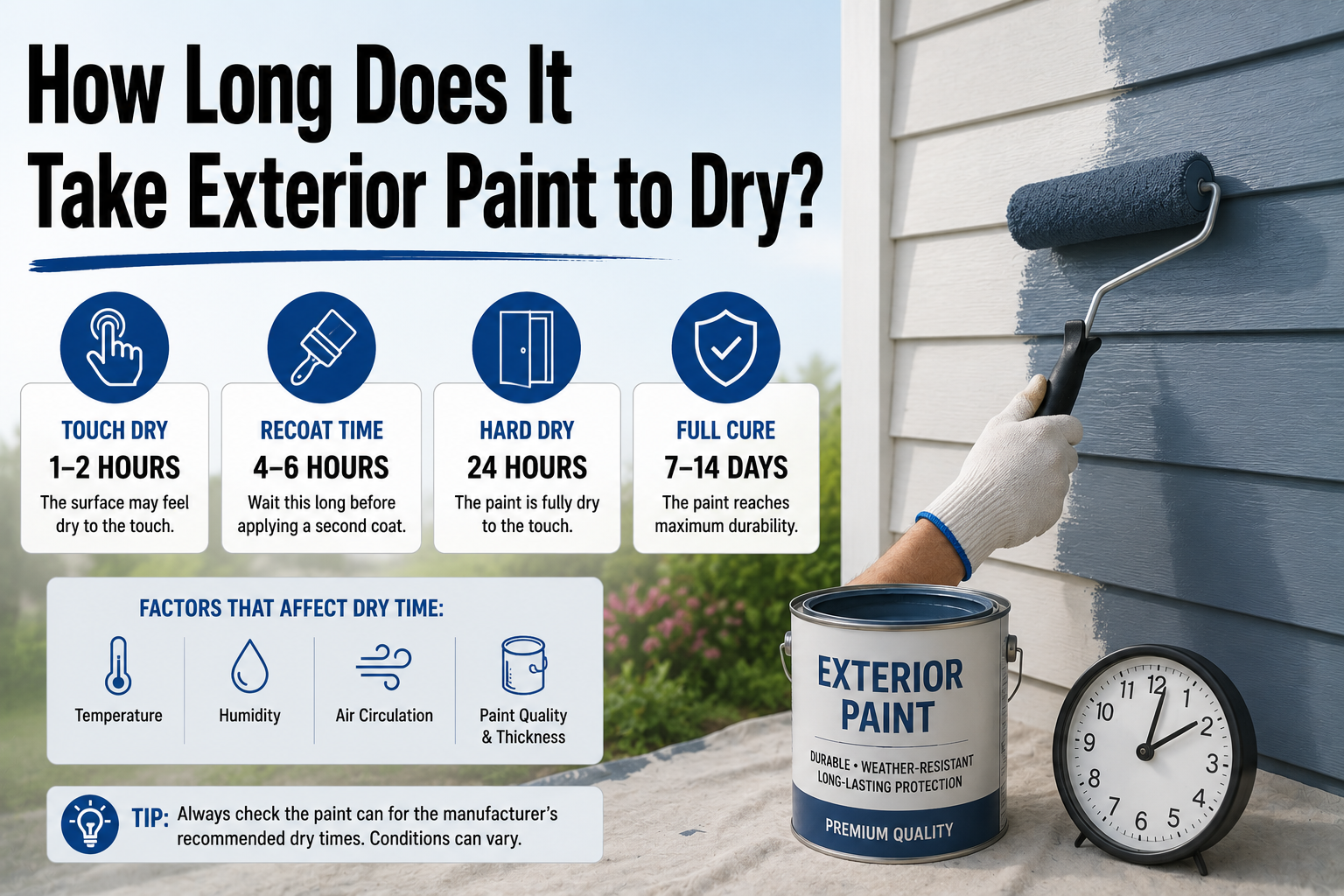
Drying is when the paint’s surface is no longer wet or tacky. Solvent or water has evaporated off the top layer, so you can touch it without leaving a fingerprint or smearing the color. This usually happens within a few hours.
Curing is a much slower chemical process. The paint film has to fully harden and bond to the surface underneath it, building up the hardness and weather resistance it’s designed to have. Curing can take anywhere from one to four weeks, depending on the product and conditions.
The reason this distinction matters: a wall can look and feel completely finished within a day, but it’s still soft underneath. Leaning a ladder against it, letting a hose spray it, or scrubbing it too soon can leave marks, dents, or peeling — even though it “seemed dry.”
How Long Does Exterior Paint Take to Dry by Type?
Not every paint behaves the same way. Here’s a quick-reference breakdown of the most common exterior paint types.
| Paint Type | Touch-Dry | Safe to Recoat | Fully Cured |
|---|---|---|---|
| Latex/Acrylic (standard) | 1–2 hours | 4–6 hours | 2–4 weeks |
| Oil-Based (alkyd) | 6–8 hours | 24 hours | 1–2 weeks |
| Masonry/Stucco Paint | 2–4 hours | 12 hours | ~4 weeks |
| Solid Color Deck/Siding Stain | 1–2 hours | 2–4 hours | 1–2 weeks |
Latex and Acrylic Paint
Most residential exteriors are painted with latex (water-based acrylic) paint, and for good reason — it dries quickly, cleans up with soap and water, and holds up well to sun and moisture once cured. It typically feels dry to the touch within an hour or two, and most manufacturers recommend waiting at least four hours before applying a second coat. Full cure, however, can take two to four weeks.
Oil-Based Paint
Oil-based (alkyd) paints are less common on modern exteriors, but they’re still used for trim, doors, and metal surfaces because of their hard, glossy finish. They take longer to dry to the touch — often six to eight hours — and generally need a full 24 hours before a second coat goes on. Interestingly, they often reach a full cure faster than latex, usually within one to two weeks.
Masonry and Stucco Paint
Stucco, concrete, and brick are porous, so paint made for masonry behaves differently than paint made for wood or siding. It takes longer to bond because it has to soak into a textured, absorbent surface. Expect it to be touch-dry within two to four hours, safe to recoat after about 12 hours, and fully cured in roughly a month.
Solid Color Stains
If you’re staining rather than painting siding, decking, or fencing, solid color stains behave similarly to thin-bodied latex paint — dry to the touch in one to two hours, recoat-ready in a few hours, and fully cured within one to two weeks, depending on wood porosity.
What Actually Affects Exterior Paint Drying Time
The numbers above are baseline estimates under ideal conditions. In the real world, several factors can speed things up or slow them down significantly.
Temperature
Most exterior paints are formulated to dry properly between 50°F and 85°F. Paint applied below 50°F may not form a proper film and can crack or fail to bond; paint applied above 90°F can dry too fast on the surface while staying wet underneath, trapping solvent and causing blistering later.
Humidity and Dew Point
High humidity slows drying because there’s less room in the air for moisture to evaporate into. Aim for relative humidity under 70% when painting. Just as important — and rarely discussed — is dew point. If the overnight temperature is expected to drop close to the dew point, moisture can condense on paint that hasn’t fully skinned over yet, leaving a cloudy or spotted finish. Check the evening dew point forecast, not just the daytime temperature.
Wind
A light breeze can actually help paint dry evenly by moving air across the surface. But strong wind causes the outer layer to dry before the paint underneath has flowed out properly, which can trap brush or roller marks and pull dust and debris into the wet finish.
Direct Sunlight and Surface Temperature
This is one of the most overlooked factors. It’s not just air temperature that matters — it’s the surface temperature of the siding itself. A wall in direct afternoon sun, especially if it’s painted a dark color, can run 20–30°F hotter than the surrounding air. That’s often enough to push the surface above a paint’s recommended application range, causing lap marks and uneven sheen. Whenever possible, follow the shade around the house rather than painting whatever side the sun happens to be hitting.
Paint Sheen and Color
Flat and matte finishes tend to dry slightly faster to the touch than satin, semi-gloss, or gloss finishes, which have more resin content. Darker colors also absorb more heat from the sun, which can accelerate surface drying while the paint underneath is still curing — one more reason not to rush recoating a dark accent color.
Coat Thickness and Number of Coats
Thicker coats always take longer to dry, and applying paint too heavily is one of the most common DIY mistakes. Two thin, even coats will dry more reliably and look better than one thick coat, even though it feels like more work up front.
Surface Material
- Wood siding: Absorbs moisture from both the paint and the environment, so it needs to be fully dry (ideally under 15% moisture content) before painting or dry time will stretch out.
- Vinyl siding: Non-porous, so paint sits on the surface rather than soaking in — it often feels dry faster, but only vinyl-safe paint should be used, or it can warp in direct sun.
- Stucco and brick: Porous and absorbent, which pulls moisture out of the paint faster on the surface but slows overall cure underneath.
- Metal (railings, doors, gutters): Doesn’t absorb anything, so paint dries purely by evaporation and oxidation — direct sun can make metal extremely hot and cause the paint to dry too fast, leading to poor adhesion.
How to Tell If Exterior Paint Is Actually Dry
Rather than guessing, use one of these simple checks before recoating, closing up windows near the surface, or letting kids and pets back into the yard.
- Touch test: Lightly press a knuckle (not a fingertip) against an inconspicuous area. If nothing transfers and it feels firm, it’s dry to the touch.
- Tape test: Press a small piece of painter’s tape onto the surface and peel it back gently. If paint comes off with the tape, it needs more time.
- Fingernail test (for cure, not just dry): After a few days, gently press a fingernail into a hidden spot. If it leaves an indent or the paint feels soft, it’s still curing — hold off on pressure-washing or heavy contact.
Best Weather Conditions for Painting a House Exterior
For the most reliable results nationwide, look for a stretch of days with:
- Daytime temperatures between 50°F and 85°F
- Relative humidity under 70%
- Little to no rain forecast for at least 24–48 hours after your last coat
- Light wind (a slight breeze is fine; gusty days are not)
- No overnight dew point crossover expected
In most of the U.S., spring and fall tend to offer the most consistent combination of these conditions. Summer can work but often means painting early morning or evening to avoid peak heat, and winter is generally too cold for most latex formulations to cure properly.
How Long to Wait Before Common Next Steps
| What You Want to Do | Recommended Wait Time |
|---|---|
| Apply a second coat (latex) | 4–6 hours |
| Apply a second coat (oil-based) | 24 hours |
| Remove painter’s tape | Once dry to the touch, ~1 hour |
| Let rain hit fresh paint safely | 24 hours minimum (latex), 48 hours (oil) |
| Rehang shutters, planters, house numbers | 24–48 hours |
| Pressure wash or scrub the surface | 30 days (full cure) |
| Let kids/pets lean or rub against it | 24–48 hours minimum |
What to Do If It Rains Before the Paint Finishes Drying
If an unexpected shower hits before your paint has dried, don’t panic immediately — assess it first. A light drizzle on paint that’s already dry to the touch usually causes minimal damage, maybe some slight dulling. Heavy rain on paint that’s still wet, though, can wash pigment away, cause streaking, or leave the surface tacky and uneven.
If that happens, wait for the area to dry out completely — often another 24–48 hours — before deciding whether to sand down uneven spots and apply a fresh coat. Don’t attempt to “fix” it while anything is still damp, since trapped moisture underneath a new coat can cause bubbling and peeling later.
Tips to Speed Up Drying Without Ruining the Finish
- Paint in the morning once dew has evaporated, rather than in peak afternoon heat.
- Apply thin, even coats instead of one heavy layer.
- Follow the shade around the house instead of painting in direct sun.
- Check the dew point, not just the temperature, for your evening forecast.
- Use a fan or improve airflow in sheltered areas like porches or covered patios where natural wind doesn’t reach.
- Avoid rushing recoat times — cutting a 4-hour wait down to 90 minutes to “save time” is one of the most common causes of a lap-marked or peeling finish.
Frequently Asked Questions
How long does exterior paint need to dry before it rains? Plan for at least 24 hours of dry weather after your final coat of latex paint, and 48 hours for oil-based paint. Check an hourly forecast, not just the daily summary, before starting.
How long does exterior paint take to dry in cold weather? Below 50°F, most latex paints dry much more slowly and may not cure properly at all. If you have to paint in cooler temperatures, look for a paint specifically formulated for low-temperature application, and expect drying times to roughly double.
Can exterior paint dry too fast? Yes. In very hot, dry, or windy conditions, the surface of the paint can dry before it has time to properly bond and level out, which often causes lap marks, poor adhesion, or a rough texture.
Does paint color affect how long it takes to dry? Indirectly, yes. Darker colors absorb more heat from sunlight, which can speed up surface drying while the paint underneath is still curing — increasing the risk of trapping moisture if you recoat too soon.
How long should you wait to power wash new exterior paint? Wait a full 30 days to allow the paint to reach a full cure before pressure washing or scrubbing the surface.
Is it OK to paint exterior siding in direct sunlight? It’s better to avoid it. Painting in direct sun raises the surface temperature well above the surrounding air, which can cause the paint to dry unevenly. Try to follow the shaded side of the house throughout the day.
Final Thoughts
So, how long does it take exterior paint to dry? As a quick rule of thumb: most latex paints are dry to the touch within one to two hours, safe to recoat within four to six hours, and fully cured within two to four weeks — with oil-based and masonry paints following their own, slightly different timelines. The real key to a paint job that actually lasts isn’t rushing past those numbers; it’s understanding how temperature, humidity, sunlight, and your specific surface interact with them.
Before you pick up a brush, check the extended forecast — not just for rain, but for temperature swings and overnight dew — and give each coat the full time it needs before moving to the next step. If you’d rather skip the guesswork altogether and have the timing, prep, and application handled by professionals, reach out to a local exterior painting contractor for a free estimate and get a finish that’s built to last.
Related Articles
Does Spray Paint Come Out of Clothes? Complete Removal Guide
How to Remove Paint from Plastic: 7 Easy & Safe Methods That Work
How to Dispose of Paint Thinner (Safely & Legally)
How to Paint a Brick Fireplace: The Complete Step-by-Step Guide