

That sharp, chemical scent that fills a room right after painting is something almost everyone has experienced. Whether you just repainted your bedroom, touched up the living room walls, or finished a full home renovation, the lingering smell can be uncomfortable, and for some people, it can even cause headaches or nausea. If you have been searching for how to get rid of paint smell without waiting endless days for it to fade on its own, you are in the right place.
- Understanding Why Paint Smells
- What Are VOCs (Volatile Organic Compounds)
- Difference Between Oil-Based, Latex, and Water-Based Paint Odors
- Why Some Paints Smell Stronger Than Others
- Immediate Steps After Painting
- Ventilation Basics: Opening Windows and Doors
- Using Fans for Cross-Ventilation
- Setting Up Airflow Direction (Intake vs Exhaust)
- Natural Ways to Absorb Paint Odor
- Bowls of Water (With Vinegar, Onion, or Lemon)
- Baking Soda Placement
- Activated Charcoal Bags
- Coffee Grounds Method
- Using Air Purifiers and Filters
- HEPA Filters vs Activated Carbon Filters
- Best Type of Purifier for VOC Removal
- Placement Tips for Faster Results
- Temperature and Humidity Control
- Ideal Room Temperature for Faster Off-Gassing
- Role of Humidity in Odor Lingering
- Using Dehumidifiers Effectively
- Speeding Up the Drying Process
- How Drying Time Affects Smell Duration
- Using Low Heat vs Natural Airflow
- Avoiding Common Mistakes That Trap Odor Indoors
- Candles, Sprays, and Odor Neutralizers
- Choosing Low-Odor Paints in the Future
- Health and Safety Precautions
- How Long Should You Wait Before Sleeping in a Freshly Painted Room
- Frequently Asked Questions (FAQs)
- Conclusion
- Related Articles
Paint smell comes from chemical compounds that are released into the air as paint dries. This process is completely normal, but it doesn’t mean you have to sit around and breathe it in. In this guide, we will walk through exactly what causes the smell, how long it usually lasts, and most importantly, practical and proven ways to get rid of it quickly and safely.
Paint odor is generally not dangerous in small, short-term doses, but prolonged exposure, especially in poorly ventilated spaces, can cause discomfort ranging from mild irritation to more serious symptoms in sensitive individuals. The good news is that with the right approach, most paint smell can be significantly reduced within a day or two, and often eliminated completely within a week.
Understanding Why Paint Smells
Before jumping into solutions, it helps to understand exactly why paint smells the way it does. This knowledge makes it much easier to choose the right method for your specific situation.
What Are VOCs (Volatile Organic Compounds)
The primary reason paint smells is because of VOCs, or Volatile Organic Compounds. These are chemicals that easily evaporate into the air at room temperature. Paint manufacturers use VOCs as solvents, which help the paint spread smoothly and dry evenly. As the paint cures, these compounds are released into the air, which is what creates that distinct “fresh paint” odor.
Common VOCs found in paint include benzene, formaldehyde, toluene, and xylene. While the amounts used in household paints are regulated and considered safe in typical use, they can still cause discomfort, especially in enclosed spaces with poor airflow.
Difference Between Oil-Based, Latex, and Water-Based Paint Odors
Not all paints smell the same, and understanding the difference can help you predict how strong or long-lasting the odor might be.
| Paint Type | VOC Level | Smell Intensity | Typical Drying Time |
|---|---|---|---|
| Oil-Based Paint | High | Strong and long-lasting | 24 hours to several days |
| Latex Paint | Moderate | Noticeable but fades faster | A few hours to 1 day |
| Water-Based Paint | Low to none | Mild or almost odorless | A few hours |
Oil-based paints tend to have the strongest and most persistent smell because they contain higher concentrations of VOCs and take longer to dry. Water-based and latex paints are generally milder options and are a good choice if odor sensitivity is a concern.
Why Some Paints Smell Stronger Than Others
Beyond the paint type, several factors affect how strong the smell is and how long it lingers, including the size of the room, the number of coats applied, ventilation quality, humidity levels, and even the temperature of the space. A small, closed room with two coats of oil-based paint will almost always smell stronger and longer than a large, well-ventilated room with a single coat of water-based paint.
Immediate Steps After Painting
The moment you finish painting is the best time to start working on odor removal. Taking quick action can dramatically shorten how long the smell sticks around.
Ventilation Basics: Opening Windows and Doors
The single most effective and simplest solution to how to get rid of paint smell is proper ventilation. As soon as painting is finished, open all windows and doors in the room, and if possible, in adjoining rooms as well. This allows fresh outdoor air to flow in and push the contaminated indoor air out. Ideally, this should be done continuously for at least 48 to 72 hours after painting.
Using Fans for Cross-Ventilation
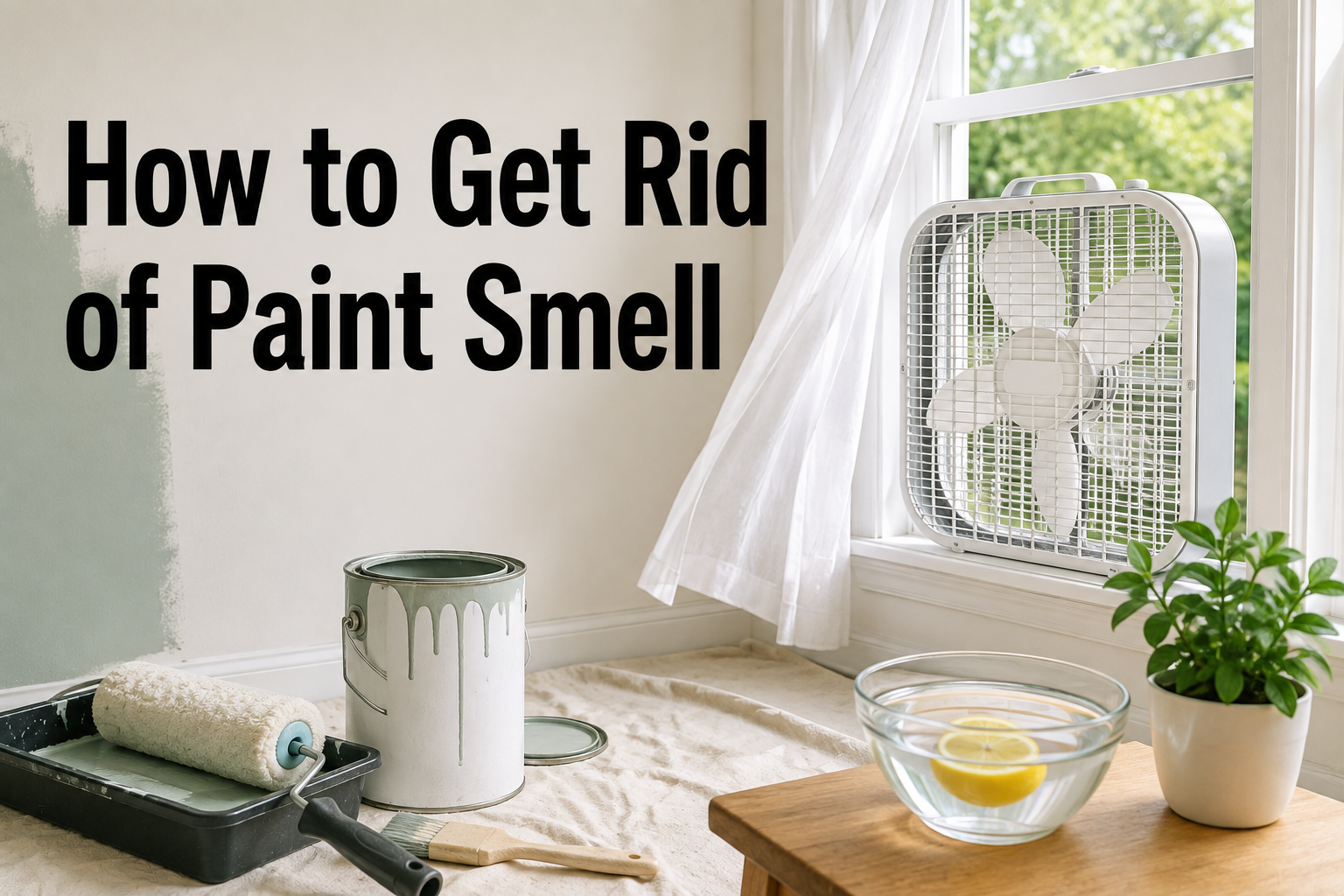
Simply opening a window is a good start, but adding fans speeds up the process significantly. Place one fan facing outward in a window to pull odorous air out of the room, and another fan near a different window or doorway pulling fresh air in. This creates what is known as cross-ventilation, a continuous air exchange that clears out fumes much faster than passive airflow alone.
Setting Up Airflow Direction (Intake vs Exhaust)
For the best results, think of your ventilation setup in two parts: intake and exhaust. The intake fan brings fresh air into the room, while the exhaust fan pushes stale, fume-filled air out. Positioning fans diagonally across the room, rather than side by side, helps air travel across the entire space rather than just near the windows, ensuring more thorough odor removal.
Natural Ways to Absorb Paint Odor
If you prefer chemical-free solutions, several household items are surprisingly effective at absorbing paint fumes naturally.
Bowls of Water (With Vinegar, Onion, or Lemon)
Placing a few bowls of water around the freshly painted room helps absorb odor particles from the air. Adding a splash of white vinegar, a few slices of onion, or lemon peels to the water increases its odor-absorbing power. Vinegar is particularly effective because it is mildly acidic and helps neutralize the alkaline compounds found in paint fumes. Replace the water every 12 hours for best results.
Baking Soda Placement
Baking soda is a well-known natural deodorizer. Fill several small bowls or open containers with baking soda and place them strategically around the room, especially near the freshly painted walls. Baking soda works by absorbing odor molecules from the air rather than simply masking them, making it a genuinely effective option rather than a temporary fix.
Activated Charcoal Bags
Activated charcoal is one of the most powerful natural odor absorbers available. Its porous structure traps odor-causing molecules effectively. Simply place a few bags of activated charcoal around the room, and leave them for 24 to 48 hours. Many people find this method noticeably reduces smell within a single day.
Coffee Grounds Method
Fresh or used coffee grounds placed in open containers can also help absorb paint smell while adding a pleasant aroma of their own. This method works similarly to baking soda and charcoal, and is a great option if you already have coffee grounds on hand.
Using Air Purifiers and Filters
For faster and more consistent results, especially in larger spaces, air purifiers can make a significant difference.
HEPA Filters vs Activated Carbon Filters
HEPA filters are excellent at trapping dust, pollen, and particulate matter, but they are not specifically designed to remove gaseous VOCs. Activated carbon filters, on the other hand, are specifically built to absorb chemical odors and gases, making them far more effective for paint smell removal. For the best results, look for an air purifier that combines both HEPA and activated carbon filtration.
Best Type of Purifier for VOC Removal
When shopping for a purifier to tackle paint smell, prioritize models labeled as effective against VOCs, with a substantial amount of activated carbon inside (the more, the better). Purifiers with only a thin carbon layer are less effective and may need frequent filter replacement.
Placement Tips for Faster Results
Place the air purifier in the center of the room if possible, or near the area with the strongest odor concentration. Running it continuously for the first 48 hours after painting will yield the most noticeable improvement.
Temperature and Humidity Control
Environmental conditions play a bigger role in paint odor than most people realize.
Ideal Room Temperature for Faster Off-Gassing
Interestingly, slightly warmer temperatures actually help paint dry and off-gas faster, since heat speeds up the evaporation of VOCs. However, this only works well if paired with strong ventilation, otherwise the warm air simply traps the fumes indoors. Aim for a room temperature between 65 and 75°F (18 to 24°C) with windows open for best results.
Role of Humidity in Odor Lingering
High humidity slows down the drying process, which in turn extends how long the smell lingers. Damp, humid air also tends to trap odor particles rather than letting them dissipate. Keeping humidity levels moderate helps paint cure faster and reduces how long the smell sticks around.
Using Dehumidifiers Effectively
If you live in a humid climate or are painting during a rainy season, running a dehumidifier alongside your ventilation system can noticeably speed up both drying time and odor reduction.
Speeding Up the Drying Process
The faster paint dries, the sooner the smell disappears, since most VOCs are released during the drying and curing phase.
How Drying Time Affects Smell Duration
Wet paint continuously releases VOCs into the air. Once the paint is fully dry and cured, off-gassing slows down dramatically. This is why speeding up drying time is directly connected to reducing how long the smell lasts.
Using Low Heat vs Natural Airflow
While gentle heat can help speed up drying, avoid using direct high heat sources like space heaters too close to the wall, as this can cause uneven drying or even damage the paint finish. Natural airflow combined with mild warmth is generally the safest and most effective combination.
Avoiding Common Mistakes That Trap Odor Indoors
A common mistake is closing the room up right after painting to “protect” the fresh paint from dust. Unfortunately, this traps fumes indoors and significantly extends how long the smell lingers. Always prioritize ventilation over sealing the room, unless dust is an extreme concern.
Candles, Sprays, and Odor Neutralizers
While not the most effective standalone solution, these can help as a finishing touch once most of the odor has already dissipated.
Do Scented Candles Help or Just Mask Smell
Scented candles and air fresheners primarily mask odor rather than eliminate it. They can make a room smell more pleasant temporarily, but they do not actually reduce VOC levels in the air. Use them as a complement to ventilation and absorption methods, not a replacement.
Natural Odor Neutralizer Sprays
Sprays made with natural ingredients, such as essential oil blends or enzyme-based neutralizers, can help break down odor molecules rather than just covering them up. Look for products specifically labeled as odor neutralizers rather than simple fragrance sprays.
Essential Oil Diffusers
Diffusing essential oils like lavender, eucalyptus, or citrus can help create a more pleasant environment while other odor-removal methods do the heavier lifting in the background.
Choosing Low-Odor Paints in the Future
If paint smell is a recurring issue for you, choosing a different type of paint next time can prevent the problem altogether.
Low-VOC vs Zero-VOC Paint Explained
Low-VOC paints contain a reduced amount of volatile organic compounds compared to traditional paints, resulting in less odor and a shorter off-gassing period. Zero-VOC paints go a step further, containing little to no volatile compounds at all, making them the best choice for sensitive individuals, nurseries, or bedrooms.
Best Low-Odor Paint Brands
Many major paint brands now offer low-VOC and zero-VOC product lines specifically designed for indoor use, particularly in homes with children, pets, or individuals sensitive to strong smells. When shopping, check the product label or specification sheet for VOC content, measured in grams per liter, and choose options with the lowest number.
Tips for Choosing Eco-Friendly Paint
Beyond just VOC content, look for paints certified by recognized environmental or indoor air quality standards. These certifications typically indicate rigorous testing for low emissions and safer indoor use.
Health and Safety Precautions
While most people experience only mild, temporary discomfort from paint smell, it is still important to take basic safety precautions.
Signs of VOC Sensitivity or Exposure
Common symptoms of VOC exposure include headaches, dizziness, eye or throat irritation, and nausea. These symptoms typically resolve once the person moves to fresh air and are less common with proper ventilation during and after painting.
When to Wear a Mask While Painting
If you are painting in a small, enclosed space, or using oil-based paint, wearing a respirator mask rated for organic vapors can reduce direct inhalation of fumes during the painting process itself.
When to Seek Medical Advice
If symptoms such as severe headaches, difficulty breathing, or prolonged dizziness occur and do not improve after moving to fresh air, it is best to seek medical attention, particularly for individuals with pre-existing respiratory conditions.
How Long Should You Wait Before Sleeping in a Freshly Painted Room
As a general guideline, it is best to wait at least 24 to 72 hours before sleeping in a freshly painted room, allowing time for ventilation and initial off-gassing to occur. For oil-based paints, waiting closer to the higher end of that range is advisable.
Tips for Pregnant Women, Children, and Pets
Pregnant women, young children, and pets are generally more sensitive to VOC exposure. It is best for these groups to avoid freshly painted rooms for at least a few extra days, and to ensure the space is well-ventilated with little to no detectable odor before regular use resumes.
Frequently Asked Questions (FAQs)
Does paint smell mean it’s toxic? Not necessarily. Paint smell indicates the presence of VOCs, which are regulated to safe levels in household paints. However, prolonged exposure in poorly ventilated spaces can still cause discomfort.
How long does paint smell last indoors? This depends on the paint type and ventilation, but typically ranges from a few hours for water-based paints to several days for oil-based paints in poorly ventilated rooms.
Can paint smell cause headaches? Yes, strong or prolonged exposure to paint fumes can cause headaches in some individuals, particularly in enclosed, poorly ventilated spaces.
Is it safe to sleep with fresh paint smell? It is best to avoid sleeping in a room with strong, fresh paint smell. Waiting at least 24 to 72 hours with proper ventilation is recommended before using the room normally.
Conclusion
Learning how to get rid of paint smell doesn’t have to be complicated or time-consuming. With a combination of proper ventilation, natural odor absorbers like baking soda and activated charcoal, air purifiers, and smart environmental control, most paint odor can be significantly reduced within just a day or two. For future projects, choosing low-VOC or zero-VOC paints can help you avoid the problem altogether.
By following the tips outlined in this guide, you can enjoy your freshly painted space comfortably, without the lingering chemical smell holding you back.
Related Articles
How Long Will It Take to Paint a Room? Full Time Guide
What Is Latex Paint? Meaning, Types & Uses Explained
How to Remove Chalk Paint: 5 Easy Methods That Actually Work
Do You Sand Primer Before Painting? A Complete Step-by-Step Guide