
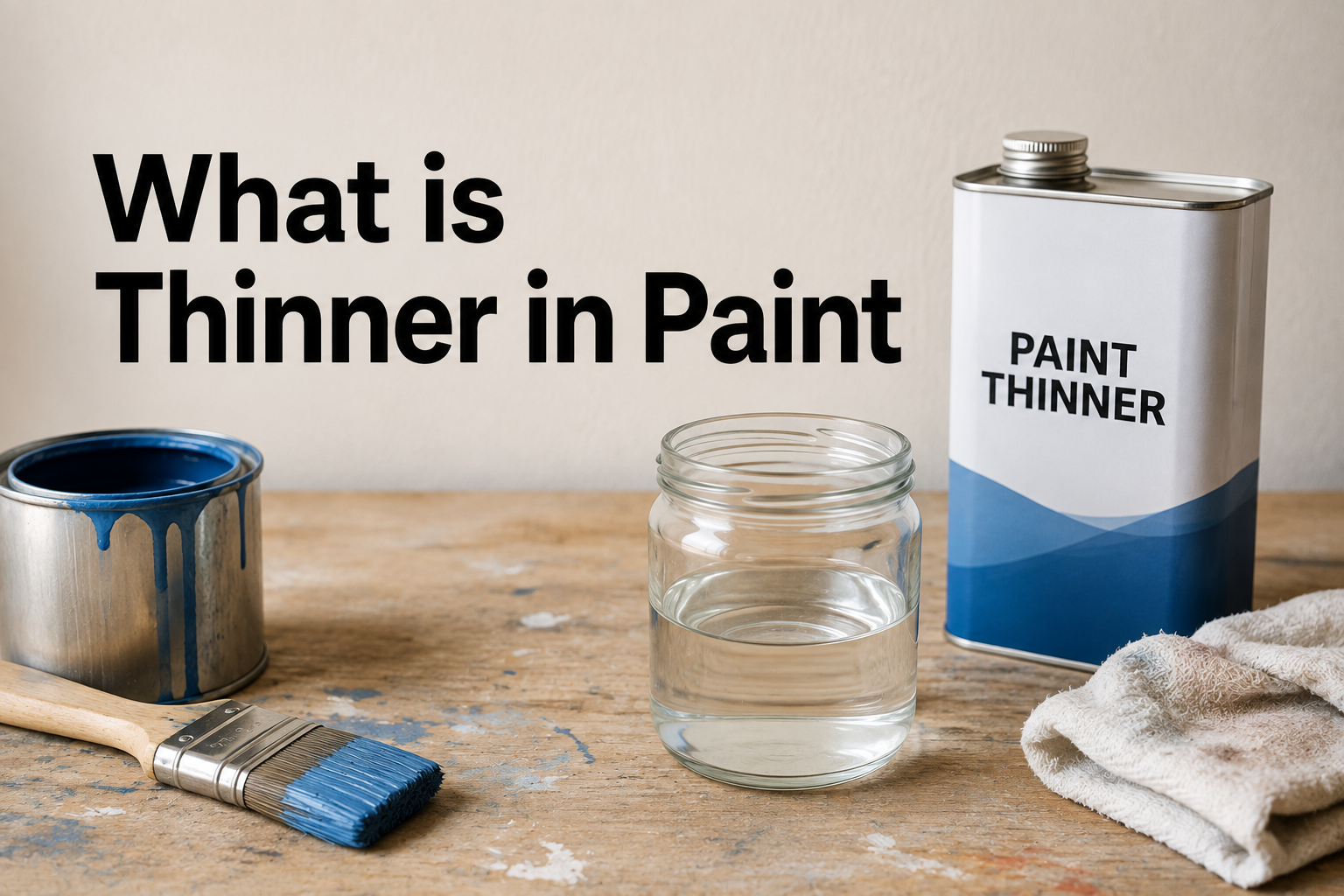

If you have ever picked up a can of oil-based paint and found it too thick to brush smoothly, you have probably wondered, “what is thinner in paint, and how does it actually help?” In simple words, paint thinner is a solvent liquid that is mixed with paint to make it thinner, smoother, and easier to work with. It is a small addition that makes a big difference in how paint flows, how evenly it covers a surface, and how long it takes to dry.
- Types of Paint Thinner
- Composition of Paint Thinner
- Uses of Paint Thinner
- How Paint Thinner Works
- Paint Thinner vs. Mineral Spirits
- Paint Thinner vs. Paint Reducer
- How to Use Paint Thinner Safely
- Storage and Handling
- Safety Precautions
- Environmental Impact
- Alternatives to Paint Thinner
- Common Mistakes to Avoid
- Frequently Asked Questions (FAQs)
- Conclusion
- Related Articles
Paint thinner is not just for professional painters. Homeowners, hobbyists, and DIY enthusiasts use it too, whether they are painting furniture, touching up walls, or cleaning brushes after a project. Understanding what it is, how it works, and how to use it safely can save you time, money, and a lot of frustration.
In this guide, we will walk through everything you need to know about paint thinner in an easy, conversational way, so by the end you will feel confident using it in your own projects.
Types of Paint Thinner
Not all paint thinners are the same. Different projects and different types of paint call for different solvents. Here is a breakdown of the most common types you will come across.
| Type of Thinner | Best Used For | Key Characteristic |
|---|---|---|
| Mineral Spirits | Oil-based paints, varnishes | Mild odor, widely available |
| Turpentine | Oil paints, artist use | Made from pine resin, strong smell |
| Acetone | Removing dried paint, lacquers | Fast-evaporating, very strong solvent |
| Lacquer Thinner | Lacquer-based paints | Powerful, fast-drying |
| Naphtha | Fast-drying oil paints | Evaporates quickly |
| Xylene | Industrial coatings | Very strong, used mainly in industry |
| Water | Water-based/latex/acrylic paints | Safe, no fumes, eco-friendly |
Each of these serves a specific purpose, so picking the right one depends largely on the type of paint you are working with.
Composition of Paint Thinner
Most traditional paint thinners are petroleum-based products. This means they are derived from crude oil through a refining process that isolates certain hydrocarbons suited for dissolving oil-based substances. Mineral spirits, for example, are a refined petroleum distillate, while naphtha is another petroleum-derived solvent known for evaporating faster.
On the other hand, natural solvents like turpentine come from distilling resin obtained from pine trees. These natural alternatives have been used for centuries, long before petroleum-based products became common, and they remain popular among traditional and artist-grade paint users.
Water, of course, is the simplest thinning agent, and it works only with water-based paints such as acrylics and latex formulas, since oil and water do not mix.
Uses of Paint Thinner
Paint thinner plays several practical roles in painting projects, and its usefulness goes beyond simply making paint runnier.
One of its main jobs is thinning oil-based paints so they spread more easily and give a smoother, more even finish. Thick paint can leave brush marks and an uneven texture, while properly thinned paint glides on with far less effort.
Another common use is cleaning brushes, rollers, and other painting tools. Oil-based paint does not wash out with water, so a solvent is necessary to dissolve the paint and restore the brush bristles.
Paint thinner is also handy for removing paint stains from surfaces like tools, floors, or skin (with appropriate caution), and for prepping surfaces by wiping away grease or residue before painting begins.
Finally, for those using spray guns, thinner adjusts the paint’s viscosity so it can pass through the equipment’s nozzle smoothly without clogging.
How Paint Thinner Works
Paint thinner works through a straightforward chemical process. When added to paint, the solvent molecules surround and loosen the paint’s binding particles, effectively reducing the paint’s thickness and making it flow more freely.
Once the paint is applied to a surface, the thinner does not stay in the paint permanently. It evaporates into the air as the paint dries, leaving behind only the pigment and binder that make up the actual paint layer. This is why thinned paint often dries faster in the early stage, since a portion of the liquid content escapes through evaporation rather than absorption.
The rate of evaporation and drying time depends on the specific type of thinner used, room temperature, humidity, and ventilation.
Paint Thinner vs. Mineral Spirits
People often use these two terms interchangeably, but there is a slight difference worth understanding.
“Paint thinner” is a general term that can refer to any solvent used to thin paint, including mineral spirits, turpentine, naphtha, and others. Mineral spirits, specifically, is one particular type of paint thinner made from refined petroleum, known for its relatively mild odor and lower toxicity compared to some other solvents.
In short, all mineral spirits can be called paint thinner, but not all paint thinner is mineral spirits. If a product label simply says “paint thinner,” it is often mineral spirits or a similar petroleum distillate, but it is always best to check the label for exact composition.
Paint Thinner vs. Paint Reducer
Another point of confusion is the difference between paint thinner and paint reducer, especially in automotive and industrial painting circles.
Paint thinner is generally used with oil-based house paints and general-purpose coatings, while a paint reducer is specifically formulated for use with automotive paints, particularly enamel and urethane-based coatings used in car spray painting. Reducers are engineered to work with specific paint chemistries and often come in different “speeds” (fast, medium, slow) depending on the temperature and drying conditions needed for a spray job.
Using a regular paint thinner in place of a proper reducer for automotive paint can lead to poor finish quality, so it is important to use the product recommended by the paint manufacturer.
How to Use Paint Thinner Safely
Using paint thinner correctly is just as important as understanding what it is. Here is a simple, step-by-step approach to using it safely and effectively.
- Read the paint label first. Check whether the paint is oil-based or water-based, since thinner only works with oil-based products.
- Choose the right thinner. Match the solvent type to the paint, as shown in the earlier table.
- Work in a well-ventilated area. Open windows, use fans, or work outdoors if possible, since fumes can build up quickly indoors.
- Measure carefully. A common starting ratio is about one part thinner to four parts paint, though this can vary depending on paint thickness and manufacturer instructions.
- Mix gradually. Add small amounts of thinner at a time, stirring thoroughly, until you reach the desired consistency.
- Test before full application. Try the thinned paint on a small, hidden area first to check color and finish.
- Wear protective gear. Gloves, safety goggles, and a mask are recommended, especially in enclosed spaces.
Following these steps helps avoid common issues like overly runny paint, uneven coverage, or health discomfort from fume exposure.
Storage and Handling
Proper storage extends the usability of paint thinner and keeps your home or workshop safer. Store it in a tightly sealed, original container, away from direct sunlight, heat sources, and open flames, since most paint thinners are highly flammable.
A cool, dry place such as a garage cabinet or shed (away from living spaces) is generally suitable. Keep it out of reach of children and pets, and avoid storing it near food items or drinking water sources.
As for shelf life, unopened paint thinner can often last for several years, while opened containers should ideally be used within a year or two for best performance. Signs that thinner may have gone bad include a change in color, an unusually strong or altered odor, or visible sediment at the bottom of the container.
Safety Precautions
Because paint thinner is a chemical solvent, taking safety seriously is essential.
Flammability is one of the biggest risks, as most paint thinners can ignite easily near open flames, sparks, or even static electricity. This is why they should never be used or stored near stoves, heaters, or electrical equipment.
Toxic fume exposure is another concern. Inhaling concentrated fumes for extended periods can cause headaches, dizziness, nausea, or throat and eye irritation. In poorly ventilated spaces, prolonged exposure can lead to more serious respiratory issues over time.
If skin contact occurs, wash the area thoroughly with soap and water. If thinner is accidentally ingested or causes severe irritation, seek medical attention immediately rather than waiting for symptoms to worsen.
For fire safety, always keep a fire extinguisher nearby when working with large quantities of thinner, and never smoke or use open flames in the same area.
Environmental Impact
Paint thinner does carry environmental considerations that are worth understanding, especially when it comes to disposal.
Pouring used paint thinner down the drain or onto the ground is harmful to soil and water systems and is illegal in many regions. Instead, used thinner should be taken to a local hazardous waste disposal facility, many of which accept these materials for free or a small fee.
Because of environmental regulations, many regions also limit the amount of Volatile Organic Compounds, commonly known as VOCs, that paint products and solvents can contain, since these compounds contribute to air pollution and can affect air quality both indoors and outdoors.
For those wanting a lower-impact option, eco-friendly alternatives such as citrus-based or soy-based solvents are increasingly available and offer similar thinning power with a reduced environmental footprint.
Alternatives to Paint Thinner
If you are looking to avoid traditional chemical solvents, a few alternatives can work depending on your paint type and project needs.
Water works perfectly as a thinning agent for latex and acrylic paints, since these are water-based formulas to begin with. Citrus-based solvents, often made from orange or lemon peel extracts, provide a more natural-smelling alternative with lower toxicity, though they may be slightly less powerful than traditional thinners for tough jobs. Soy-based cleaners are another gentler option, often used for cleanup rather than thinning, and are considered safer for indoor use due to lower fume intensity.
Common Mistakes to Avoid
Even experienced painters sometimes run into avoidable issues when using thinner. Overthinning paint is one of the most frequent mistakes, where adding too much solvent results in paint that is too watery, leading to drips, poor coverage, and a weak final finish.
Using the wrong thinner for a particular paint type is another common error, since mismatched solvents can cause the paint to separate, curdle, or fail to bond properly with the surface.
Ignoring safety guidelines, such as skipping ventilation or protective gear, is also a mistake that can lead to unnecessary health risks, even on small home projects.
Frequently Asked Questions (FAQs)
Can I use paint thinner on all paints? No. Paint thinner works only with oil-based and some lacquer-based paints. Water-based paints like latex or acrylic should be thinned with water instead.
How long does paint thinner take to dry? This depends on the thinner type, paint thickness, and environmental conditions, but most thinned oil-based paints begin to dry within a few hours, with full curing taking one to several days.
Is paint thinner the same as nail polish remover? Not exactly, though both often contain acetone. Nail polish remover typically has a lower concentration and includes additional ingredients meant for cosmetic use, while paint thinner is formulated specifically for industrial and painting purposes.
Can paint thinner be reused? Yes, in some cases. If used thinner is left to settle, paint solids often sink to the bottom, allowing the clearer liquid on top to be carefully poured off and reused for basic cleaning purposes.
Conclusion
So, what is thinner in paint at its core? It is simply a solvent that adjusts paint’s thickness, helping it apply more smoothly, dry appropriately, and clean up more easily afterward. From mineral spirits to turpentine to eco-friendly citrus-based options, there is a suitable thinner for nearly every type of paint project.
The key to getting the best results lies in choosing the right type of thinner for your paint, using correct ratios, following safety precautions, and disposing of it responsibly once your project is complete. With this knowledge in hand, you can confidently tackle your next painting project, whether it is a small furniture touch-up or a larger home renovation.
Related Articles
How to Get Acrylic Paint Off Wood: Easy Step-by-Step Guide
Will WD-40 Harm Auto Paint? The Complete Truth Explained
How to Remove Paint from Plastic: 7 Easy & Safe Methods That Work