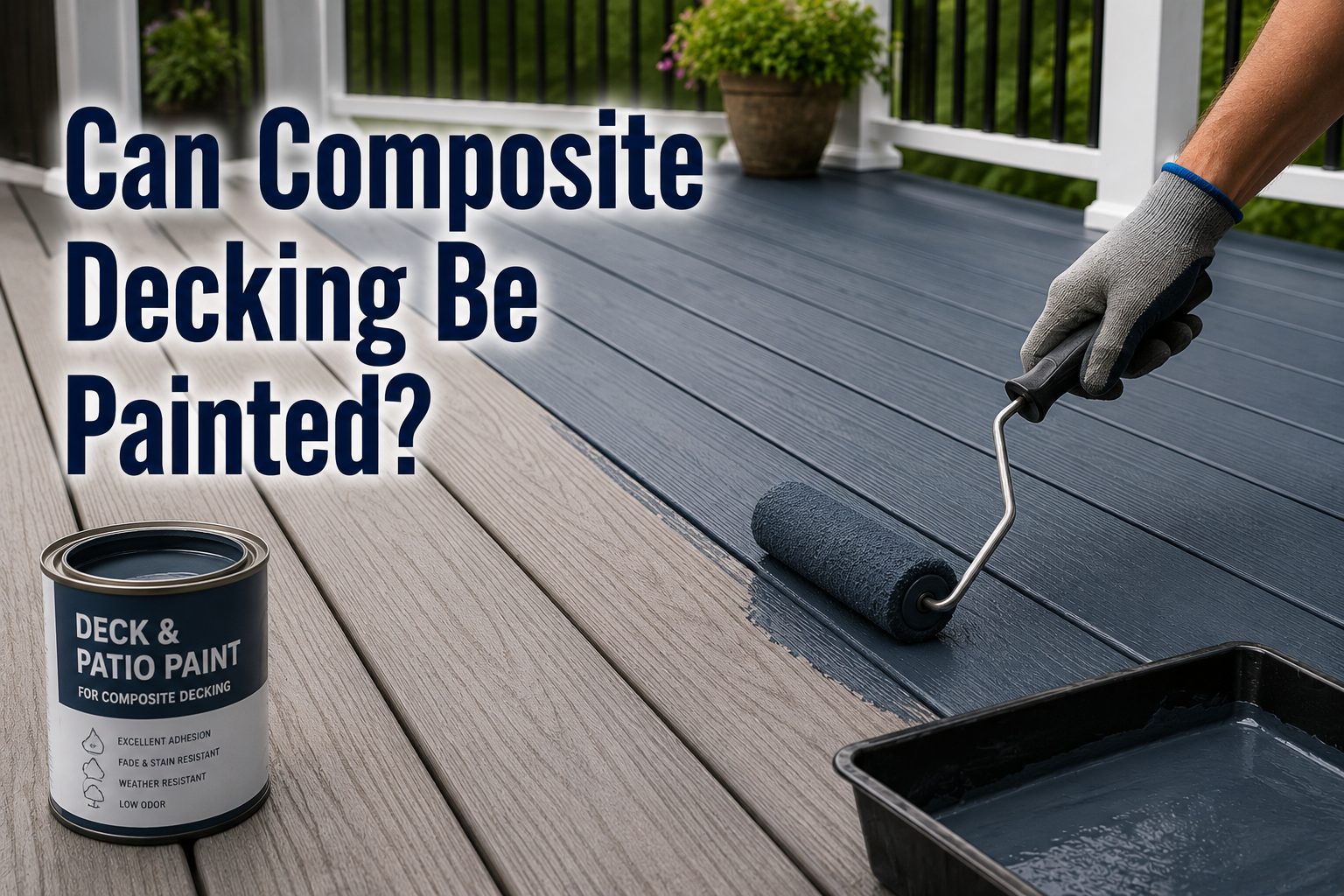

The short answer is yes, composite decking can be painted, but whether it should be depends entirely on what kind of boards you have. Older, uncapped composite decking, roughly the stuff made before 2010, can be painted successfully with careful preparation.
Modern capped composite, which has a smooth polymer shell around the core, resists paint by design, and painting it usually leads to peeling and disappointment. On top of that, painting almost any composite deck can void the manufacturer’s warranty and trade away the low-maintenance benefit that made composite appealing in the first place.
So this isn’t a simple yes-or-no. Before you buy a can of paint, you need to know which type of deck you have and what you’re giving up. Here’s how to tell, what it costs you, and how to do it right if your boards qualify.
Capped vs uncapped: the deciding factor
Everything about painting composite decking comes down to one distinction: is your board capped or uncapped? This is the single fact that determines whether paint will stick.
Uncapped composite is the older style. It’s a wood-plastic mix, wood fibers blended with plastic, that runs all the way through the board with no separate outer layer. That surface is relatively porous, which is why it tends to fade and stain over time, and also why it can accept paint or stain reasonably well with the right prep.
Capped composite is the modern standard. It has a hard polymer shell bonded around the core, a sealed, non-porous surface engineered to resist fading, stains, and scratches. That shell is fantastic for durability and terrible for paint adhesion: it’s a low-energy plastic that coatings can’t grip on their own, so paint tends to peel off in sheets, especially as the cap expands and contracts in the heat.
The rule that governs the whole project: uncapped composite can be painted; capped composite shouldn’t be. If your boards have a sealed polymer shell, paint won’t hold.
This is why deck manufacturers like Trex and TimberTech explicitly say not to paint or stain their capped boards, and market them as clean-don’t-coat. The cap already does the job paint would, so coating it only adds problems.
It helps to understand the physics of why the cap fights paint, because it explains the peeling people report. The polymer shell is a smooth, low-surface-energy plastic, meaning there’s very little for a coating to mechanically or chemically grab onto, which is exactly what makes it stain-proof and easy to clean.
On top of that, the cap expands and contracts with heat more than wood does, so even a coating that initially sticks gets flexed hard at the board edges every hot day, and a brittle paint film cracks and lifts there first. That combination, nothing to grip plus constant thermal movement, is why skipping the bonding primer and scuff step on a capped board leads to paint peeling off in sheets within a single summer.
How to tell which kind you have?
Since the capped-versus-uncapped question decides everything, you need to figure out which you own before doing anything else. A few checks will tell you.
- Check the age. Composite decking made before about 2010 is usually uncapped. Boards installed in the last decade or so are almost always capped. If you know when the deck went in, that’s your first clue.
- Look at a board edge. Examine a cut end or the underside. If you can see exposed wood-fiber core with no distinct outer shell, it’s likely uncapped. A glossy, sealed skin that’s clearly a separate layer means it’s capped.
- Feel the surface. Uncapped boards feel more porous and matte and may show fading. Capped boards feel smooth, slick, and plasticky, and hold their color.
- Confirm with the manufacturer. The most reliable step: identify the brand and product line and check its specs, or call the manufacturer. They’ll tell you if it’s capped and what coatings, if any, are allowed.
When in doubt, treat it as capped and paintable-with-caution, or better yet contact the maker. Guessing wrong wastes a weekend of work that peels by the next summer.
The downsides to know first
Even if your boards can technically be painted, there are real costs, and this is where honest advice matters. Painting composite is often not the smart move it seems.
First, it usually voids the warranty. Most composite manufacturers’ warranties exclude aftermarket coatings, so the moment you paint, you may lose your remaining coverage. If your deck is fading and still under warranty, a warranty claim might actually address the very problem you’re trying to paint over, so check before you pick up a brush.
Second, you lose the low-maintenance benefit. The whole point of composite is that you clean it, you don’t coat it. Once paint goes on, you’ve started a maintenance clock: painted composite behaves like a wood deck, needing periodic recoating. On uncapped boards, a paint job typically lasts only about 2 to 4 years, less in high-traffic areas or harsh sun, before it needs redoing.
The honest trade-off: painting composite can end its warranty and turn a maintenance-free deck into one you’ll repaint every few years. Make sure the color change is worth that.
How to paint uncapped composite decking?
If you’ve confirmed your boards are uncapped (or your manufacturer okays coating) and you accept the trade-offs, preparation is everything. The more care you put into prep, the longer the finish lasts.
- Check the warranty and weather. Confirm painting won’t cause a problem you’ll regret, then pick a stretch of mild, dry weather. Aim to apply between about 50°F and 85°F, out of direct sun, with two dry days ahead.
- Clean thoroughly. Use a composite deck cleaner and a soft-bristle brush to remove dirt, grime, mold, and mildew. Rinse well. Paint won’t bond over a dirty, oily, or mildewed surface.
- Let it dry completely. Give the deck a full day or two to dry, ideally around 48 hours. Moisture trapped under paint ruins adhesion.
- Lightly sand (uncapped only). Scuff the boards with fine-grit sandpaper, around 240 grit, to dull the surface and give the primer something to grip, then wipe off the dust. Never sand a capped board; it damages the protective shell.
- Prime with a bonding primer. Apply an exterior bonding or adhesion primer suited to composite, not a standard deck primer. This is the layer that makes paint hold on a slick synthetic surface.
- Apply two thin coats. Roll or brush on two thin, even coats of the right paint, letting each dry fully. Thin coats bond and wear better than one thick one.
- Cure before use. Let the finish cure several days before returning furniture and foot traffic, longer on sun-baked sections. Rushing this is a common cause of early wear.
What paint and primer to use?
The products matter as much as the prep. The wrong paint stays tacky or peels, no matter how well you cleaned.
Use a high-quality exterior 100% acrylic latex paint made for floors and decks, a porch-and-floor enamel is ideal, or a solid-color exterior deck stain formulated for composite. Avoid oil-based paints, which can stay tacky and fail to cure on composite. Pair the topcoat with a compatible bonding primer.
Sherwin-Williams’ guide to painting and staining composite decking recommends products like its SuperDeck solid-color stain or Porch & Floor Enamel for exactly this kind of high-traffic outdoor surface.
A note on paint versus stain: paint gives stronger, more opaque color coverage but is more prone to peeling if adhesion isn’t perfect. A solid-color stain often penetrates and holds a bit better on porous uncapped boards and gives a more wood-like look. Whichever you choose, confirm the label says it’s suitable for composite or synthetic surfaces, and spot-test in a hidden area first.
Alternatives to painting
Because painting comes with such real downsides, it’s worth weighing the alternatives, especially if your deck is capped or still under warranty.
If the issue is dirt or general dullness, a thorough clean with a composite-specific cleaner often restores much of the original look, no coating needed. If it’s fading on capped boards, check whether your warranty covers it before doing anything.
And if the deck is genuinely old, worn, or you simply want a different color for good, replacing the boards with new capped composite in your chosen color gives you exactly the look you want with none of the repainting treadmill, which over years can cost less hassle than maintaining paint. You can also change the deck’s feel with accents, rugs, planters, furniture, and railings, rather than coating the boards at all.
It’s worth doing the rough math over time, because painting looks cheaper only at the start. A gallon or two of quality deck paint plus primer is a modest upfront cost, but on uncapped boards you’re signing up to redo that work every few years, buying materials and spending weekends each time, and living with a surface that looks progressively more worn between coats.
Cleaning costs almost nothing and keeps the warranty intact. Replacement is the biggest single outlay but resets the clock to zero maintenance for decades. When you compare the true multi-year cost rather than the price of the first paint can, painting is often the most expensive option in disguise, which is the honest thing many quick guides leave out.
Conclusion
Can composite decking be painted? Older uncapped boards can, with thorough cleaning, light sanding, a bonding primer, and an exterior acrylic deck paint or solid stain. Modern capped composite shouldn’t be painted, because its polymer shell resists coatings and paint will peel.
In both cases, painting can void the warranty and end the low-maintenance benefit, and even a good job on uncapped boards needs repainting every few years. So identify your boards first, check your warranty, and if you can, consider cleaning, a warranty claim, or replacement before committing to a paintbrush.
Frequently asked questions
Can you paint Trex or other capped composite decking? It’s not recommended. Capped boards have a polymer shell that paint can’t grip well, so it tends to peel, and painting typically voids the warranty. Manufacturers like Trex advise against coating their capped decking.
How do I know if my composite decking is capped or uncapped? Check the age (pre-2010 is usually uncapped), look at a board edge for a separate glossy shell, and feel the surface. When unsure, identify the brand and confirm with the manufacturer.
Does painting composite decking void the warranty? Usually, yes. Most composite warranties exclude aftermarket coatings, so painting or staining can end your coverage. Always check your specific warranty, and consider a claim if the deck is fading under warranty.
What kind of paint should I use on composite decking? A high-quality exterior 100% acrylic latex made for decks and floors, such as porch-and-floor enamel, or a solid-color composite deck stain, over a bonding primer. Avoid oil-based paints, which can stay tacky.
How long does paint last on composite decking? Typically about 2 to 4 years on properly prepped uncapped boards, and less in high-traffic areas or intense sun. That ongoing repainting is why many owners choose cleaning or replacement instead.
Related Articles
How to Get Dried Paint Off Brushes and Save Them?
Can Acrylic Paint Be Used on Fabric?