
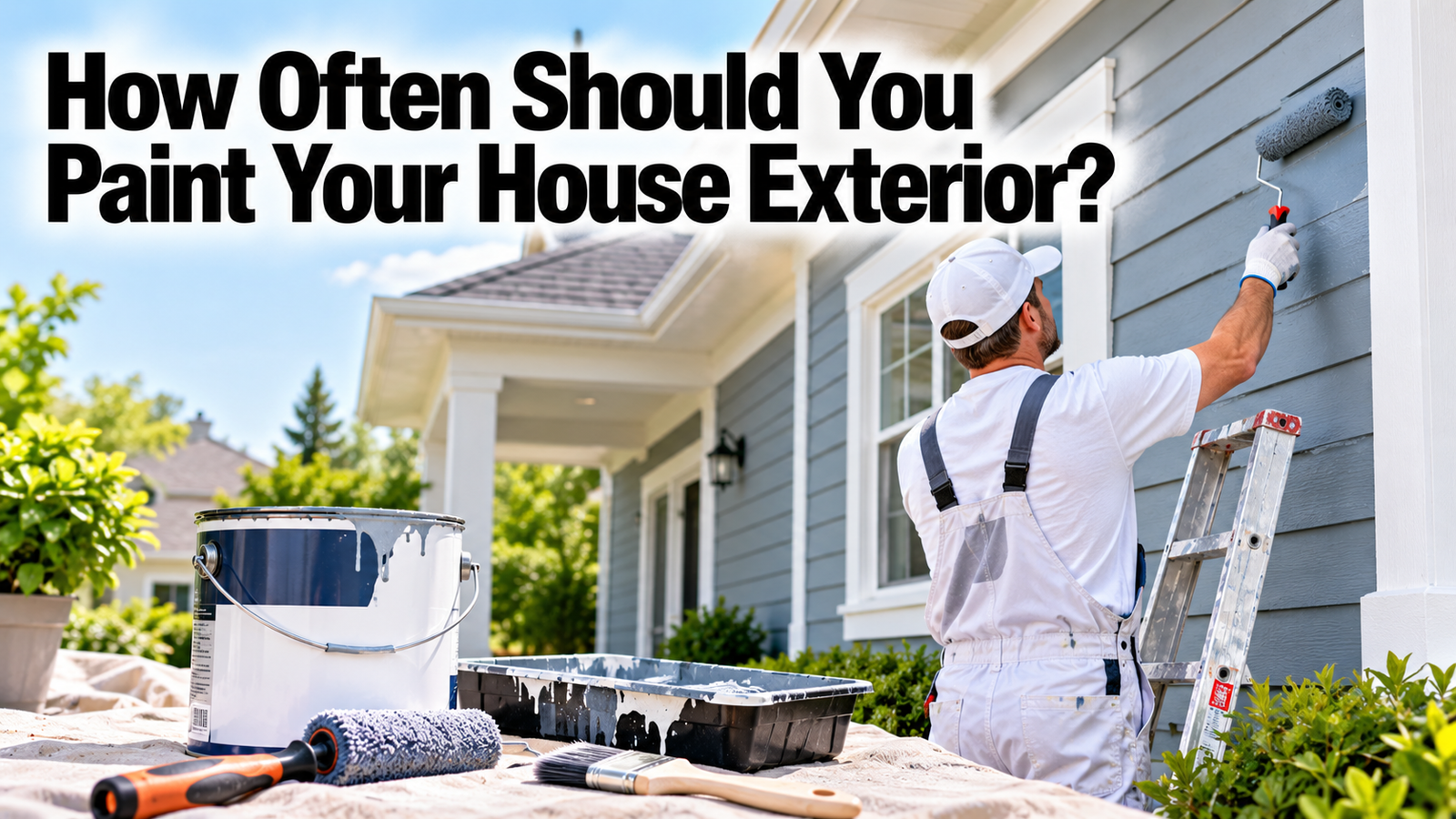

Most homes need their exterior repainted every 5 to 10 years. The exact timing depends on three things: the material your home is made of, the climate you live in, and how good the last paint job was. A wood house in a harsh climate may need it every few years, while brick can go well over a decade. The good news is that your house shows you when it is due, so you do not have to guess from a calendar alone. Here is the full breakdown by material, the factors that change it, and the signs to watch for.
The quick answer
Plan on repainting your home’s exterior every 5 to 10 years as a general rule. Many painting contractors point to the 10-year mark as a common benchmark, but plenty of homes need attention sooner, especially in tough weather or with cheaper paint. A well-prepared, high-quality job on a forgiving material can last toward the far end of that range or beyond.
Rather than counting years, it helps to think about your specific house. A yearly walk around the outside, looking for wear, is the smartest habit. When the paint starts to fail, it stops protecting the surface underneath, and that is the real signal it is time, whether it has been five years or twelve.
It is also worth separating two different jobs. A full repaint of the whole exterior is the big one you plan for every several years. Between those, small touch-ups, a failing patch of caulk here, a sun-worn south wall there, keep the finish healthy and can push the next full repaint further out. Thinking in terms of both a long cycle and ongoing upkeep gives you a more realistic picture than a single number ever will.
How long it lasts by siding material
The material your home is clad in is the biggest factor in how often you repaint. Some surfaces hold paint for years; others drink up moisture and need frequent upkeep. Here is a rough guide by material:
| Exterior surface | Repaint every | Notes |
| Wood siding | 3–7 years | Absorbs moisture, needs the most upkeep |
| Stained wood | About every 4 years | Stain wears faster than paint |
| Aluminum siding | About every 5 years | Watch for chalky residue |
| Stucco | 5–6 years | Repaint to seal cracks |
| Vinyl siding | About every 5 years | If painted rather than replaced |
| Fiber cement | 10–15 years | Very moisture-resistant |
| Brick | 10–15 years | Power-wash every 3–5 years |
A few of these deserve a note. Wood is the highest-maintenance because it absorbs moisture, which leads to peeling and, if ignored, rot. It also matters whether wood is painted or stained: stain soaks in and wears away rather than peeling, so it tends to need refreshing a little sooner, but the prep is often simpler. Brick is the opposite of wood: the brick itself lasts for decades, so painted brick mostly needs repainting to refresh the coating or fix peeling, and a regular power-wash keeps it clean in between. Bear in mind that once brick is painted it generally needs to stay painted, since stripping it back cleanly is difficult.
Stucco sits in the middle. It is a tough surface, but it develops hairline cracks over time, and repainting every five to six years helps seal those before water works its way in. Vinyl and aluminum siding can be painted rather than replaced, and a good job on them lasts around five years, though aluminum in particular tends to chalk as it ages. Newer materials like fiber cement are made to be low-maintenance and can go the longest between coats, which is part of why they have become popular on newer homes.
What shortens or extends the timeline
Two identical houses can need painting on very different schedules, because these factors push the timing in either direction:
- Climate and weather. Harsh sun, big temperature swings, humidity, and hard winters all wear paint down faster. Homes near the coast often need more frequent painting because salt air is rough on a finish.
- Sun exposure. Strong, direct sunlight fades and breaks down paint, so sun-facing walls and homes at high elevation age faster than shaded ones.
- Paint and prep quality. High-quality exterior paint applied over a properly cleaned, sanded, and primed surface lasts noticeably longer than a cheap, rushed job. This is the factor you control most.
- Color choice. Darker colors show fading more obviously than lighter ones, so a deep shade may look tired sooner even if it is technically protecting the surface.
- Maintenance. Washing off dirt and mildew and touching up small problems early helps a finish go the distance.
The single biggest lever you control is quality. Good paint plus thorough prep can stretch a repaint from the short end of the range toward the long end, saving you money over time.
Warning signs it’s time to repaint
Your house tells you when it needs paint, often before the calendar says so. Do a slow walk around the outside once a year and look for these signs:
- Cracking, flaking, or peeling paint. The clearest sign the coating is failing and no longer sealing the surface.
- Fading color. Noticeable fading, especially on sun-facing sides, means the paint is breaking down.
- Chalky residue. If you wipe the siding and get a chalky powder on your hand, the paint is wearing out and no longer protecting well. This is common on aluminum siding.
- Bubbling or blistering. Bubbles under the paint point to moisture problems that need addressing.
- Gaps and cracked caulk. Failing caulk around windows, doors, and trim lets water in and signals it is time for attention.
- Bare or exposed wood. Any spot where paint has worn through to the material underneath needs to be recoated before damage sets in.
If you spot several of these, do not wait for a round number of years to pass. The surface is telling you it needs protection now.
Why you should not wait too long
Exterior paint is not just about looks. It is a protective shell that keeps moisture, sun, and pests away from your siding and the structure beneath it. Once paint cracks or peels, that shell has a hole in it, and water can get in.
Letting it go too long can turn a repaint into a repair job. Wood can rot, siding can be damaged past the point of simply repainting, and moisture can lead to mold and pest problems. Fixing those costs far more than a coat of paint would have, and it can add days of carpentry and repair work on top of the painting itself.
There is a curb-appeal side to this too. A fresh, intact exterior is the first thing anyone sees, and it signals that the home has been cared for. If you plan to sell, a clean coat of paint can make a house look years newer and helps buyers trust that the place has been maintained. Even if you are staying put, repainting on time protects the value of your home and keeps a manageable maintenance task from becoming an expensive one. Waiting, by contrast, quietly stacks up costs you cannot see until the paint finally gives way.
How to make a paint job last longer
Since prep and quality drive how long a finish lasts, a few choices at painting time pay off for years:
- Prep thoroughly. Clean the surface, scrape and sand loose paint, make repairs, and prime bare spots before painting. Skipping prep is the top reason a paint job fails early.
- Use quality exterior paint. A better exterior-rated paint costs more up front but lasts longer and protects better, so it is usually cheaper over time.
- Paint in good conditions. Aim for mild, dry weather. Painting when it is too hot, too cold, or damp can weaken how well the paint sticks. A dry surface and moderate temperatures give the best result.
- Keep up with maintenance. Wash off dirt and mildew, and touch up small chips and failing caulk early, before they spread.
For a plain-English overview of exterior paint lifespan and timing, the Southern Living guide to how often to paint your house is a useful reference.
Conclusion
Most homes need their exterior repainted every 5 to 10 years, with the exact timing set by your siding material, your climate, and the quality of the last job. Wood needs the most frequent attention and brick or fiber cement the least. Instead of watching the calendar, watch the house: cracking, fading, chalking, and bare spots mean it is time. Repaint before the protection fails, use quality paint over good prep, and a fresh coat will look good and shield your home for years.
Frequently asked questions
How often should you paint a house exterior?
Most homes need repainting every 5 to 10 years. The exact timing depends on your siding material, climate, sun exposure, and how good the previous paint job was, so watch the surface rather than just the calendar.
How often should wood siding be repainted?
Wood siding usually needs repainting every 3 to 7 years, and stained wood about every 4 years. Wood absorbs moisture, so it wears faster than most materials and needs the most regular upkeep.
How long does paint on brick last?
Painted brick can go about 10 to 15 years between coats since brick is very durable. Power-washing it every 3 to 5 years keeps it clean and helps the paint last.
What are the signs my house needs repainting?
Look for cracking, peeling, or flaking paint, faded color, a chalky residue when you wipe the siding, bubbling, and bare spots. Any of these means the paint is no longer protecting the surface.
Does climate really change how often I need to paint?
Yes. Harsh sun, big temperature swings, humidity, hard winters, and coastal salt air all wear paint faster, so homes in tough climates often need repainting sooner than the average.
Related Articles
How to Clean a Paint Gun: Step-by-Step for a Clog-Free Spray
How to Clean Walls Before Painting: A Simple Step-by-Step