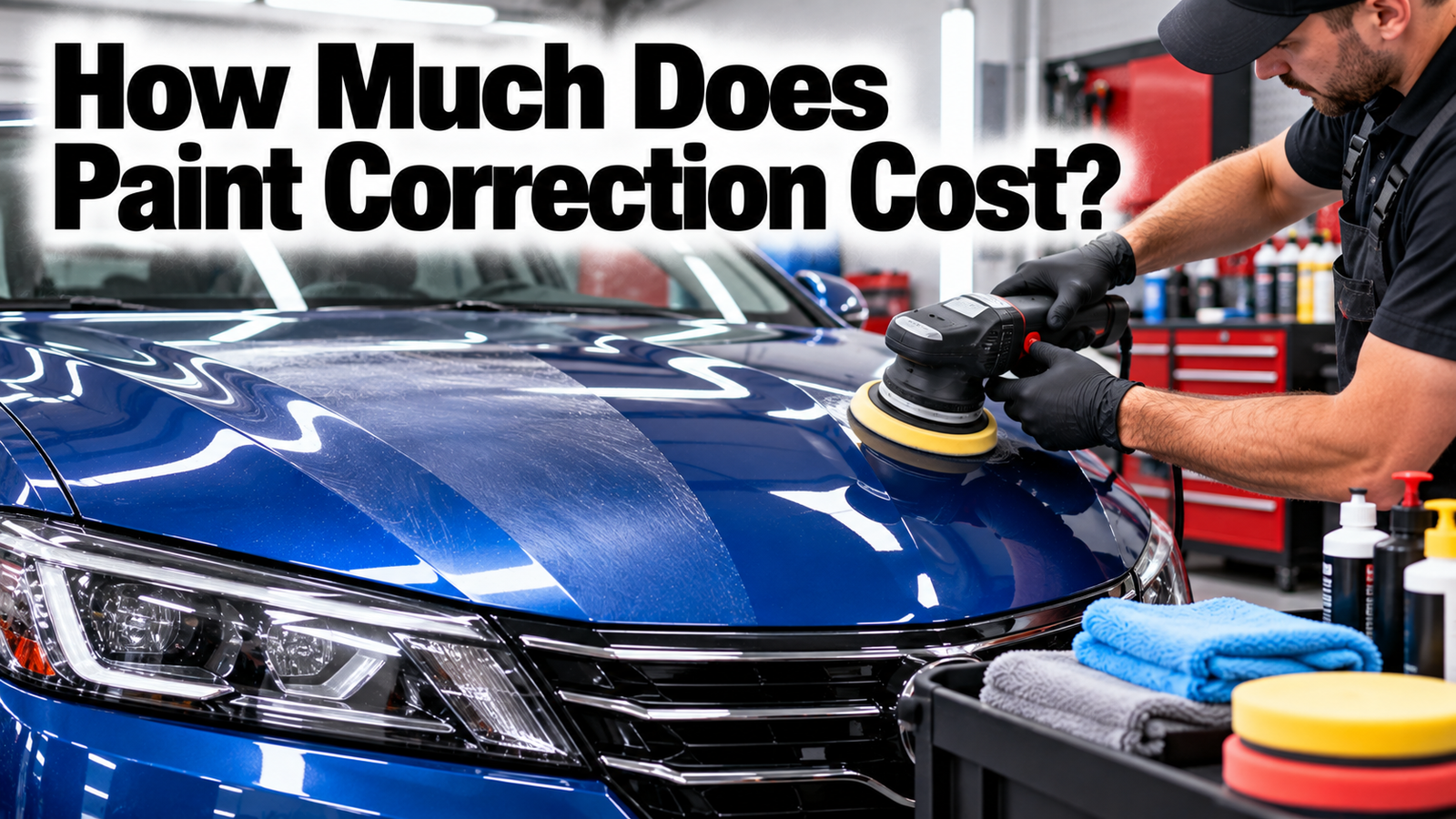

Paint correction on a typical car costs about $300 to $600 for a single-stage polish, $500 to $1,000 for a two-stage correction, and $800 to $1,500 or more for full multi-stage work, with show-level jobs on large, dark, or badly damaged vehicles running $1,000 to $3,000 and beyond. Doing it yourself costs $200 to $500 in equipment plus a weekend of careful labor.
- What paint correction actually is
- Cost by correction level
- Adjusting for vehicle size
- What moves your quote
- What a legitimate job includes
- The protection add-on
- The DIY route: costs and honest risks
- Is it worth it?
- Keeping the result (so you don’t pay twice)
- How to compare quotes
- Conclusion
- Frequently asked questions
- How much does a stage 1 paint correction cost?
- How long does paint correction take?
- Is paint correction permanent?
- Can paint correction remove deep scratches?
- Do I need paint correction before ceramic coating?
- Related Articles
The spread is wide because you’re buying hours of skilled machine polishing, and the hours depend on your vehicle’s size, its paint’s condition and hardness, and how far toward perfect you want to go. Here is what each stage costs and fixes, the factors that move your quote, what a legitimate job includes, and where DIY makes sense.
What paint correction actually is
First, what the money buys. Paint correction is the machine polishing of a vehicle’s clear coat with abrasive compounds to physically remove defects: the spiderweb swirl marks from automatic washes and bad towels, light scratches, oxidation haze, water-spot etching, and buffer holograms from past detailing.
Unlike wax or glaze, which fill and hide defects until the next wash strips them, correction levels the clear coat down past the damage, so the fix is real. That also means it consumes material: each correction removes microns from a clear coat that’s only so thick, which is why the work is measured, staged, and not something a car can absorb indefinitely.
Cost by correction level
Pricing follows the number of machine stages, because each stage is another full pass over every panel:
| Service level | Typical price | What it addresses |
| One-stage (enhancement) polish | $300 to $600 | Light swirls and haze; big gloss gain, 60 to 80% of defects |
| Two-stage correction | $500 to $1,000 | Compound then polish; moderate swirls, light scratches, water spots |
| Multi-stage (3+) correction | $800 to $1,500+ | Heavy swirls, deeper scratches, oxidation; near-flawless finish |
| Show / concours correction | $1,000 to $3,000+ | Wet sanding and multiple refinement passes for a mirror finish |
Time explains the money. A one-stage on a sedan takes roughly four to six hours; multi-stage work runs eight to twelve or more, often spread over more than a day. In expensive metro areas the same menu prices 20 to 40 percent above the national ranges, and elite studios charge above their local market on skill and equipment.
Adjusting for vehicle size
Vehicle size translates the table for your driveway. Treat the ranges above as coupe-and-sedan pricing; a midsize SUV or crossover typically adds 20 to 30 percent at every level, and a full-size truck, three-row SUV, or van adds 30 to 50 percent, simply because every stage repeats across more square footage of paint.
In flat dollars, expect each size class to add roughly $100 to $300 per stage of correction, and confirm the shop’s size brackets up front, since some price by class while others quote after seeing the vehicle.
What moves your quote
Within those ranges, six factors position your quote:
- Vehicle size. An SUV or truck carries far more painted surface than a coupe, and every stage multiplies across it.
- Paint condition. A garage-kept two-year-old car needs a fraction of the machine time a decade of automatic washes demands. Severe oxidation or deep defect sets can push a job into wet sanding, the top of every price range.
- Paint hardness and color. Some factory clear coats are hard and slow to cut; others are soft, easy to mar, and need extra refinement passes. Dark colors, black above all, reveal every remaining defect, so reaching “finished” on black takes more work than on silver or white.
- Panel materials and trim. Flexible plastic panels polish differently than metal, and vehicles with lots of painted trim, pillars, and complex bodywork add slow, careful hand-tool time.
- The vehicle itself. Exotic and luxury cars price higher for the risk, the insurance, and the finish standard their owners expect.
- Location and shop tier. Urban shops carry higher costs, and correction skill genuinely varies; the cheapest quote in town is often a glorified gloss polish wearing the name.
What a legitimate job includes
A legitimate correction includes far more than the polishing, and the included steps are where cheap quotes quietly cut. Expect a proper job to cover: an inspection under proper lighting, ideally with a paint-thickness gauge to confirm the clear coat can take the work; a full wash and chemical decontamination (iron remover and clay) so no grit gets ground into the paint under a pad; careful taping of trim, edges, and badges; the machine stages themselves with panel wipes between passes to verify true, filler-free results; and a protective layer, at minimum a sealant, applied at the end. A “$150 full paint correction” cannot contain those hours; it’s an enhancement polish, which is a fine product at its own price, but not the same purchase.
Quick rule: correction is priced in stages and hours. A quote that names neither is selling a polish, not a correction.
The protection add-on
Budget for the question that follows every correction: protecting the result. Freshly corrected paint is perfect and unprotected, and most owners pair the work with either a sealant (often included), a premium wax, or a ceramic coating. Coatings are the significant add-on: professionally installed, they commonly cost as much again as the correction itself, in exchange for years of easier washing and chemical resistance.
The order matters and can’t be reversed: coating locks in whatever surface it covers, defects included, which is why every reputable installer requires at least a one-stage correction first, and why doing correction without any protection afterward means your investment starts collecting new swirls at the next wash.
The DIY route: costs and honest risks
The DIY math is genuinely attractive for the right owner. A dual-action polisher runs roughly $100 to $300, a set of pads $50 to $100, and compound plus polish another $40 to $80, so a complete kit lands between $200 and $500 and serves for years of vehicles.
Dual-action machines are far more forgiving than the rotary buffers professionals also use, and manufacturer guidance on clear-coat-safe compounds makes the point that modern products remove swirls without the harsh cutting that damages contemporary finishes, so patient work in small sections removes light and moderate swirls reliably.
The honest risks: it takes most first-timers a full weekend for one car; edges, character lines, and thin repainted panels can be burned through by inattention; and hard defects that a pro clears in one compounding pass can eat hours of amateur effort. The sensible split: DIY for maintenance-level polishing on a daily driver, professional hands for heavy correction, soft or exotic paint, and any car headed for a coating.
Is it worth it?
Whether the spend is worth it depends on what the car is for. Correction is a cosmetic restoration: it makes a sound but tired finish look better than showroom, it’s the mandatory first step before a ceramic coating, and it photographs dramatically at sale time, though its resale return is real but modest, more about selling faster than selling higher.
It is not the tool for paint that’s failing, peeling clear coat, through-the-color scratches, or sun-baked panels needing a body shop’s respray, and a good detailer will say so at inspection rather than polish a lost cause. For a keeper car you wash yourself, one thorough correction followed by protection and careful wash habits can hold its result for years.
Keeping the result (so you don’t pay twice)
One more line item deserves planning: not paying for this twice. Corrected paint stays corrected only as long as the wash routine stops installing new swirls, and the routine is cheap compared to the service.
Skip automatic brush washes entirely; hand wash with two buckets (wash and rinse) and a quality mitt so grit never rides back onto the paint; dry with plush microfiber or a blower rather than a bath towel; and top up the protection on schedule.
Owners who add one light one-stage polish every couple of years maintain a corrected finish indefinitely for a fraction of a repeat full correction, which is the difference between correction as an investment and correction as a subscription.
How to compare quotes
Comparing quotes is easy once you know what to ask:
- Ask for a test spot. Reputable detailers polish a small section during the estimate so both of you see what your paint can achieve at each stage before money changes hands.
- Get the stages and hours in writing, not just a package name; “paint correction” on an invoice can mean one pass or four.
- Ask whether they measure paint thickness, especially on an older or repainted car, since polishing thin clear is how burn-throughs happen.
- Look at their own before-and-after photos under proper lighting, with 50/50 shots (half a panel corrected) counting for far more than glamour angles.
- Confirm insurance and what happens if a panel is damaged; professionals answer this without flinching.
Conclusion
Plan on $300 to $600 for a one-stage polish, $500 to $1,000 for two stages, $800 to $1,500 and up for full multi-stage correction, and roughly double any of those figures if a ceramic coating follows, with vehicle size, paint condition, color, and city setting your spot inside each range. Buy hours and skill, not package names: ask for the test spot, the stage count, and the thickness measurement, and pair the finished result with protection and better wash habits, because the correction removes the damage, and only your habits keep it from coming back.
Frequently asked questions
How much does a stage 1 paint correction cost?
Typically $300 to $600 for an average-sized vehicle, rising toward $500 to $800 in expensive metro markets. One machine stage removes light swirls and haze, roughly 60 to 80 percent of visible defects, and delivers most of the gloss improvement for the least money.
How long does paint correction take?
About four to six hours for a one-stage polish on a sedan, and eight to twelve or more for multi-stage work, which often spans more than a day. Larger vehicles, heavy defects, and soft or dark paint all push toward the long end.
Is paint correction permanent?
The removed defects are gone for good, because correction levels the clear coat rather than filling scratches. New swirls, though, start accumulating with the very next careless wash, which is why corrected cars get paired with protection and gentler wash habits.
Can paint correction remove deep scratches?
Only ones within the clear coat. The fingernail test is the classic screen: if a nail catches in the scratch, it likely runs too deep to polish out safely, and the fix is touch-up paint or body-shop repair rather than more compounding.
Do I need paint correction before ceramic coating?
Yes, at least a one-stage polish. A coating seals in whatever surface lies beneath it, defects included, so every reputable installer corrects first. Skipping it means paying premium money to preserve your swirl marks under glass.
Related Articles
How Much Does Paint Protection Film Cost?
How Often Should You Paint Your House Exterior?