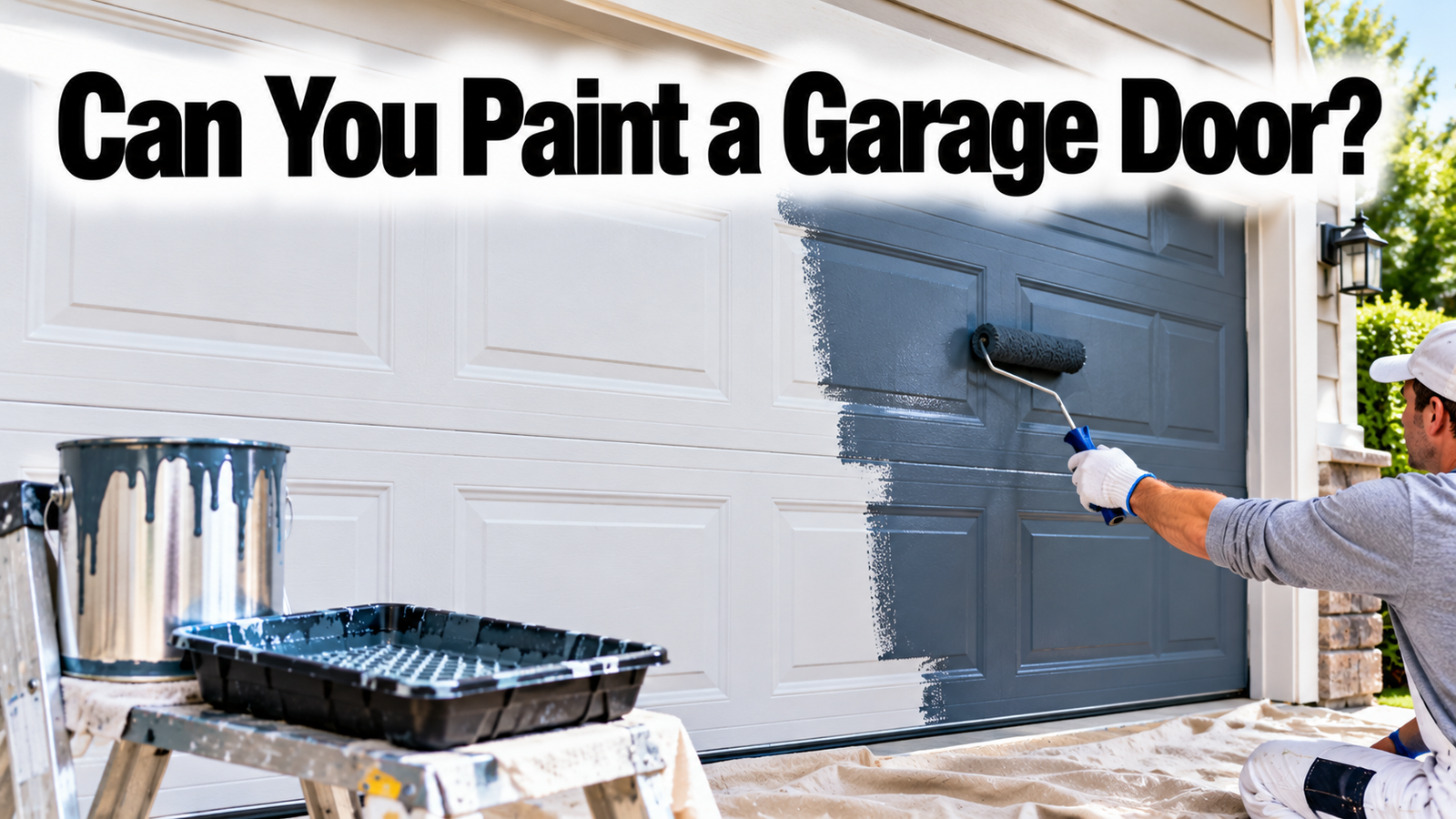

Yes, you can paint a garage door, and since it is often the biggest single feature on the front of a house, few projects boost curb appeal faster or cheaper. It is largely a one-day job. The keys are matching your prep and primer to the door’s material, choosing the right kind of paint, and avoiding one color mistake that can actually warp the door. Here is how to paint a garage door so it looks sharp and lasts.
- Can you paint it?
- What paint to use, and why not oil
- Match the prep to your door’s material
- The color warning most people miss
- How to paint a garage door, step by step
- Mistakes that cause peeling and warping
- Conclusion
- Frequently asked questions
- What kind of paint should you use on a garage door?
- Do you need to prime a garage door before painting?
- Can you paint a garage door a dark color?
- Can you paint a garage door without removing it?
- How long does a painted garage door last?
- Related Articles
Can you paint it?
You can, on steel, aluminum, wood, vinyl, and fiberglass doors alike. A fresh coat protects the door from weather and instantly updates the look of your home. Like any exterior paint job, the result rides on preparation. Paint fails on a garage door not because it cannot be painted, but because it went on over dirt, rust, chalky oxidation, or a slick surface with nothing to grip.
Two quick things before you start. First, check the door’s condition: fix dents, rot, or serious rust before painting, since paint hides none of it. Second, if the door is under warranty, check the paperwork, because repainting can affect some manufacturer warranties, and the wrong paint or color can void coverage. A two-minute check now can save a headache later.
A safety note too: if your door is automatic, unplug the opener and pull the manual release before you start, so the door cannot move on its own while you work.
On value, this is one of the best returns in exterior painting. For most single doors you need only a gallon or two of paint plus primer, so the materials often run well under a hundred dollars if you do it yourself. Hiring a pro typically lands in the few-hundred-dollar range for a standard steel door, more for wood or heavy repairs. Either way, refreshing the largest flat surface on the front of many homes is a small spend for a big change in curb appeal.
What paint to use, and why not oil
The clear standard for garage doors is a high-quality 100% acrylic exterior latex paint, for the door of any material. Acrylic latex sticks well, resists UV fading, cleans up with water, and stays flexible so it moves with the door as it expands and contracts through temperature swings. That flexibility is the point: a garage door flexes constantly, and a stiff finish cracks.
This is exactly why you should avoid oil-based paint. Oil paint dries into a hard, brittle film that becomes more brittle with age, so on a flexing door it tends to crack over time. Many door makers explicitly warn against oil-based or alkyd paint and note it can void the warranty. For sheen, satin or semi-gloss looks best and wipes clean more easily than flat.
The two paint rules that matter most: use 100% acrylic exterior latex (not vinyl-acrylic or a blend), and never use oil-based paint on a garage door. Oil goes brittle and cracks on a surface that flexes.
You can apply it by brush, roller, or sprayer. A sprayer is fastest and gives the smoothest finish on modern paneled doors with lots of grooves, while a brush gets into recesses and a roller covers the flats. Many people combine a roller for the panels with a brush for the details. Paint makers like Sherwin-Williams publish step-by-step guidance and pair a bonding primer with a durable exterior acrylic latex for this exact job.
Match the prep to your door’s material
This is the step generic guides skip, and it is what actually decides whether the paint holds. Different door materials need different priming.
| Door material | What it needs |
| Steel | Wire-brush off any rust, then spot-prime bare metal with a rust-inhibitive primer before painting. |
| Aluminum | Scrub off the chalky white oxidation completely, then use a self-etching or bonding primer, or paint will not stick. |
| Wood | Fill cracks, sand, and seal with an exterior wood primer to block moisture and old color. |
| Vinyl / fiberglass | Usually needs a bonding primer to grip the smooth surface; watch color choice for heat. |
The common thread is a primer suited to the surface. On bare or rusty steel, a rust-inhibitive metal primer stops corrosion bleeding back through. Aluminum is the sneaky one: it does not rust but it oxidizes into a chalky film that paint slides off, so it must be cleaned off and sealed with a self-etching or bonding primer. Smooth vinyl and fiberglass usually need a bonding primer to grip. If your door is already painted and sound, a bonding primer over a light scuff is often enough, and a tinted primer helps when you are covering a much darker old color.
The color warning most people miss
Here is the part that trips people up: on an insulated metal garage door, dark colors can warp the door. Dark paint absorbs far more of the sun’s heat, and a south or west-facing steel door can reach 150 to 160°F on a hot day. That heat, combined with a big temperature difference between the warm outer skin and the cool inner skin of an insulated door, can cause the panels to bow. This is called thermal bowing, and it is a real, documented risk, not just caution.
It also has a warranty angle. Several manufacturers will not honor warranty claims on doors painted dark colors in high-sun exposures, and some prohibit very dark colors outright. So if you have your heart set on a bold navy or charcoal:
- Check your door’s guidance first. Many makers publish a minimum Light Reflectance Value (LRV) or ban colors below a certain darkness.
- Consider a solar-reflective paint. Some exterior lines are formulated to reflect more heat, letting you go darker more safely. Confirm it is approved for your door.
- Play it safe on sunny walls. For a south or west-facing door in strong sun, lighter tones (white, greige, light gray) with a higher LRV are the low-risk choice.
Design-wise, many people match the garage door to the trim or a light body color anyway, so it blends in rather than shouting, which sidesteps the heat problem entirely.
How to paint a garage door, step by step
With your acrylic paint and the right primer ready, pick a mild, dry, low-wind day, ideally out of direct sun and between about 50 and 90°F. Then work through these in order.
- Disable the opener and mask off. Unplug the automatic opener and pull the manual release. Tape off windows, trim, handles, and weatherstripping, and lay a drop cloth to catch drips.
- Clean the door thoroughly. Wash with mild detergent or pressure-wash to remove dirt, mildew, grease, and chalk. On metal, scrub off rust or oxidation. Rinse and let it dry completely.
- Sand and repair. Scrape off any loose or peeling paint, sand rough edges smooth, and fill dents or cracks. Avoid scratching the window glass while sanding.
- Prime what needs it. Spot-prime bare metal, or fully prime, using the primer matched to your door’s material (see above). Let it dry per the label. On steel, aim to paint within about 24 hours of cleaning.
- Paint panel by panel. Start at a top corner. Cut in the recessed panels first with a brush, then fill the flat areas with a roller or sprayer, working one panel at a time from top to bottom so you keep a wet edge and avoid lap lines.
- Do the edges and details. Raise the door partway if it helps you reach the bottom edge and get clean, precise brushwork around the panels.
- Add a second coat. Let the first coat dry, then apply a second for even color and full coverage. A big color change may need a third. Two thin coats always beat one thick one.
- Let it dry before closing. Leave the door slightly open while it dries so panels and weatherstripping do not stick together, and wait a day or two before closing it fully against the frame.
Mistakes that cause peeling and warping
Almost every disappointing garage-door job comes down to one of these. Avoid them and yours will look sharp for years.
- Skipping the right primer. Painting bare steel, chalky aluminum, or slick vinyl without the correct primer leads to peeling within weeks. Match the primer to the material.
- Using oil-based paint. It goes brittle and cracks on a flexing door, and can void the warranty. Use 100% acrylic exterior latex.
- Going dark on a sunny insulated door. Dark colors can overheat and bow the panels. Check the LRV guidance or choose a solar-reflective paint.
- Painting in direct sun or bad weather. Heat flash-dries paint and leaves marks; wind ruins a spray pattern. Work on a mild, dry, low-wind day in the shade.
- Closing the door too soon. A tacky door sticks to its weatherstripping and frame. Leave it cracked open and give it time.
Conclusion
Painting a garage door is a high-impact, low-cost upgrade that mostly comes down to prep and the right products. Clean it well, match your primer to the door’s material, and use a 100% acrylic exterior latex, never oil. Mind the color on sunny insulated doors, since dark shades can warp them, and paint panel by panel on a mild day out of direct sun. Give it two thin coats and time to dry before closing. Do that, and a faded, dated door becomes a crisp centerpiece that lifts the whole front of your home for years.
Frequently asked questions
What kind of paint should you use on a garage door?
A high-quality 100% acrylic exterior latex paint, for doors of any material. It stays flexible so it moves with the door without cracking, resists UV fading, and cleans up with water. Avoid oil-based paint, which goes brittle and can crack.
Do you need to prime a garage door before painting?
Usually, yes, and the primer depends on the material: rust-inhibitive on bare steel, self-etching or bonding on aluminum, exterior wood primer on wood, and bonding primer on smooth vinyl or fiberglass. A sound, already-painted door may only need a scuff and bonding primer.
Can you paint a garage door a dark color?
Sometimes, but carefully. On insulated metal doors, dark colors absorb heat and can warp the panels, and may void the warranty. Check your door’s LRV guidance, use a solar-reflective paint if going dark, and prefer light colors on sunny south or west-facing doors.
Can you paint a garage door without removing it?
Yes. Garage doors are normally painted in place. Just unplug the opener and pull the manual release first, mask off the hardware and trim, and raise the door partway when you need to reach the bottom edge or panel details.
How long does a painted garage door last?
With good prep and quality acrylic latex, roughly 5 to 8 years on steel and about 3 to 5 on wood, depending on sun exposure and climate. Cleaning it occasionally and touching up wear extends the life.
Related Articles
How Long Should Primer Dry Before Painting?
Do You Italicize Painting Titles?