

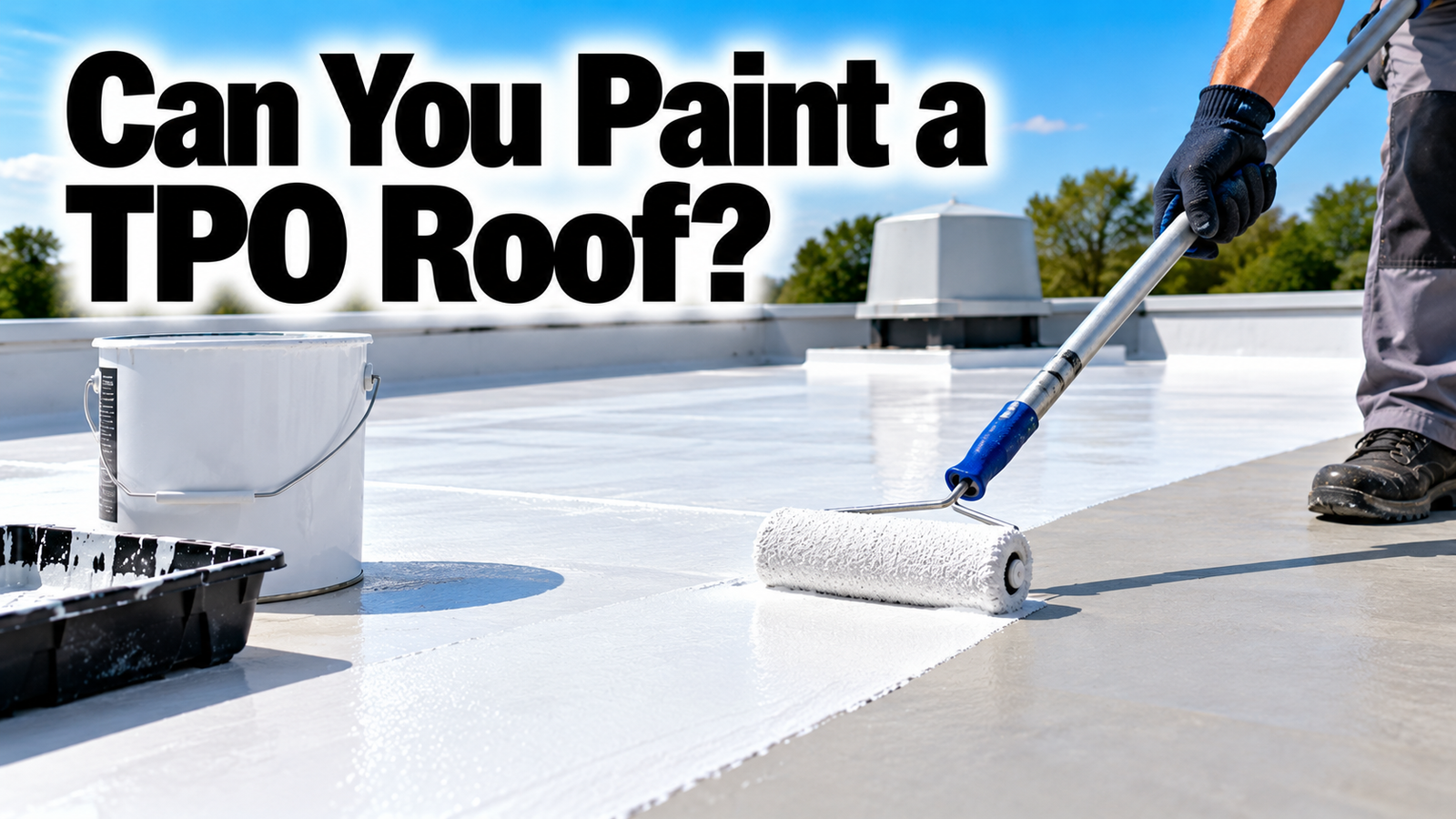

Yes, you can coat a TPO roof, but not with regular paint. House paint, exterior latex, and oil based paint will not hold on a TPO membrane. They peel, crack, and let water in within a season or two. What does work is a roof coating made for TPO, put down over a clean surface with the right primer. Done well, it refreshes the look, bounces back heat, and buys the roof years of extra life. Here is how to do it right, and when to leave the roof alone.
- Can you paint a TPO roof?
- Why regular paint won’t stick to TPO
- Signs your TPO roof is a good candidate for coating
- What to use instead: coatings made for TPO
- Do you need a primer? Almost always, yes
- How to coat a TPO roof, step by step
- Should you coat it yourself or hire a pro?
- Why coat a TPO roof at all
- When coating is the wrong call
- What it costs and how long it lasts
- Conclusion
- Frequently asked questions
- Related Articles
Can you paint a TPO roof?
You can apply a coating to a TPO roof, but you cannot use ordinary paint. TPO stands for thermoplastic polyolefin, a single ply plastic membrane used on flat and low slope roofs. Its surface is smooth and slick, which is great for shedding water and dirt but bad for anything trying to stick to it.
A proper TPO roof coating is built to grip that surface and flex with it. Standard paint is not, so it fails fast. The real question is not can you paint it, but what you should put on it. The answer is a coating system: a primer plus a flexible, reflective topcoat made for membranes.
Why regular paint won’t stick to TPO
TPO has low surface energy, which is a plain way of saying almost nothing bonds to it on its own. The membrane is also built to move. It expands in heat and shrinks in cold, every single day. Regular paint is stiff. When the roof stretches, the paint cannot stretch with it, so it cracks. Those cracks open a path for water, and now you have added a problem instead of fixing one.
There is one more issue. House paint is made to cover a wall and look nice. It is not made to sit in standing water and full sun for years. On a flat roof it breaks down quickly, and within a year or two you are usually scraping it back off.
Signs your TPO roof is a good candidate for coating
Coating pays off on a roof that is aging but still doing its job. Before you spend a cent on product, walk the roof and look for these signs that it is worth saving.
- The membrane is dull, chalky, or faded, but still intact across most of the roof.
- Seams are mostly sound, with only a few spots that need a patch.
- There are no soft, spongy areas underfoot, which point to wet insulation below.
- The roof still has roughly five or more years of structure left in it.
- You want lower cooling bills and a brighter surface without a full tear off.
If the roof is near the end of its life, leaking in several places, or holding water in big ponds that never drain, a coating is the wrong fix. Spend that money toward a replacement instead, since a coat on a dying roof just buys a few months.
What to use instead: coatings made for TPO
The right product is a roof coating designed for single ply membranes. Three types do the job, and each has a sweet spot.
| Coating type | Best for | Trade off |
| Acrylic (elastomeric) | Reflectivity, drier climates, lower cost | Thins out where water ponds |
| Silicone | Flat roofs with ponding water, long life | Slick when wet, harder to recoat later |
| Polyurethane | Roofs with foot traffic, tough wear | Costs more, needs careful application |
Acrylic elastomeric coatings are the common pick. They flex with the roof, reflect sun, and cost the least. Silicone is the choice when water pools and sits, since it shrugs off ponding better than anything else. Polyurethane is the toughest against foot traffic and impact, so it suits roofs that get walked on a lot. Whatever you choose, use a coating the maker lists as TPO compatible. Matching the product to the membrane is what keeps it stuck.
Coatings are measured in mils, which is the dry film thickness once they cure. Thicker is not just tougher; it is often tied to the warranty, since many makers offer a longer guarantee for a thicker system. A thin single coat might carry a short warranty, while a heavier two coat build can back a ten year or longer term. Read the data sheet and apply the coating at the rate the maker lists for the warranty you want.
Color matters too. Most TPO coatings go on bright white on purpose, because white reflects the most sunlight and keeps the roof coolest. You can get tints and darker shades, but every step away from white reflects a little less heat, so you trade some energy saving for the look. On a roof you never see from the ground, white is almost always the smart choice.
Do you need a primer? Almost always, yes
A primer is what makes the coating grip. Because TPO is a hard, slick plastic, a bonding primer acts as the glue layer between the membrane and the topcoat. Skip it and even a good coating can peel off in sheets.
A TPO bonding primer goes on thin and covers roughly 200 to 250 square feet per gallon, so a little goes a long way. You brush, roll, or spray it on, let it flash off, then coat on top. It is the step most DIY jobs skip, and the reason most DIY jobs fail.
How to coat a TPO roof, step by step
Take the prep seriously. On a coating job, the prep is most of the work, and the coating itself is the easy part.
- Inspect and repair first. Walk the roof and check every seam, flashing, and penetration. Fix open seams, holes, and tears now. A coating seals a sound roof; it will not bridge an active leak.
- Clean the whole surface. Pressure wash, or scrub with a roof cleaner, to strip off dirt, chalk, oils, and old residue. The coating sticks to the membrane, not to the grime on top of it.
- Let it dry fully. Any trapped moisture under the coating causes blisters and peeling, so give it time.
- Scuff if the label says to. A light scuff with a pad helps some primers bite harder.
- Prime. Apply the bonding primer evenly and let it set per the instructions.
- Apply two thin coats. Two thin passes beat one thick glob. Let the first cure before the second, and keep the film even.
Pick a dry stretch of weather with no rain for a day or two. Mild temperatures and low humidity give the best cure. Rain on a coating that has not set yet can wash it off or leave it blistered, so watch the forecast before you start.
Should you coat it yourself or hire a pro?
A small, simple TPO roof in good shape is within reach for a careful DIYer, as long as you respect the prep and use real TPO products. The work itself is not hard: clean, repair, prime, and roll on two coats. The mistakes that ruin jobs are skipping the primer, coating over dirt, or coating a roof that needed repairs first.
Hire a pro when the roof is large, cut up with lots of penetrations, has ponding water, or is still under warranty. A contractor can lay down a thicker, warrantied system, spot problems you might miss, and work safely on a roof at height. For a commercial building, the longer warranty and the safety alone usually make a pro worth it. For a small shed or garage with a sound membrane, doing it yourself can save real money.
Why coat a TPO roof at all
A coating does three useful things. First, it restores reflectivity, so the roof bounces heat away instead of soaking it in. A bright white reflective surface keeps the roof and the space below it cooler, which trims cooling bills in summer.
Reflective roof products are measured and rated by groups like the Cool Roof Rating Council, so you can compare real numbers instead of guessing. Second, it adds a fresh UV shield, which slows the aging of the membrane underneath. Third, it extends the roof’s service life for a fraction of a replacement, which is the biggest reason building owners do it.
That third point is the one that saves the most money over time. Each coating cycle buys several more years, and when it wears thin you recoat rather than tear off. A roof kept on a coating schedule can keep serving long past the point where a bare, untreated membrane would have needed replacing. You are trading a small, planned cost every few years for a large, one time cost you keep pushing down the road.
Think of a coating as restoration, not a rescue. It works best on a roof that is still basically sound, with around five or more years of life left. On a worn out membrane, you are putting good money on a bad base.
When coating is the wrong call
A coating cannot fix a failing roof. If the membrane has cracking across the whole surface, failed seams, soaked insulation, or active leaks you cannot trace, a coating just hides the problem for a few months. At that point replacement is the honest answer.
Warranty is the other thing to check before you start. Putting standard paint on TPO will usually void the manufacturer’s warranty, and even an approved coating can affect it if the roof is still under cover. If your membrane is newer and still warrantied, call the maker first. An older, out of warranty roof is where coating makes the most sense.
What it costs and how long it lasts
A coating is far cheaper than a tear off. A silicone restoration coating on TPO typically runs about $2.00 to $4.50 per square foot, depending on roof size, condition, and how much prep it needs. Full TPO replacement runs roughly $7 to $12 per square foot, so coating can cost less than half.
On a real building the gap is large. A 20,000 square foot roof might cost somewhere around $40,000 to $90,000 to coat, while a full replacement of the same roof can land between $140,000 and $240,000. That is the math that makes owners reach for a coating whenever the membrane is still sound enough to carry one.
On lifespan, plan on touching up high wear spots every few years, and recoating the whole roof every five to seven years to keep the protection and reflectivity working. The thicker the coat and the better the prep, the longer each cycle lasts.
Conclusion
Yes, you can coat a TPO roof, just never with regular paint. Use a primer and a TPO rated coating, acrylic for most roofs and silicone where water ponds, and put the work into cleaning and repairs before you open a single bucket. On a roof that is still sound, a coating refreshes the surface, reflects heat, and adds years for a fraction of replacement cost. On a worn out membrane, replace it instead.
Frequently asked questions
Can I use normal exterior paint on a TPO roof?
No. Latex and oil based paints will not bond to TPO’s slick surface and crack as the membrane moves. Use a primer and a coating made for TPO instead.
Does coating a TPO roof stop leaks?
Only minor surface issues. A coating seals a sound roof, but it cannot bridge open seams, tears, or active leaks. Repair those first, or the leak keeps going underneath.
What color can a TPO coating be?
White is most common because it reflects the most heat, but coatings come in other colors. Darker shades reflect less, so you lose some of the energy savings.
How long does a TPO coating last?
Expect about five to seven years before a full recoat, with touch ups on worn spots in between. Good prep and two solid coats push it toward the longer end.
Will coating void my roof warranty?
It can. Standard paint usually voids it, and even an approved coating may affect a live warranty. If your TPO is still under warranty, check with the manufacturer first.
Related Articles
Can You Paint a Fridge? Yes, and Here’s How to Do It Right
Can You Paint a Garage Door? Yes, Here’s How to Do It Right
Can You Paint a Vent? Yes, Here’s How to Make It Look Right
Can You Paint a Fiberglass Bathtub? Yes, and Here’s How to Do It Right