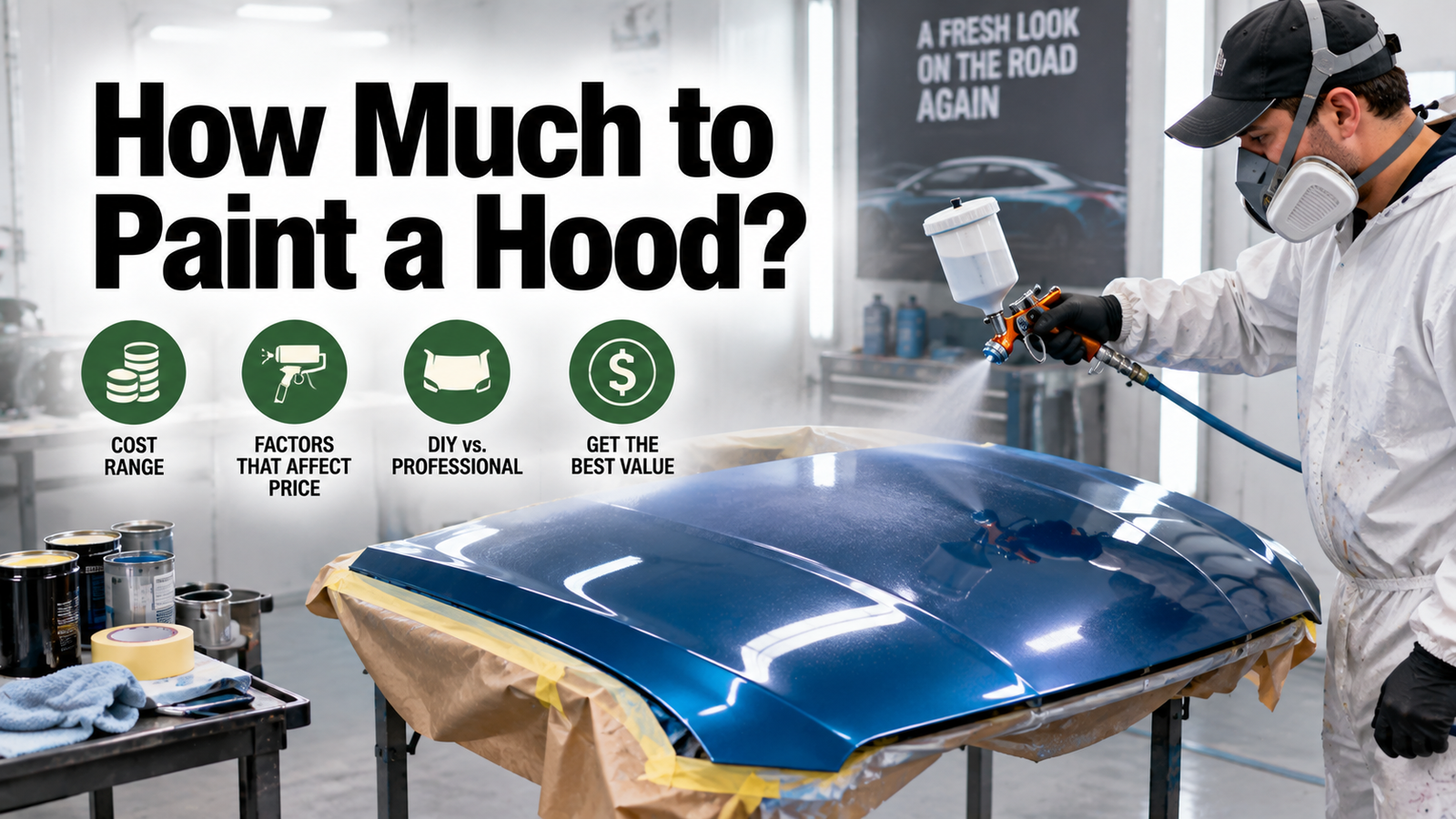

Painting a car hood usually costs $400 to $1,000 at a body shop, or $50 to $300 if you do it yourself. Most people with a daily driver land in the $500 to $700 range for a proper shop job that matches the rest of the car. The final number comes down to a few things: the type of paint, how much damage needs fixing first, and whether the shop blends the new paint into the fenders for a seamless match.
- How much does it cost to paint a hood?
- What drives the price
- Single-stage vs basecoat-clearcoat: which you pay for
- DIY vs a body shop
- Why blending costs extra
- How to save money without a bad result
- Conclusion
- Frequently asked questions
- Is it cheaper to paint just the hood or the whole car?
- Why do hood paint quotes vary so much?
- Can I paint my car hood myself?
- How long does it take to paint a car hood?
- Does a painted hood need to match the rest of the car?
- Related Articles
Here’s the full picture, so you know what a fair quote looks like before you call around.
How much does it cost to paint a hood?
The price splits cleanly by who does the work and how good you want it to look. This table covers the common routes.
| Type of job | Typical price | What you get |
| DIY with spray cans | $50 to $150 | Primer, paint, and clear in aerosol form. Fine for an older daily driver, not a factory match. |
| DIY with a spray gun | $100 to $300 | Automotive urethane, hardener, and clear. Better finish, but you need a gun and space. |
| Budget shop repaint | $150 to $300 | A quick single-stage spray, minimal prep, no blending. Color match is rough. |
| Standard shop repaint | $400 to $1,000 | Basecoat and clearcoat, proper prep, color matched and often blended into the fenders. |
| Show-quality or custom | $1,000 to $3,000+ | Metallics, pearls, wet-sanding, and buffing to a flawless, deep finish. |
The wide DIY-to-custom spread is why online estimates feel all over the place. For a normal car you actually drive, the honest answer is the standard shop tier: roughly $400 to $1,000, with $700 being a very common real-world figure for a clean, color-matched job on a modern vehicle.
For context on why the DIY figures are so low, an average hood is about 30 square feet, roughly 5 feet by 6 feet. That’s a small enough area that a couple of quarts of paint and clear cover it. The cost of a shop job isn’t the paint. It’s the hours and the booth.
What drives the price
Four things decide where you land in that range. Understanding them helps you read a quote and spot when one shop is cutting corners another isn’t.
Labor and prep. This is the biggest slice of a shop bill, often 60 to 70 percent of the total. Body shop labor runs about $50 to $150 an hour depending on where you live. Most of that time is prep: sanding, masking, and fixing flaws before any color goes on. A hood with dents, rust, or peeling clear needs more of it, and prep time can double when the damage is bad.
Paint type. A basic single-stage paint, where color and gloss are in one layer, is the cheap option. The modern standard is basecoat plus clearcoat: color first, then two or three coats of clear urethane on top for gloss and UV protection. That two-stage system adds roughly $100 to $300 over plain enamel. Metallic and pearl colors cost even more, because the flakes need a clear layer to sit in and they demand precise mixing.
Damage and repair. Paint only looks as good as the surface under it. Filling dents, treating rust, and applying body filler all add labor and materials. Minor to moderate repair work commonly adds $50 to $500 before the painting even starts.
Color match and blending. Getting the new hood to match a sun-faded ten-year-old car is harder than it sounds, and it’s the cost most people don’t see coming. More on that below.
Single-stage vs basecoat-clearcoat: which you pay for
Since paint type is one of the two biggest price drivers, it’s worth knowing what you’re actually choosing between.
Single-stage paint mixes color and gloss into one product and sprays in two or three coats. It’s cheaper, faster, and easier to touch up later, and it saves roughly 20 to 40 percent on labor because there’s less masking and no separate clear to sand and buff. The catch is that the color layer is the exposed surface, so it fades, chips, and chalks sooner. Outdoors it tends to last around three to seven years depending on sun exposure. It’s a fair choice for an older daily driver or a solid color.
Basecoat-clearcoat sprays a thin layer of color, then two or three coats of clear urethane over it. The clear is what you see, and it protects the color from UV and light chips while giving that deep, wet gloss. It’s the factory standard on modern cars and the only way to do metallic, pearl, or tri-coat colors properly, because those flakes need a clear layer to sit in for depth. It costs more in both material and labor, but on a newer car it’s what makes the hood match and last.
If a shop quotes a basecoat-clearcoat price that looks too good, be a little suspicious. A proper two-stage job needs real sanding hours and a color-sand and buff at the end. A rock-bottom quote often means one of those steps is getting skipped.
DIY vs a body shop
The gap between doing it yourself and paying a shop is mostly about equipment, skill, and the finish you can live with.
Going DIY, your materials are primer, basecoat, and clearcoat, plus sandpaper, masking film, and tape. With rattle cans you can get it done for $50 to $150. Step up to automotive urethane and a spray gun and you’re looking at $100 to $300 in materials, plus the gun and a dust-free space to work. A quart of automotive paint runs around $20 and covers about three coats on a standard hood. DIY makes sense on an older car, when you want the practice, or when the current paint is bad enough that you can only improve it.
Paying a shop buys you the thing that’s hard to fake at home: a smooth, even, factory-looking finish that matches the rest of the car. A shop preps properly, sprays in a clean booth, bakes the paint to cure it, and often wet-sands and buffs out any imperfections at the end. That’s what you’re paying $400 to $1,000 for, and on a newer or higher-value car it’s usually worth it. A rough DIY job on a car you plan to sell can cost you more at resale than the paint saved.
Quick gut-check: if the car is worth under about $8,000 and you just want it to look decent, DIY is reasonable. If it’s newer, financed, or you care about resale, a shop pays for itself.
Why blending costs extra
Blending is spraying a little of the new color onto the panels next to the hood, usually the front edges of the fenders, so there’s no hard line where old paint meets new. It’s the single biggest quality marker on a modern repaint, and it adds about $150 to $400 to the job.
The reason comes down to metallic and pearl paint. Even with a perfect computer-matched formula, a fresh panel sprayed on its own can look slightly off next to years-old paint, because the metallic flakes catch light a touch differently and the original has faded. Blending feathers the transition across the fender so your eye never catches a seam. Solid colors are more forgiving; metallics and pearls almost always need it. Rare or discontinued colors push the price up further because matching them takes more work.
So if one shop quotes $450 and another quotes $800 for what sounds like the same hood, the difference is often blending. The cheaper quote may be spraying the hood alone and hoping the match is close. On a solid white or black car that can be fine. On a metallic, it’s how you end up with a hood that clearly doesn’t match. A pro’s guide to hood painting costs is worth a read before you compare bids, so you know which steps a low quote might be skipping.
How to save money without a bad result
You can trim the cost without ending up with a hood that looks cheap. A few moves that actually work:
- Get three quotes. Prices for the same hood swing widely by shop. Ask each one whether the price includes hood removal, blending, and wet-sanding, so you’re comparing the same scope.
- Fix the dents yourself first. If you’re handy, pulling small dents or sanding out surface rust before you hand it over cuts the labor you pay for.
- Consider a spot repair. If the damage is one scratch or chip, a touch-up or spot repair ($100 to $700) can beat a full repaint. You only need the whole hood done when the damage is widespread or you want a uniform look.
- Weigh a vinyl wrap. A hood wrap runs about $200 to $600 and is reversible. It won’t fix dents, but for a color change or to hide light wear it can be cheaper than paint.
- Don’t chase the cheapest single-stage quote on a metallic car. Saving $200 up front isn’t worth a mismatched panel you’ll see every time you walk up to the car.
If you’re going the DIY route, buying quality materials matters more than saving a few dollars on paint. Reputable automotive paint suppliers sell primer, base, and clear as a matched system, and using products meant to work together is what keeps the finish from lifting or clouding. You can compare urethane paint systems and prices from a supplier like Eastwood to see what a proper DIY kit costs.
Conclusion
For a normal car, expect a body shop to charge $400 to $1,000 to paint the hood, with around $700 being typical for a clean, matched job. DIY drops that to $50 to $300 if you have the tools and patience. The price hinges on paint type, how much repair the hood needs, and whether the shop blends into the fenders. Get a few quotes, ask exactly what each includes, and match the job to what the car is worth.
Frequently asked questions
Is it cheaper to paint just the hood or the whole car?
Just the hood is far cheaper up front, usually $400 to $1,000 versus a few thousand for a full repaint. But if several panels are faded, matching one fresh hood to old paint is harder, and a larger job can look more even.
Why do hood paint quotes vary so much?
Mostly paint type, prep, and blending. A budget quote may use single-stage paint, skip repairs, and spray the hood alone. A higher quote usually means basecoat-clearcoat, proper prep, and blending into the fenders for a real match.
Can I paint my car hood myself?
Yes. With rattle cans you can do it for $50 to $150, or $100 to $300 with a spray gun and automotive urethane. It works best on older cars. Matching a modern metallic finish at home is the hard part.
How long does it take to paint a car hood?
A shop typically needs a few hours of active work plus drying and curing time, so expect a day or two. DIY takes longer once you factor in prep, multiple coats, and full curing between them.
Does a painted hood need to match the rest of the car?
For it to look right, yes. On solid colors a close match is easy. On metallics and pearls the paint is usually blended into the neighboring fenders so there’s no visible line between the new hood and the older paint.
Related Articles
What Is Candy Paint? The 3-Stage Finish Explained
What Is Tack Cloth Used For in Painting? A Full Guide