
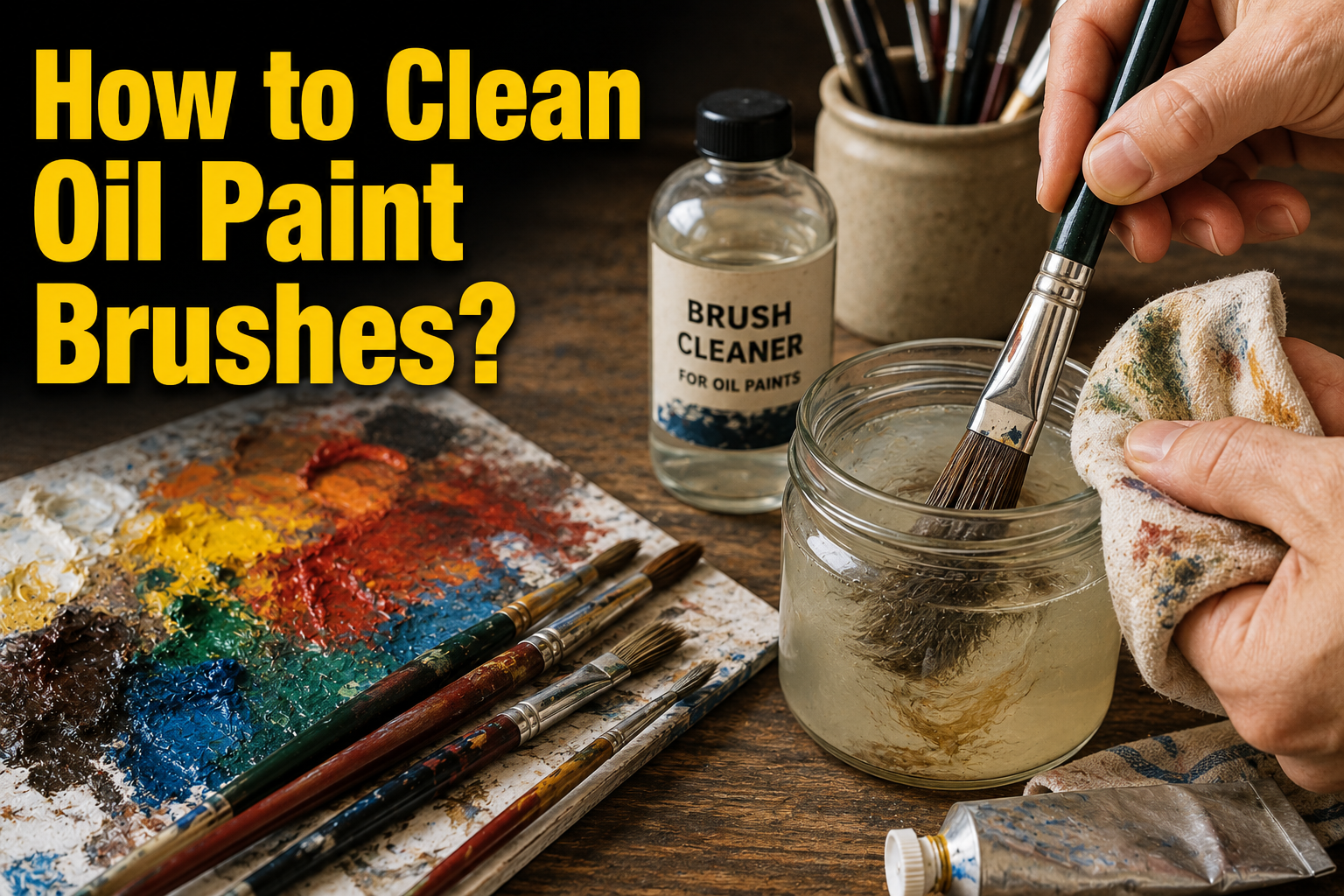

To clean oil paint brushes, wipe out the excess paint, break down what is left with either a solvent or a drying oil, then wash the bristles with mild soap and lukewarm water, reshape them, and lay them flat to dry. Water on its own will not do it, because oil paint is held together by oil, not water. That is the whole job in one line. Everything below is just doing each step well, so your brushes last for years instead of weeks.
This guide covers the quick clean you do between colors while painting, the full clean at the end of a session, two ways to do that full clean (with solvent and without), how to rescue a brush that has gone stiff with dried paint, how to dry and store brushes so they keep their shape, and how to handle solvents safely.
Why won’t water alone clean oil brushes?
Oil paint does not dissolve in water. The pigment sits in a binder of drying oil, usually linseed, safflower, or walnut, and oil and water do not mix. To get the paint out, you first need something that grips the oil: a solvent such as mineral spirits, or another oil that loosens the paint so you can wipe it away.
Only after that first step does soap and water finish the job, lifting the last of the color out of the bristles. Skip it and you are not really cleaning the brush, you are pushing paint deeper into it.
What you’ll need?
Gather a few things before you start:
- Paper towels or a lint-free rag.
- A jar or tin deep enough to cover the bristles.
- Your cleaning agent: odorless mineral spirits, or a drying oil like linseed or safflower.
- A mild soap: artist brush soap or a gentle dish soap both work.
- Gloves, if you are using solvent.
- A brush comb (optional) for stubborn paint near the base of the bristles.
Keep one jar for solvent or oil and a separate wash for the soapy rinse, so you are not carrying dirty brushes back and forth across your workspace.
Cleaning your brush between colors
While you paint, you do not need a full wash every time you switch colors. Just wipe most of the paint out on a rag or paper towel, then dip the bristles briefly in solvent or oil and wipe again. Pull the brush from the base of the bristles out toward the tip, so you draw the paint out instead of working it further in.
One rule matters more than any other here: never leave a brush standing on its bristles in a jar of solvent or water. The weight bends the hairs, and within an hour they can splay out and hold that shape for good. If you want to park a brush mid-session, lay it flat or hang it with the bristles pointing down.
A simple way to cut cleaning altogether is to keep one brush for each color family: one for whites, one for reds, one for blues and greens. Wipe it and reuse it within that family, and you rarely have to stop and clean in the middle of a painting at all.
How to clean oil brushes at the end of a session?
When you finish for the day, give each brush a full clean so no paint is left to harden overnight. There are two good ways to do it, and both finish the same way, with soap and water.
Method 1: With solvent
- Wipe first. Drag the excess paint out onto a rag or paper towel until little comes off. This keeps your solvent cleaner and cuts how much you use.
- Swirl in solvent. Pour an inch or two of odorless mineral spirits into a jar and swirl the bristles against the bottom. Odorless mineral spirits are the usual choice, because the harsher, stronger-smelling parts have been refined out, though they still need airflow.
- Wipe and repeat. Press the bristles on a rag, then swirl again. Keep going until almost no color comes off.
- Wash with soap. Lather the bristles with mild soap in lukewarm water, working the suds right down to the base of the hairs. Rinse and repeat until the suds come up white.
- Reshape and dry, which is covered further down.
Skip acetone, lacquer thinner, and shellac remover. They can dissolve the glue that holds the bristles in the metal band, and a brush that starts shedding hairs is finished.
Method 2: Without solvent
You can also clean with a plain drying oil instead of solvent, which keeps fumes out of the studio. Golden’s Just Paint guide lays out this solvent-free method, and it goes like this:
- Wipe first. Pull as much paint as you can out of the bristles with a paper towel.
- Dip in oil. Fill a jar with a couple of inches of a drying oil such as linseed, safflower, or walnut, and coat the bristles down to the base. Work the oil through with a paper towel to release the color.
- Repeat until clean. Dip, wipe with a fresh towel, and repeat until the oil comes away clear. Strong staining colors take a few more passes than earth tones.
- Wash with soap. Finish with mild soap and lukewarm water, the same as the solvent method, until the water runs clear.
The trade-off is patience. Oil cleaning takes a few more dips, and the pigment is slower to settle out of the jar. In return, you get no solvent fumes in the room.
One detail is worth knowing. Use a true drying oil, linseed, safflower, or walnut, if you clean during a session, because a little of it will end up in the painting and needs to dry along with the paint. A cheaper non-drying oil, such as baby oil or plain vegetable oil, is fine for the final clean at the end, as long as you follow it with the soap wash.
Drying and storing your brushes
How you dry a brush decides how long it lasts. First, reshape the damp bristles back to a point or a clean edge with your fingers. Then dry the brush lying flat, or hanging with the bristles pointing down.
Never stand a wet brush on its handle with the bristles up, because water runs down into the metal band, swells the handle, and loosens the bristles over time. This matches the drying and storage advice in Gamblin’s brush-care guide, and it is the single easiest way to add years to a brush.
Once a brush is fully dry, store it upright in a jar with the handle down, or lay it flat. To help a brush hold its point, you can wrap the damp bristles in a small strip of plain paper while they dry, which sets the shape as they harden. Natural-hair brushes lose a little of their own oil with each wash, so a few times a year it helps to work in a dab of brush conditioner, then rinse and reshape.
How to revive a brush with dried paint?
A brush stiff with dried paint can sometimes be saved, though not always. Start by soaking just the bristles, not the whole brush, in a brush restorer or cleaner made for the job. For a gentler try, stand the bristles in household vinegar for an hour or two, and for really stubborn paint you can briefly simmer the brush in vinegar and water.
After soaking, comb the softened paint out gently, working from the base to the tip. The one thing to avoid is scrubbing hard, which drives the loosened paint deeper into the base and splays the hairs. If the paint has set solid all the way into the metal band, the brush may be past saving, and it is better to retire it to rough jobs than to keep fighting it.
Handling solvents safely
Solvents make cleaning fast, but they are flammable and give off fumes, so treat them with care. Work in a room with airflow, open a window, and wear gloves. The most important part is disposal: never pour solvent or paint down the drain, where it coats your pipes and pollutes the water supply.
Let your dirty solvent sit in a sealed jar until the pigment settles into a sludge at the bottom, which can take a few days. Pour the clear solvent off the top into a clean jar to reuse, and take the leftover sludge to a household hazardous waste drop-off. Only the final soapy rinse, once the brush is already clean, belongs in the sink.
Watch the rags. Cloths and paper towels soaked in oil or solvent can heat up and catch fire on their own as they dry. Lay them out flat outdoors, or keep them in a sealed metal tin, and clear them out of your space at the end of each day.
Mistakes that shorten a brush’s life
A few habits quietly wreck brushes. Letting paint dry in the brush is the big one, since it hardens at the base and fans the hairs out. Standing a brush bristle-down in a jar bends it out of shape. Missing the base of the bristles leaves a hidden ring of paint that stiffens over time.
And drying a brush handle-down lets water sit in the metal band. Avoid those four and a good brush will serve you for a very long time.
Conclusion
Cleaning oil brushes comes down to a short routine: wipe off the paint, break down the rest with solvent or oil, wash with mild soap and lukewarm water, then reshape and lay the bristles flat to dry.
Clean them right after each session so nothing hardens, keep them off their tips while wet, and get rid of solvent safely rather than down the drain. Build that into the end of every painting day and your brushes will stay soft, hold their shape, and last for years.
Frequently asked questions
Can you clean oil paint brushes with just soap and water?
Not on their own. Soap and water lift the last traces, but you first need a solvent or an oil to break down the oil-based paint. Wipe, break it down, then finish with soap and lukewarm water.
What can I use instead of turpentine or mineral spirits?
A drying oil like linseed, safflower, or walnut works well and keeps fumes out of your studio. Wipe the paint out, dip and wipe the bristles in the oil until it runs clear, then wash with mild soap and water.
How do I get dried oil paint out of a brush?
Soak just the bristles in a brush restorer, or stand them in vinegar for an hour or two, then comb the softened paint out gently from base to tip. Avoid hard scrubbing, which pushes paint deeper into the ferrule.
Can I wash oil paint down the sink?
No. Solvent and oil paint should never go down the drain, since they harm your pipes and the water supply. Let the sludge settle in a jar, reuse the clear solvent, and take the waste to a hazardous waste site.
How often should I deep clean my brushes?
Give each brush a full clean at the end of every painting session, so paint never hardens in the bristles. Between colors, a quick wipe and a brief dip in solvent or oil is enough.
Related Articles
How to Make Skin Color With Paint (Easy Mixing Guide)
How to Get Paint Off Concrete (Wet, Dried & Stubborn)
How to Remove Gold Leaf From Paper and Paintings?
How to Get Latex Paint Out of Clothes?