

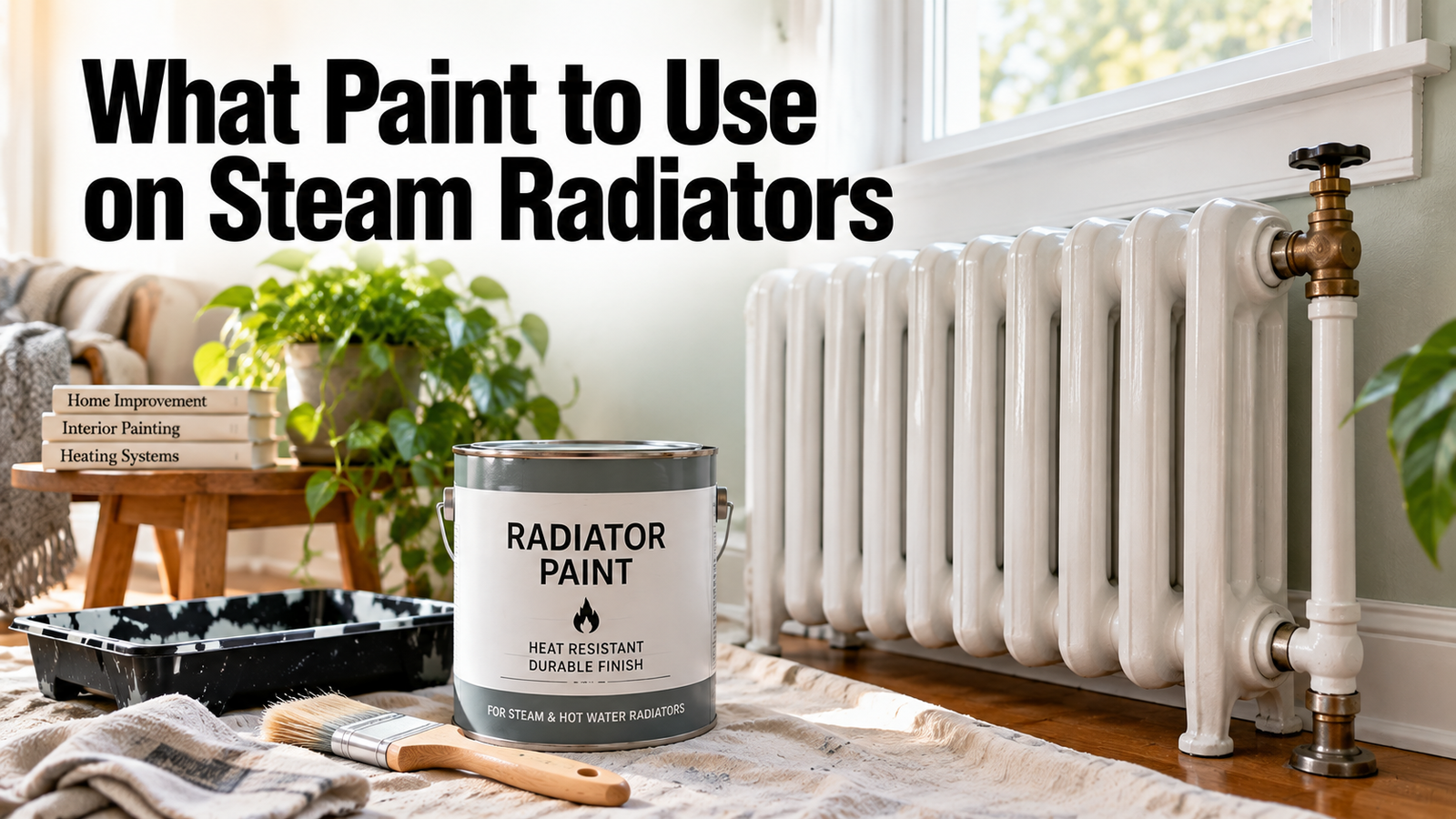

The best paint for a steam radiator is a quality enamel made for metal: either an oil-based rust-preventive enamel or one of the newer waterborne alkyd trim enamels. Both cure into a hard film that handles the heat of steam, which tops out around 215 degrees Fahrenheit in a home system. You do not need grill or engine paint. And you should stay away from two things: soft interior wall paint, which can turn tacky and discolor on hot metal, and metallic silver paint, which quietly cuts the radiator’s heat output by as much as a fifth.
- How hot a steam radiator gets, and why it matters
- The paints that work on steam radiators
- Do you need high-heat paint? No
- The two paints to avoid
- What primer to use
- Does color or finish change the heat?
- How to paint a steam radiator so it lasts
- Check old paint for lead before you sand
- Conclusion
- Frequently asked questions
- Can you use regular wall paint on a steam radiator?
- Do steam radiators need heat-resistant paint?
- What color radiator gives off the most heat?
- Can you paint a radiator while it is warm?
- Should I paint over old silver radiator paint?
- Related Articles
That is the short version. The rest of this guide covers the specific products that work, the primer to use on bare cast iron, how color and finish affect heat, and the prep and curing steps that decide whether the paint lasts fifteen years or bubbles by February.
How hot a steam radiator gets, and why it matters
Steam in a residential system runs at very low pressure, usually under two pounds per square inch. At that pressure the steam holds around 215 degrees, only a few degrees above boiling water. The radiator’s surface sits near that temperature whenever the system fires, then falls back to room temperature between cycles, over and over, all winter.
Two things follow from that number. First, 215 degrees is hot enough to ruin the wrong paint. A soft coating on hot metal can soften further, yellow, stay slightly tacky, and collect dust in the film. Second, 215 degrees is nowhere near the range that true high-heat paints are built for. Grill and engine paints are rated for surfaces of 500 to 1,200 degrees. A steam radiator lives in the gap between those extremes, which is why the right answer is a hard-curing enamel rather than either a wall paint or a specialty heat paint.
Steam radiators also run hotter than hot-water radiators, which usually peak near 180 degrees. A paint that survives on a hot-water system gets a tougher test on steam, so the margin matters.
The paints that work on steam radiators
Every good option below shares two traits: it cures into a hard film, and it is made to bond to metal. Pick based on how you want to apply it and how much odor you can live with.
| Paint type | Examples | Why it works |
| Waterborne alkyd trim enamel | Benjamin Moore Advance, Sherwin-Williams Emerald Urethane | Cures into a hard, heat-tolerant film with low odor and easy cleanup. Levels out brush marks well on ribbed cast iron. |
| Oil-based rust-preventive enamel | Rust-Oleum Stops Rust, alkyd trim enamels | The classic choice. Tough, rust-inhibiting film that shrugs off heat cycling. Slower drying and a stronger smell. |
| Direct-to-metal (DTM) enamel | Sherwin-Williams Pro Industrial DTM Alkyd | An industrial coating made to go straight onto iron and steel, with rust-inhibitive pigments. A strong pick for a stripped radiator. |
| Enamel spray paint | Rust-Oleum enamel sprays | The fastest way to lay an even coat in the tight gaps between cast iron sections, where a brush struggles. |
| Dedicated radiator paint | Water-based radiator enamels | Sold as non-yellowing and tested for heat cycling. A convenience where available, not a requirement. |
For most people brushing a radiator in place, a waterborne alkyd trim enamel is the best all-round pick: it keeps odor low indoors, cleans up with water, and still cures nearly as hard as oil. Reach for an oil-based product when the radiator has a history of rust or sits somewhere it takes knocks, such as a hallway or a rental. Rust-Oleum’s Stops Rust enamel line covers both brush and spray versions in matching colors, which makes it easy to brush the faces and spray the gaps.
Whatever you choose, apply two thin coats rather than one heavy one. Thick paint on a radiator does more than sag; every extra layer slightly slows heat transfer, and old radiators carrying five or six coats benefit from stripping before repainting.
Do you need high-heat paint? No
Stove, grill, and engine paints survive on a radiator, but they solve a problem a radiator does not have. Their extreme heat rating comes with trade-offs: a short color list, usually a flat, chalky finish, and in some cases a heat cycle needed to cure fully. Since a steam radiator peaks around 215 degrees and a quality enamel handles that comfortably once cured, the extra 1,000 degrees of headroom buys nothing. If a half-used can of high-heat black is already on your shelf, it will do the job. Nothing about steam requires you to buy it.
The two paints to avoid
Standard interior wall paint is the first. Latex wall paint is designed for drywall at room temperature and cures to a relatively soft, flexible film. On metal that climbs above boiling every heating cycle, that film can soften, yellow, stay faintly sticky, and eventually chip or peel, especially when it went on over old glossy paint without deglossing. A hard enamel costs about the same per quart, so the gamble saves nothing.
Metallic silver and bronze paints are the second, unless you want less heat on purpose. A free-standing cast iron radiator delivers roughly 70 percent of its heat by convection, air rising off the hot metal, and about 30 percent by radiation. Metal-flake pigments have very low emissivity, which strangles the radiant share and drops the radiator’s total output by as much as 20 percent. That is also the one legitimate use for silver paint: taming a radiator that overheats a small room. Only the outermost coat counts, so a single coat of ordinary enamel over old silver restores the missing output, and a coat of silver over ordinary paint takes it away.
The rule worth remembering: only the outermost coat of paint decides how much heat a radiator gives off.
What primer to use
Sound, tightly bonded old paint needs no primer, just a wash and a scuff. Bare metal does. Any spot you sand, wire-brush, or chip down to cast iron should get a rust-inhibitive metal primer before the finish coat, because bare iron flash-rusts quickly and rust bleeds through enamel. Use a clean-metal or rusty-metal primer, ideally from the same maker as your finish paint so the system is compatible, and prime the whole radiator if it has been stripped bare. There is no need for a special heat-rated primer; match the primer to the enamel, not to a temperature the radiator will never reach.
Does color or finish change the heat?
Color is a style decision, not a heat decision. Between ordinary paints, a black radiator and a white one put out heat within about one percent of each other, because at radiator temperatures the radiating power of a paint comes from its binder, not its visible color. Finish matters more in daily life than in physics: satin and semi-gloss wipe clean and hide dust better than flat, while full gloss spotlights every flaw in a rough old casting.
The one exception is the metallic finish covered above. Chrome-look, silver, and bronze coatings cost real heat. And because only the outermost layer sets the radiating power, a radiator buried under old aluminum paint gets its full output back with nothing more than one properly prepped coat of regular enamel.
How to paint a steam radiator so it lasts
Failed radiator paint is almost always a prep or patience problem, not a product problem. The sequence below takes one weekend, plus cure time.
- Turn the heat off and let the radiator go fully cold. Paint applied to warm metal flashes dry too fast, holds brush marks, and grips poorly. Plan the job for the off-season if you can.
- Clean it completely. Vacuum the dust between sections, wash the metal with a degreasing cleaner, rinse, and let it dry. Paint sticks to iron, not to grime.
- Remove anything loose. Wire-brush flaking paint and surface rust, then feather the hard edges with a sanding sponge so old layers do not telegraph through. Test old paint for lead first (see below).
- Dull any glossy areas. Scuff-sand sound glossy paint or wipe it with a liquid deglosser so the new coat can bite.
- Spot-prime the bare metal. Cover every spot of exposed iron with rust-inhibitive metal primer and let it dry per the label.
- Apply two thin coats. Brush the flat faces with an angled sash brush and work the gaps between sections, or spray a column radiator for a faster, more even coat. Respect the recoat window on the can.
- Let it cure before the heat comes on. Keep the system off for at least 48 hours, and a full week is better; enamels keep hardening for days. The first few heat cycles release odor, so open a window when the radiator finally fires.
Check old paint for lead before you sand
Radiators in homes built before 1978 often carry lead paint under the newer layers. Lead was banned from house paint that year, and roughly three-quarters of American homes built before the ban still contain some. Dry-sanding, power-sanding, or burning that paint off throws lead dust into the air, and lead dust from disturbed paint is the leading cause of childhood lead poisoning.
Before disturbing anything, rub a lead test swab from the hardware store on a chipped spot. If it turns positive, keep your prep wet, skip aggressive sanding, or send the radiator out to a professional stripping shop and repaint clean metal instead. The EPA’s lead-safe renovation guide for DIYers covers how to contain the work area and clean up safely.
Conclusion
Paint a steam radiator with a hard-curing enamel: a waterborne alkyd trim enamel for low odor and easy cleanup, or an oil-based rust-preventive enamel for maximum toughness. Spot-prime bare metal, skip wall paint, skip silver unless you want less heat, and do not bother with grill paint. Then let prep and patience do the real work: a clean, deglossed radiator painted cold and cured for days before the heat returns will hold its finish for decades.
Frequently asked questions
Can you use regular wall paint on a steam radiator?
It is a gamble. Interior latex wall paint cures soft, and at steam temperatures near 215 degrees it can soften further, yellow, stay tacky, and peel. A metal enamel costs about the same and cures hard, so there is no reason to risk it.
Do steam radiators need heat-resistant paint?
No. High-heat paints are rated for 500 to 1,200 degree surfaces like grills and engine parts. A steam radiator peaks around 215 degrees, which a fully cured oil-based or waterborne alkyd enamel handles without any special rating.
What color radiator gives off the most heat?
Any ordinary non-metallic color. Black beats white by only about one percent. The split that matters is metallic versus not: silver or bronze paint can cut output by up to 20 percent, and one non-metallic top coat brings it back.
Can you paint a radiator while it is warm?
No. Paint on warm metal dries too fast, holds brush marks, and bonds poorly. Shut the heat off, let the radiator reach room temperature, paint, and then keep the system off for at least 48 hours while the enamel cures.
Should I paint over old silver radiator paint?
Yes, if it is sound. Wash it, scuff it, and apply one or two coats of ordinary non-metallic enamel. Because only the outermost layer sets the radiating power, the new coat restores the heat the metallic paint was holding back.
Related Articles
When Not to Paint Outside: Weather Conditions to Avoid
Can I Use Exterior Paint Indoors? Here’s the Truth
Can I Paint a Vinyl Fence? Everything You Need to Know Before You Pick Up a Brush