
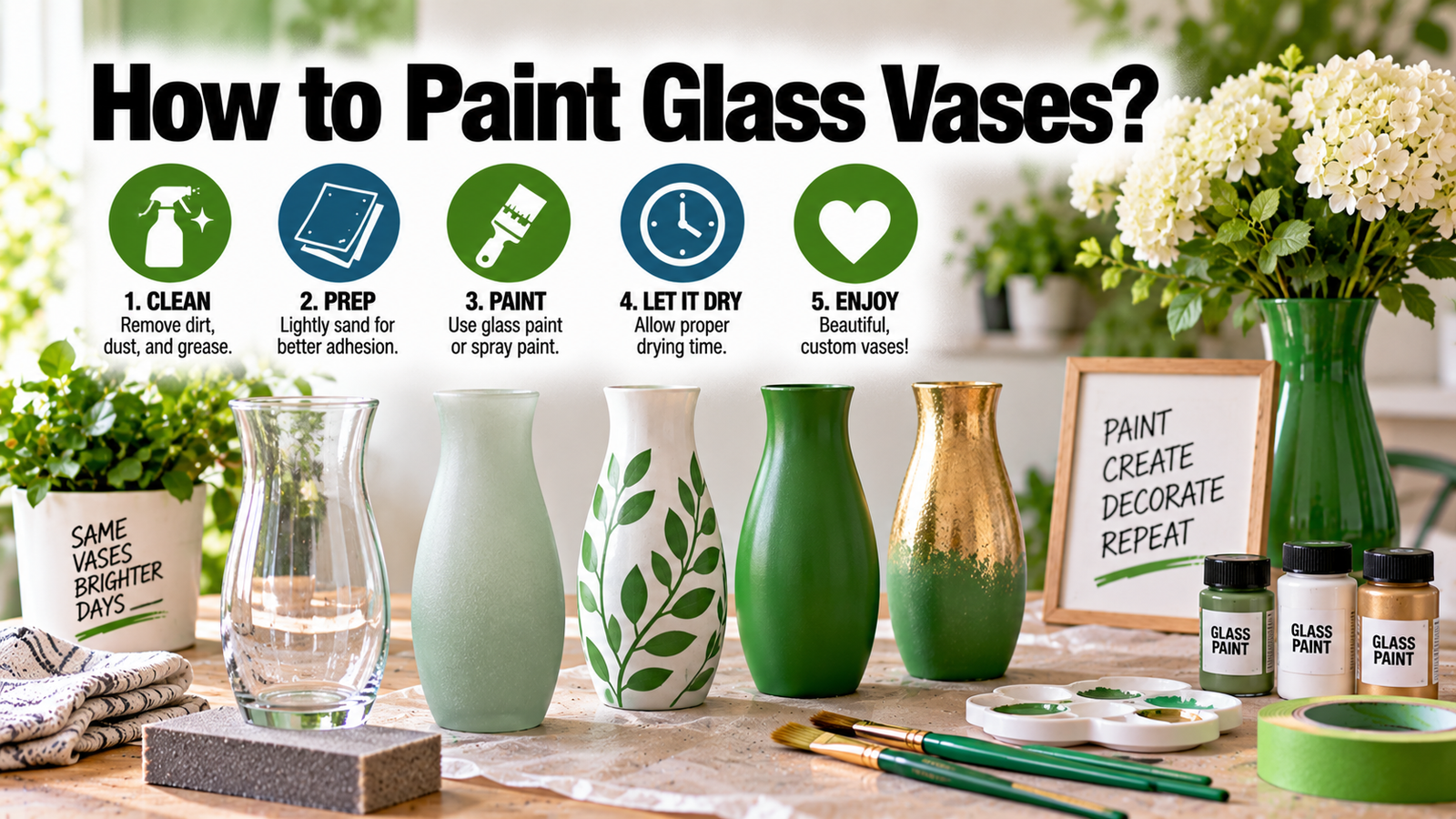

To paint a glass vase, clean it well, wipe it with rubbing alcohol, then apply thin coats of a glass-friendly paint like acrylic enamel or a bonding-primed craft acrylic, and seal it once dry. The whole reason painted glass fails is that the surface is smooth and non-porous, so paint slides off unless you prep it first. Get the prep and the paint choice right and a plain thrift-store vase turns into a piece that looks like ceramic or terracotta pottery.
This guide walks through the supplies, the core method that works for any color, the most popular finish variations, and how to make your paint last. It is written for beginners, so no artistic skill is needed, just a little patience between coats.
Part of the appeal is how forgiving and low-cost it is. A thrifted vase might cost a dollar or two, the paint is craft-aisle cheap, and if you dislike the result you can wipe fresh paint off with alcohol and start again. That makes it a great first upcycling project, and an easy way to pull a mismatched shelf of clear glass into a single coordinated set by painting them all the same color.
What you’ll need
The supplies are simple and cheap, which is half the appeal of this project. You need a clean glass vase, rubbing alcohol for the final wipe-down, your paint, a brush or spray can, and a sealer to protect the finish. For a faux-pottery look, a spoonful of baking soda and a cheap chip brush are the only extras.
Paint choice matters most. Acrylic enamel is the sturdiest air-dry option for glass and gives opaque, even coverage. Regular craft acrylic works and costs less, but it needs help gripping the slick surface, either a bonding primer underneath or a sealer on top, ideally both. Spray paint labeled for glass or multi-surface use gives the smoothest, most ceramic-like finish with almost no brush marks. Chalk or chalky-finish paint is popular for a matte, pottery feel, though it chips more easily and really wants a sealer.
A couple of small tool choices make a difference too. A cheap chip brush is perfect for the textured baking-soda finish, where you want visible strokes, while a soft synthetic brush lays acrylic down more smoothly if you are after a clean, even color. For sealing, a spray sealer gives the most even coat with no brush marks and is the most beginner-friendly, while a brush-on varnish gives you more control over thick or textured designs. Gloss, satin, and matte sealers each change the final look, so pick the sheen that matches the effect you are going for rather than grabbing whatever is nearest.
How to paint a glass vase, step by step
This is the core method. It works for any opaque color and any of the finishes below. Clean, dry glass is everything here, so do not skip the alcohol wipe.
- Clean the vase thoroughly. Wash it with soap and water to remove dust, labels, and grime. For stubborn water rings inside, soak with white vinegar and scrub with an old toothbrush until the glass is clear.
- Wipe with rubbing alcohol. Right before painting, wipe the whole surface with isopropyl alcohol to strip off soap residue and skin oils. This single step prevents most peeling later.
- Prime if you’re using craft acrylic. If you are not using enamel or a glass-specific spray, apply a bonding primer made for slick surfaces so any paint will grip. Let it cure per the label.
- Apply thin coats of paint. Build the color in several light coats rather than one thick one, letting each dry before the next. Two or three coats usually give full, even coverage.
- Let it dry fully. Give the paint plenty of time to dry between coats and before sealing. Rushing this is where finishes go patchy or tacky.
- Seal the finished vase. Once the paint is dry, apply a clear acrylic sealer, spray or brush-on, to lock in the design and protect it from moisture and scratches.
The two steps beginners skip, the alcohol wipe and the final sealer, are exactly the two that decide whether your paint lasts. Do both.
Popular finishes to try
Once you know the core method, a few variations give very different looks from the same basic supplies.
For a faux-pottery or terracotta finish, the trick is baking soda. Stir about one tablespoon of baking soda into a cup of water-based paint (roughly a 3-to-1 paint-to-soda ratio for a heavier texture) and brush it onto a lightly sanded vase. It dries to a matte, stone-like surface that makes cheap glass look like expensive stoneware. A second coat, dabbed with a damp sea sponge before it dries, adds even more texture.
For a smooth, modern ceramic look, reach for spray paint. Shake the can, then mist the vase in light, overlapping passes, rotating the piece as you go for even coverage. Several thin coats beat one heavy one, and a chalky-finish spray gives that soft matte sheen with no primer needed on clean glass. Always spray in a well-ventilated area, holding the can about 12 inches from the surface.
For a colored-glass or milk-glass effect, paint the inside instead of the outside. Pour a little acrylic into a clean, dry vase and slowly turn it at every angle so the paint flows and coats the interior, then wipe the rim clean for a crisp edge. This keeps the outside glossy and glass-like while giving it color, and it protects the paint from handling. Just remember a vase painted on the inside cannot hold water.
A few small fixes save a project when a finish does not go to plan. If a color looks thin or streaky, resist adding one thick coat to cover it and instead let it dry and add another light layer, since coverage builds better in stages. If you get a drip or a fingerprint in wet paint, a cotton swab dipped in rubbing alcohol lifts it cleanly before it dries. And if the paint pulls away or beads as you brush it on, that is the surface telling you it was not clean enough, so stop, let it dry, wipe again with alcohol, and start that section over. None of these mean the vase is ruined; they are just the surface reminding you that glass rewards clean, patient work.
Which paint should you use?
Match the paint to the look you want and how the vase will be used. Here is the quick reference.
| Paint | Best for | Good to know |
| Acrylic enamel | Durable, opaque color on a vase | The most durable air-dry option for glass |
| Craft acrylic | Easy, low-cost decorative pieces | Needs a sealer to last on slick glass |
| Spray paint (glass/multi-surface) | Smooth, even, ceramic-like coverage | Light coats only; work in ventilation |
| Chalk / chalky finish | Matte, pottery look | Sticks well but chips more easily; seal it |
If you want one dependable choice, acrylic enamel is the most forgiving durable option, and adding a sealer on top of any of these only helps. For a purely decorative vase that will sit on a shelf, craft acrylic with a good sealer is perfectly fine and the cheapest route in.
Making your painted vase last
Painted glass holds up well when you respect how it is made, and fails fast when you don’t. A few habits keep it looking good.
- Start spotless. Oils and fingerprints are the top cause of peeling, so clean the glass and wipe it with alcohol before you paint, and try not to touch the surface afterward.
- Always seal decorative pieces. A clear sealer shields the paint from moisture, scratches, and fading. Think of it as sunscreen for your design.
- Cure before use for anything that gets handled or washed. Air-dry enamels harden over days; oven-baking a glass enamel is what makes a piece truly water- and wash-tough. Check the paint’s instructions.
- Keep water off the paint. If you want fresh flowers, drop a smaller plain glass or a plastic liner inside to hold the water, so the painted surface stays dry.
- Hand wash, gently. Unless a paint is specifically baked and rated dishwasher-safe, wash painted vases by hand to protect the finish.
A quick safety note if you ever paint drinking glasses rather than vases: keep paint below the lip and off any surface that touches lips or food, and cure it properly. For vases holding only flowers, that is less of a concern, but it is worth knowing.
For choosing products, Bob Vila’s guide to the best paint for glass compares acrylics, enamels, and sealers, and an art glass supplier’s technique guide covers how enamels and sealers behave on non-porous glass.
Conclusion
Painting a glass vase comes down to prep and patience. Clean it, wipe it with alcohol, paint in thin coats of a glass-friendly paint, and seal it when dry. Reach for acrylic enamel or a primed craft acrylic for durability, spray paint for a smooth ceramic look, or baking soda in your paint for a faux-pottery finish. Keep water off the paint and cure anything that gets handled. Do that and an ordinary thrift-store vase becomes a piece that looks made to order.
Frequently asked questions
What kind of paint works best on glass vases?
Acrylic enamel is the most durable air-dry choice and gives opaque, even color. Craft acrylic works too but needs a bonding primer and a sealer to last on slick glass. Spray paint labeled for glass or multi-surface use gives the smoothest ceramic-like finish.
Do you have to seal paint on a glass vase?
For decorative pieces, yes. A clear acrylic sealer protects the paint from moisture, scratches, and fading and greatly extends how long it lasts. Some enamels can instead be oven-baked to cure, which makes them tough enough to handle and wash.
Why does paint keep peeling off my glass vase?
Almost always because of surface prep. Oils, soap residue, or fingerprints left on the glass block the paint from bonding. Wash the vase, wipe it with rubbing alcohol right before painting, and avoid touching the surface between coats.
How do you paint a glass vase to look like pottery?
Stir about a tablespoon of baking soda into a cup of water-based paint and brush it onto a lightly sanded vase. It dries to a matte, stone-like texture that mimics stoneware or terracotta. A second coat dabbed with a damp sponge adds more texture.
Can a painted glass vase hold water and flowers?
If it is painted on the outside and sealed, it can hold water, but keeping water off the paint helps it last. The safest approach is to set a smaller plain glass or a plastic liner inside for the water. A vase painted on the inside should not hold water at all.
Related Articles
How to Paint Metal With Spray Paint: A Step-by-Step Guide