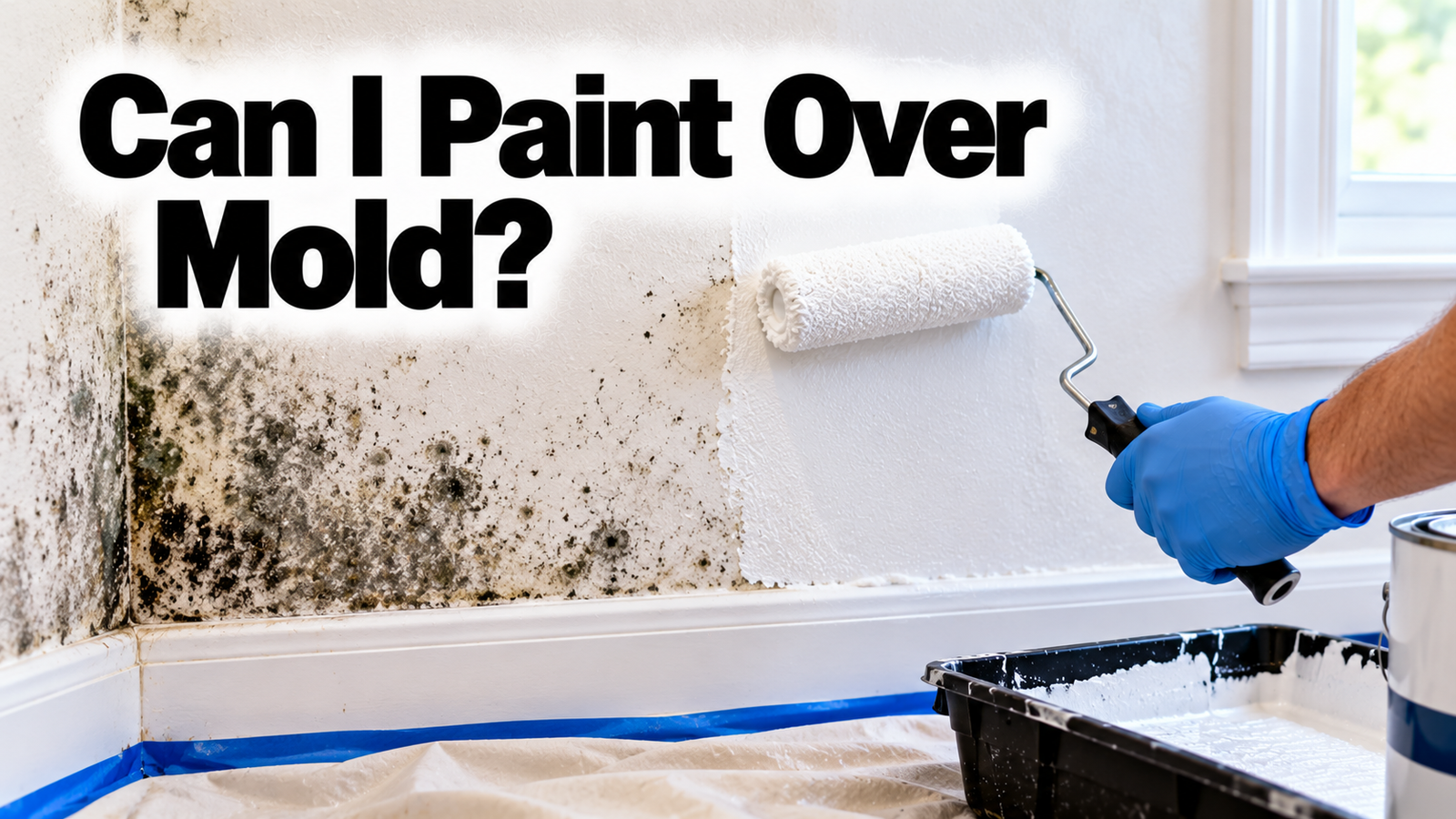

No, you should not paint over mold. Mold is a living organism, and a coat of paint does not kill it or stop it from spreading. It keeps growing under the film, then bleeds back through, peels the paint away, and leaves you with the same problem plus a ruined paint job. To fix mold for good, you have to remove it and fix the moisture feeding it first, then paint once the surface is clean and dry.
This guide explains why painting over mold fails, how to remove it safely, when the job is bigger than a DIY fix, and where mold-resistant primers actually fit. The goal is a wall that stays clean, not one that looks fine for a month and comes back worse.
Why painting over mold doesn’t work
Paint is a cosmetic layer, not a treatment. Mold is alive and feeds on moisture and the surface underneath, so sealing it with paint changes none of that. The colony keeps growing beneath the coating, and because it is still active it works its way back to the surface. Within weeks or months you typically see it show through as spots or staining, or the paint starts to bubble and peel as the mold and trapped moisture break the bond.
It is easy to see why painting over it is tempting. It looks like the fastest, cheapest fix, and for a little while the wall does look clean. But that appearance is exactly the trap: the problem is hidden rather than solved, so you stop watching it while it quietly spreads. By the time it reappears, you often have more mold than you started with, plus a peeling wall to strip and redo, which ends up costing more time and money than doing it properly the first time. If a previous owner or landlord painted over mold, you can sometimes feel it as a slightly raised or bubbled patch, or see faint staining bleeding through, which is worth checking before you add another coat.
There is a moisture problem underneath all of this. Mold only grows where there is water, so if you paint over it without fixing the leak, humidity, or condensation that caused it, that water stays trapped against the wall. Sealed in, it can speed up damage to the drywall or wood behind the paint rather than protect it. This is why federal guidance is blunt on the point: do not paint or caulk moldy surfaces, clean the mold up and dry the surface first.
It is worth knowing the difference between mold and mildew, since people often use the words interchangeably. Mildew is a surface growth that usually looks gray or white and powdery, and it is easier to clean off. Mold tends to be darker, green or black, and it roots deeper into the material. Both need to be removed rather than painted over, but mold is the more stubborn of the two, and a patch that keeps returning or has darkened the wall through the paint is a sign it has gone deeper than a surface wipe can reach.
Painting over mold hides it for a while, but it never removes it. The colony keeps growing under the paint and comes back, usually worse.
The right way: remove the mold first
The correct order is always the same: fix the water, remove the mold, dry the surface, then paint. Skip any of those and you are back where you started. For a small patch, under roughly 10 square feet on a hard surface, this is a manageable do-it-yourself job with the right precautions.
- Find and fix the moisture source. Track down the leak, condensation, or humidity feeding the mold and fix it. If the water keeps coming, the mold comes back no matter how well you clean.
- Protect yourself. Disturbing mold releases spores that can irritate the airways and eyes, so wear an N95 respirator, gloves, and eye protection, and open a window or run a fan for ventilation.
- Clean the mold off. Scrub hard, non-porous surfaces with detergent and water until the mold is gone. Plain detergent and water is what the EPA recommends; harsh bleach is not required for routine cleanup of non-porous surfaces.
- Replace what you cannot clean. Porous materials like drywall, ceiling tiles, or carpet can hold mold deep in the material. If mold has soaked in, that section usually has to be cut out and replaced, not cleaned.
- Dry the surface completely. Use fans, a dehumidifier, or air conditioning until the area is fully dry. Any leftover moisture invites the mold straight back and stops paint from bonding.
- Prime, then paint. Once the surface is clean and dry, apply a suitable primer and then your topcoat in thin, even coats.
The order matters as much as the steps. Cleaning before fixing the leak just resets the clock, and painting before the wall is dry traps moisture all over again.
One thing to check before you start: whether the paint on the wall has already failed. Peeling, bubbling, or cracked paint over a moldy spot is a warning sign that moisture has gotten behind the film and reached the porous drywall or plaster underneath. In those places the mold has usually rooted into the material, and surface cleaning will not remove it. The same is true of walls that feel soft or look stained through from behind. Where that has happened, the affected material itself has to come out, which is often a sign the job has grown past a simple wipe-and-paint.
When to call a professional?
Small, surface-level mold on a hard wall is a reasonable DIY task. Larger or riskier situations are not, and trying to handle them yourself can spread spores through the house or leave hidden mold behind. Federal guidance uses a rough 10-square-foot threshold as the line where most homeowners should bring in a pro.
| You can usually DIY when | Call a professional when |
| The patch is under about 10 square feet | The mold covers more than about 10 square feet |
| It sits on a hard, non-porous surface | It has soaked into drywall, plaster, or carpet |
| The cause is an obvious, fixable leak | It came from sewage or contaminated water |
| No one in the home is sensitive to mold | Someone has asthma, allergies, or a weak immune system |
| It has not come back after cleaning | It keeps returning after you clean it |
None of this is meant to alarm you. Most small bathroom or window-frame spots are well within DIY range. The table is just a quick gut check: if your situation lands in the right column, a qualified remediation contractor has the containment and equipment to handle it safely, and proper documentation can also help if you ever need to file an insurance claim.
Do mold-resistant primers and paints help?
They help, but not the way the names suggest. A mold and mildew primer does not kill existing mold, and neither does mold-resistant paint. What these products do is resist new growth on the finished surface and block old stains from bleeding through, which is useful, but only after the mold itself is gone. Applying one over live mold has the same result as any other paint: the mold keeps growing underneath.
Used correctly, a mold-resistant primer is a good final layer. Once you have removed the mold, fixed the moisture, and dried the surface, priming with a product made for damp-prone rooms adds a barrier that makes it harder for mildew to take hold again. It is the last step in the process, not a substitute for the cleanup. Pair it with the real fix, better ventilation and humidity control, and the finish has a genuine chance of staying clean.
Prevention is where you actually win against mold long term, because it removes the water the mold needs. In bathrooms, laundry rooms, and kitchens, an exhaust fan or an open window during and after use carries damp air out before it can settle on cool surfaces. A dehumidifier helps in basements and other spaces that stay humid.
Outside the house, redirecting moisture sources such as leaky gutters, dripping air conditioners, or misaimed sprinklers keeps water off the walls in the first place. Cleaning damp-prone spots more often, and drying up spills and leaks quickly, keeps small growth from turning into a real problem. A mold-resistant coat plus good airflow is a far more durable answer than either one alone.
For the cleanup itself, the EPA’s mold cleanup guidance lays out the safe steps and the point at which to call a professional, and a product like KILZ Mold & Mildew primer shows how a mold-resistant primer is meant to be used after the surface is already clean.
Conclusion
You cannot fix mold by painting over it. It keeps growing, bleeds back through, and peels the paint, while the trapped moisture damages the wall underneath. The real fix is to correct the water source, remove the mold safely, dry the surface fully, and only then prime and paint. Keep DIY to small patches on hard surfaces, and call a professional for large areas, contaminated water, or health concerns. Do it in that order and the wall stays clean instead of coming back worse.
Frequently asked questions
Can you just paint over mold to cover it?
No. Paint hides mold for a short time but does not kill it or stop it spreading. The mold keeps growing under the coating, bleeds back through, and causes the paint to bubble and peel. You have to remove the mold and fix the moisture first.
Does KILZ or mold-resistant paint kill mold?
No. Mold and mildew primers and mold-resistant paints resist new growth and block stains, but they do not kill existing mold. Remove the mold and dry the surface first, then use the primer as a protective final layer.
What happens if you paint over mold anyway?
The mold continues to grow beneath the paint and usually shows through again within weeks or months. The paint often bubbles or peels as trapped moisture breaks the bond, and the hidden moisture can speed up damage to the drywall or wood underneath.
How do I remove mold before painting?
Fix the moisture source first, then wear an N95 respirator, gloves, and eye protection, scrub hard surfaces with detergent and water, and dry the area completely. Porous materials like soaked drywall usually need to be cut out and replaced rather than cleaned.
When should I call a professional for mold?
Call a pro when the mold covers more than about 10 square feet, has soaked into porous materials, comes from sewage or contaminated water, keeps returning after cleaning, or when someone in the home has asthma, allergies, or a weakened immune system.
This article is general guidance, not health or safety advice for your specific situation. If mold in your home is extensive or anyone is experiencing health symptoms, consult a qualified remediation professional or your doctor.
Related Articles
Can You Paint a Fiberglass Bathtub? Yes, and Here’s How to Do It Right
Does Paint Have an Expiry Date?