
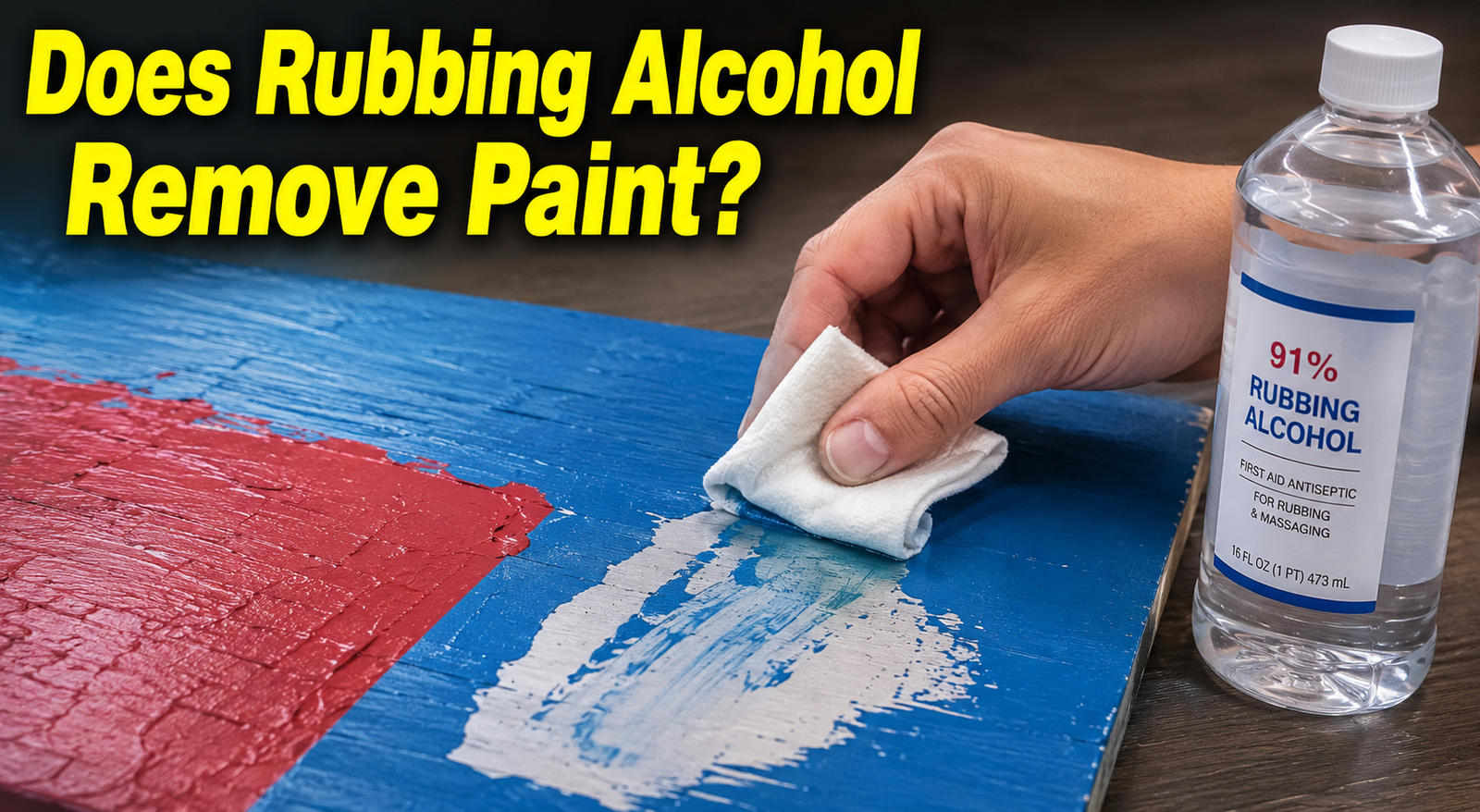

Yes, rubbing alcohol removes paint, but how well depends on the paint. It works well on water-based paints like latex and acrylic, especially while they’re still fresh, by softening the paint so you can wipe or scrape it away. It struggles with cured oil-based paint, which shrugs off alcohol and needs a stronger solvent like mineral spirits. And because it’s a real solvent, it can also lift finishes you want to keep, so it’s smart to test a hidden spot first.
- The short answer
- How rubbing alcohol removes paint?
- Which paints it works on?
- 70% or 90%? Which strength to use
- How to remove paint with rubbing alcohol?
- Which surfaces it’s safe on (and which to be careful with)
- The flip side: it can remove finishes you want to keep
- A handy bonus: testing whether paint is latex or oil
- Conclusion
- Frequently asked questions
- Does rubbing alcohol remove dried paint?
- Will rubbing alcohol remove oil-based paint?
- Is 70% or 90% rubbing alcohol better for removing paint?
- Will rubbing alcohol damage the surface underneath?
- Can I use rubbing alcohol to get paint out of clothes?
- Related Articles
Rubbing alcohol, also called isopropyl alcohol, is one of the handiest paint removers already sitting in most homes. It’s cheap, safe enough for skin and clothes, and effective on the most common household paints. But it isn’t a universal stripper, and knowing where it shines saves you a lot of wasted effort. Here’s the full picture.
The short answer
If you’re dealing with latex or acrylic paint, rubbing alcohol will very likely get it off, and it works fastest on fresh spills. If you’re dealing with dried, oil-based paint, don’t count on it; you’ll want a purpose-made solvent instead. For most accidental spills, drips, and stains around the house, though, the answer is a practical yes.
How rubbing alcohol removes paint?
Understanding the mechanism explains everything else about when it works. Rubbing alcohol is a solvent, which means it dissolves certain materials that water can’t.
With paint, alcohol works by swelling the paint’s binder and loosening its grip on the pigment. Water-based paints like latex and acrylic dry into a flexible film held together by a polymer binder, and alcohol softens that film so it releases from the surface. In effect, it re-liquefies the paint enough that you can lift it off. This is why it can tackle even fairly old latex or acrylic paint, not just fresh spills, though the older and more cured the paint, the more soaking and elbow grease it takes.
It also explains the limit. Oil-based paint forms its film a different way, from a polymer dissolved in an oil-based solvent, and once it fully cures, alcohol can’t swell it effectively. You might soften the very surface of an oil-based film with enough rubbing, but you won’t strip it the way you can latex.
Timing plays into this too. Fresh paint hasn’t fully coalesced into a hard film yet, so alcohol penetrates and softens it almost instantly, which is why a wet or day-old spill wipes away with so little effort. As the same paint cures over the following weeks, the polymer particles knit together more tightly, and the alcohol needs more time and more soaking to break that bond. It still works on old latex, it just asks for patience.
And because alcohol is volatile, it evaporates within seconds of hitting a surface, so a single quick wipe often isn’t enough contact time to do anything. That’s the real reason so many people decide “alcohol doesn’t work”, when in fact it simply dried before it had a chance to act.
Which paints it works on?
Here’s how rubbing alcohol performs across the common paint types, from best to worst.
| The rule of thumb: rubbing alcohol loves water-based paint and dislikes oil-based. If it cleans up with soap and water when wet, alcohol will usually remove it when dry. | |||
| Paint type | Works? | Details | |
| Acrylic | Yes | Breaks down well, especially before it fully cures | |
| Latex (water-based) | Yes | Softens and wipes off; dried needs soaking and patience | |
| Oil-based (dried) | Barely | Cured oil resists it; needs a stronger solvent like mineral spirits | |
| Spray paint | Sometimes | Depends on the base; usually oil-based, so results vary | |
The takeaway from the table: acrylic and latex are the sweet spot. Acrylic breaks down especially well, particularly before it fully cures, and latex softens and wipes off with a bit of patience. Oil-based paint is the weak spot, and spray paint is a coin flip that depends on its base, since most spray paints are oil-based. When alcohol isn’t enough, that’s your cue to reach for mineral spirits or a dedicated stripper.
70% or 90%? Which strength to use
Rubbing alcohol comes in different concentrations, usually 70%, 90%, and 99%, and the strength you choose actually matters for paint.
It’s a little counterintuitive, but 70% isn’t always weaker for this job. The extra water in 70% alcohol keeps it wet on the surface longer and helps rehydrate water-based paint films, so it’s a great default for latex and acrylic.
Higher concentrations like 90% or 99% act faster and bite deeper, which helps on older, tougher, or more oil-rich paint, but they also evaporate more quickly. A common approach for stubborn paint is to break the surface with 90% and then switch to 70% to keep everything wet while you work.
On delicate plastics, the gentler 70% is the safer starting point. On bare metal, the faster 90% or higher saves time. Either way, start with the mildest strength that works and step up only if you need to.
How to remove paint with rubbing alcohol?
The single biggest mistake people make is letting the alcohol evaporate before it can work. Alcohol dries fast, so the trick is keeping the paint wet long enough to soften. Here’s the reliable method.
- Test a hidden spot first to be sure the alcohol won’t harm the surface underneath.
- Soak a cloth or cotton pad with rubbing alcohol until it glistens, and press it onto the paint.
- Keep it wet: cover the spot with plastic wrap to slow evaporation, and let it sit for several minutes.
- Lift the softened paint with a plastic scraper, a stiff brush, or an old toothbrush.
- Repeat on stubborn areas, re-wetting as you go, until the paint is gone.
- Wipe the area clean with warm water and a drop of dish soap, then dry it.
For paint on clothing, saturate the stain, scrub with a toothbrush, then machine wash. For a really stubborn fabric stain, a paste of rubbing alcohol, baking soda, and a little water left on for 10 to 15 minutes can lift it before you rinse. One important safety note: rubbing alcohol is flammable, so work in a ventilated area away from flames, sparks, and heat.
Which surfaces it’s safe on (and which to be careful with)
Because alcohol evaporates cleanly and doesn’t leave an oily residue, it’s gentle on many surfaces, but not all. A quick rundown:
- Glass and mirrors. Excellent. Even old latex paint on a window wipes right off after a little alcohol and rubbing.
- Metal. Works well for lifting water-based paint, and higher concentrations speed things up.
- Clothing and fabric. Generally safe, but test a hidden seam first, since alcohol can occasionally affect dyes on delicate materials.
- Finished wood. Use caution. Alcohol can dull or cut into a glossy finish, so test first and use a light touch.
- Plastics. Varies by plastic. Some tolerate it, others cloud or soften, so test an inconspicuous area with a gentler concentration.
- Painted walls. Be careful. Alcohol will lift the wall’s own paint along with the spill, so keep it strictly on the target and blot gently.
The flip side: it can remove finishes you want to keep
This is the part most quick guides leave out, and it’s important. The same solvent power that removes an unwanted paint spill can also damage a finish you’re trying to protect.
On a car, for instance, undiluted rubbing alcohol used repeatedly or on fresh paint can dull or damage the clear coat. Detailers do use it, but heavily diluted, roughly one part alcohol to three parts water, and sparingly, precisely because full strength is risky. Shellac is another cautionary case: it dissolves in alcohol entirely, so rubbing alcohol will strip a shellac finish quickly. Some furniture finishes and some plastics react the same way.
The practical lesson is simple: always test an inconspicuous spot first, and reach for the mildest effective concentration. If you’re working near a surface you want to preserve, mask it off. For guidance on safe use around automotive finishes, Kelley Blue Book’s overview of rubbing alcohol and car paint is a useful reference, and it stresses the same rule: dilute it, use it sparingly, and keep it off fresh paint.
A handy bonus: testing whether paint is latex or oil
That same water-based-yes, oil-based-no behavior makes rubbing alcohol a quick way to identify what kind of paint you’re dealing with, which is genuinely useful before a repainting or removal project. Knowing the paint type tells you whether a new coat will stick, which primer to use, and which remover to buy, so the test saves guesswork on the whole job.
Dab a little rubbing alcohol on a cotton ball or rag and rub a small, hidden patch of the paint. If the paint softens and color transfers onto the cotton, it’s water-based (latex or acrylic). If the alcohol does nothing and the cotton stays clean, the paint is oil-based.
It’s a thirty-second test that tells you whether alcohol is even worth trying, and which products you’ll need if it isn’t. This is why painters and DIYers keep a bottle on hand even when they’re not removing anything: it’s a fast, free diagnostic as much as a cleaner.
Conclusion
So, does rubbing alcohol remove paint? Yes, for water-based paints like latex and acrylic, which it softens and lifts especially well when they’re fresh. It’s cheap, effective, and already in most homes, as long as you keep it wet on the surface and use the right strength.
It won’t strip cured oil-based paint, and it can harm finishes like a car’s clear coat or shellac, so test a hidden spot first every time. For the everyday spill or stain, though, that bottle of rubbing alcohol is often all you need.
Frequently asked questions
Does rubbing alcohol remove dried paint?
Yes, for dried water-based paint like latex and acrylic. Soak the spot, keep it wet under plastic wrap so the alcohol can soften the film, then scrape or scrub it off. Dried oil-based paint is the exception and usually needs a stronger solvent.
Will rubbing alcohol remove oil-based paint?
Not really, once it’s cured. Oil-based paint forms a film alcohol can’t swell effectively, so you’ll only soften the surface at best. Use mineral spirits, paint thinner, or a dedicated stripper for oil-based paint instead.
Is 70% or 90% rubbing alcohol better for removing paint?
70% is a great default for latex and acrylic, since its extra water keeps it wet longer and rehydrates the film. 90% or higher acts faster on older or oil-rich paint but evaporates quickly. Start with 70% and step up if needed.
Will rubbing alcohol damage the surface underneath?
It can. Alcohol may dull glossy wood finishes, cloud some plastics, strip shellac, harm a car’s clear coat, and lift a wall’s own paint. Always test a hidden spot first and use the mildest concentration that works.
Can I use rubbing alcohol to get paint out of clothes?
Yes, for latex and acrylic. Saturate the stain, scrub with a toothbrush, and machine wash. For stubborn stains, a paste of alcohol, baking soda, and water left on for 10 to 15 minutes helps. Test delicate fabrics for colorfastness first.
Related Articles
How to Make Skin Color With Paint (Easy Mixing Guide)
How to Clean Oil Paint Brushes (Solvent & Oil-Free)
How to Get Paint Off Concrete (Wet, Dried & Stubborn)