

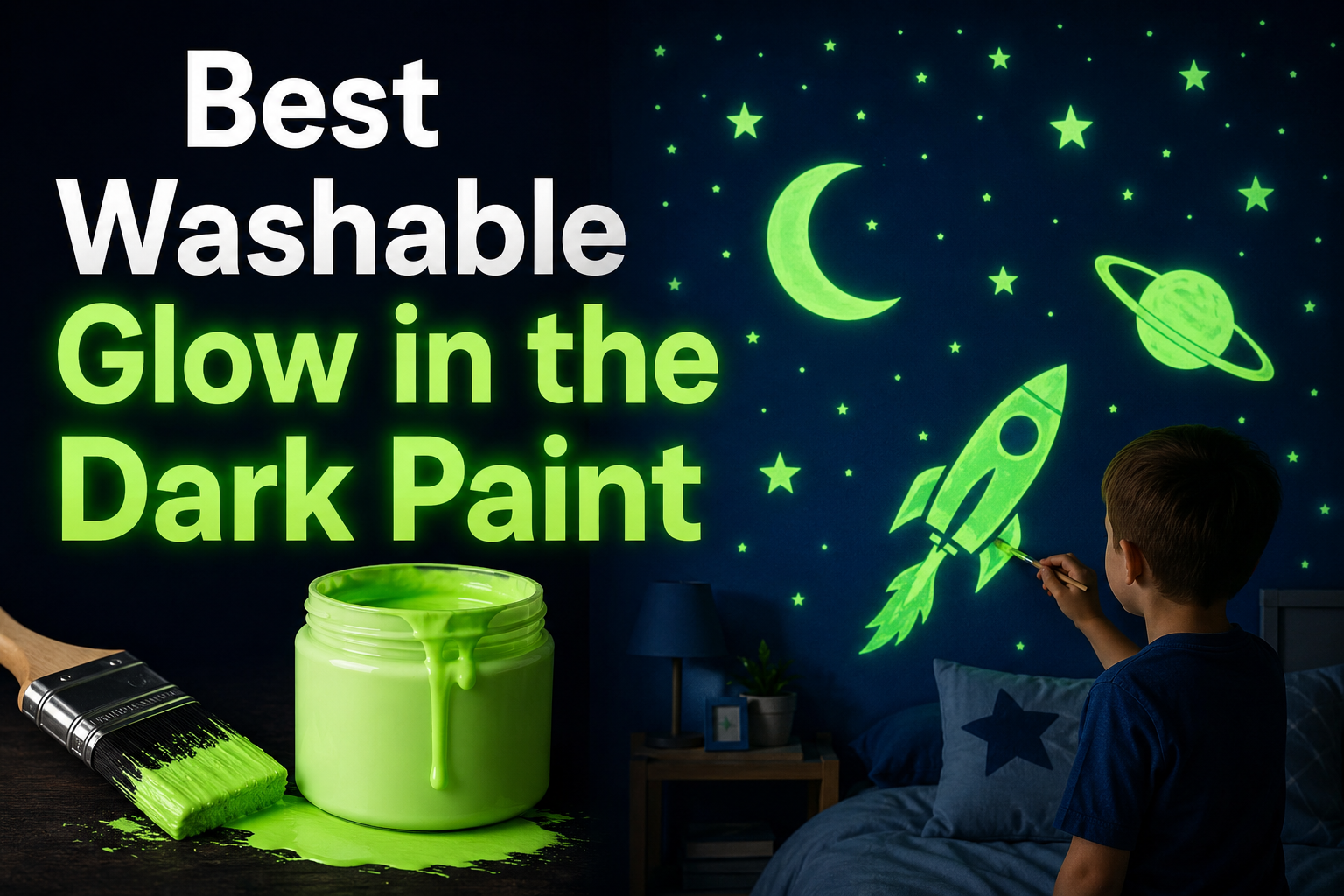

The best washable glow-in-the-dark paint depends on what “washable” actually means for your project, because the word points at two opposite things. If you want paint that washes off, a water-based, non-toxic body or party paint like the Neon Nights UV body paint set scrubs off skin and fabric with soap and water.
- What’s the best washable glow paint, in one line?
- The two meanings of “washable”
- Phosphorescent vs UV-reactive: how it glows
- How to choose the right one?
- Best washable glow paints by use case
- Best for parties and body art: a water-based UV body paint
- Best for crafts and decor you’ll keep: a non-toxic glow acrylic
- Best for kids’ art: a washable non-toxic glow paint
- Best for fabric and clothing: a glow fabric paint
- How to get the brightest, longest glow?
- Conclusion
- Frequently asked questions
- Related Articles
If you want a craft paint that stays put but can still be cleaned, a durable glow acrylic like Neon Nights or Tulip is the better buy. There isn’t one universal winner; the right paint is set by the job.
That sounds like a technicality, but it’s the single thing that decides whether you end up happy or stuck with paint you can’t remove, or that vanishes the first time it gets wet. Here’s how to tell which one you need and which products fit each use.
What’s the best washable glow paint, in one line?
For most people the honest answer is: match the paint to the surface and the outcome you want. As a quick guide, a water-based UV body paint is best for parties and skin, a non-toxic glow acrylic is best for crafts and decor you’ll keep, and a washable kids’ glow paint is best for young children’s art. Below, each of these gets a concrete pick. But first, the distinction that makes the choice obvious.
The two meanings of “washable”
This is where most buyers go wrong. “Washable” gets used for two completely different properties, and they’re nearly opposites.
Washes off (temporary)
This kind is designed to come off easily. It’s the water-based, non-toxic paint made for skin, hair, and clothes at a party or on Halloween, and it rinses away with soap and water at the end of the night. You want this when the glow is a one-time thing and removal is the whole point. The trade-off is obvious: it isn’t durable, so it won’t survive rain, wear, or repeated washing on a permanent project.
Wash-durable (permanent but cleanable)
This kind dries hard and stays put, but the finished, cured surface can be wiped or gently washed without lifting the paint. Glow acrylics fall here. You want this for a mural, painted rocks, decor, or anything you’ll keep and occasionally clean. The trade-off is the reverse: once it’s dry on skin or fabric, it does not simply rinse away.
Before you buy, finish this sentence: “I want the paint to ______ when it gets wet.” If the answer is “disappear,” you need washes-off. If it’s “stay, but survive a wipe,” you need wash-durable.
Almost every disappointed review of a glow paint comes from buying one type expecting the other. Get this right and the rest is easy.
It helps to think about cleanup at both ends of the project. With washes-off paint, act while it’s fresh: most of it rinses with warm water and soap, and a gentle scrub lifts what’s left, though very porous fabrics can hold a faint tint, so test a hidden spot first.
With wash-durable acrylic, cleanup means two different things: wet paint wipes up with water before it dries, but once it has cured it’s there to stay, so lay down a drop cloth and keep it off anything you don’t want painted. Knowing which cleanup you’re signing up for is part of choosing the right paint.
Phosphorescent vs UV-reactive: how it glows
There’s a second choice that matters just as much as washability: how the paint actually glows. These are two different technologies, and they don’t do the same thing.
Phosphorescent paint is the true “glow in the dark” type. It contains pigments that absorb light, charge up, and then release that light slowly, so it keeps glowing on its own in a dark room after the lights go out. This is what you want for a bedroom ceiling of stars or anything that should glow without special equipment. The glow fades over time and needs recharging with light.
UV-reactive (fluorescent) paint works differently. It only glows while a black light or UV lamp is shining on it, and it goes dark the moment that light is off. It doesn’t store light. This is the paint for glow parties, raves, and blacklight body art, where a UV lamp is part of the setup. Many party and body paints are this type, which is why they look bright under a black light but dull in an ordinary dark room.
Some products, especially certain body paints, are both: fluorescent under UV and faintly phosphorescent in the dark. Just know which effect you’re buying for, because a UV paint with no black light is simply invisible in the dark.
Color is worth a quick word too. Most true phosphorescent paints glow green or aqua, because those pigments store and release light most efficiently and give the longest, brightest afterglow. Other colors exist but usually glow more faintly and for less time.
UV-reactive paints, by contrast, come in a wide rainbow of neon shades because they don’t rely on stored light; the black light does the work, so bright pinks, oranges, and blues all pop. If you specifically want a long green glow that lasts in a dark room, go phosphorescent; if you want a full spectrum of party colors, UV-reactive is the way.
How to choose the right one?
Put the two decisions together and the choice narrows fast. Run through these before you buy.
- Surface. Skin and clothes need washes-off body paint. Walls, wood, canvas, rocks, and decor need a glow acrylic.
- Permanence. One-night fun means washes-off. Something you’ll keep means wash-durable.
- How it glows. Glowing on its own in the dark means phosphorescent. Glowing only under a black light means UV-reactive.
- Safety. For kids or skin, look for non-toxic and, on skin, a paint specifically labeled for face and body. Look for a safety mark such as ASTM D-4236 on craft paints.
- Charging. Phosphorescent paint charges best under bright sunlight or a UV black light, not a dim LED, so plan for a light source.
Answer those five and usually only one or two products are left standing.
Best washable glow paints by use case
Instead of crowning a single winner that fits no one, here are strong, widely available picks matched to what you’re actually doing. Products and prices change, so check current listings and reviews before buying, but these are solid starting points.
Best for parties and body art: a water-based UV body paint
For glow parties, festivals, and Halloween, a water-based UV body paint like the Neon Nights body paint set is the standard choice. It’s made for skin, goes on creamy, glows brightly under black light, and, crucially, washes off skin and even fabric with soap and water for next-day cleanup. Because it’s UV-reactive, remember you’ll need a black light for it to glow. Always pick one labeled non-toxic and made for face and body, and keep it away from the eyes.
Best for crafts and decor you’ll keep: a non-toxic glow acrylic
For painting rocks, canvas, wood, models, and home decor, a phosphorescent glow acrylic is the pick. The Neon Nights glow-in-the-dark acrylic set works on most hard surfaces like canvas, wood, plastic, and metal, glows on its own after charging, and is visible in daylight too. It’s wash-durable once cured, so finished pieces can be wiped clean, but note that acrylic-based sets like this are made for objects, not skin or fabric.
Best for kids’ art: a washable non-toxic glow paint
For young children, look for a paint specifically labeled washable and non-toxic, such as glow puff paints (Tulip makes a popular one) or a kids’ glow craft set. These clean up easily from hands and surfaces and are safe for little artists, while still giving a fun glow. For fabric projects like t-shirts, a dedicated glow fabric or puff paint holds up better to washing than a general craft acrylic.
Best for fabric and clothing: a glow fabric paint
If the project is a shirt, costume, or bag you’ll wash, skip the general acrylic and use a glow-in-the-dark fabric paint. These are formulated to flex with the cloth and survive the laundry, where a stiff craft acrylic would crack or wash out. Follow the label’s heat-setting instructions to lock the glow in.
Shortcut: skin and one-night events, water-based UV body paint. Objects you’ll keep, phosphorescent glow acrylic. Kids’ hands, washable non-toxic craft paint. Clothing, glow fabric paint.
How to get the brightest, longest glow?
The paint is only half the result; how you use it decides how bright it looks. A few habits make a big difference.
Charge it well. Phosphorescent paint glows in proportion to the light it soaks up, so give it 10 to 20 minutes under bright sunlight or a UV black light before the show, not a weak room lamp. Apply it over white or a light base coat, since a bright underlayer reflects more light back and makes the glow read stronger.
Use several thin coats rather than one thick one; more pigment layered up glows brighter and, on craft paints, resists cracking. For UV-reactive paint, the brightness is all about the black light, so use a real UV lamp and get it reasonably close. And keep expectations realistic: even good glow paint fades over minutes to a couple of hours between charges, which is normal.
Conclusion
The best washable glow-in-the-dark paint is the one that matches your project, and the key is knowing that “washable” means either washes-off or wash-durable. For skin and one-night parties, choose a water-based, non-toxic UV body paint that rinses away, and pair it with a black light.
For crafts and decor you’ll keep, choose a phosphorescent glow acrylic that stays put but wipes clean. Add a washable kids’ paint for little ones and a glow fabric paint for clothing. Decide whether you want the paint to vanish or survive when wet, check for non-toxic safety marks, charge it properly, and you’ll get a bright glow with none of the buyer’s remorse.
Frequently asked questions
Does washable glow paint come off skin easily? Water-based body and party paints do. They’re made to rinse off skin, hair, and fabric with soap and water. Craft glow acrylics are different; once dry they don’t simply wash away, so use body-specific paint on skin.
Is glow-in-the-dark paint safe for kids? Many are. Look for paint labeled non-toxic, and for skin use one made for face and body. A safety mark like ASTM D-4236 on craft paint is a good sign. Supervise young children and avoid the eyes.
Why doesn’t my glow paint glow in the dark? It may be UV-reactive rather than phosphorescent, meaning it only glows under a black light. Or a phosphorescent paint wasn’t charged enough. Charge it under bright light for 10 to 20 minutes, or add a UV lamp.
Can I use washable glow paint on walls or ceilings? Yes, use a phosphorescent glow acrylic made for hard surfaces, not a washes-off body paint. Apply over a white base and charge it with light. For a bedroom starscape, phosphorescent is the type you want.
How long does glow-in-the-dark paint last? A single charge glows for minutes up to a couple of hours, then needs recharging with light. The painted surface itself, if it’s a durable acrylic, can last for years with proper application.
Related Articles
How to Remove Paint From Leather Without Damaging It?
How to Get Dried Paint Off Brushes and Save Them?